
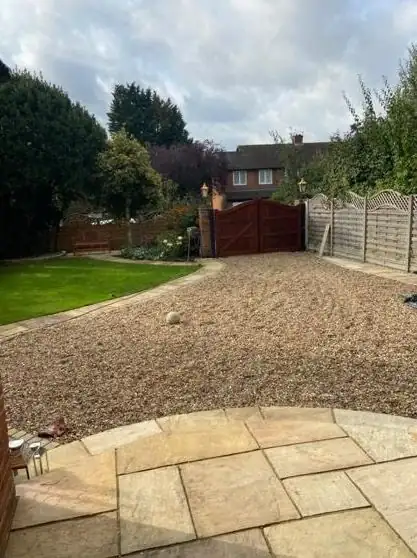
New Duston has a handful of natural stone cottages at its old centre, which need breathable mineral or limewash treatments rather than plastic masonry paint. Elsewhere, masonry painting means plinths, porches and garden walls on cavity-brick houses. Dean quotes for free.
The stone cottages at the old centre
The parish had iron-ore workings east of the old village, and New Duston itself has a former stone quarry, now Duston Wildes open space. The original settlement, as the Neighbourhood Plan describes it, was “terraces of natural stone cottages”, later joined by red brick ones. Energy certificates for two of those cottages, 1 and 3 Quarry Road, record walls of sandstone or limestone, solid and uninsulated as built.
Stone like this is rare in New Duston now. Of 143 sampled energy certificates, only 2 record natural stone walls, against 127 with cavity brick. Not all of it is old, either: a recent development near Duston Wildes, the restored quarry, used local stone with brick detailing, and that stone is meant to be seen, not painted. That makes the stone walls at the junction of Main Road, Port Road and Quarry Road, and the ashlar of Woodlands on Harlestone Road, worth getting right.
| Fact | Detail | Source |
|---|---|---|
| Stone walls recorded | 1 Quarry Road ‘sandstone or limestone’; 3 Quarry Road ‘sandstone’; both uninsulated | EPC register |
| Wall types (143 sampled EPCs) | 127 cavity brick, 8 solid brick, 2 natural stone, 1 timber frame | EPC register |
| Quarrying | Iron ore worked at Duston from 1854-55 until 1908 | Wikipedia |
| Ashlar, listed | Woodlands, 546 Harlestone Road, Grade II | Historic England |
| Front boundary walls | Named in Neighbourhood Plan policy BE1 as part of New Duston’s character | duston-pc.gov.uk |
Can you paint natural stone?
Usually it should not be painted. A solid stone wall has no cavity, so it handles damp by letting moisture evaporate out through the face of the stone and the mortar joints. An ordinary acrylic masonry paint forms a film over that face. Water still gets in through cracks and the top of the wall, but cannot get out, so the stone stays wet, frost breaks up the surface, salts push the paint off, and damp shows on the inside. If stone has never been painted, the right answer is to clean it gently and leave it bare. If it has been, it depends on the coating that is already there:
| Wall | Where in New Duston | What we use |
|---|---|---|
| Bare natural stone | Cottages at the Port Road and Quarry Road junction | Leave unpainted; a mason handles any lime repointing |
| Stone already painted | Some older cottages | Test the existing coat; recoat with a mineral silicate or limewash that suits it |
| Ashlar, listed | Woodlands, 546 Harlestone Road (Grade II) | Nothing without first checking whether listed building consent is needed |
| Solid red brick | Parts of Main Road, Ryeland Road and Park Lane | Leave bare; where already painted, a breathable masonry paint |
| Cavity brick and cement render | The 1983-99 estates and most other homes | Painted plinths, porch panels and render take a good masonry paint |
Front boundary walls at the old centre
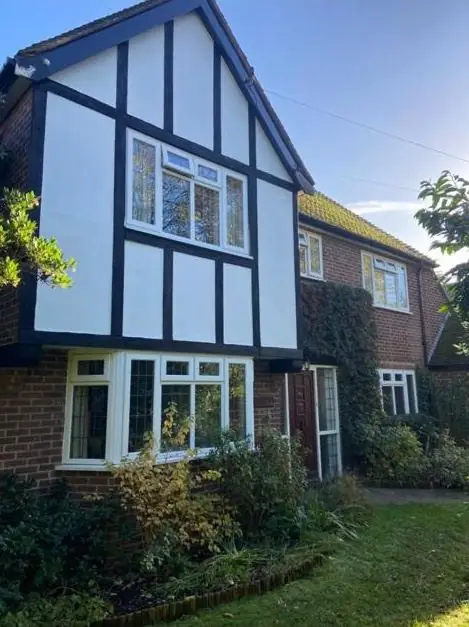
The plan’s policy BE1 names front boundary walls as part of New Duston’s character. Garden walls get wetter than house walls: they are exposed on both faces and along the top, and paint on them fails first. Before any coat goes on a painted boundary wall, the coping or capping has to be sound, because water getting in at the top is what pushes paint off the faces. Ivy is cut back and its roots removed, loose paint is scraped off, and the same breathable rule applies to any stone wall.
Repointing comes before paint. Where soft stone or old brick at the junction has been repointed with hard cement mortar, water leaves through the stone instead of the joints, and the faces crumble. That is a mason’s job, done in lime, but it needs doing before any coating goes on, or the coating fails with the stone behind it.
Masonry on the brick estates
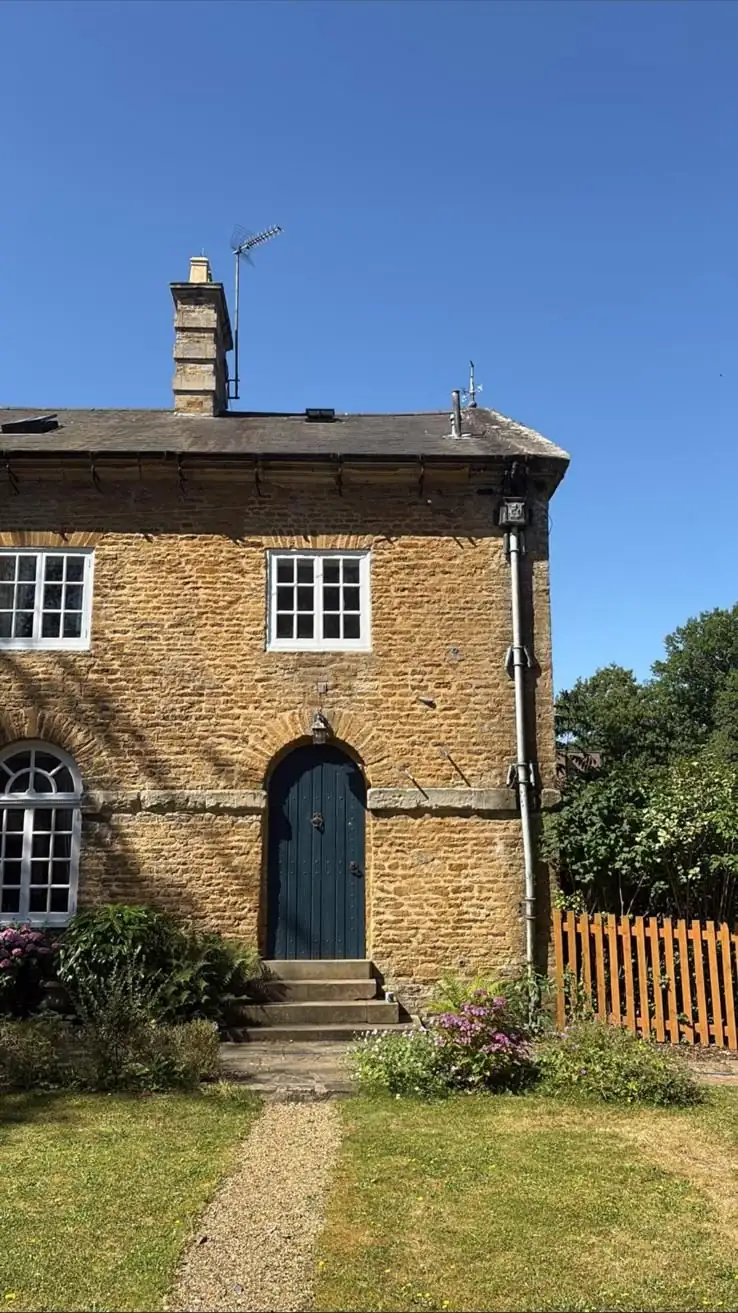
Most houses west of Main Road are bare cavity brick, and the solid-brick semis of the 1950s and 60s on Ryeland Road and Park Lane were not usually rendered. Painting a face of bare brick is seldom a good idea: it changes the house for good and brings a repaint cycle it never had. Masonry painting on the estates is mostly plinths, porch panels, rendered sections and garden walls that have been painted before. On the exposed plateau, north- and west-facing walls go green, so we wash them with a biocide and let them dry before painting. Our guide on painting render and roughcast covers render repairs.
Products and preparation are on the main render and masonry painting page; joinery on the same houses is under exterior painting in New Duston; the New Duston page places the stone cottages among the cavity-brick estates.
Sources
- Energy performance certificates, NN5 6NT (Quarry Road), GOV.UK (accessed 2026-11-16)
- Energy performance certificate register, NN5 postcode searches, GOV.UK (accessed 2026-11-16)
- Duston, Wikipedia (accessed 2026-11-16)
- Woodlands, 546 Harlestone Road: list entry 1039684, Historic England (accessed 2026-11-16)
- Woodlands, Duston (list entry 1039684), British Listed Buildings (accessed 2026-11-16)
- Duston Neighbourhood Plan (made 14 December 2015), Duston Parish Council (accessed 2026-11-16)
- Parks and open spaces in Duston, Duston Parish Council (accessed 2026-11-16)
Last updated .


