We stain and paint garden fences, timber gates and sheds in New Duston, NN5, on Northampton's north-west fringe, 2.8 miles out. Dean allows for the long rear gardens behind the old terraces and treats the algae that shade from nearby woodland brings.
Long gardens behind the old terraces
The Neighbourhood Plan describes New Duston’s original settlement as terraces of natural stone cottages, some with long rear gardens. A long garden means a long fence on each side, and on a terrace both of those runs are often shared with neighbours. Staining a fence that length is mostly a matter of steady preparation and enough dry days, but it also means carrying ladders, sheets, brushes and tins the full length of the plot, sometimes through the house if there is no side or rear way in. We ask about access when we first look at the garden, and allow for the carrying in the time we quote.
Shared boundaries need a word with the neighbour. Their side of a fence is not ours to stain unless they agree, and on a terrace it is common for both owners to want the same colour so the whole run matches.
Shade, leaf litter and green growth
The woodland of Harlestone Firs and the plantations beside it runs close to New Duston’s northern and western edges. Gardens near them get more shade and more leaf fall, and fences that face north or sit under trees hold moisture and go green with algae and lichen. Staining over that growth wastes the stain, because it peels away with the algae. On those fences we:
- apply a fungicidal wash and give it time to work before brushing the growth off
- clear leaf litter and soil banked against the bottom rail and gravel boards, where rot starts
- wait for the timber to dry out properly, which takes longer in shade
- choose a product with a fungicide or preservative where the fence will stay damp
Estate fences of the same vintage
Most of the houses on the western estates around Weggs Farm Road and Rochelle Way have front and rear gardens with fencing put up when the houses were built in the 1980s to 2000s. Where panels have been replaced one at a time, a single run can mix new pale timber with old weathered boards. A solid-colour stain or a fence paint evens that out; a translucent stain will show the difference between old and new wood, which some owners like and others do not. Dean will show you how each option would look on your fence before you choose.
Front gardens on those estates are on show from the close, and the timber there often sits next to a garage door or porch of the same age. If those were painted in a particular shade when the houses were new, picking a stain colour that sits with them keeps the front of the house looking planned rather than patched. Sheds and summerhouses in the rear gardens can be done in the same visit with the same product.
Timber gates in stone and brick walls
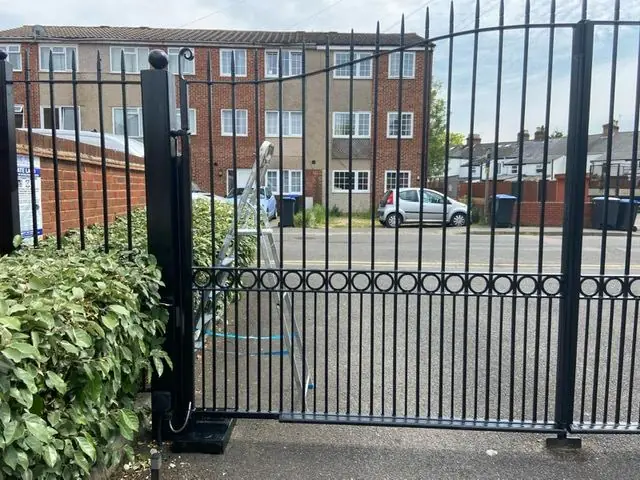
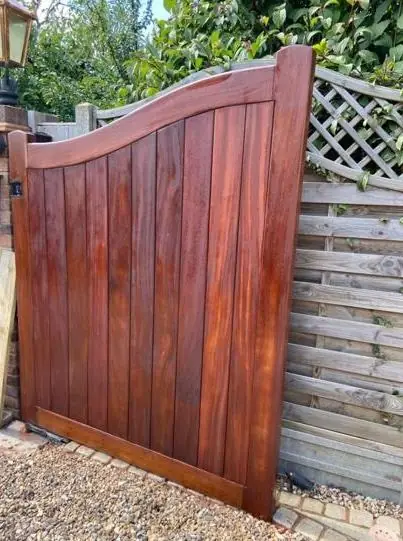
Around the old centre, side and front gates often hang between stone or red brick boundary walls, which the Neighbourhood Plan singles out as part of the area’s character under policy BE1. A ledged and braced gate there works well in a natural oak or a muted green or grey, which sits quietly against stone. Before staining we check the hinges and latch, ease any binding, and treat the end grain at the bottom of the gate, which takes the most rain.
Staining is weather-dependent, so we book fence work for settled spells; our guide to the when to schedule outdoor work covers why. Product choices and the full process are on our main fence and gate staining service, and our wider coverage is on the New Duston page.
Last updated by Dean, DH Painter & Decorator.