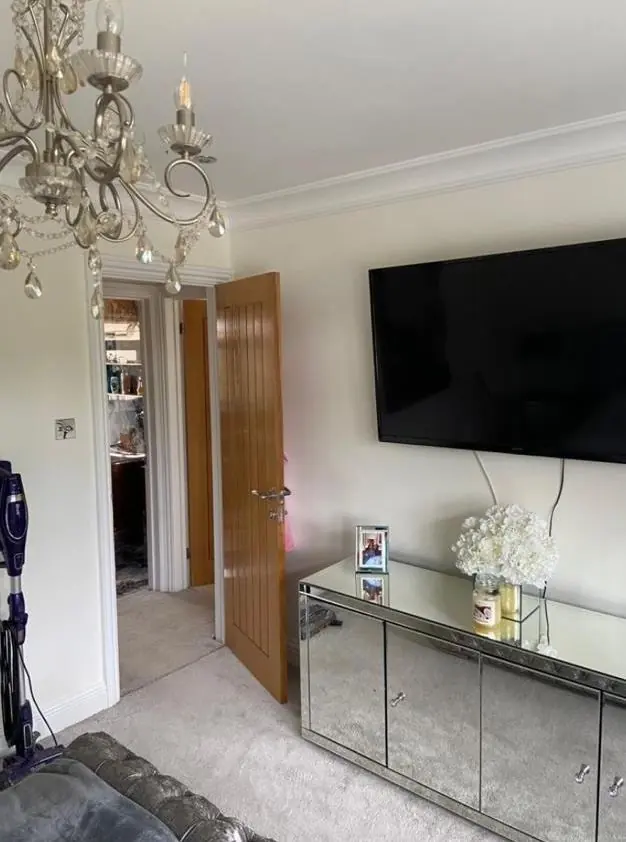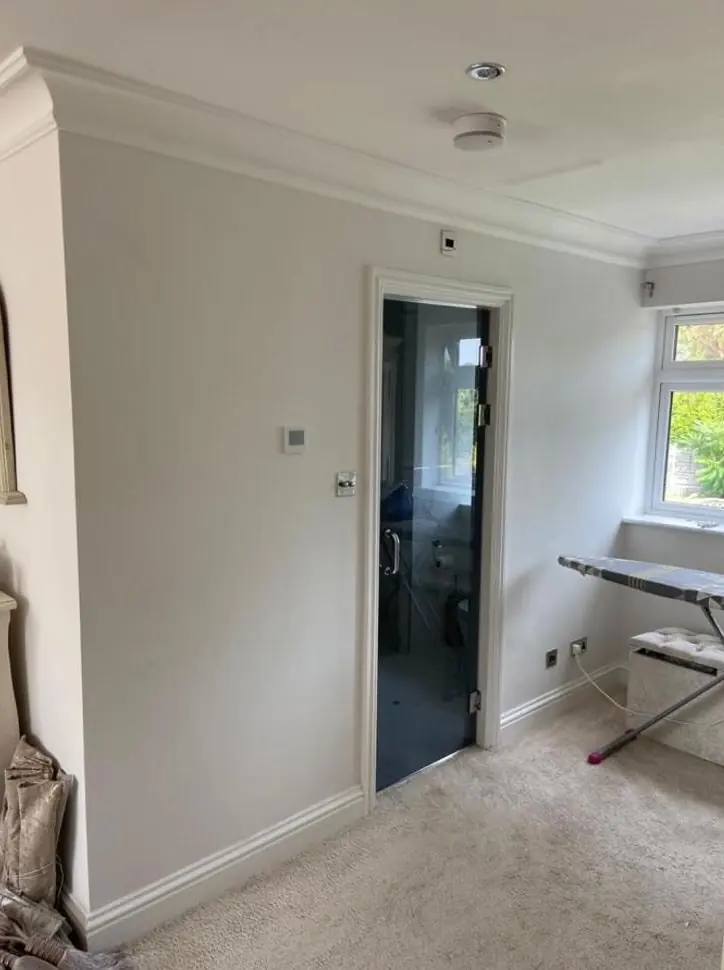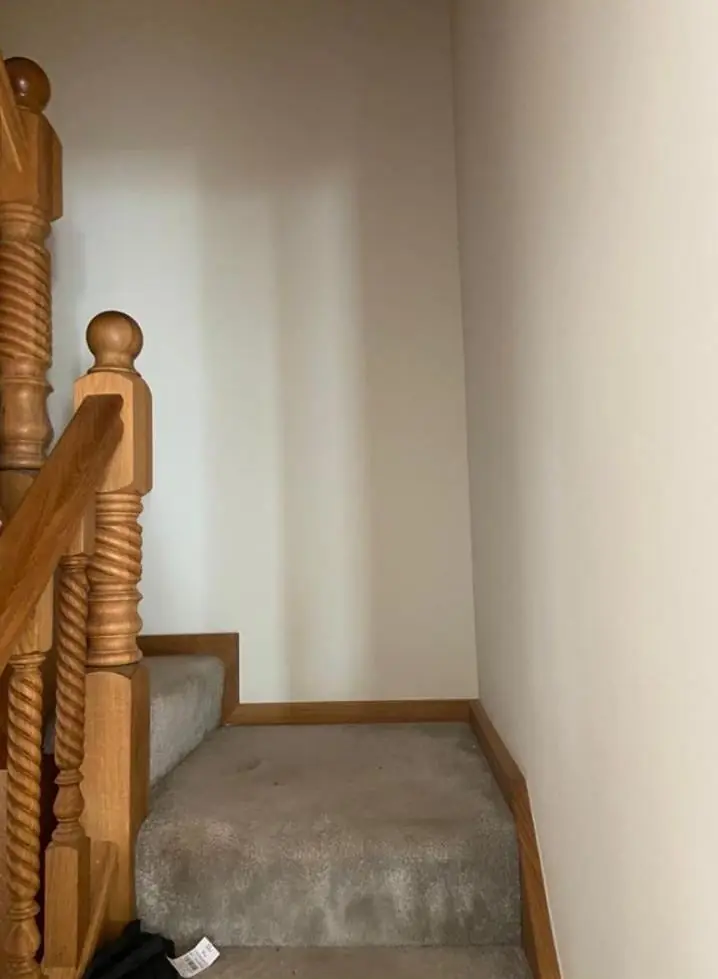
Dean strips, lines and hangs wallpaper in homes across Duston, on the west side of Northampton about 2.1 miles from the town centre. The parish mixes tall-walled Victorian and Edwardian villas with crooked-walled ironstone cottages, and each needs a different approach before the first length goes up.
High walls along Main Road
The bigger 19th-century houses on Main Road, from the Saxon Rise junction up towards Peveril Road, span Regency and Neo-Classical villas, the red brick and stucco group at 70 to 80, and Victorian and Edwardian homes just outside the conservation area boundary. Rooms in houses of that age tend to have taller walls than a modern semi, and that suits a period paper with a proper repeat, whether a damask, a stripe or a trailing floral.
Height makes setting-out matter more: a small error at the ceiling becomes a visible lean by the skirting, so the first drop is plumbed from the room’s focal point. Where a picture rail or dado survives, we decide with you whether the paper sits above it, below it or both, because that changes how many rolls you need.
Lining paper on crooked cottage walls
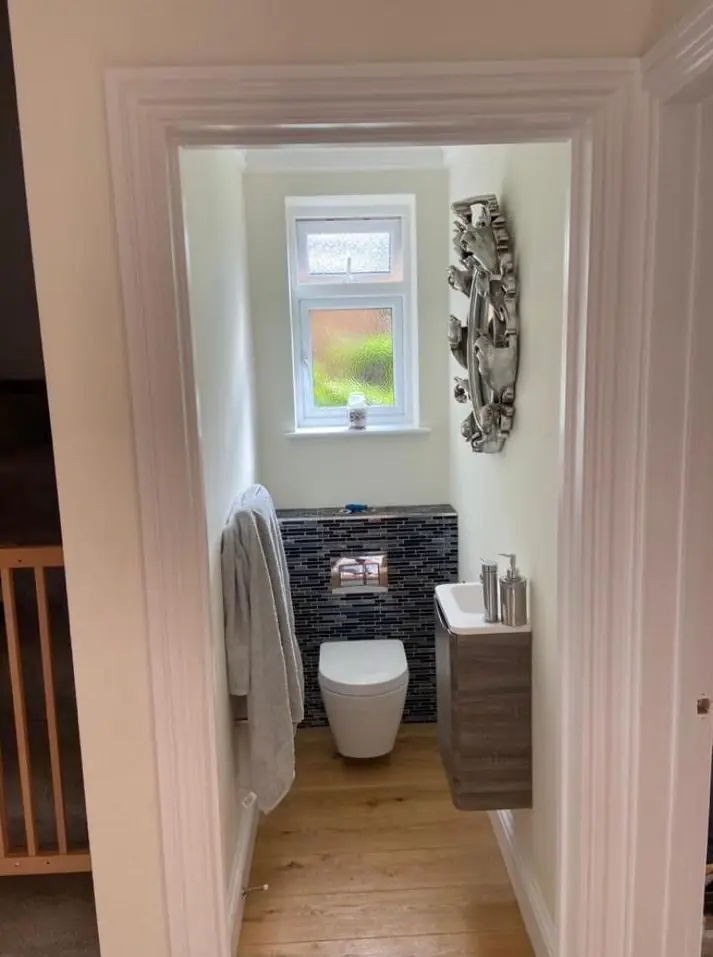
Duston’s oldest homes, the 17th and 18th-century cottages of the old village, have walls that bow. Corners lean and the plaster has been patched many times. Hang a printed paper directly onto that and every bump catches the light. A lining paper first, cross-lined where the pattern paper will run vertically, evens out minor waves and gives the top paper a consistent surface to grip.
There are limits. Lining paper hides texture, but it will not straighten a wall that leans. On a cottage wall that is badly out of true, a small, loose pattern or a plain textured paper hides the movement far better than a bold geometric that shows every degree of lean. Some of these walls are lime plaster, so we check the surface before choosing a paste and lining.
Listed interiors in the conservation area
The Duston Conservation Area, first designated in 1977, contains 21 listed buildings and 20 more on the draft Local List. Listed building consent applies inside as well as outside. Swapping one wallpaper for another is normally redecoration, but removing historic linings, panelling or old papers that may have value can be a change of character. If your home is listed, a short conversation with the conservation officer before stripping starts is sensible, and we are happy to pause and show you what we find under the top layer.
Semis, terraces and flats elsewhere in the parish
| Where | What to expect | Typical papering job |
|---|---|---|
| Kerrfield (1920s-30s) | Layers of old paper, sometimes painted over | Full strip, then a feature wall or chimney breast |
| Limehurst, Eastfield, Chiltern Way | Regular rooms, sound plaster, dated woodchip | Stripping woodchip and hanging lining for paint, or a statement wall in a lounge |
| Newton Road area (1960s-70s) | Smaller terraces and apartments | Single-wall papers that suit compact rooms |
| Flats over Village Centre shops | Rooms between tenancies | Hard-wearing vinyl or plain lining for paint |
Painted-over paper on the older estates needs scoring and steaming slowly, because pulling it fast often brings the skim coat away with it. That damage is filled and sanded before anything new goes on.
Getting the rolls and the table in
A pasting table, steamer and a dozen rolls take up space, and on narrow Village Centre roads with limited parking we plan unloading for a quieter time of day. In the Newton Road Radburn layout, everything comes in along the front footpath from the rear parking court. We cover the full process, from stripping to trimming, on our main wallpaper hanging service page. For other work in the parish, see the Duston area page.
Last updated by Dean, DH Painter & Decorator.