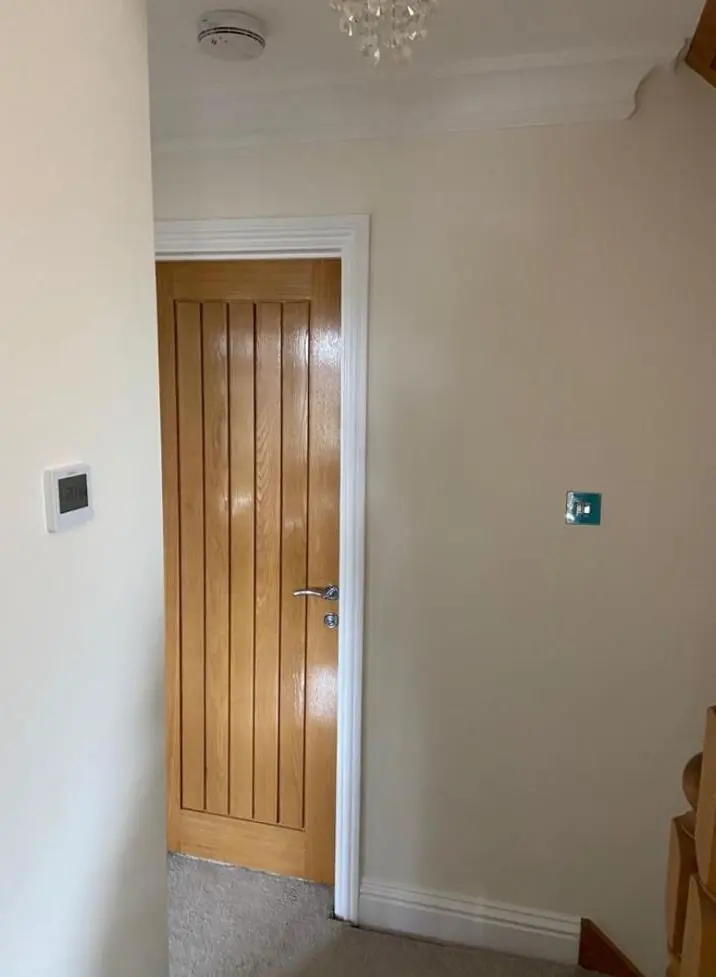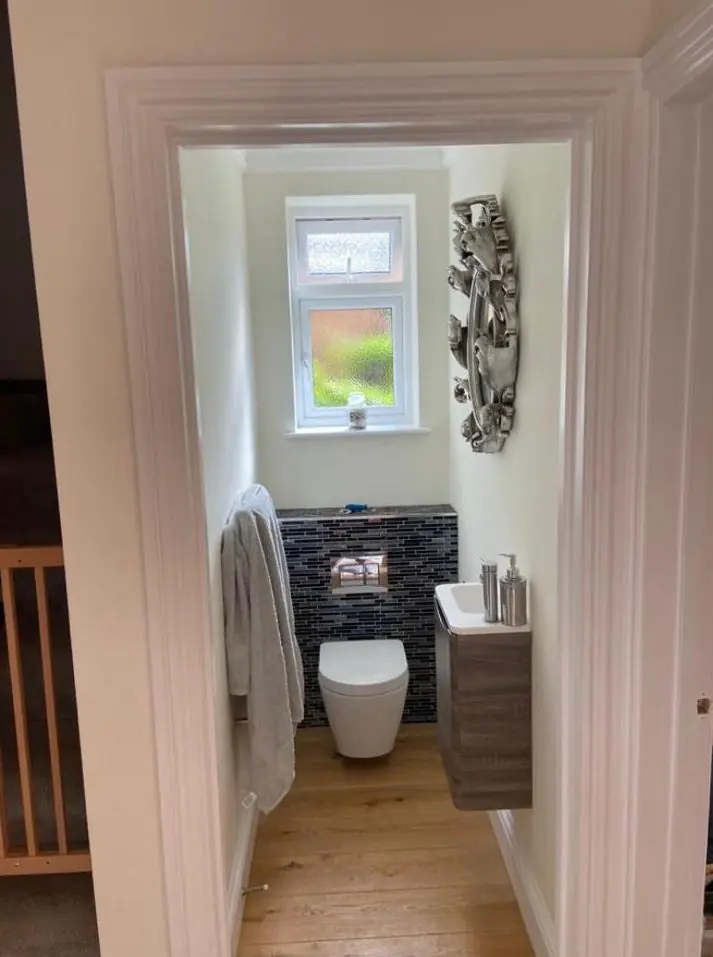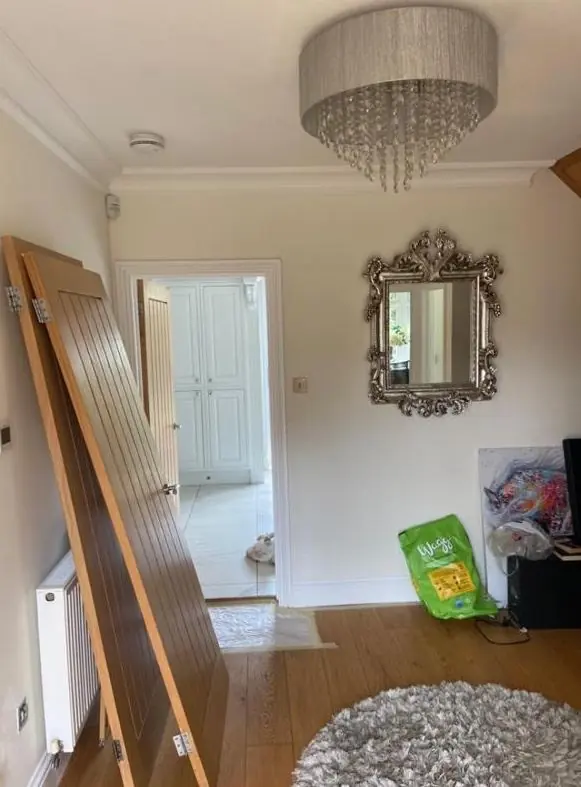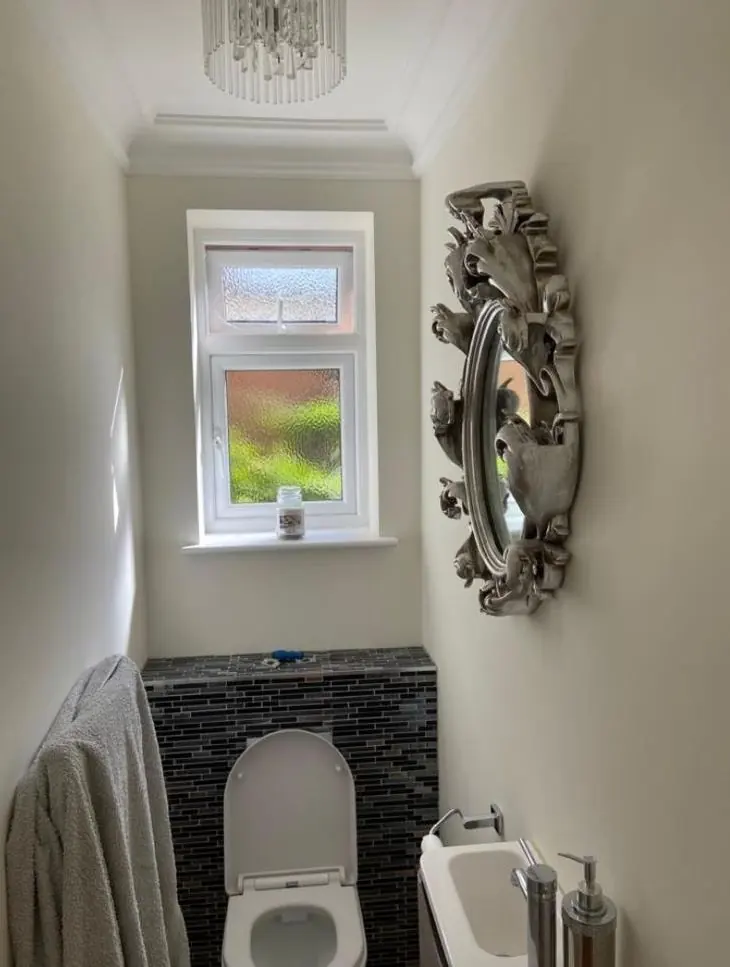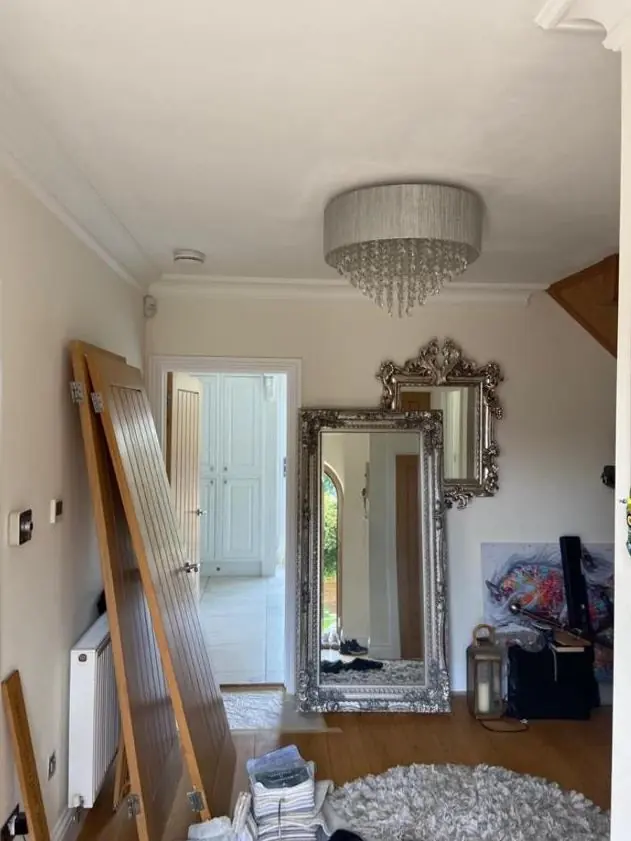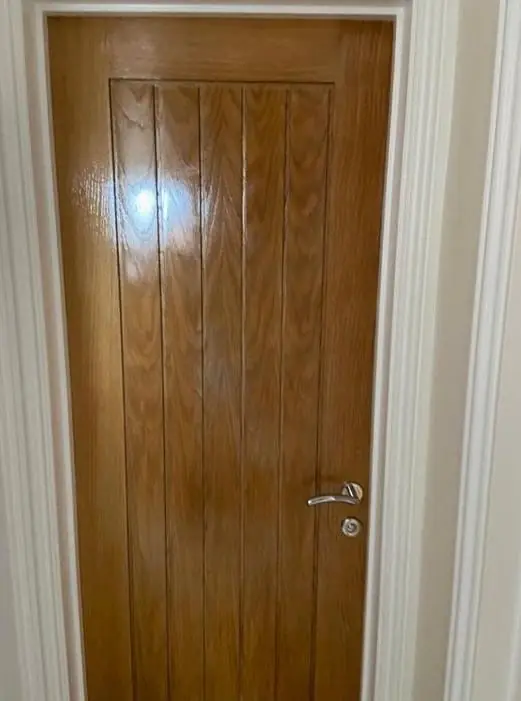
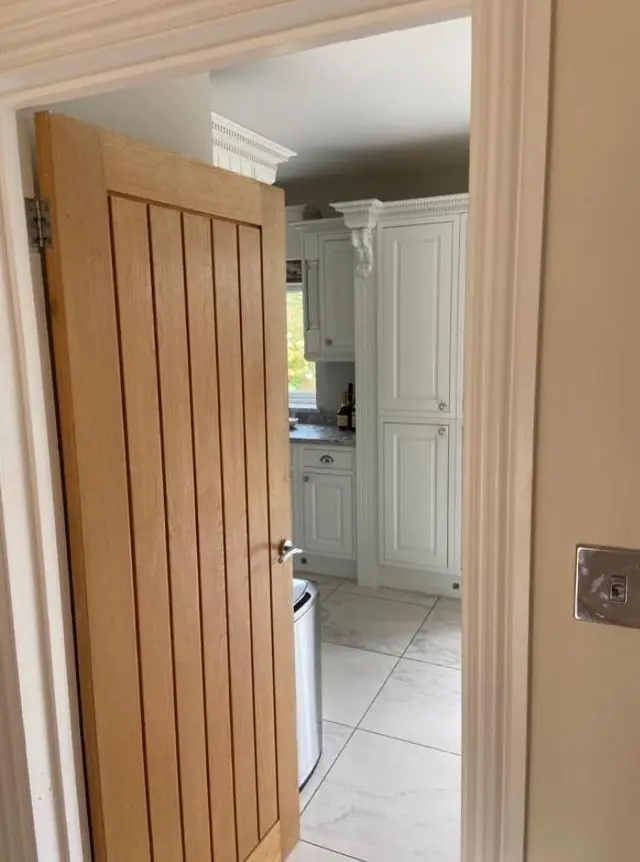
Dean at DH Painter & Decorator paints doors, skirtings, frames, sashes and casements in Dallington, NN5, about 1.3 miles north-west of Northampton town centre. Work ranges from listed joinery in the conservation area around Dallington Green to upgrading thin factory finishes on new homes at Dallington Grange.
Three centuries of joinery in one small suburb
Dallington’s joinery runs from the 1600s to the 2020s. Around Dallington Green and upper Raynsford Road the houses date from the 17th and 18th centuries, built in sandstone rubble and ashlar with timber and metal casements, stone mullions and, on the house known as Dallington Weir, a bracketed door hood. Dallington Hall, finished around 1730, has sash windows with glazing bars set in eared architraves and a pedimented eight-panel entrance door. Then, on the north-western edge beside Harlestone Firs, Dallington Grange is adding new estate houses whose doors and skirtings arrive in factory primer or a thin first gloss.
Each of those needs a different approach to preparation, primer and topcoat, so we price and plan Dallington woodwork by the building rather than by the room. The general method for doors, frames and skirtings is on our main door and skirting painting page; this page covers what changes once you are in NN5.
Leaded casements and lattice windows by the green
Several of the listed buildings in the old village have leaded-light windows. The Wheatsheaf on Dallington Road has leaded metal casements and a sash, Brookside and The Old Forge on the green have leaded casements, and the 1673 Raynsford Almshouses have stone-mullioned lattice casements. That is fiddly work. The frames are narrow, the panes are small, and the lead cames must not be scraped, bent or smeared with paint.
- Loose paint on metal casements is removed by hand with scrapers and abrasive pads, working away from the lead cames.
- Bare spots of iron get a metal primer before any undercoat, because rust lifts new paint from underneath.
- Cutting in is done freehand with a small sash brush; masking tape on old lead and glass can pull putty and lift paint when removed.
- Where the roof above is thatch, as on the Wheatsheaf, there is no heat gun or blowlamp anywhere near it. Stripping is chemical or mechanical only.
These buildings sit in the Dallington Conservation Area, and all four are listed. A repaint that matches the existing colour and finish is normally straightforward, but a change of colour or finish on a listed building’s external joinery needs listed building consent, so check with the council’s conservation officer before choosing anything new.
Georgian doors and sashes at Dallington Hall
The hall is now divided into apartments, so the front door, communal joinery and exterior sashes are the freeholder’s or management company’s responsibility, while each flat’s internal doors belong to the owner. Inside, a pedimented or panelled Georgian door has mouldings and fielded panels that collect decades of old gloss. Before repainting, the edges of the panels are eased back, runs and drips are cut out, and old cracked layers are feathered so the new coat sits flat. The panels are painted in a set order (mouldings, panels, then muntins, rails and stiles) so wet edges do not overlap.
Sashes with glazing bars take the longest per window of anything we paint. The meeting rails and parting beads are painted with the sashes slightly open so they do not seal shut, and the outer faces get a coating that suits an exposed listed elevation: a traditional oil-based gloss or a good-quality waterborne one, agreed with whoever manages the building.
Factory-primed woodwork at Dallington Grange
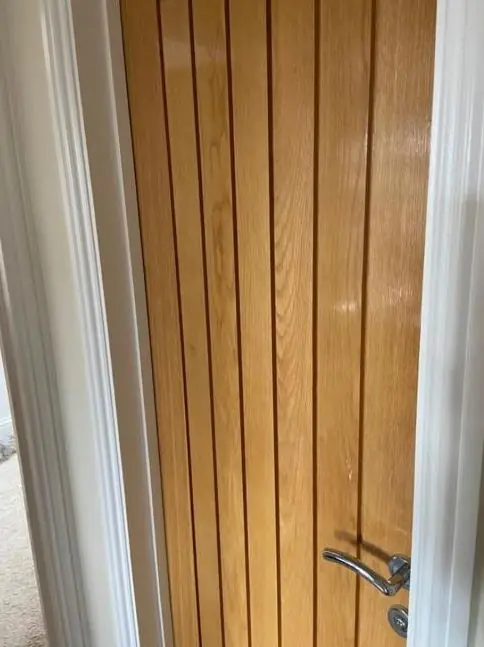
New homes from Persimmon, Charles Church and the other builders at Dallington Grange usually hand over with skirtings, architraves and doors that have one coat of builder’s finish over factory primer. It looks fine at handover, then marks quickly. Upgrading it means a light sand to key the surface, caulking the gaps that open as the new timber and plaster shrink in the first year, and two coats of a harder-wearing satin or gloss. Many owners wait until the first winter of heating has passed so the shrinkage cracks have appeared before the joinery is finished.
Damp mornings and tree cover outside
The old village sits low in the Dallington Brook valley with mature trees around the greens and along the water. External doors and window frames there dry slowly on damp mornings and pick up green algae on shaded faces, so outdoor joinery is washed down and treated with fungicide before any sanding. We book that work for settled spells and start once the dew has gone. For approximate budgets, see our painter and decorator cost guide, or read more about the area on our Dallington page.
Last updated by Dean, DH Painter & Decorator.