
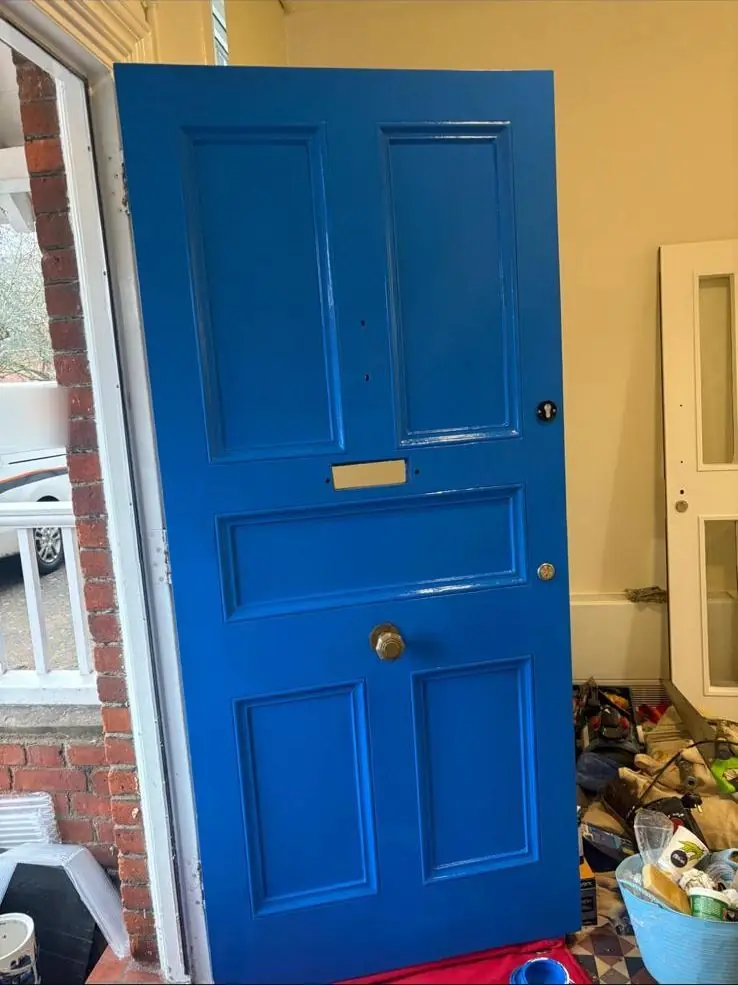


On Kingsley's Article 4 addresses round the Racecourse, original doors and sashes cannot be swapped without permission, so they are repaired and repainted. Dean does that work, from resin repairs to sills through to gloss, and paints the skirtings, architraves and internal doors of homes across the district, many of them built before 1900. Kingsley is about 1.5 miles north-east of Northampton town centre.
Original doors and sashes on the Article 4 fronts
On the 1990 Kingsley Road Area Article 4 addresses, the first class of control is the one that matters most for woodwork: it removes permitted development rights for any improvement or alteration to a door or window on the front, or on a side you can see from the front. The council’s 2009 appraisal mapped which original windows survive and used that map to support the controls, and it calls uPVC replacements on these houses inappropriate. So on Nos 1-58 East Park Parade, the even numbers 2-84 Kingsley Road and the even numbers 78-140 St George’s Avenue, the realistic way to keep timber doors and sashes looking right is to repair and repaint them.
The appraisal is specific about what is left. Of Nos 54-58 Kingsley Road, only No. 58 keeps its original sashes with ornate upper lights. Of Nos 14-18 (evens), No. 16 is the only one to have had its original windows replaced. A surviving set like that is worth looking after, because once it is gone it is unlikely to be allowed back in a different form. Painting itself is not controlled, so there is no application to make for a repaint.
| Fact | Detail | Source |
|---|---|---|
| Article 4, class 1 | Alterations to front doors and windows need permission on listed addresses | West Northamptonshire Council |
| Original sashes | Only No. 58 of Nos 54-58 Kingsley Road keeps its ornate upper lights | West Northamptonshire Council |
| Watkin Terrace canopies | 12 decorative timber door canopies survive | West Northamptonshire Council |
| Built before 1900 | 38.8% of properties; West Northamptonshire 12.3% | GOV.UK |
What a Kingsley sash or door needs
| Item | Where you see it | What we do |
|---|---|---|
| Sash windows with divided upper lights | Racecourse terraces, listed as a Queen Anne feature in the appraisal | Cut back flaking paint, splice or resin-fill soft timber at sills and bottom rails, reputty loose panes, prime bare wood, two coats; sashes left free to run |
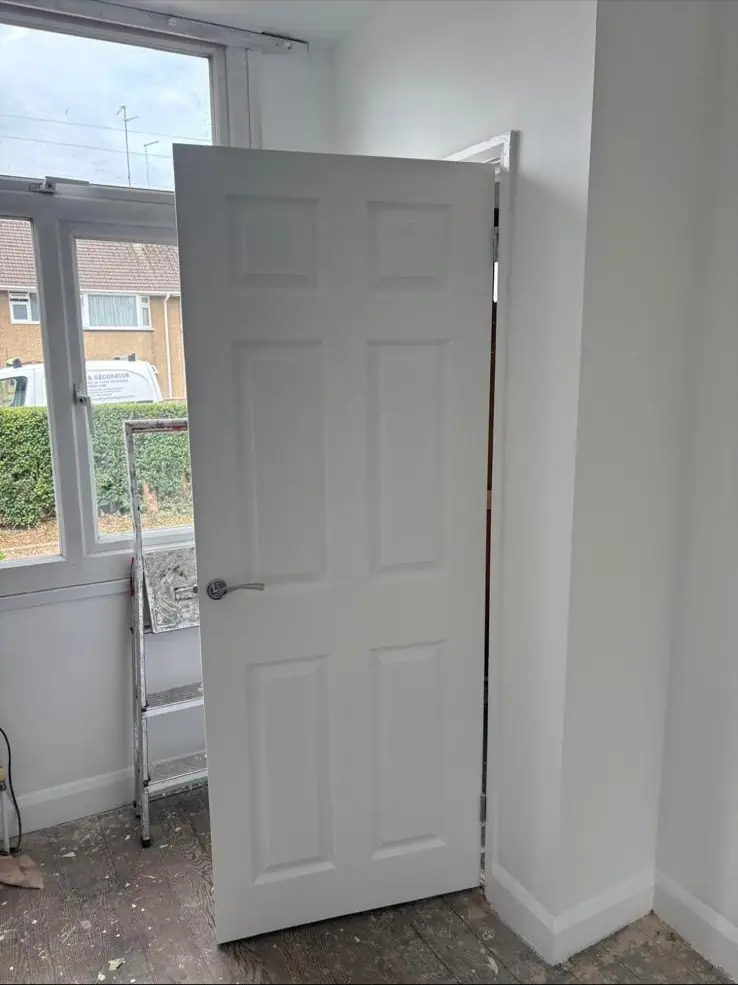
| Panelled front doors with fanlights | Most of the Victorian terraces | Strip or flat back thick layers on mouldings, fill, prime, undercoat and gloss or eggshell |
| Side and secondary doors | No. 26 Kingsley Road has a separate side door, possibly a tradesmen’s entrance | Treated the same as the front; often in worse condition |
| Timber door canopies | Watkin Terrace, Beaconsfield Terrace side: 12 survive, two much altered | Rot checks on brackets and the top surface, repairs, then paint |
Sash windows facing the open Racecourse take the weather full on, so sills and the bottom rails of the lower sashes are where we usually find soft wood. Small areas are cut out and filled with a two-part resin or a spliced-in timber repair; larger rot goes to a joiner. We repair before we paint, because new paint over wet timber fails within a season.
Inside: skirtings and architraves under a century of gloss
Across Kingsley, 38.8% of properties were built before 1900, against 12.3% in West Northamptonshire. Their skirtings, architraves and internal doors have usually been painted many times, and the deep mouldings fill up until a torus or ogee profile looks rounded and soft. Old layers can include lead paint, which was common in houses until the 1960s. We test before sanding, and where lead is likely we wet-sand or use a chemical stripper rather than dry sanding or burning off, keep dust contained and clean up with a vacuum fitted with a fine filter. Where the build-up is too thick, stripping back to bare wood is the way to get the profile back.
The final coat depends on the room. Gloss is hard-wearing and traditional on Victorian woodwork; eggshell or satin gives a flatter, more modern look and hides small imperfections in old timber better. Water-based trim paints stay white longer, while oil-based ones flow out to a smoother finish. Dean will talk through the choice on the visit.
Plainer terraces and 1930s houses
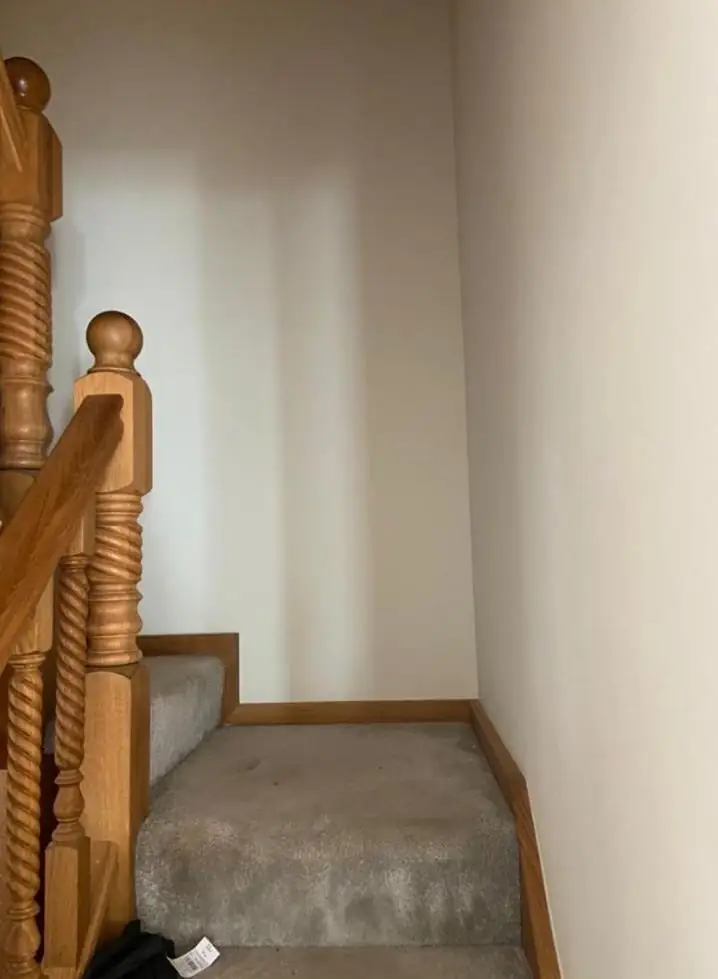
In the Junction Road and Shelley Street terraces many front windows have already been changed to uPVC, which leaves the front door, the skirtings and the internal doors as the main woodwork. In the 1930s houses towards Fairway and Brookfield Road the doors are often flush or simpler panelled types and the skirtings shallower, so the work is quicker.
The main woodwork, door and skirting painting page explains our general method. For the rest of the front see exterior painting in Kingsley, and for staircases see Kingsley hallways and stairs. The Kingsley area page covers the district, and the cost guide explains how repair time is priced.
Sources
- Kingsley Road Area Article 4 Direction 1990, West Northamptonshire Council (accessed 2026-11-17)
- Kingsley Conservation Area Appraisal and Management Plan (2009), West Northamptonshire Council (accessed 2026-11-17)
- Council Tax: stock of properties, 2026, Valuation Office Agency (accessed 2026-11-17)
Last updated .