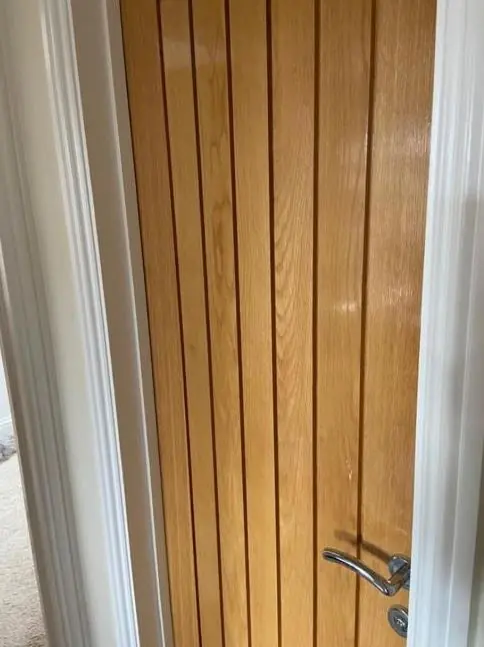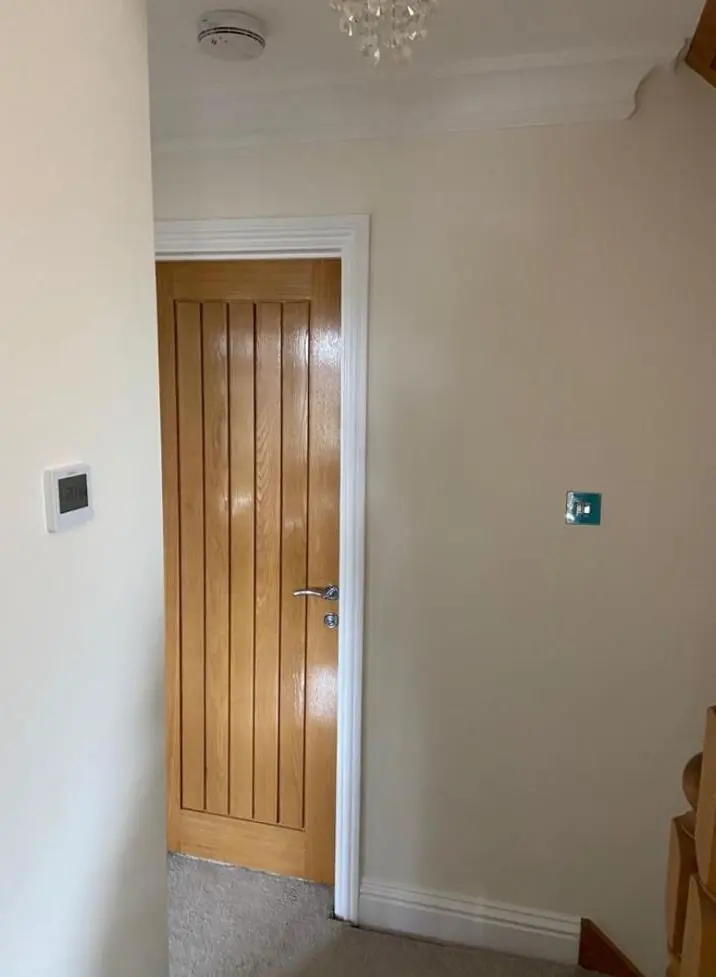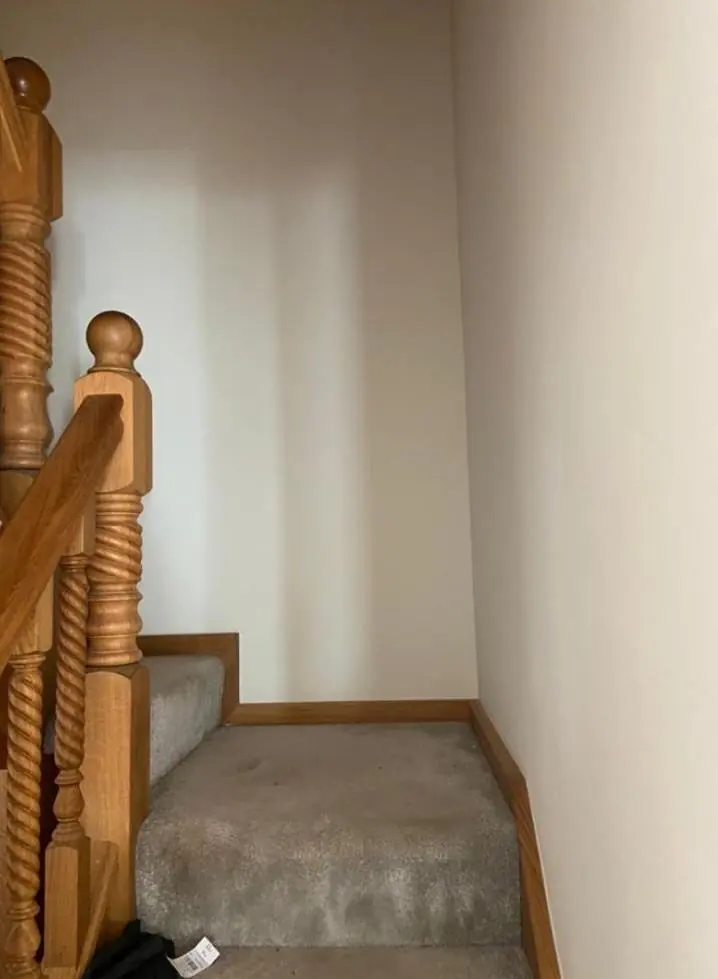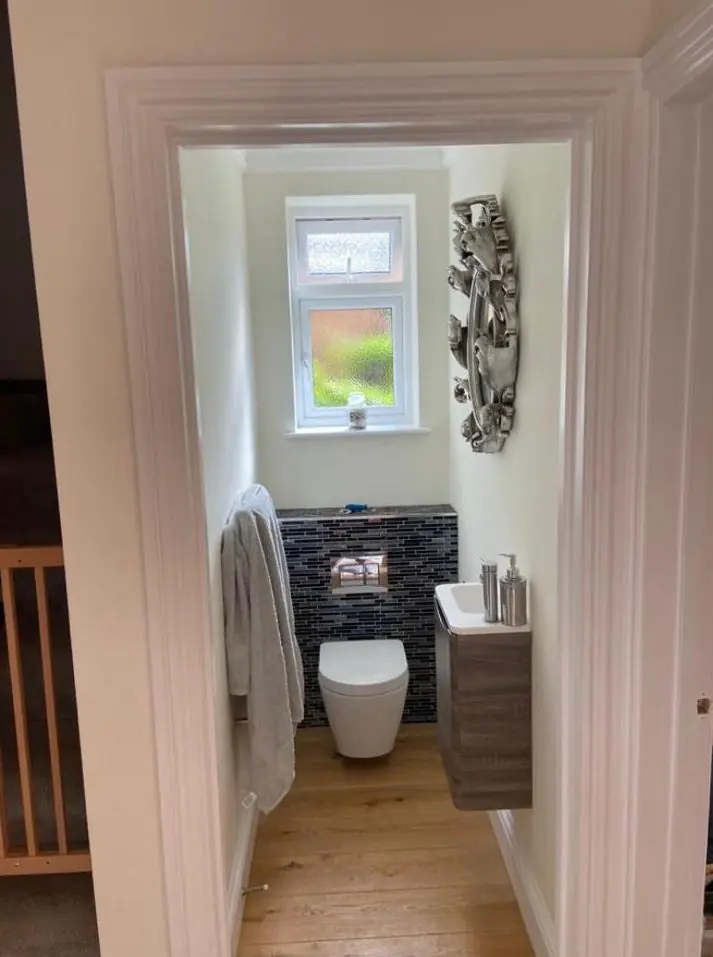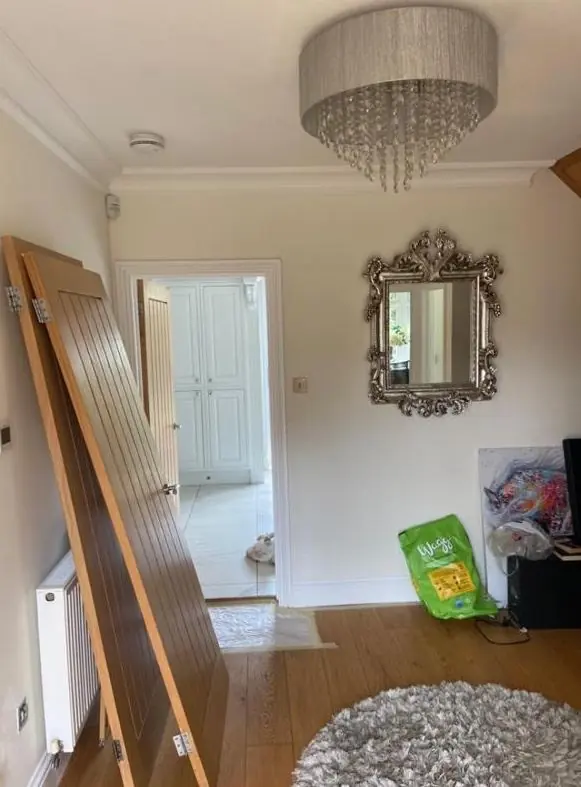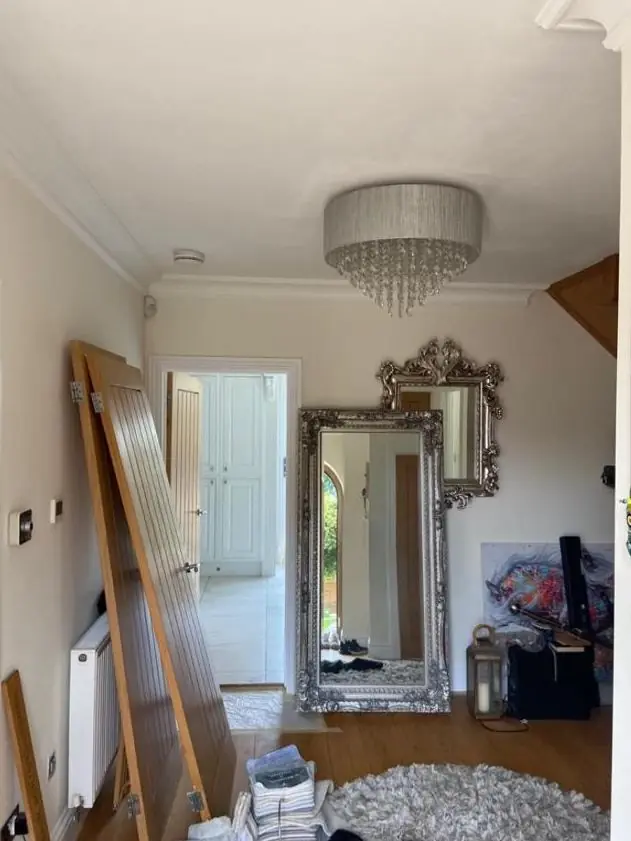
DH Painter & Decorator paints doors, skirting boards, architraves, banisters and window woodwork in St James (Jimmy's End), Northampton NN5. St James lies about 0.6 miles west of Northampton town centre across the River Nene, and Dean quotes for free.
Two kinds of woodwork on one patch of NN5
St James grew in the second half of the nineteenth century as housing for shoe and engineering workers, and much of that terraced stock survives on streets such as Wimbledon Street and Althorp Road. The joinery in those houses is the real thing: deep moulded skirting boards, panelled doors carrying many old layers of paint, and on bay-fronted streets, timber bays and sills at the front. A short walk away the picture changes. The housing built in 1999 and 2000 on the old Express Lift Abbey Works site, and the modern infill townhouses around Bruce Street, Ross Road and Countess Road, mostly have MDF or softwood trim that left the factory primed and has only ever had one or two coats.
Those two groups need different handling, so we look at what is actually in the house before pricing anything.
| Where you find it | Typical woodwork | What it usually needs |
|---|---|---|
| Victorian terraces | Deep moulded skirtings, panelled doors, old sashes | Heavy sanding or partial stripping, filling of old dents, oil or waterborne undercoat |
| 1999-2000 Abbey Works homes | Softwood and MDF trim | Degrease, key the original finish, two coats |
| Modern townhouses and flats | Pre-primed MDF, flat-faced doors | Light sand, caulk gaps, satin or eggshell |
Generations of gloss on a Victorian St James skirting
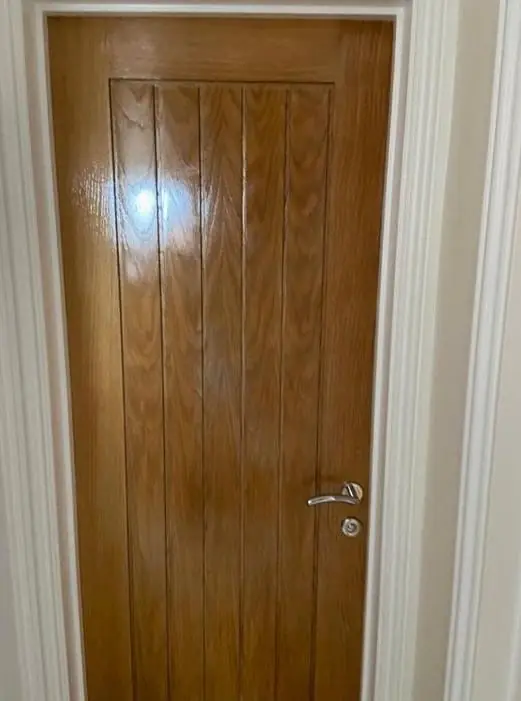
On a Victorian skirting the problem is rarely too little paint. It is too much. Layer after layer fills the mouldings until the profile goes soft, and the lower coats are often old oil gloss that has gone brittle and, in houses of this age, may contain lead. We test suspect layers before sanding and use wet abrasives or a chemical stripper on the bad sections rather than dry power sanding in a small front room. Where the moulding has been filled flat, stripping just the top run brings the detail back. Where it is sound, we key it, fill and go straight on.
Old panelled doors have often been rehung or planed over the years, so we check that the door closes before we paint the edges. Painting a binding door just makes it stick harder.
Front sills and bay timber on the main roads
Bay-fronted terraces have bay timber, sills and lead detailing at the front that take the weather. On Weedon Road and St James’ Road there is another factor: both sit inside an Air Quality Management Area for nitrogen dioxide, and traffic film builds up on window sills and front door frames faster than on a quiet side street. Exterior woodwork there gets washed and degreased before any sanding, otherwise the grime gets ground into the new coat. Front doors on these roads look better for longer in a darker colour with a hard-wearing gloss or satin.
Victorian houses here are parked on the street, so for a front door we take the door off only if the job really needs it and plan for the house to be secure by the end of the day.
Skirtings on the lower floodplain streets
Parts of St James Road, Harlestone Road and Weedon Road lie in the Nene floodplain, and residents were evacuated in the Good Friday flood of April 1998. Ground-floor skirtings in low-lying houses can show the signs: swollen bottom edges, paint lifting at the floor line, or timber that is soft to a screwdriver. We check moisture before painting. A board that is still damp will push off a fresh coat within months, and soft timber needs replacing by a joiner, not painting over.
Our main woodwork and door painting page explains our general prep and the finishes we use. For more on the area and the other jobs we cover there, see our St James page.
Last updated by Dean, DH Painter & Decorator.