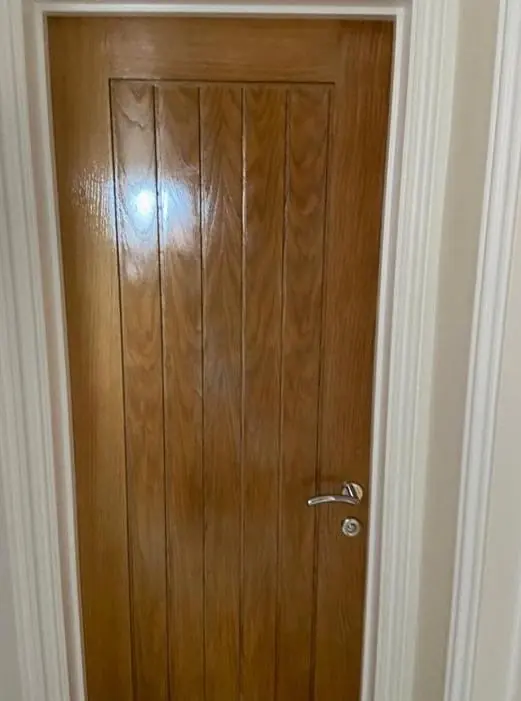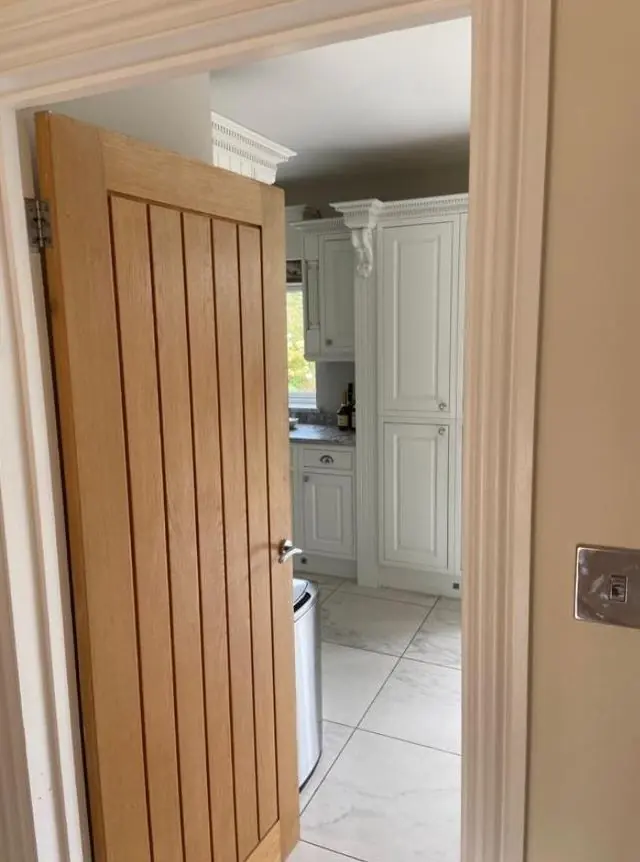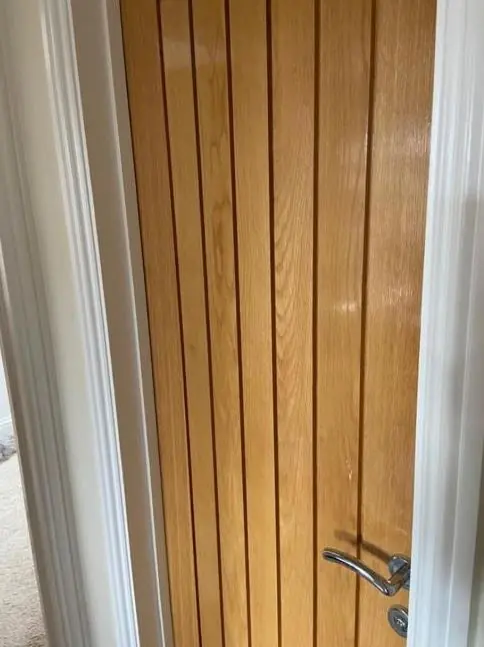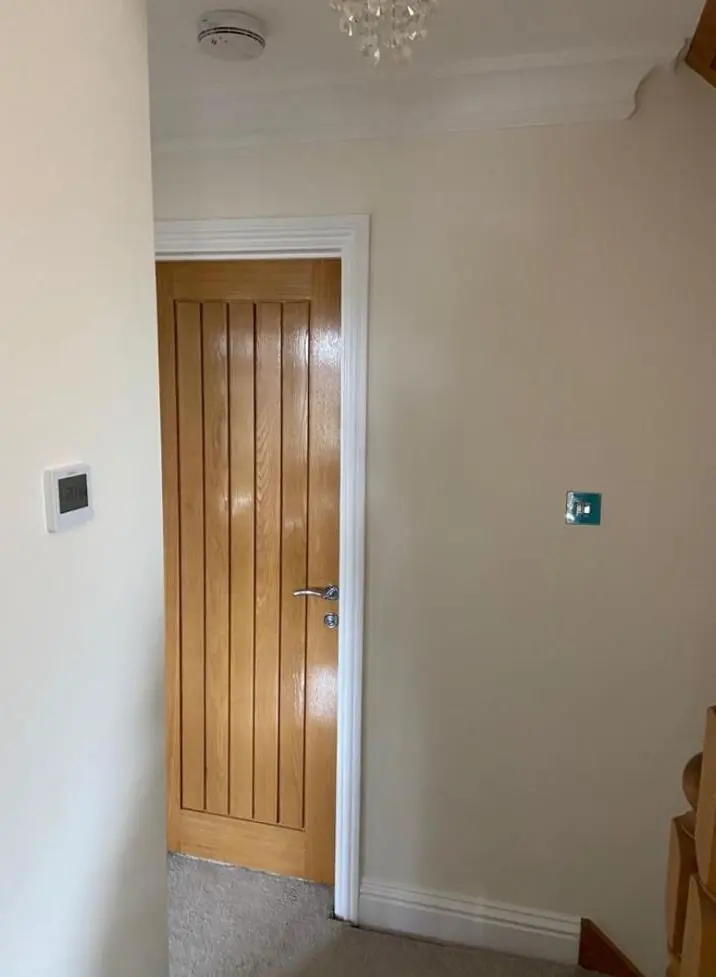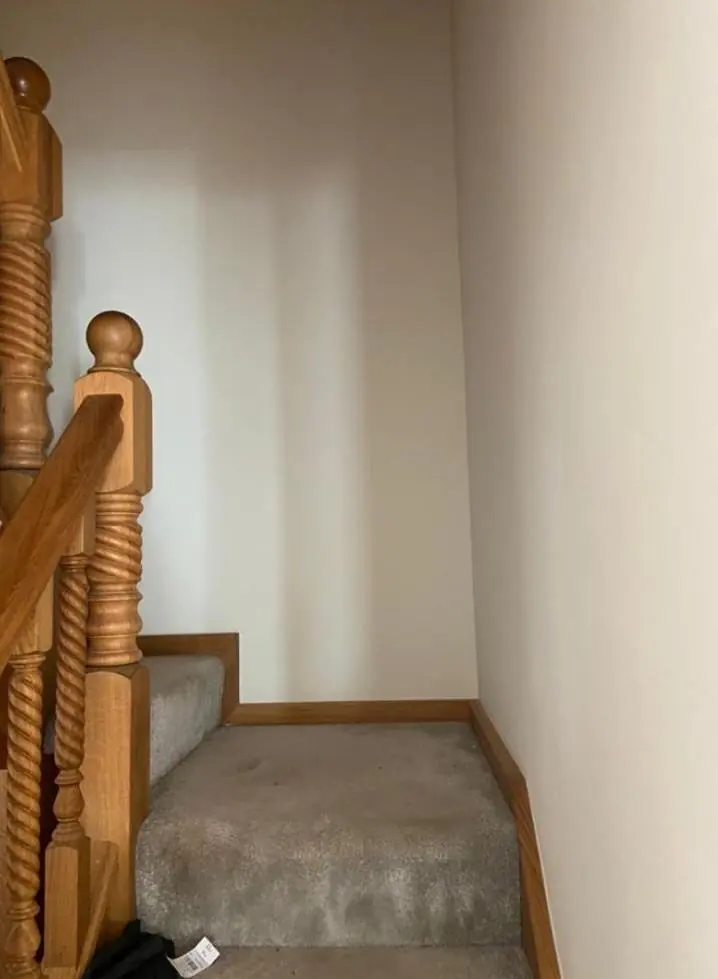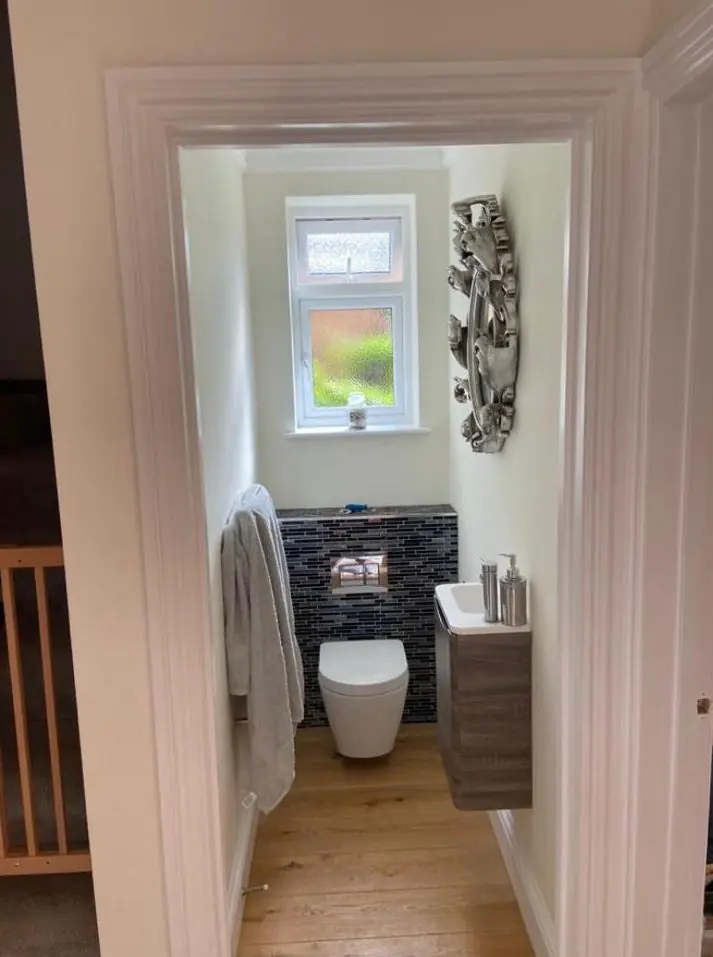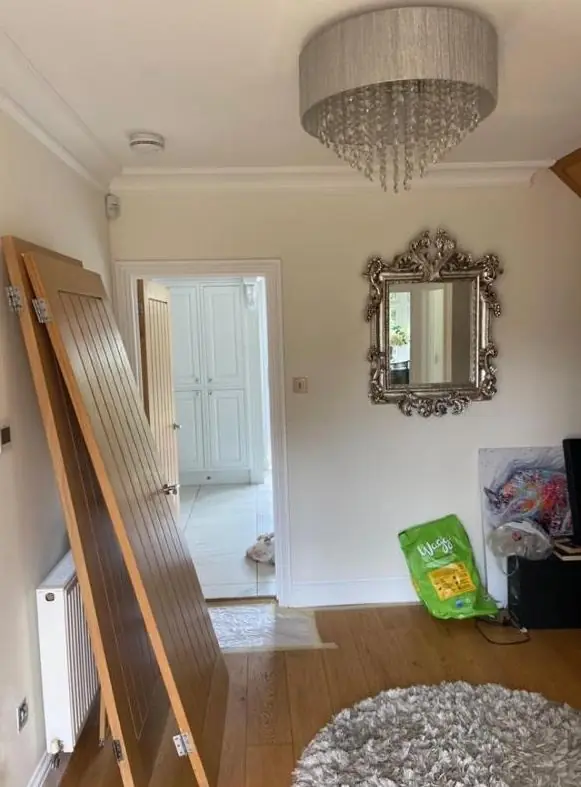
DH Painter & Decorator paints internal doors, frames, skirtings, architraves and front doors in Spencer, NN5 7, around a mile north-west of central Northampton. Most of the work here is reviving original 1930s-50s joinery that has been glossed over many times, plus refreshing woodwork in the 1970s, 2000s and recent flats.
Woodwork glossed over since the 1930s-50s
The bulk of Spencer’s housing went up between the late 1930s and the 1950s. Pembroke Road, Tenby Road, Swansea Road, Monmouth Road, Streatfeild Road and Warren Road all fall mainly into those age bands, and the semis and short terraces along them often still have their original internal doors, frames and skirting boards. That joinery usually carries layer after layer of solvent gloss, applied by successive tenants and owners over several decades.
Thick old gloss causes three problems. It yellows, especially on skirtings away from daylight. It builds up on door edges and hinge sides until doors stick or will not close cleanly. And the mouldings on panel doors and architraves fill in, so the detail turns soft and rounded. A fresh coat on top only makes those faults worse.
Our main door and skirting painting page sets out the general preparation and paint system. This page covers what that means in Spencer’s housing.
Testing before sanding in mid-century houses
In a house built before the 1960s, the lowest coats on doors and skirtings may contain lead. Before any heavy sanding on original joinery in the older estate streets, Dean checks the paint. If lead is likely, we wet-sand or use a chemical stripper rather than dry-sanding or burning, and we contain and bag the dust and scrapings. That matters most in any home with young children or someone pregnant.
Where the build-up is so heavy that doors bind, we strip the edges and hinge sides back to timber, and sometimes the whole door, then prime and rebuild the finish in thinner coats.
Moving from oil gloss to water-based satin
Losing the shiny, yellowing look is often the point of the job. Water-based satin stays white, dries fast enough for doors to go back into use the same day, and gives a softer sheen that suits plain mid-century doors. It will not bond reliably to old oil gloss on its own, though, so the switch needs:
- a thorough degrease, as hallway door edges and kitchen skirtings carry years of hand grease
- a full key with abrasive so no glossy patches are left
- an adhesion primer made for going from oil-based to water-based paint
- caulking along skirting tops, where gaps have opened as walls and floors have moved over the years
Picture rails survive in some rooms of these houses and get the same treatment. Owners who want a period feel can pick them out in a contrasting colour.
Bungalows, flats and newer joinery
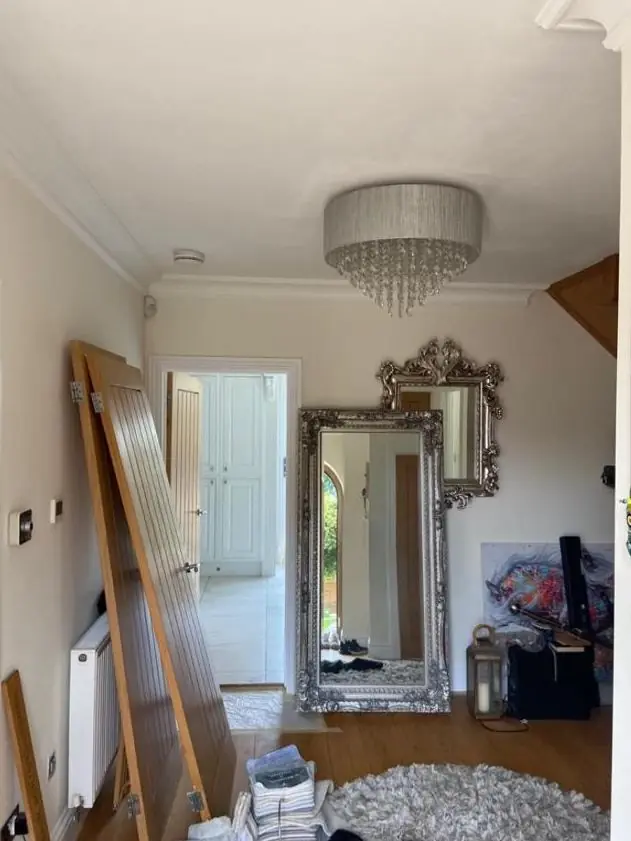
Not all Spencer woodwork is old. The bungalows and flats around Cardigan Close, Spencer Haven and Newport Road mostly date from about 1970, Lyttleton Road was largely built between 1986 and 2009, and Countess Road is mainly flats with a median build year of 2019. In those homes the joinery is usually flush doors and plain softwood or, in the newer blocks, MDF skirtings with a thin factory or builder’s finish. Here the job is keying and recoating rather than stripping, and fixing the shrinkage gaps that open at mitres and skirting tops in the first few years.
| Where in Spencer | Typical woodwork | Usual approach |
|---|---|---|
| 1930s-50s estate streets | Original internal doors and skirtings, some picture rails | Lead check, strip heavy build-up, oil-to-water conversion |
| Closes built around 1970 | Flush doors, low skirtings, communal doors in flat blocks | Clean, key, two hard-wearing coats |
| Lyttleton Road and Countess Road | MDF skirtings and architraves, factory-primed doors | Caulk shrinkage gaps, seal cut edges, satin topcoats |
Front doors on the main roads
Most Spencer houses now have replacement windows, so exterior woodwork is usually limited to timber front and back doors, frames and porch joinery. Doors facing Spencer Bridge Road or Harlestone Road pick up an oily road film, which has to be washed off before sanding or the new paint will not bond properly. Homes near the top of Gladstone Road, the highest and most exposed part of the estate, take more wind-driven rain on their doors and frames, so we fill and seal the bottom rails and joints with particular care there.
We cover all of Spencer from our Northampton base. For other work in the area, see our Spencer area page, or call Dean on 07539 779 036 to arrange a free quote.
Last updated by Dean, DH Painter & Decorator.