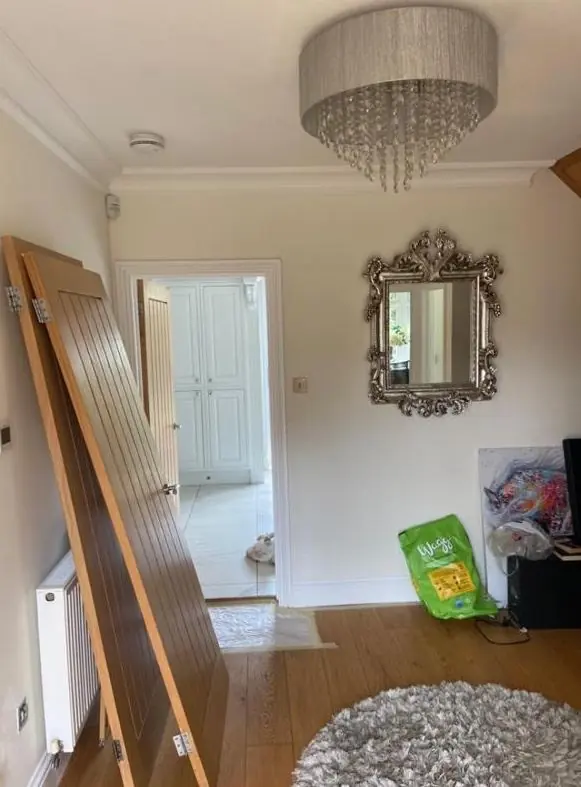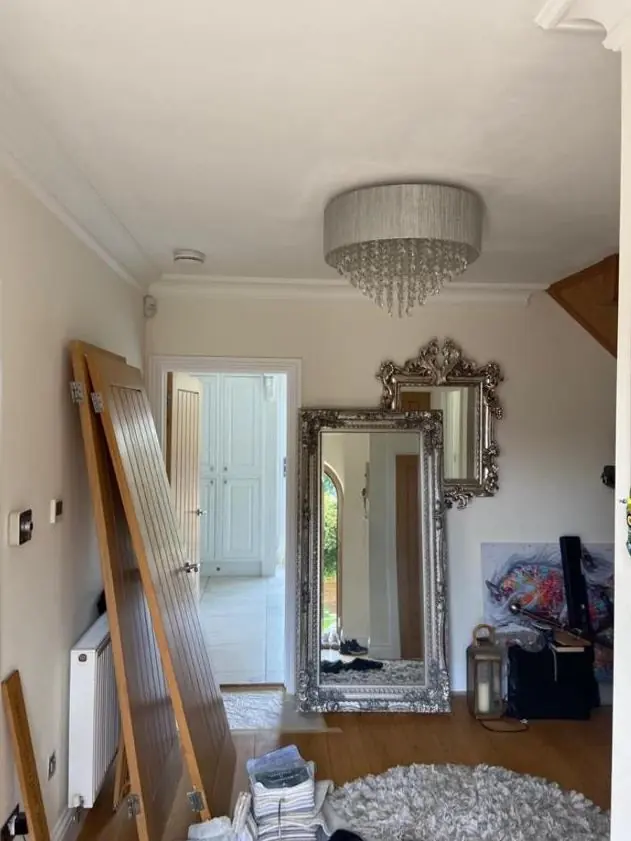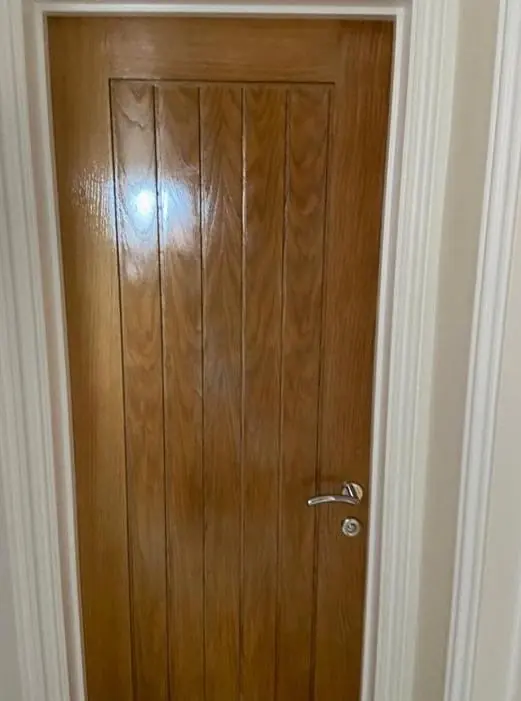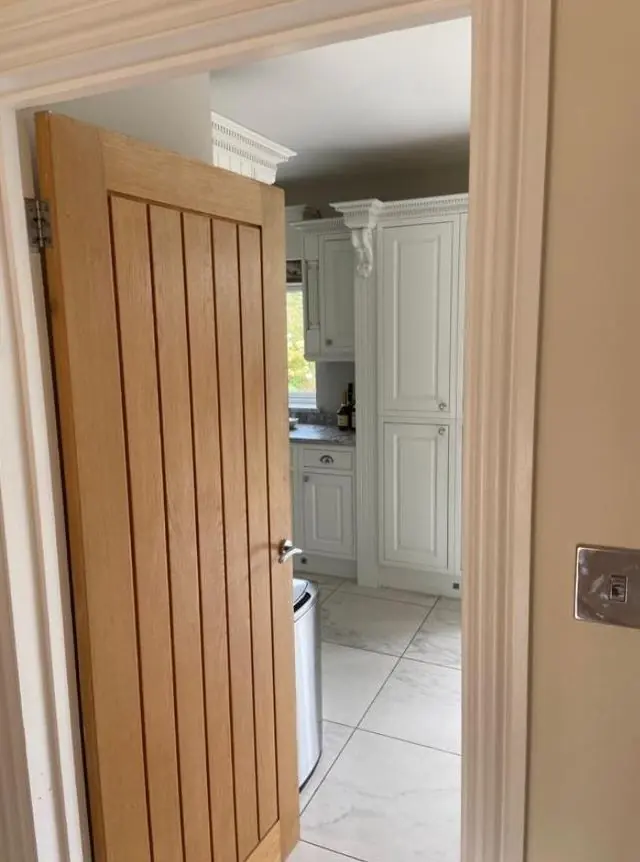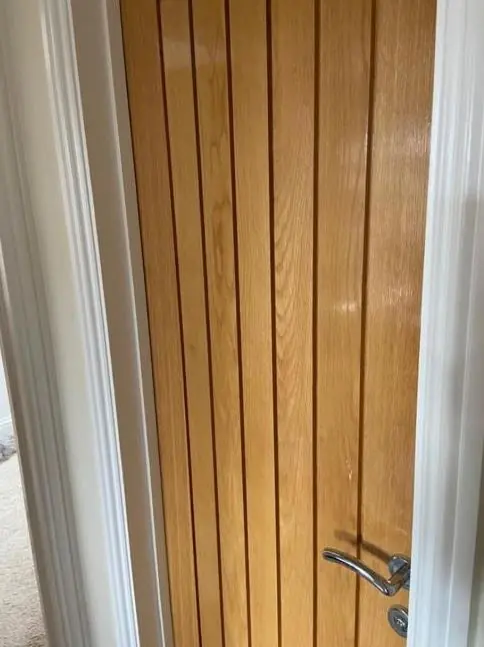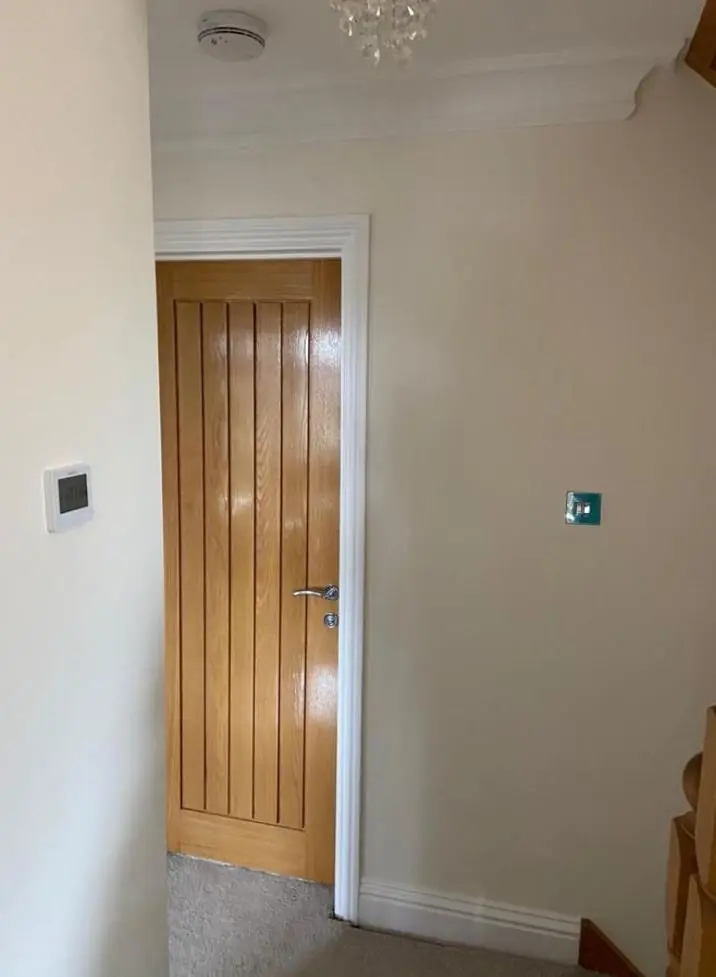
DH Painter & Decorator paints internal doors, skirtings, architraves and sash windows in the Queen's Park terraces of NN2, a short 1.3 miles from Northampton town centre. Dean preps period joinery properly, keeps moulded detail crisp and gives a free written quote after a visit.
Panelled doors and tall skirtings in the Balmoral Road terraces
East of Kingsthorpe Road, Balmoral Road, Edinburgh Road and Stanhope Road are lined with bay-fronted terraces from the late Victorian years and the early 1900s. Houses of this age were built with four-panel doors, deep moulded skirtings and architraves around every opening, and a century of repainting has usually left layers of gloss sitting thick in the panel mouldings and along the top edge of the skirting. With a separate dining room, a bay-fronted lounge and an entrance hall, there can be three or four doors and a long run of skirting on the ground floor alone.
That build-up is the main thing we deal with here. Before any new coat goes on, edges that have rounded over with old paint are sanded back, chips and runs in the panel beads are flatted, and failing layers are scraped until we reach sound paint. We don’t fill moulded profiles flat, because the point of a period door is the shadow line around its panels. Older layers can contain lead, so on anything that might be original we keep to wet abrading and careful dust control rather than dry power sanding.
Timber sash windows on the Kingsthorpe Road approach
Just south of the district, the three-storey townhouses of St George’s Place, Elysium Terrace and Primrose Hill sit inside the Barrack Road Conservation Area, where timber sashes with four panes to each sash are the common pattern. Replacing them on the front needs permission under the Article 4 Direction, so keeping them painted and working is the sensible route. Sash work is fiddly: beads come off where needed, sashes are eased so they don’t paint shut, and the meeting rails and inner faces are done in an order that lets them run freely afterwards. We paint the inside face, linings and window boards as part of a woodwork job.
Front doors, frames and the conservation rules
For houses within the conservation area, the Article 4 Direction covers works visible from the highway, including replacing front doors. Repainting an existing timber front door in its current colour is ordinary maintenance, but if you want a different colour on a frontage there, check with West Northamptonshire Council first. Doors on houses facing the A508 also collect traffic grime, so we wash down and degrease before keying the surface.
How a woodwork job runs in a mid-terrace
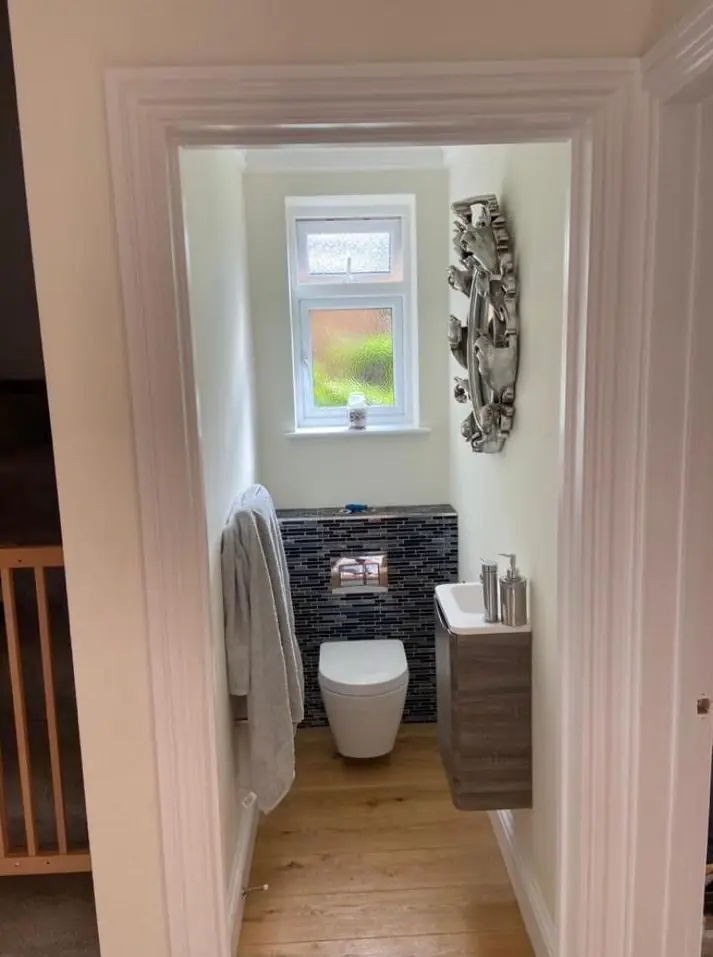
Most Queen’s Park terraces are mid-terrace with on-street parking, so we bring in what the day needs rather than leaving kit outside. Inside, the hall floor, stair treads and any original tiles are covered before sanding starts, and doors are taken in turn so rooms stay usable. The finish depends on how you use the house:
- Oil-based satin or gloss gives the hard, level finish many people want on period doors, though it yellows over time in rooms with little daylight.
- Water-based satinwood stays white and dries quickly, which helps when a door has to be back on its hinges the same evening.
- Eggshell suits skirtings in a heritage colour scheme, where a lower sheen looks more in keeping with the age of the house.
The preparation steps are set out in full on our door, skirting and woodwork painting page. Everything else we do on these streets is on our Queen’s Park area page. For what affects the price of a woodwork job, read our painter and decorator cost guide. Queen’s Park is only 1.3 miles from the town centre, so Dean can come and look at the doors before quoting.
Last updated by Dean, DH Painter & Decorator.