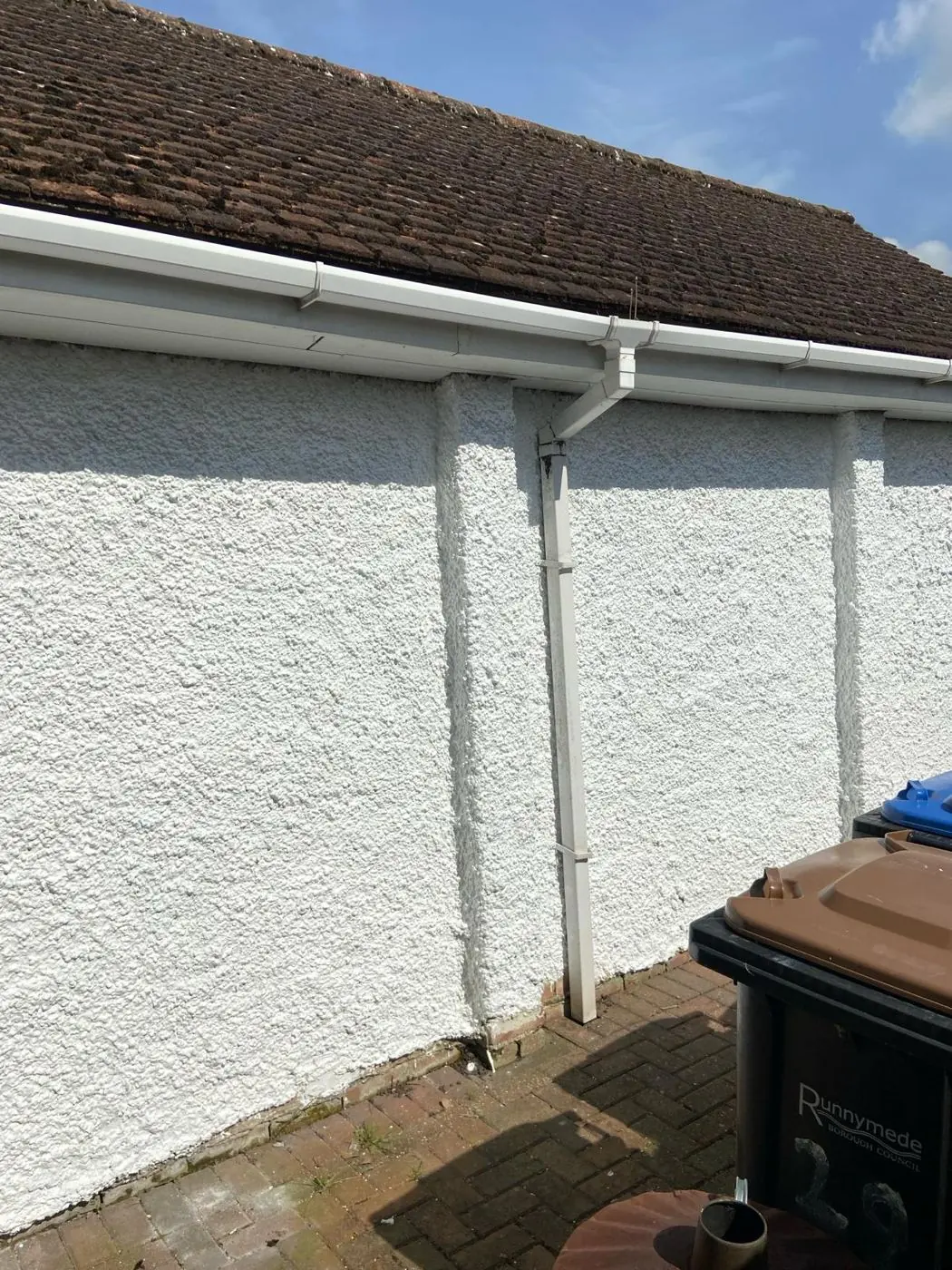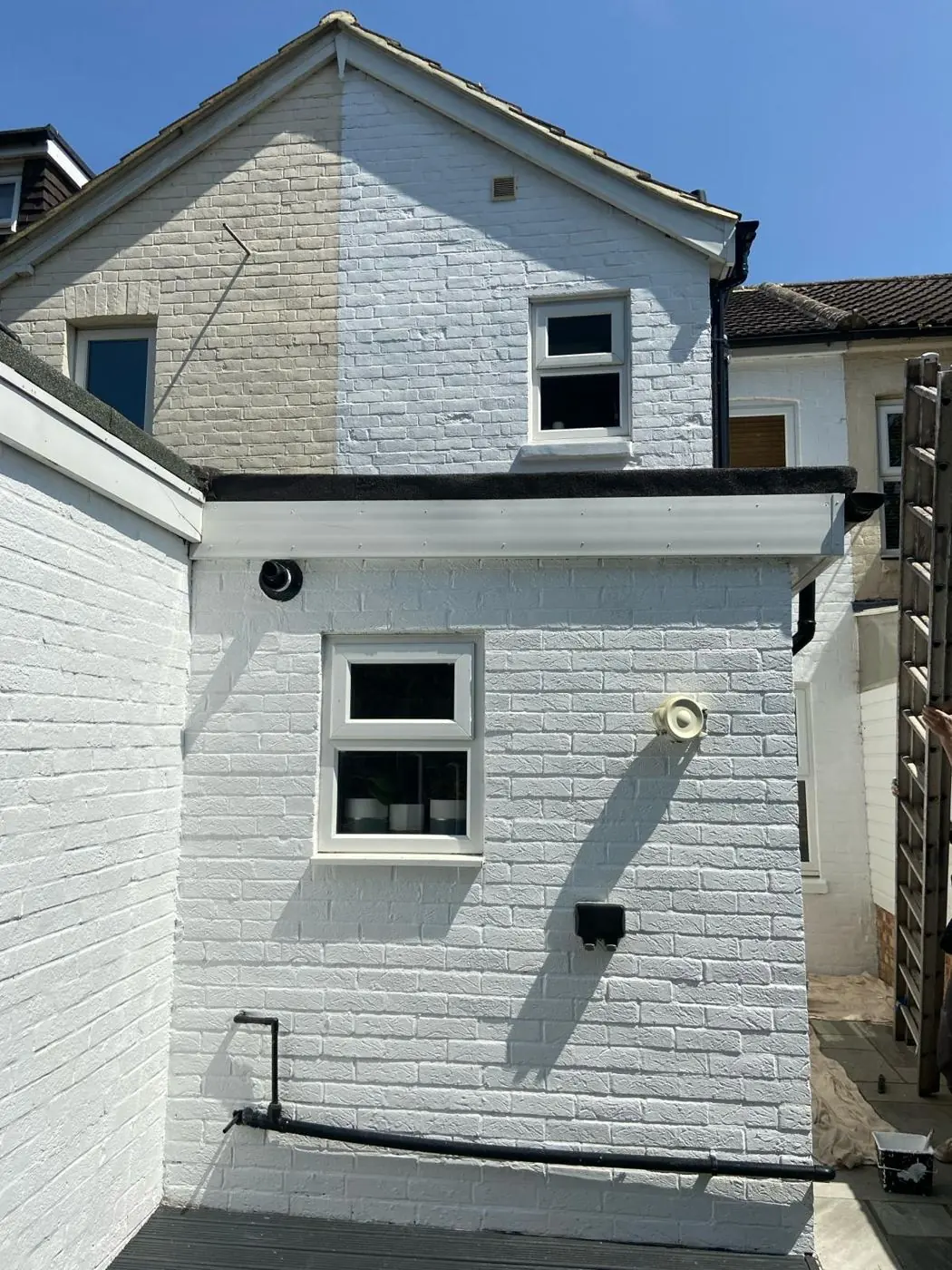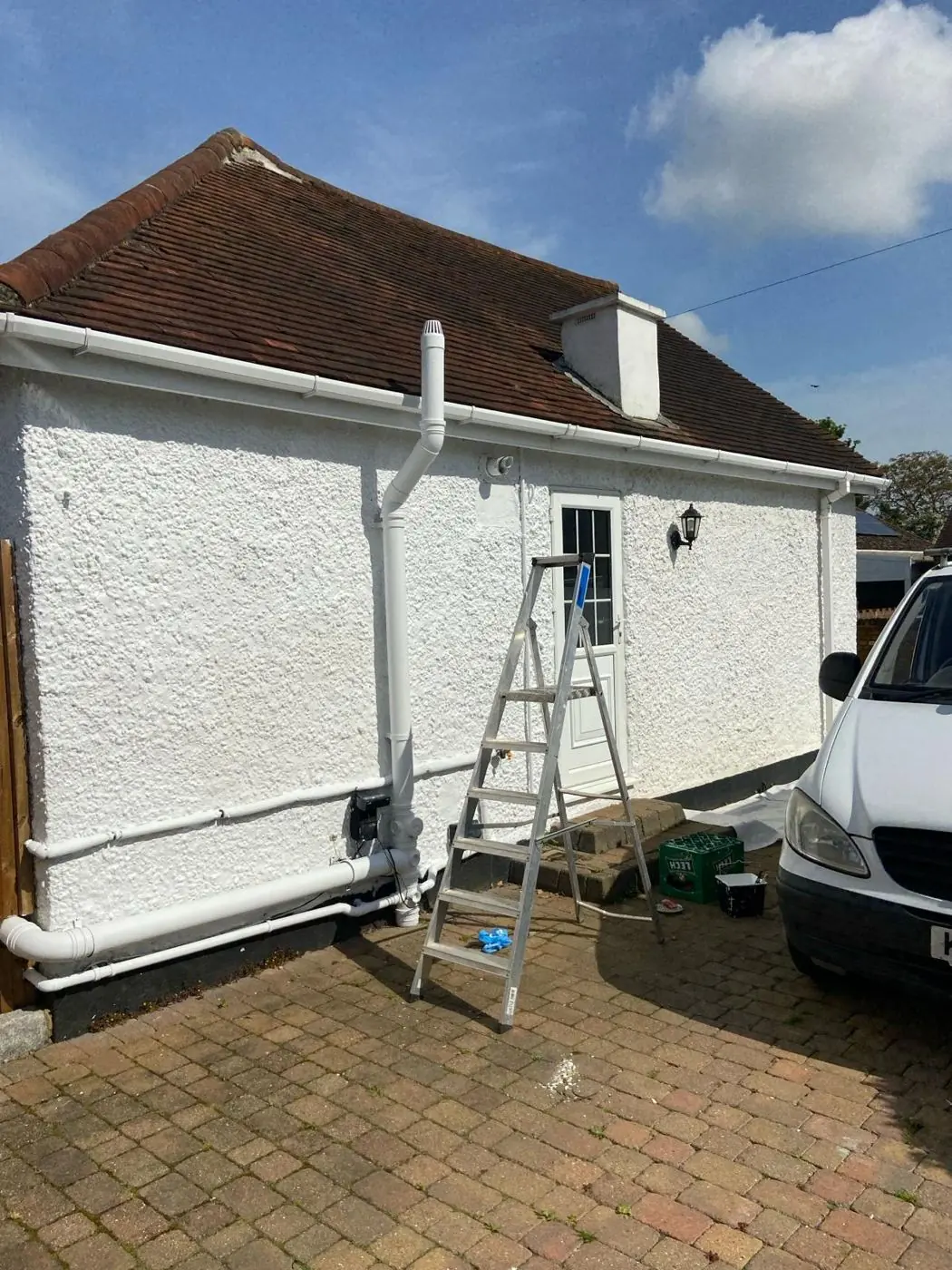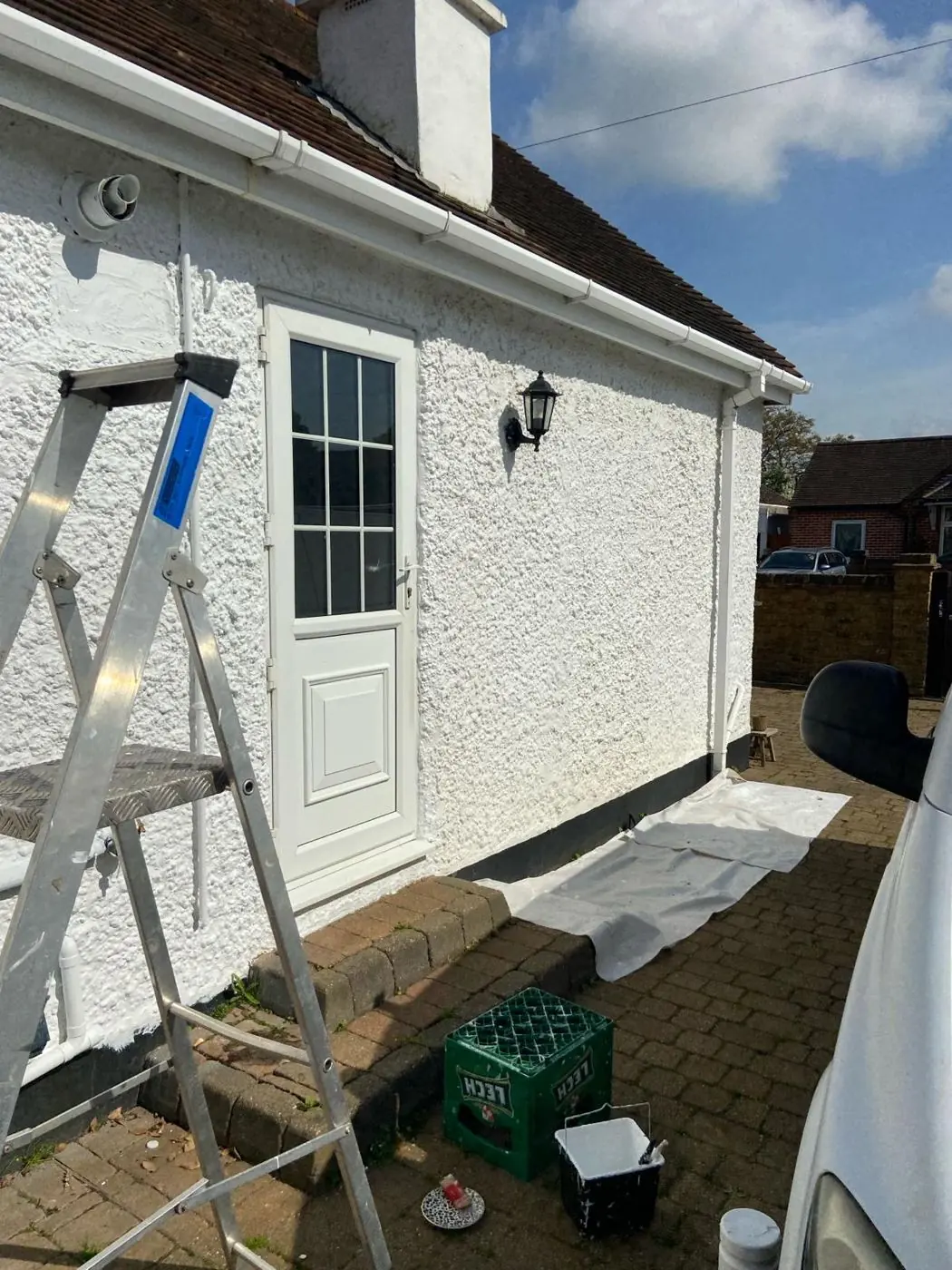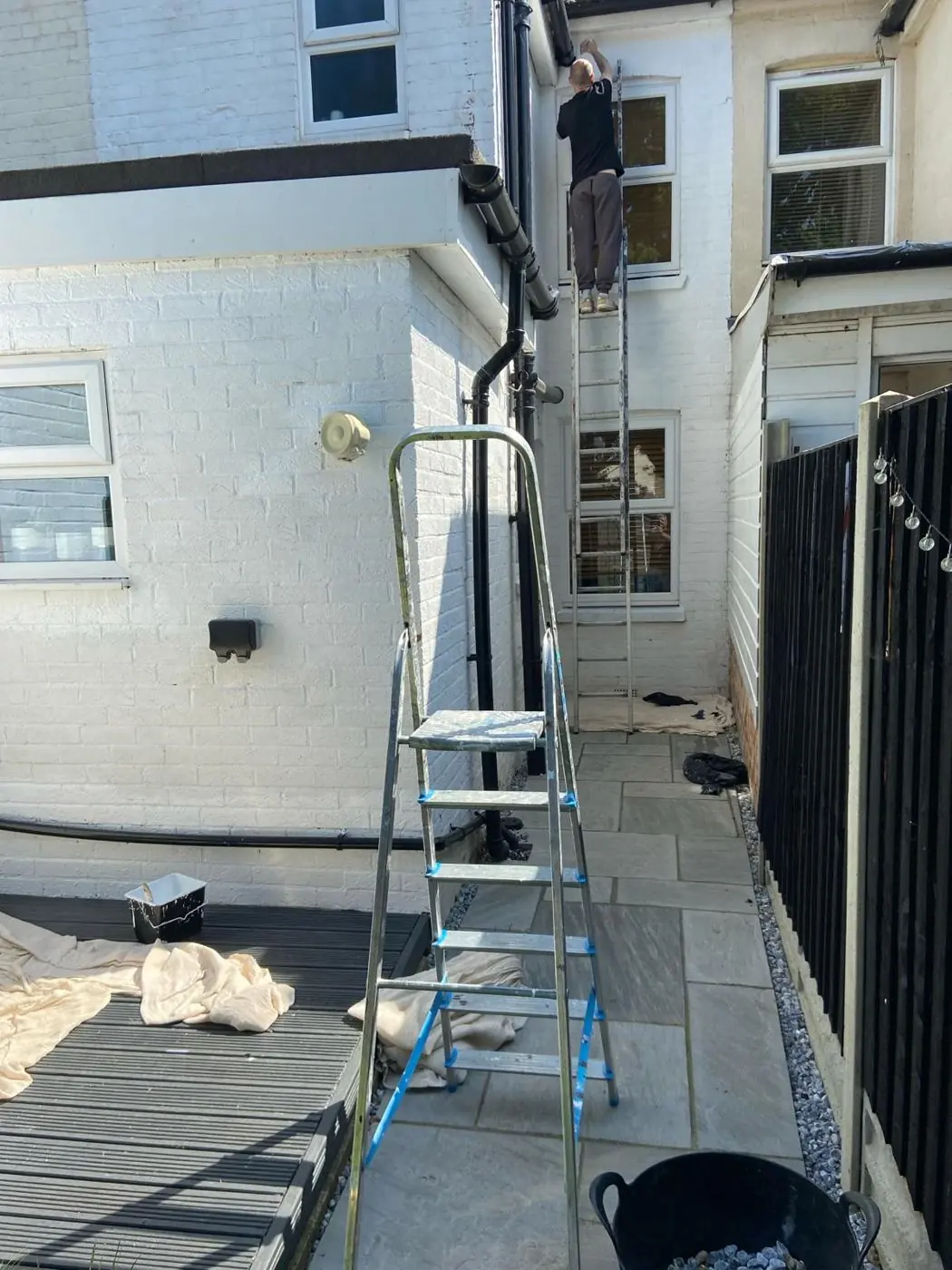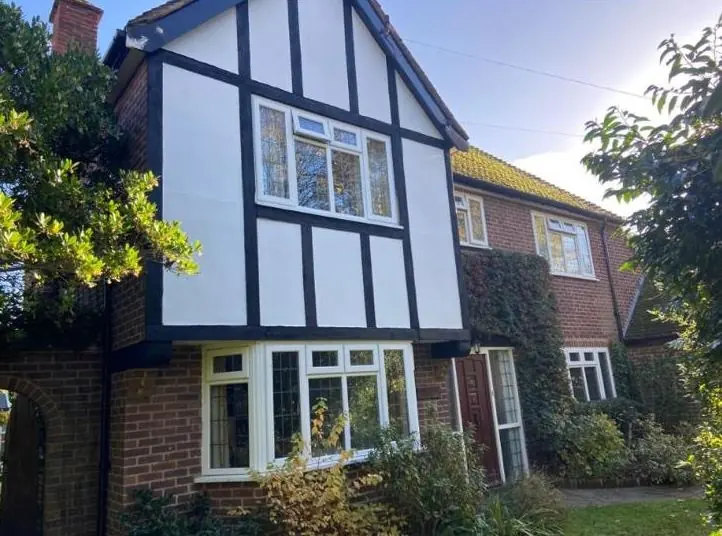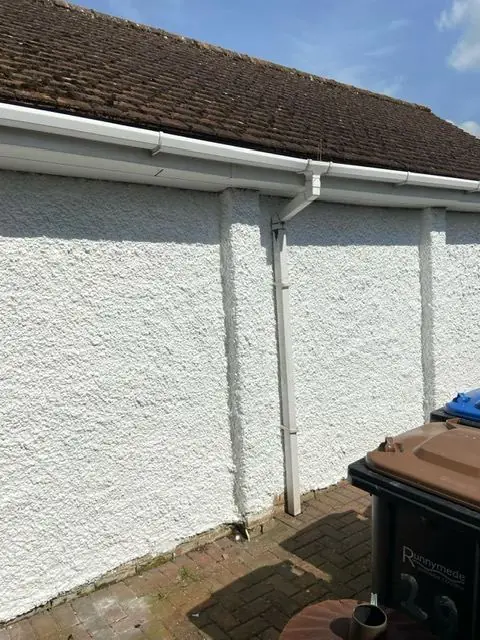
We paint timber fascias, soffits, gutters and downpipes across Dallington, NN5, about 1.3 miles north-west of Northampton town centre. Dean works from ladders on low single-storey eaves and takes extra care where rooflines meet listed stonework in the conservation area.
Low eaves on the Bants Lane and Brook Lane bungalows
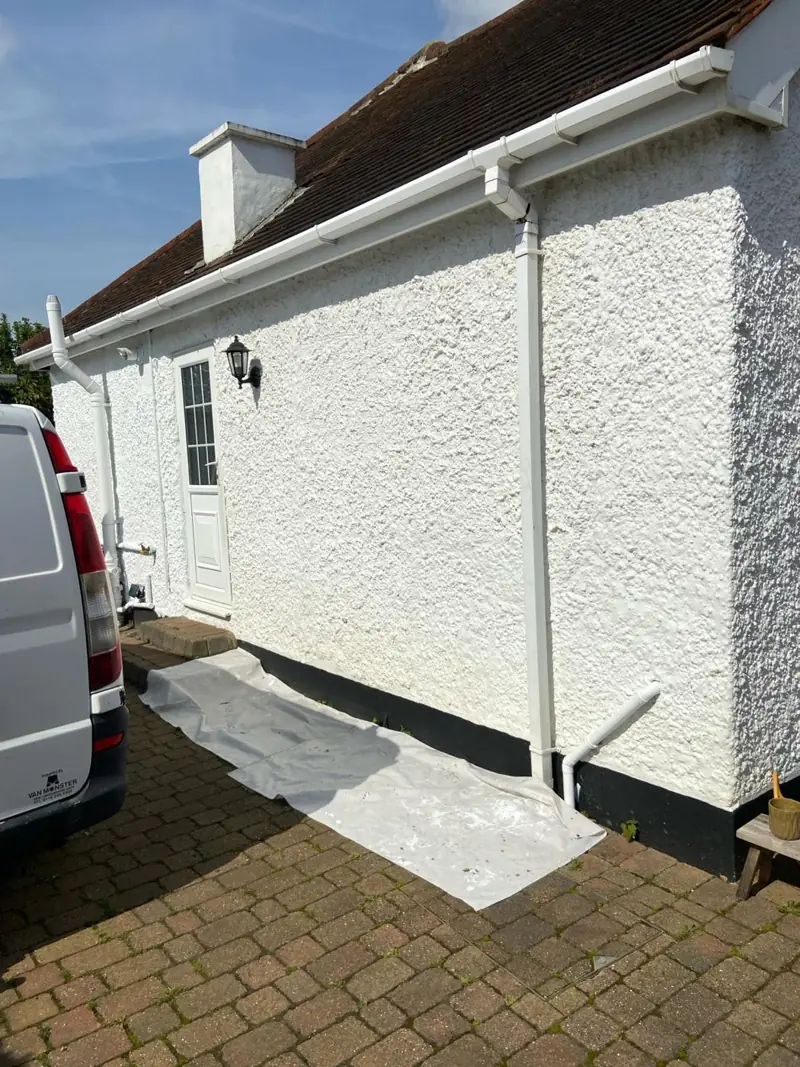
Dallington has two groups of single-storey homes for over-60s let by Northampton Partnership Homes: the eight Bants Lane homes date from 1966, and the twelve on Brook Lane followed in 1988. Single-storey eaves are the easiest roofline there is to reach. Fascias, soffits and gutters can be worked from a ladder or low platform with no scaffold, which keeps the setup quick and the job short.
Because these are social rented homes, any work on them is arranged through the landlord rather than the tenant. If you manage maintenance for similar bungalows, Dean is happy to price a roofline repaint as a planned job.
What the trees do to a Dallington roofline
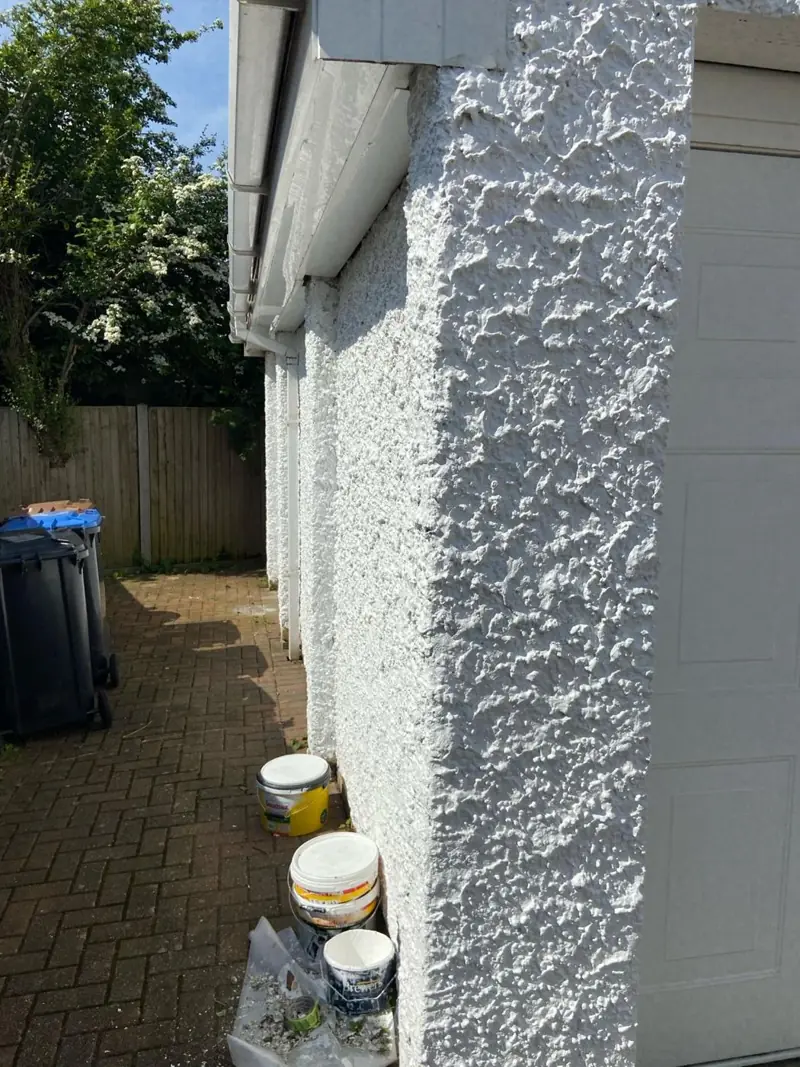
The old village and the streets dropping towards Dallington Brook have a lot of mature trees, around the greens, along the water and in Dallington Park. Leaves, seed and twigs fill gutters every autumn. A blocked gutter overflows down the face of the fascia, and that steady wetting is what lifts the paint and softens the timber behind it, usually at the corners and joints first.
So before any paint goes on we:
- clear the gutters and check outlets and joints for leaks, since painting a board that is still being soaked is wasted effort;
- probe each fascia and soffit board for soft timber and flag anything that needs a carpenter;
- wash off algae and sap from shaded boards and allow them to dry;
- scrape, sand, prime bare wood, then undercoat and top coat.
The ordinary steps are described in more depth on our fascia and soffit painting page. What changes in Dallington is how much of the time goes on the gutters and drying, not the brushwork.
The damp valley setting adds one more thing to plan for. Mornings near the brook are often wet with dew, and the underside of a soffit is the last part of a house to dry. We start later in the day on those boards and keep the top coat for a settled spell.
Rooflines that meet listed stone
Inside the conservation area the roofline is often more stone than timber. Dallington Hall, built in 1720-30, has a hipped tiled roof behind a parapet and cornice, so there is no fascia board to speak of on the main elevations. Other listed buildings have stone kneelers where timber meets masonry. Where we are painting near those, the stone is masked and protected so no gloss ends up on it, and nothing abrasive is used on the stone itself. Like-for-like colours are the safe choice on listed buildings, since a change of finish would need consent.
Where a tall tree hangs over the eaves, ladder access may mean pruning it first, and in the conservation area the council has to be given six weeks’ warning of that. Send the notice, then book the painting.
Suburban semis and Dallington Grange
Outside the old core, Dallington’s two-storey suburban houses have eaves that need a tower or ladder stand-off. Where boards are still timber they get the same prep as above; where they have been replaced with uPVC, cleaning is often enough, and painting needs a primer made for plastic. On the newer Dallington Grange estate, check what material the builder fitted before planning any work. More about the area is on our Dallington page.
Last updated by Dean, DH Painter & Decorator.