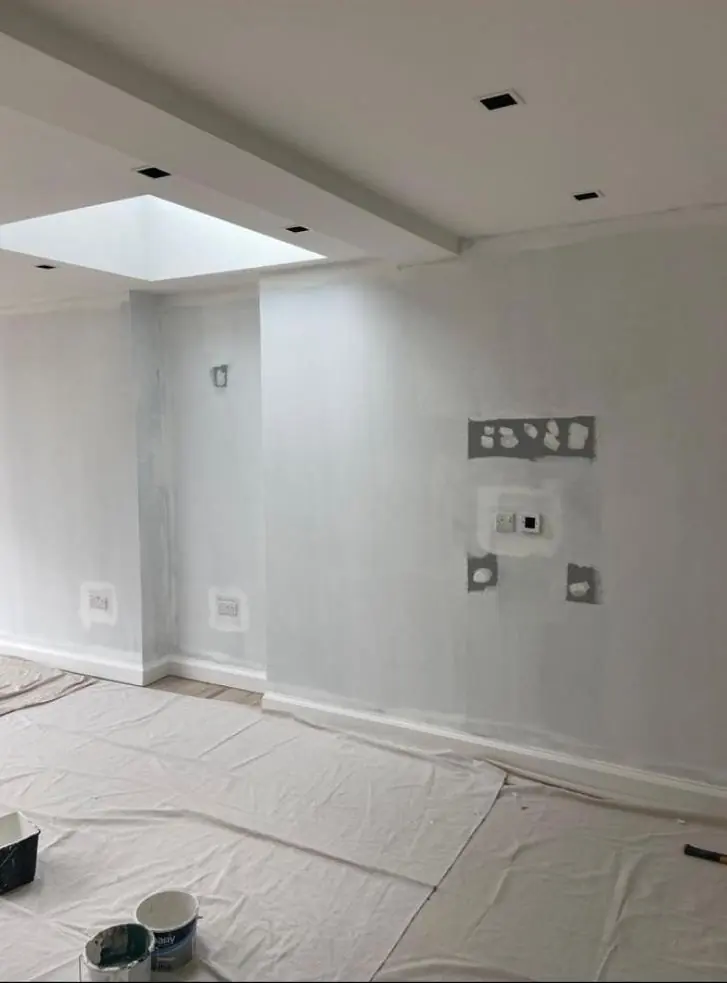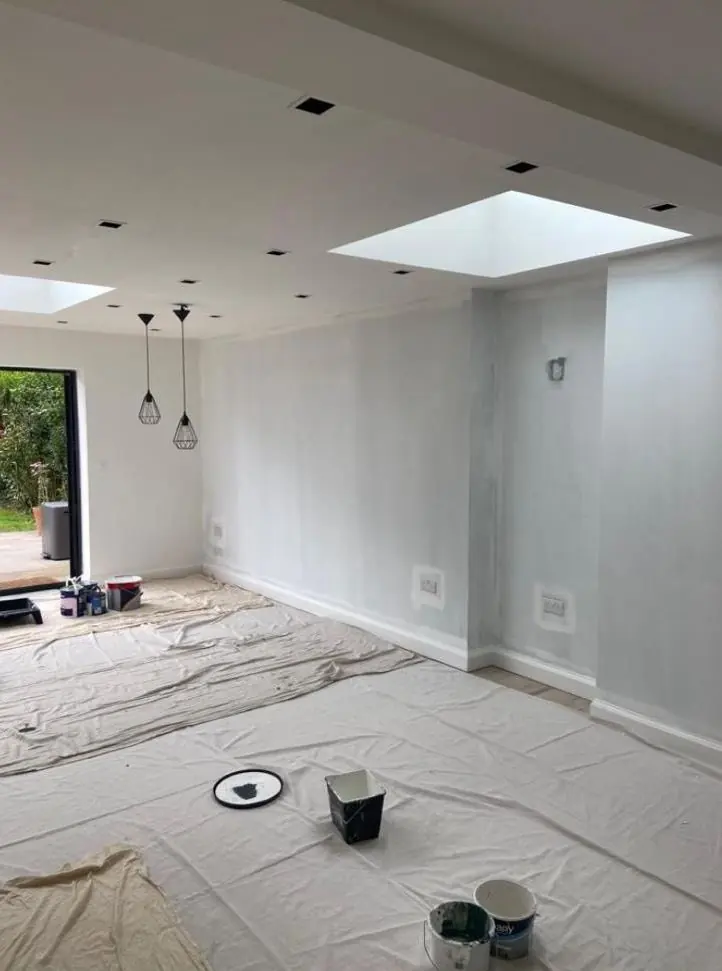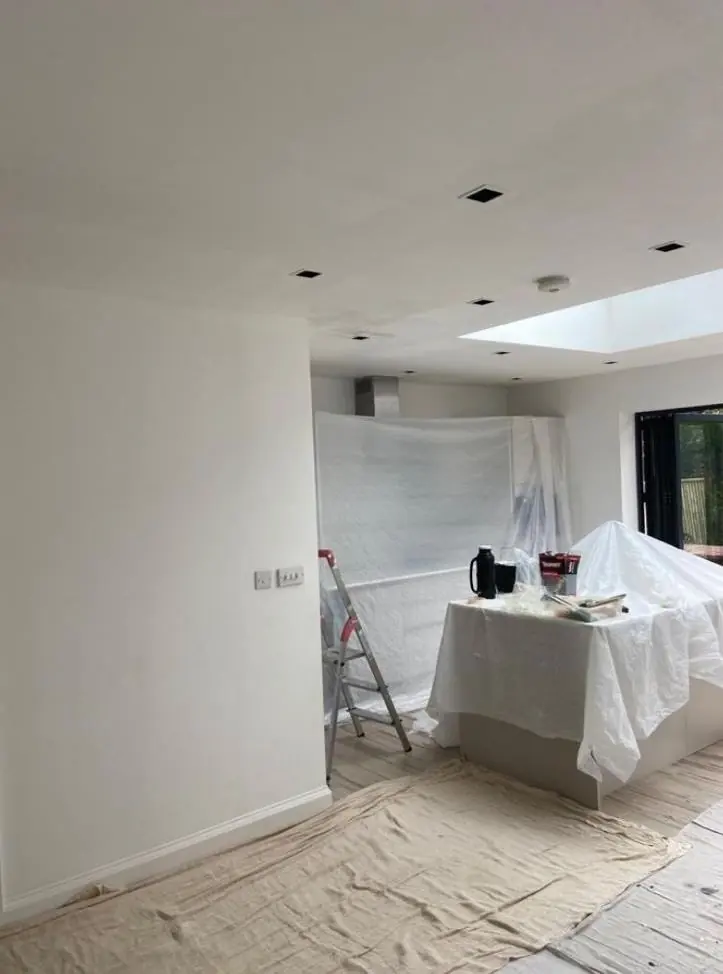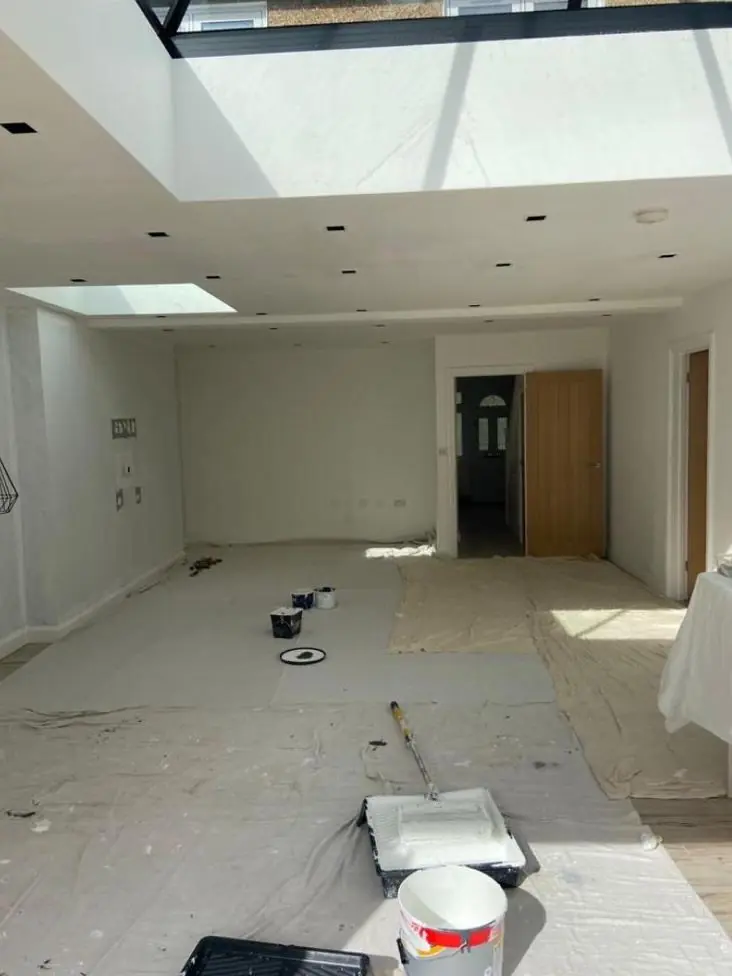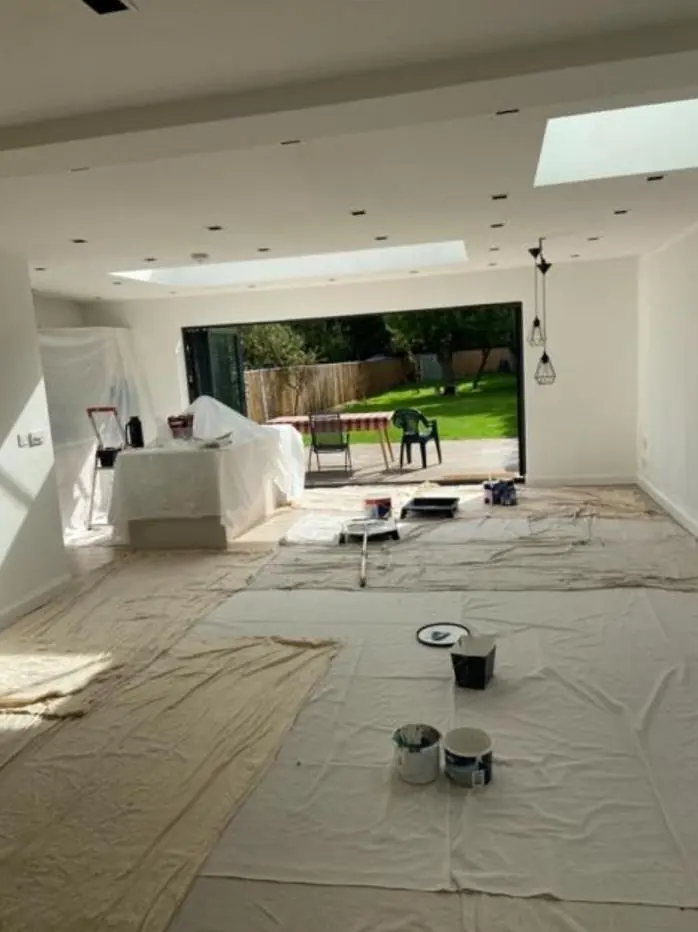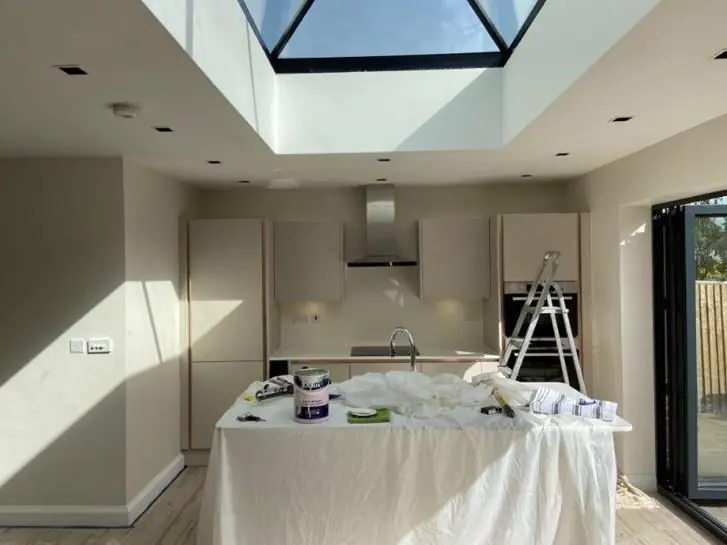
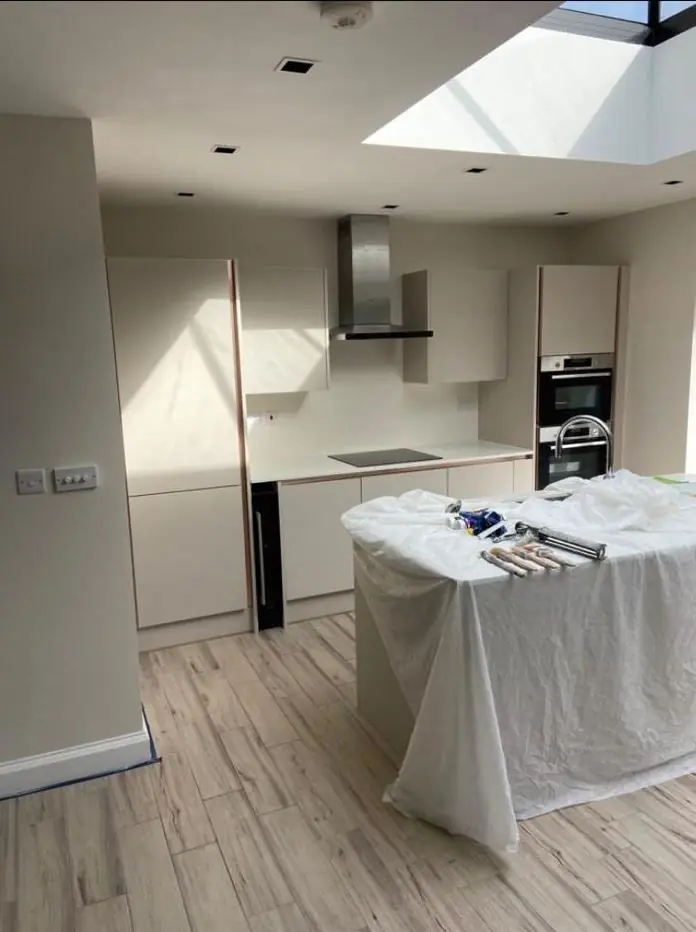
Dean decorates freshly plastered walls, extensions and conversions in Rectory Farm, NN3, about 4.2 miles north-east of Northampton town centre. New plaster here is most likely to come from extending or converting 1980s detached houses, or from reskimming walls in the 1970s terraces.
Where new plaster comes from on this estate
Rectory Farm has no old solid-walled or lime-plastered houses. Everything was built with cavity walls between 1973 and 1992, apart from small groups of newer homes. When there is new plaster to decorate, it has normally come from one of three places:
- Extensions and garage conversions in the detached houses around Deansway, Bentley Close, Healey Close and Allard Close. These houses often have garages, and nearly 90% of them are owner-occupied, which is where long-term owners tend to add space.
- Reskimmed rooms in the 1970s terraces, often after old textured ceilings or blown plaster have been dealt with.
- Newer homes settling in, including about 140 dwellings dated 2009, probably on the northern Overstone Lodge edge, and a cluster of about 130 from 2019 to 2021 near Lowlands Close and the east end of Collyweston Road.
Garage conversions in the 1980s closes
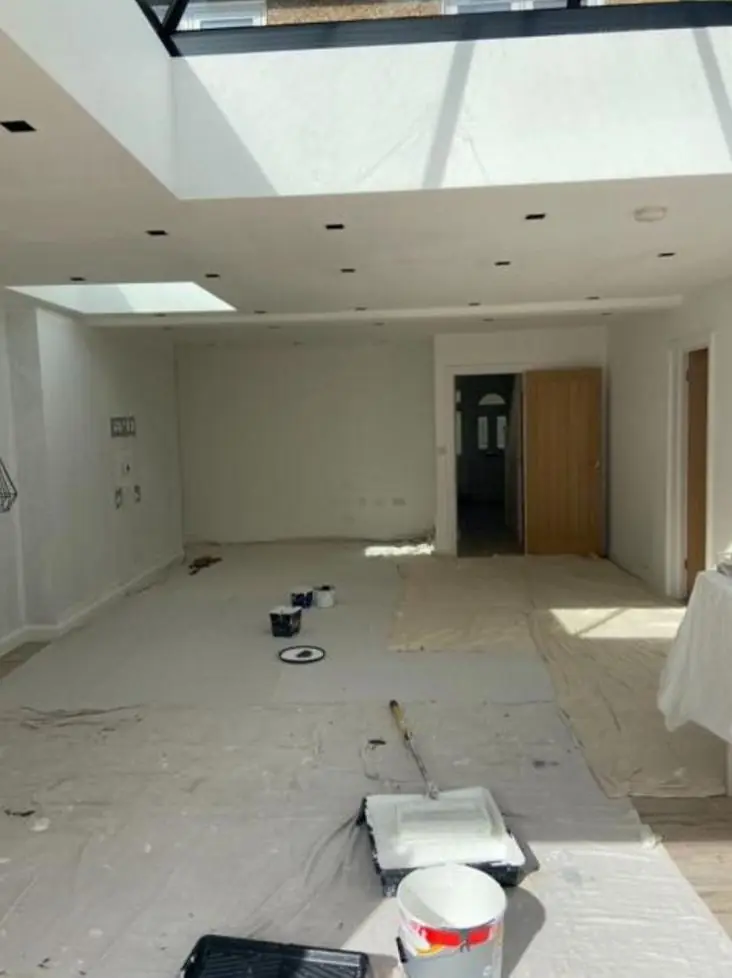
A converted garage in a 1980s detached house leaves new plaster against old in the same room. The new skim on the former garage walls is bare and absorbent, while the wall shared with the hall or kitchen may carry thirty years of emulsion. If both get the same coat, the new section can dry patchy and the join shows as a line. We mist-coat only the new plaster first, then fill and sand the joint so the whole room takes the finish coats evenly.
Converted garages also bring new MDF skirtings and door linings, and sometimes a new window board. We seal the cut edges of the MDF before priming so they do not swell and roughen under water-based paint. The full sequence from drying check to final coat is on our main new plaster and extension painting page, and the reasons for the thinned first coat are explained in our mist coat guide.
Replastering on the colder 1970s walls
In some terraces on Mortar Pit Road and Collyweston Road, the external cavity walls are recorded as having little or no insulation. Those cold walls attract condensation, and bedroom corners and bathrooms can grow mould that damages the old plaster to the point of needing a reskim. New plaster on a wall like that dries more slowly in winter, and if it is sealed too soon the moisture trapped behind the paint can push it off.
We test the plaster before any coat goes on and wait until it has dried to an even pale colour. Then we use a breathable mist coat followed by a mould-resistant finish. Insulating, ventilating or heating the room is a separate job, but if the conditions that damaged the old plaster are still there, we say so before you spend money decorating over them.
First decoration in the 2009 and 2019 to 2021 homes
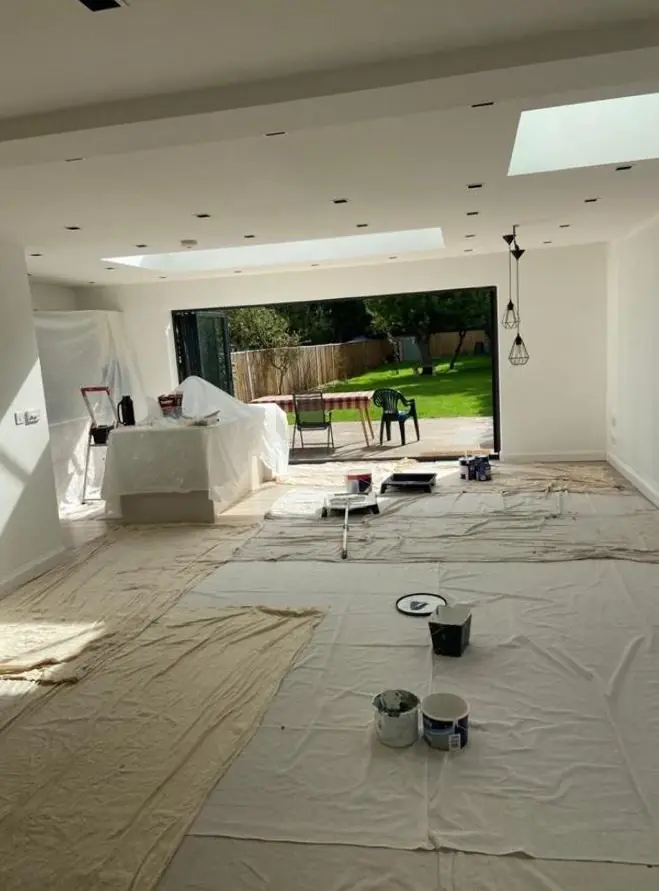
New-build homes are usually handed over with a thin contract emulsion on plaster that is still drying. During the first year or two, as the timber and plaster shrink, hairline cracks tend to open at ceiling angles, around door linings and along plasterboard joints. That is the time to decorate properly. We rake out and fill the cracks, then apply two full coats instead of patching the developer’s original paint.
If you are in a shared-ownership home in the newer parts of the estate, check whether your lease has any rules on internal decoration before you choose colours. Most do not, but it is worth knowing first. Our Rectory Farm area page has more about the estate’s different housing areas.
Last updated by Dean, DH Painter & Decorator.