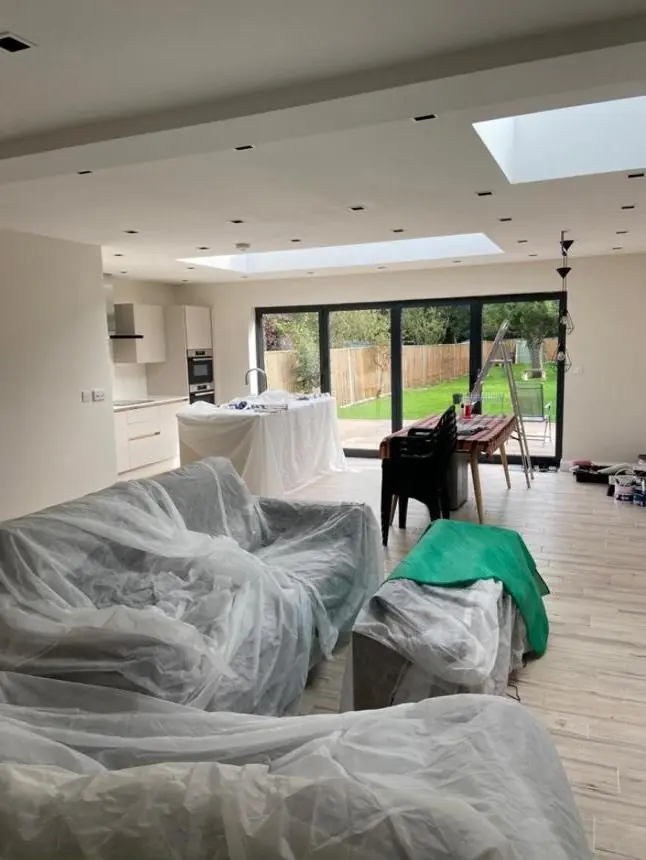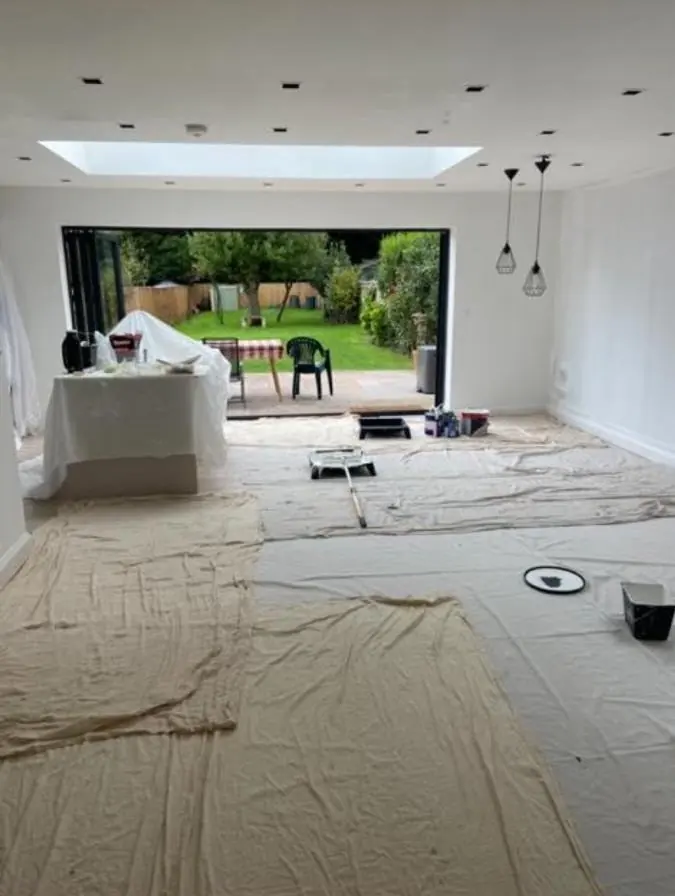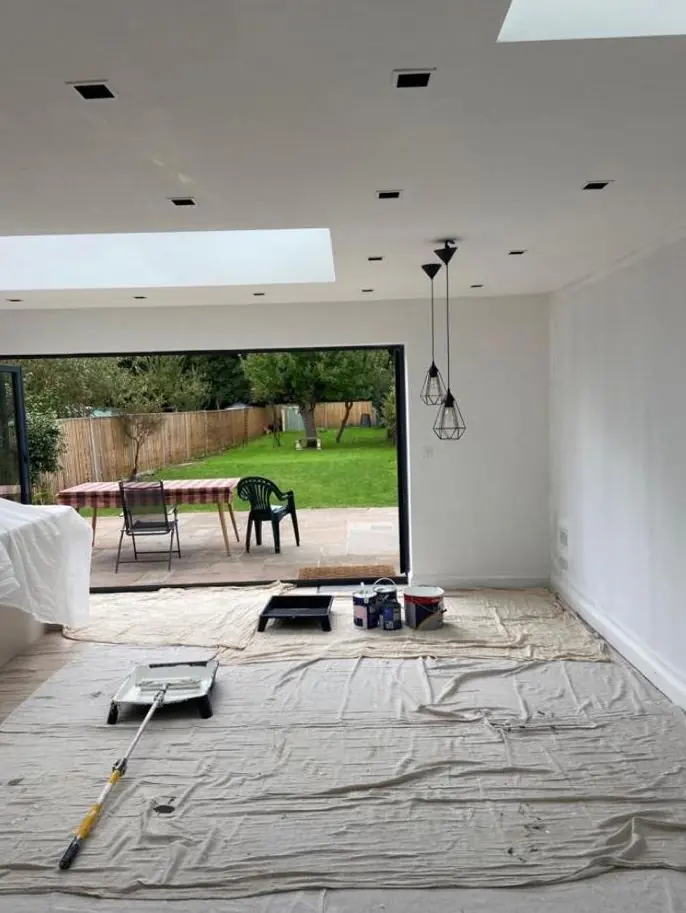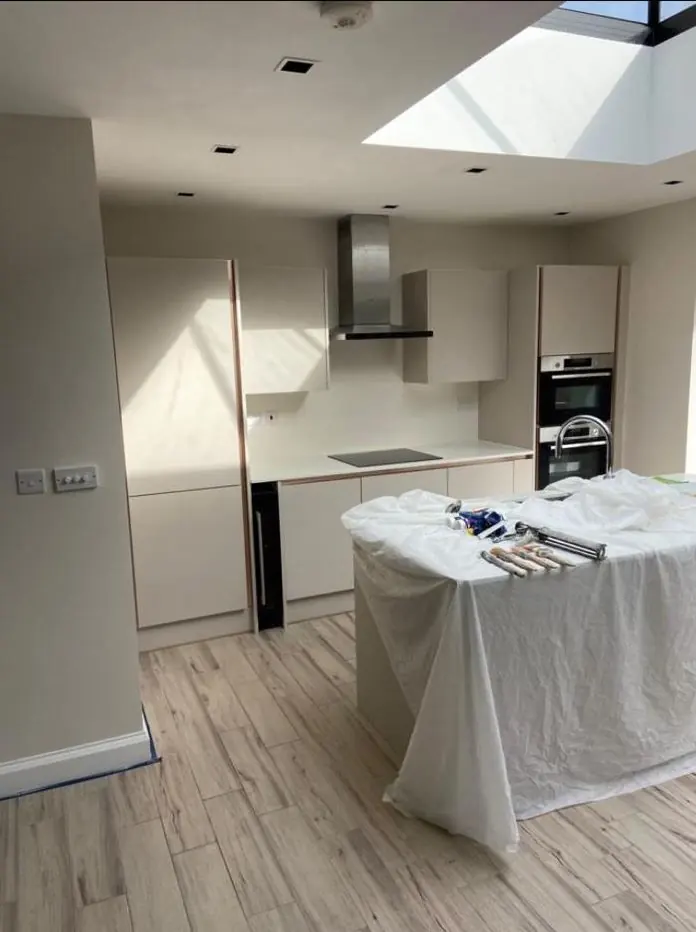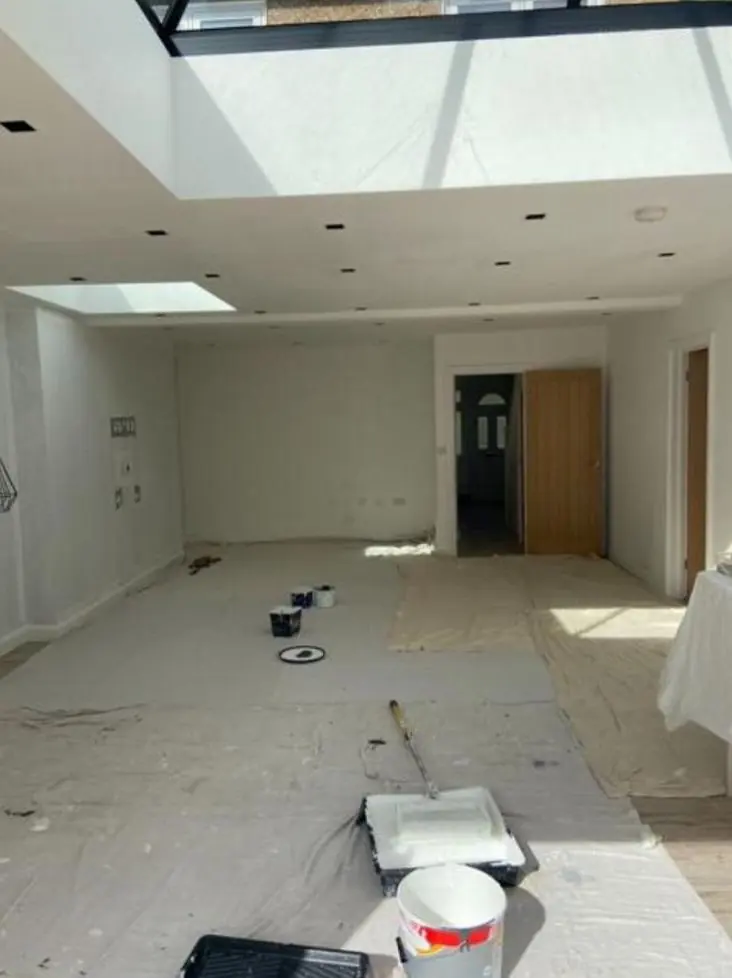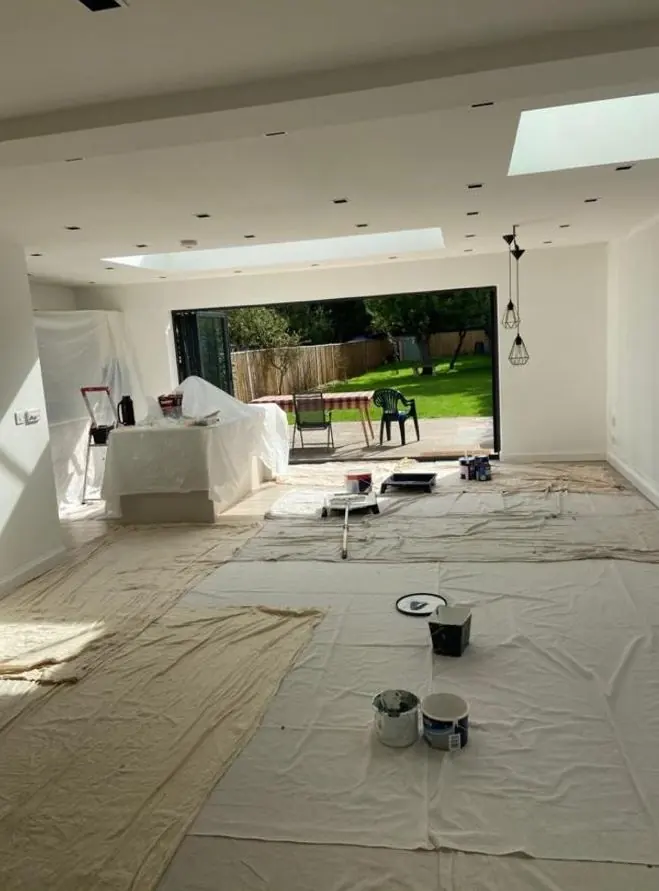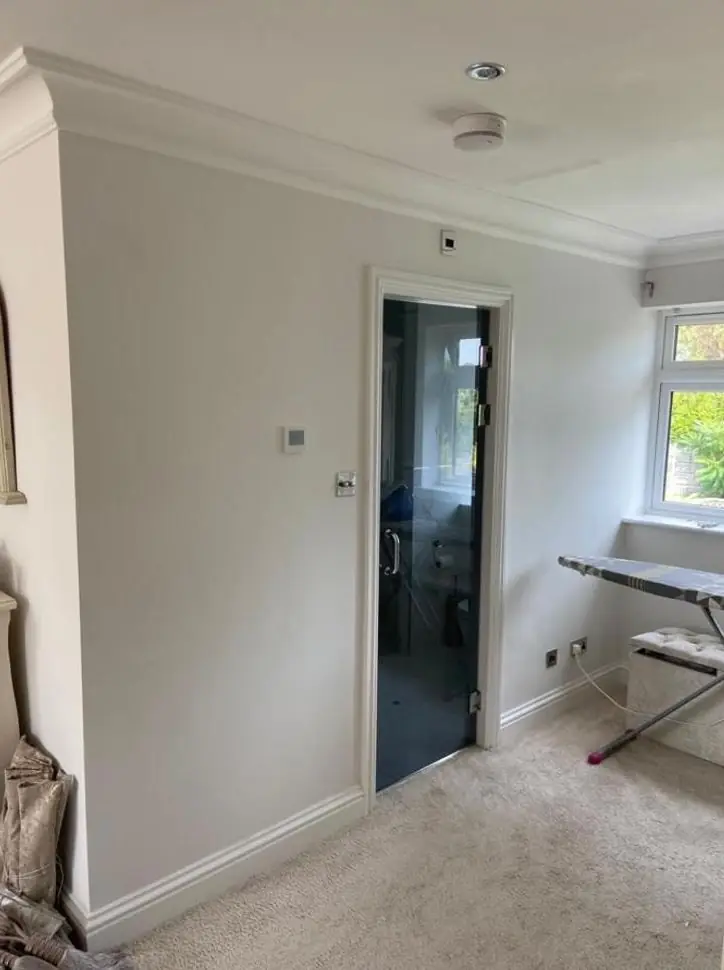
Dean decorates freshly plastered walls, ceilings and extensions in Blackthorn, NN3, about 3.8 miles north-east of Northampton town centre. On this 1970s estate that usually means rooms re-skimmed after rewiring or repair, and the occasional extension, each sealed with a breathable mist coat before finishing.
Why new plaster turns up in a fifty-year-old estate
Blackthorn’s houses date from the mid-1970s, when the Northampton Development Corporation was building out the eastern side of the New Town. Half a century on, the original plaster tends to be renewed piece by piece rather than all at once. Typical reasons for fresh skim in a Blackthorn house:
- Walls and ceilings re-skimmed after rewiring, where cable runs have been chased in.
- Patches made good after a new boiler, kitchen or bathroom.
- Cracked ceilings over-boarded and skimmed.
- Whole rooms skimmed to clear textured coatings or layers of earlier DIY.
Each of those leaves bare, absorbent plaster that cannot simply take normal emulsion, and often a mix of new and old surfaces in the same room.
Drying times, mist coats and the old-to-new join
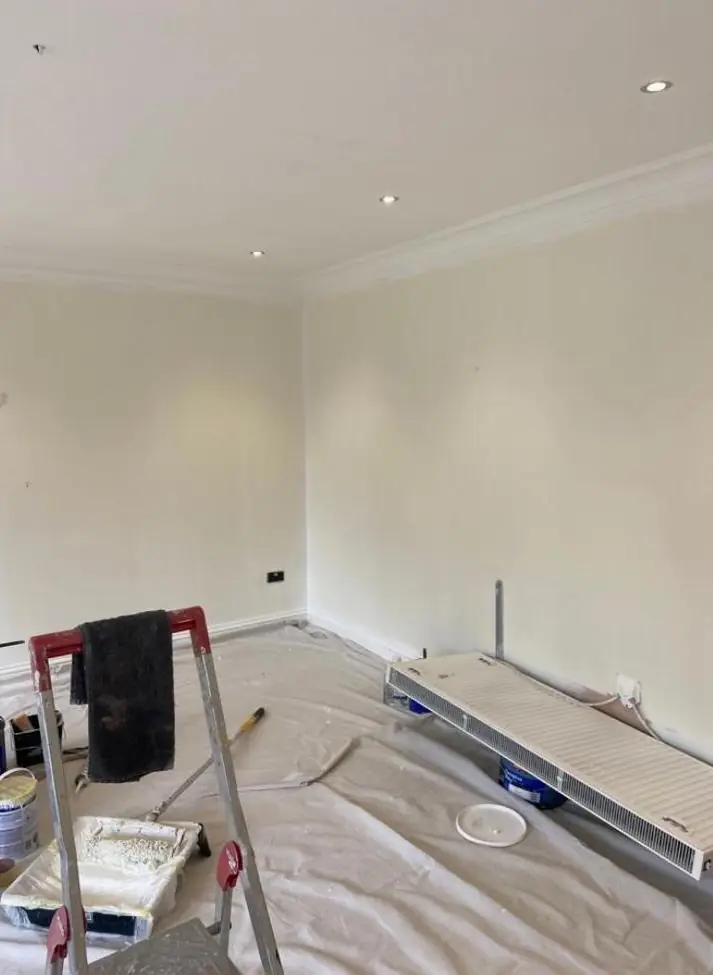
Fresh skim needs to dry right through before it is sealed. The sign is an even pale colour with no darker damp patches in corners or behind radiators, and we check every wall and ceiling at the start. The first coat is a breathable mist coat, thinned so it soaks in and binds to the surface; vinyl emulsion applied straight onto new plaster tends to peel. Our mist coat guide explains the reasons and the drying signs in detail.
In Blackthorn the trickier part is usually where new meets old. A patch of fresh skim beside a wall with decades of emulsion on it absorbs differently, so a finish coat can flash and leave a visible dull or shiny outline. We seal the patch, feather its edges, then take the finish coat across the whole wall, corner to corner, so the repair disappears.
Extensions on tight terraced plots
Terraced houses make up between 45% and 64% of homes in the two Census areas covering the estate, so most rear gardens are reached only through the house or along a shared path. That shapes how an extension gets decorated. Once the building work is finished, our materials and steps come through the house, so we protect floors along the route from the front door. A single-storey rear extension usually brings new MDF skirtings, architraves and a door or two as well as plaster, and cut MDF edges need sealing before priming or they swell.
Homes on the western edge of the estate, beside Lings Wood, sit under mature trees and can be shadier and damper. A new extension in shade may need extra drying time before we seal it, particularly in late autumn and winter. Running the heating gently and opening a window helps, but blasting heaters at fresh skim can make it crack. Where an extension sits under overhanging trees, we also check the new window reveals and any plastered upstand for damp before sealing.
Working out the order with your plasterer
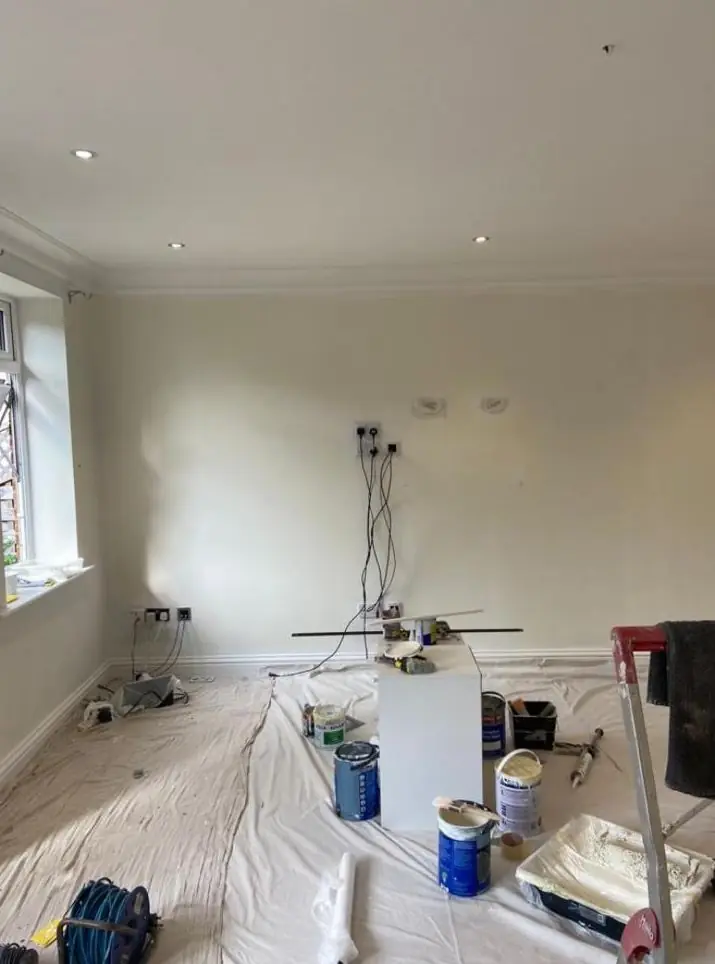
Booking us a little after the plasterer’s finish date, rather than the same week, gives the walls time to dry. On a re-skim after rewiring, it helps to have the electrician leave sockets and switch plates loose so we can paint behind them. For the general process, including what a typical extension decorating quote covers, see our main new plaster and extension painting page. The Blackthorn area page sets out the other work we cover locally.
Dean covers Blackthorn, about 3.8 miles from Northampton town centre. Call 07539 779 036 to book a free quote.
Last updated by Dean, DH Painter & Decorator.