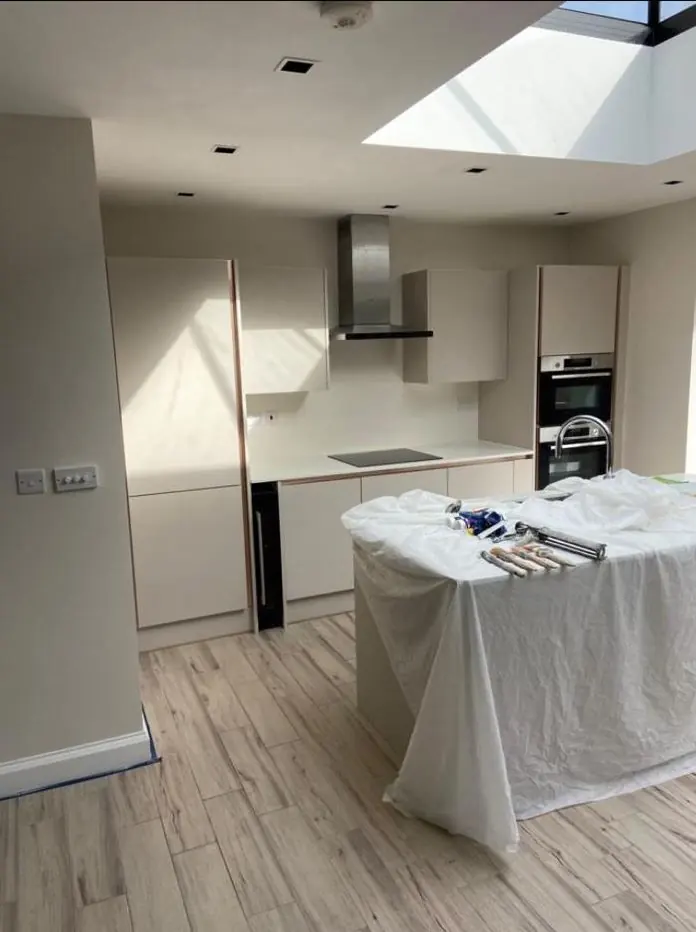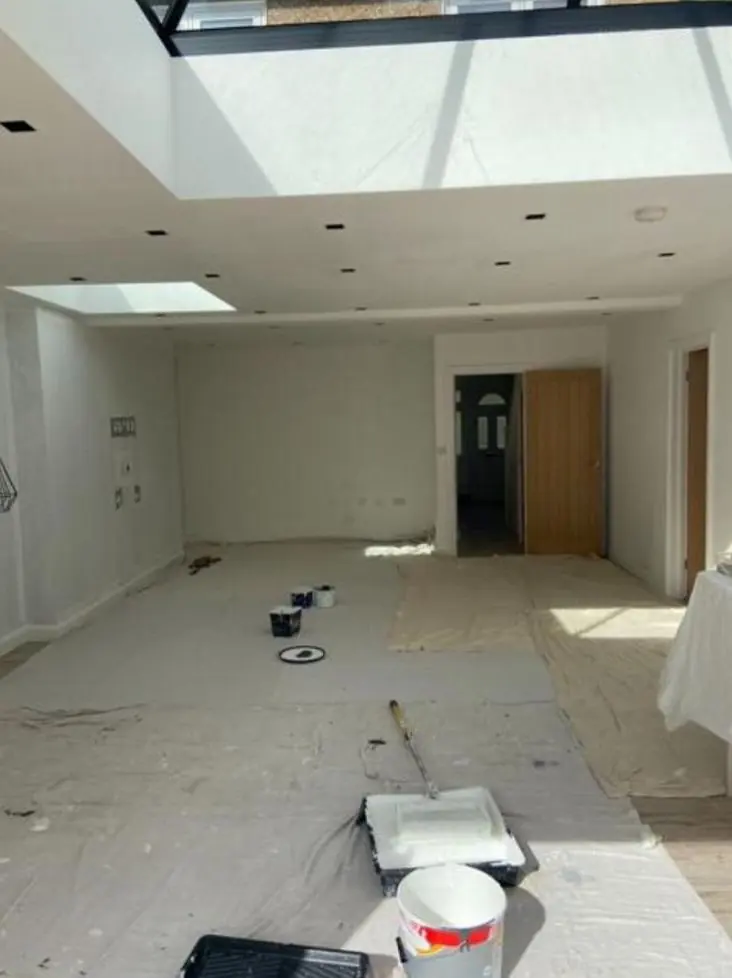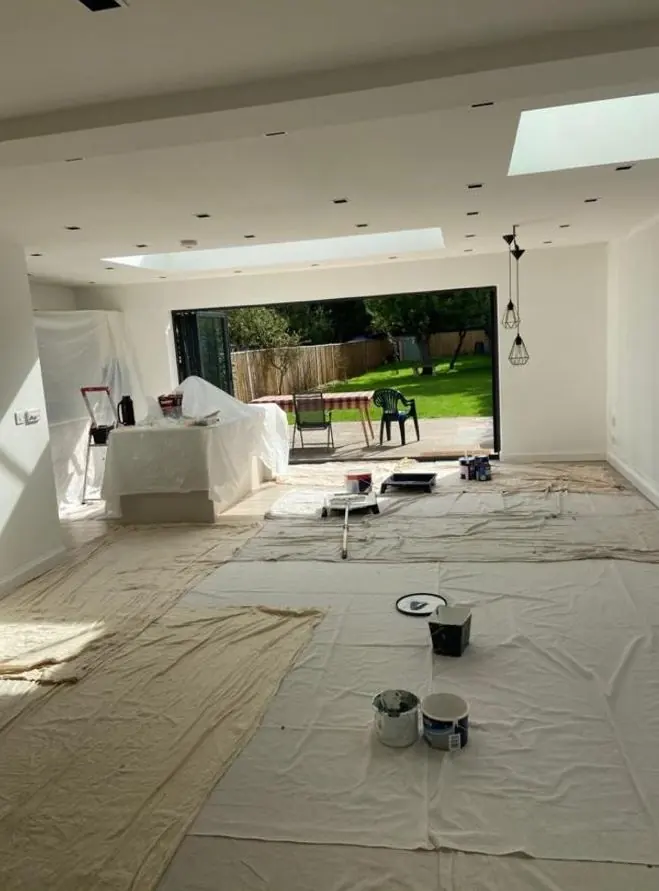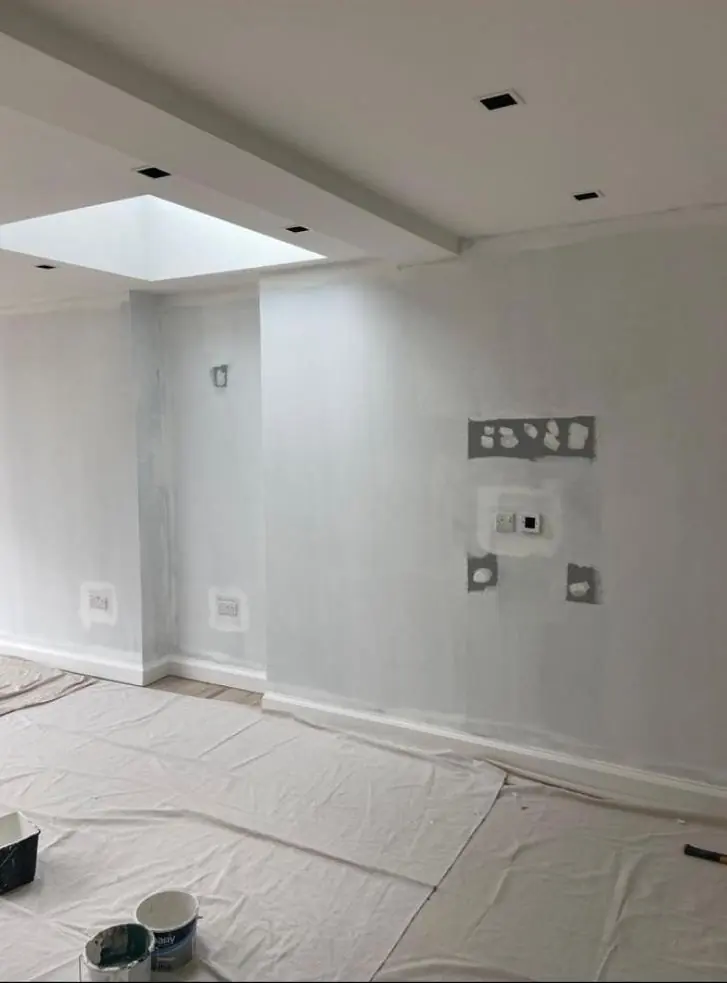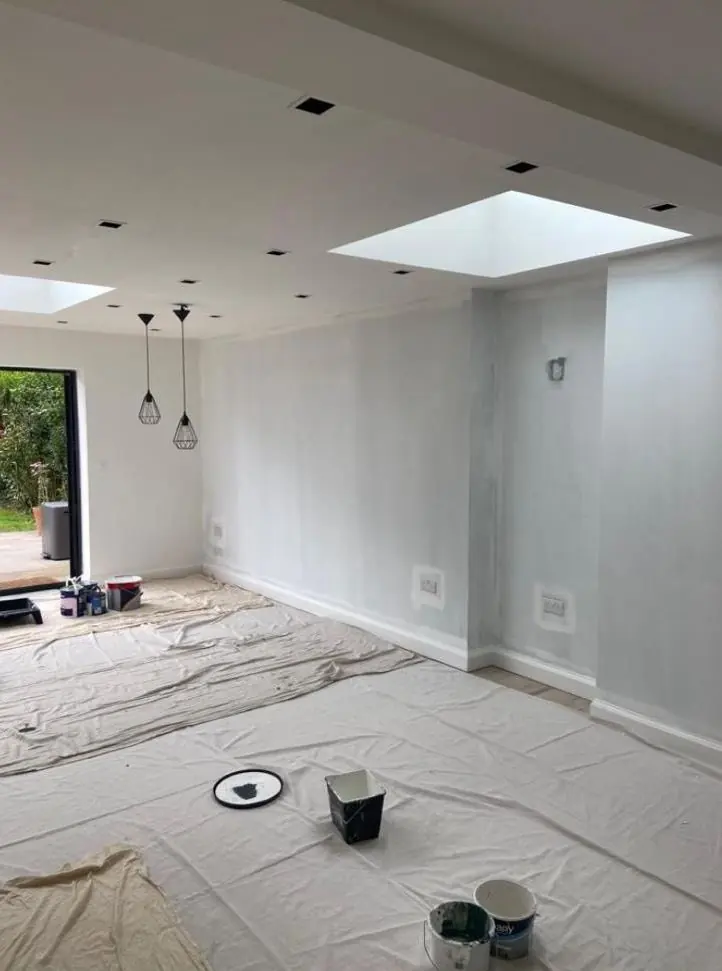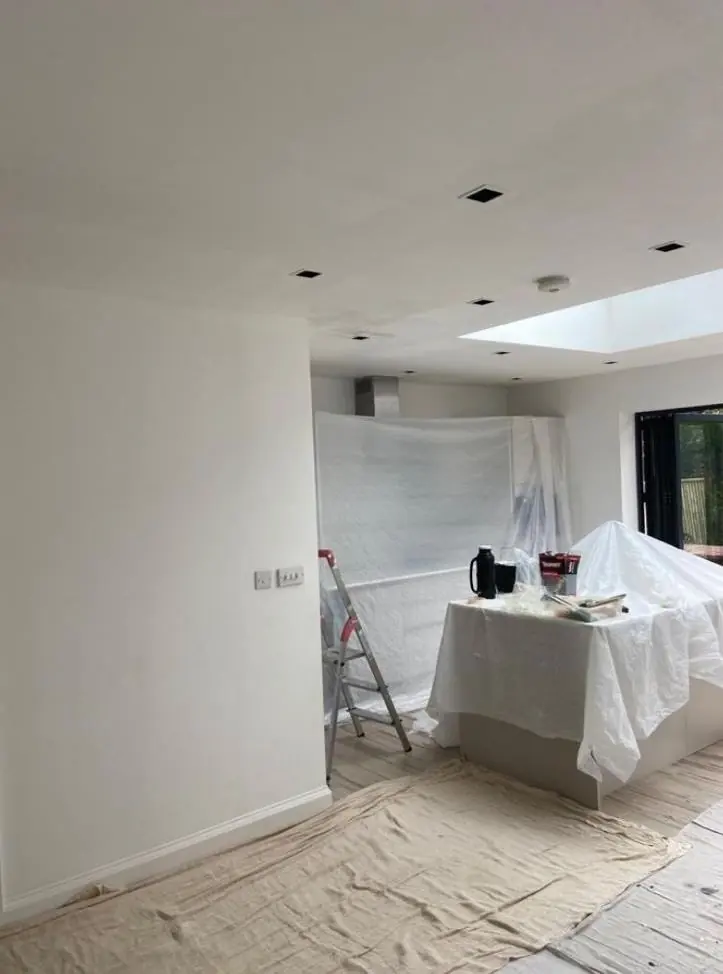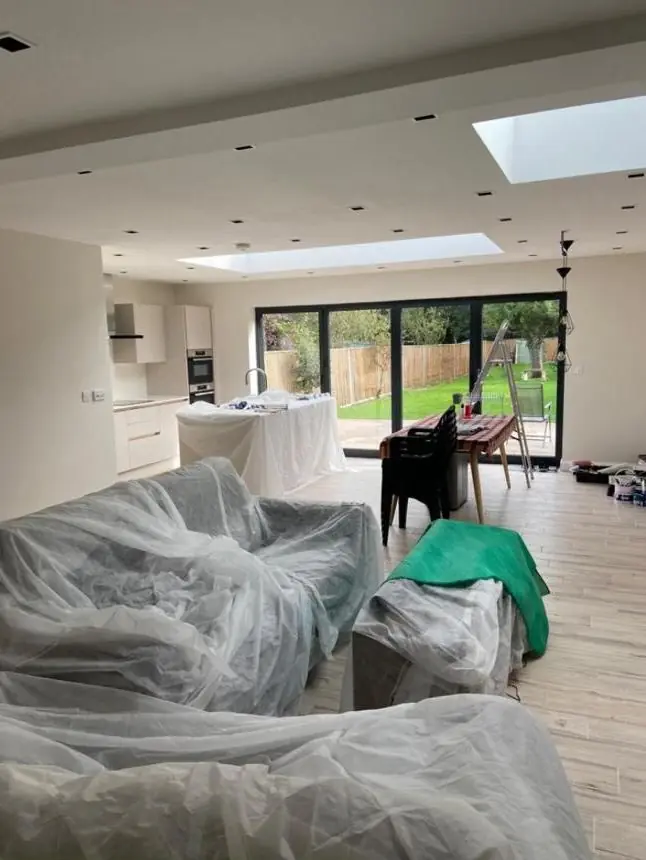
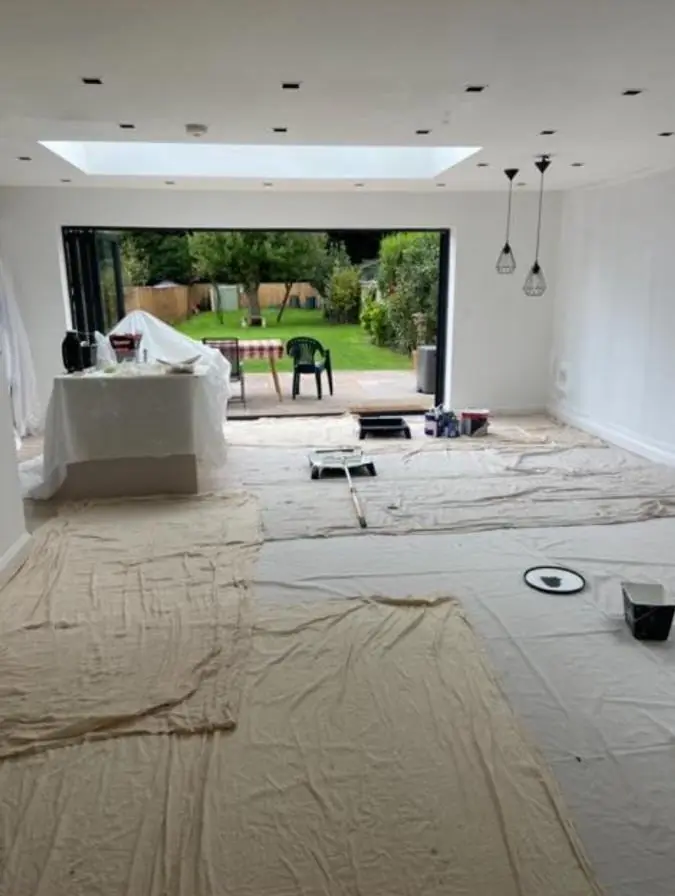
We decorate new plaster in Thorplands, NN3, about 3.3 miles north-east of Northampton town centre. Most of it comes from re-skimming and patch repairs in the estate's early-1970s terraces and flats, with occasional extensions, and it always starts with a mist coat on dry plaster.
Where new plaster comes from on a 1970s estate
Extensions are less common here than in suburbs with large gardens. Much of Thorplands is mid-terrace housing and flats grouped in courts, built mostly between 1967 and 1975, and many homes are rented. On this kind of stock, fresh plaster usually turns up in smaller pieces:
- A room re-skimmed between tenancies after years of filled holes and patched-over damage.
- Making good after a rewire, a new boiler flue or replacement windows, leaving fresh plaster round sockets, reveals and window boards.
- A ceiling skimmed over an old textured coating.
- The occasional single-storey extension, more likely on the later houses at Huxloe Rise and Pindar Rise or on the end-terraces with more space at the side.
Each one leaves the same problem: a patch of bare plaster next to wall that has been painted many times. Painted straight over with ordinary emulsion, the new area shows through as a different sheen and often peels within months.
Textured ceilings: test before anyone sands
Textured ceiling and wall coatings were widely used in houses of this age, and those applied before the mid-1980s can contain asbestos. When a Thorplands ceiling is being skimmed over, the plasterer seals it in rather than disturbing it, which is the normal approach. The risk comes afterwards if someone sands or scrapes the edges of the old texture to blend in a repair. If the house still has original textured ceilings and a repair cuts into them, we ask for them to be tested before we prepare that area. We would rather lose a day than raise dust from a material nobody has checked.
Drying time, mist coat, then colour
Fresh skim needs to dry before it is sealed. A thin skim in a heated room may be ready in about a week, while thicker repairs and backing coats take longer, and corners, reveals and areas behind radiators dry last. We check by colour and with a meter, not just by the date on the plasterer’s invoice. In a void property it is tempting to paint straight away to get the tenant in, but paint trapped over damp plaster blisters and the room ends up being done twice.
Once the plaster is dry, we apply a thinned, breathable mist coat that soaks into the surface, then fill and sand any trowel marks and hairline cracks it shows up, and finish with two full coats. On a patch repair we carry the finish coats to a natural break, usually a corner or the whole wall, so the repair does not show as a lighter square. Our guide to painting new plaster with a mist coat explains the reasoning, and the main new plaster and extension painting page covers full extension jobs.
Matching the rest of the room
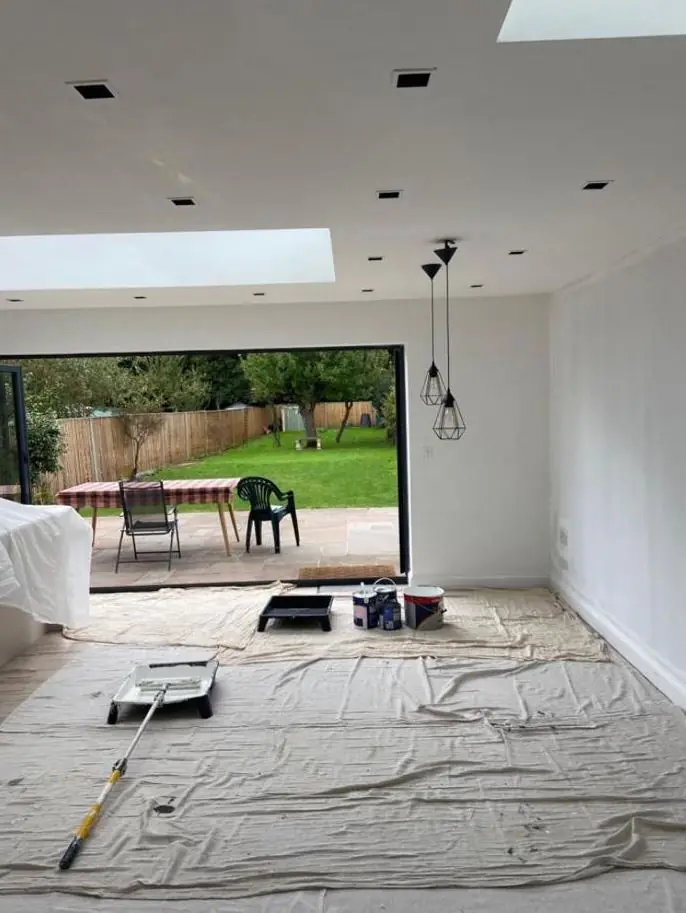
Many Thorplands homes are social or private rentals, so the colour of the rest of the room is often a landlord’s standard neutral. If we know the product and shade, a repaired wall can be matched exactly. If not, we take a sample and match it. In owner-occupied homes the new plaster is often an opportunity to repaint the whole room rather than blend in a section.
Thorplands is about 3.3 miles out from our Northampton base, so we can usually come and look at the plaster before it has finished drying to plan dates around it. Find out more about painting on the estate on the Thorplands area page.
Last updated by Dean, DH Painter & Decorator.