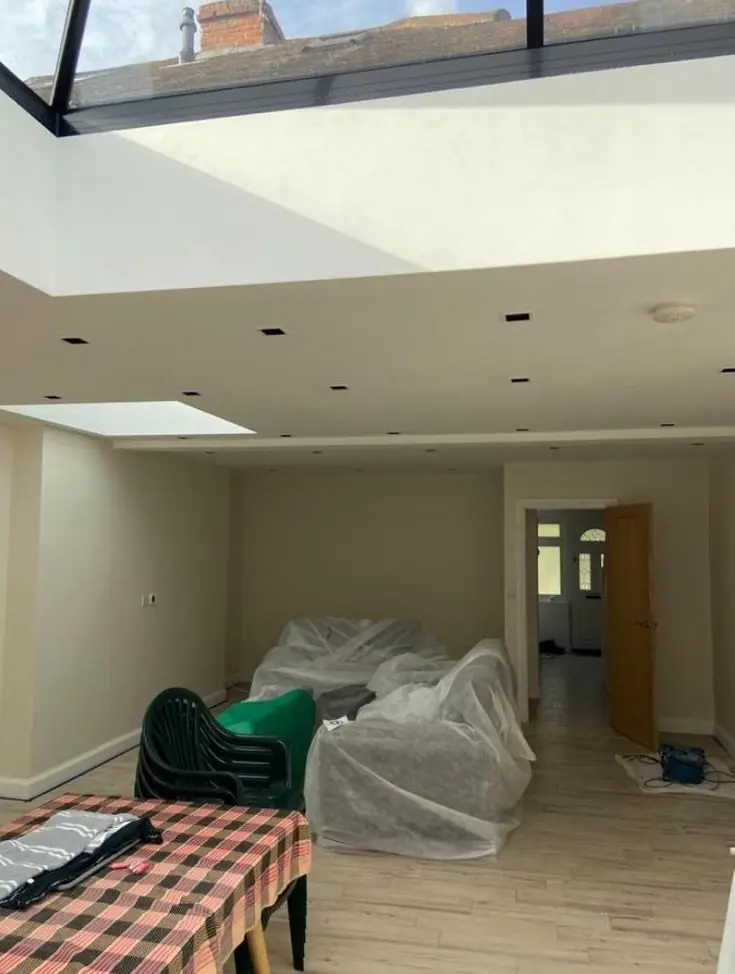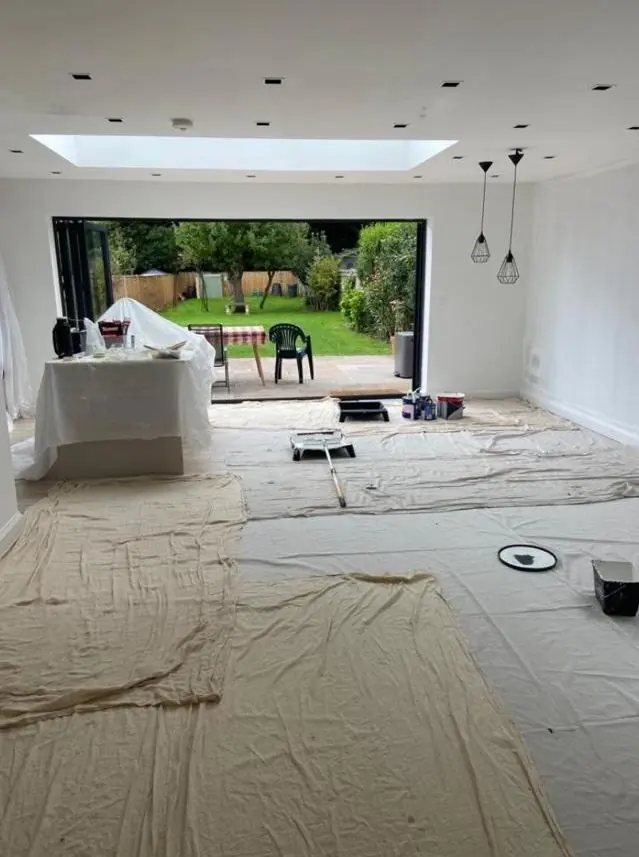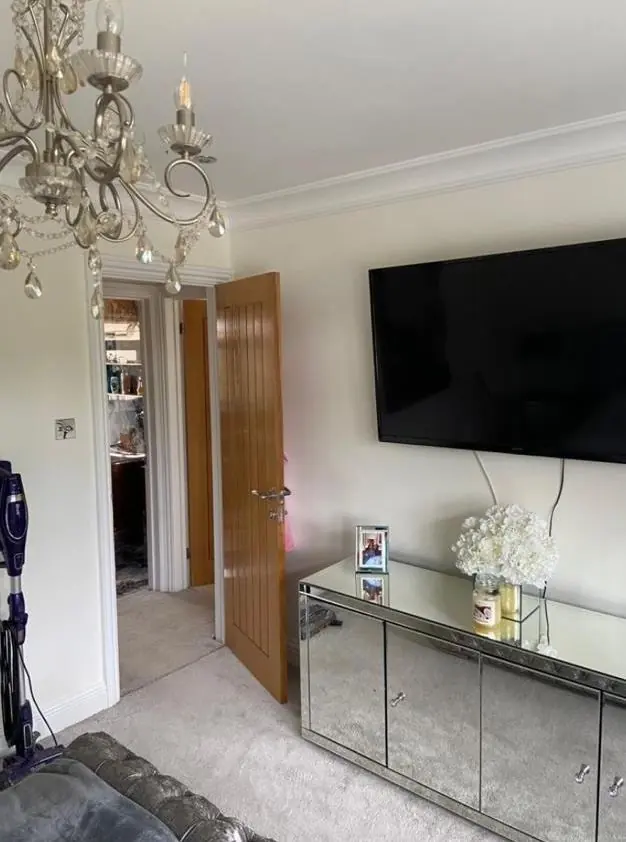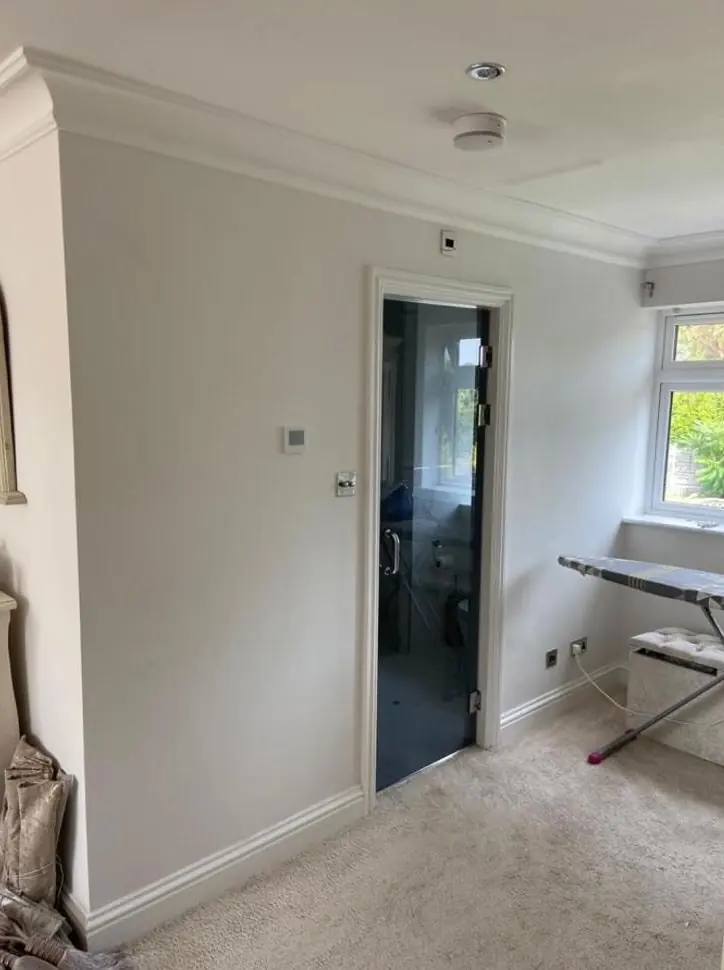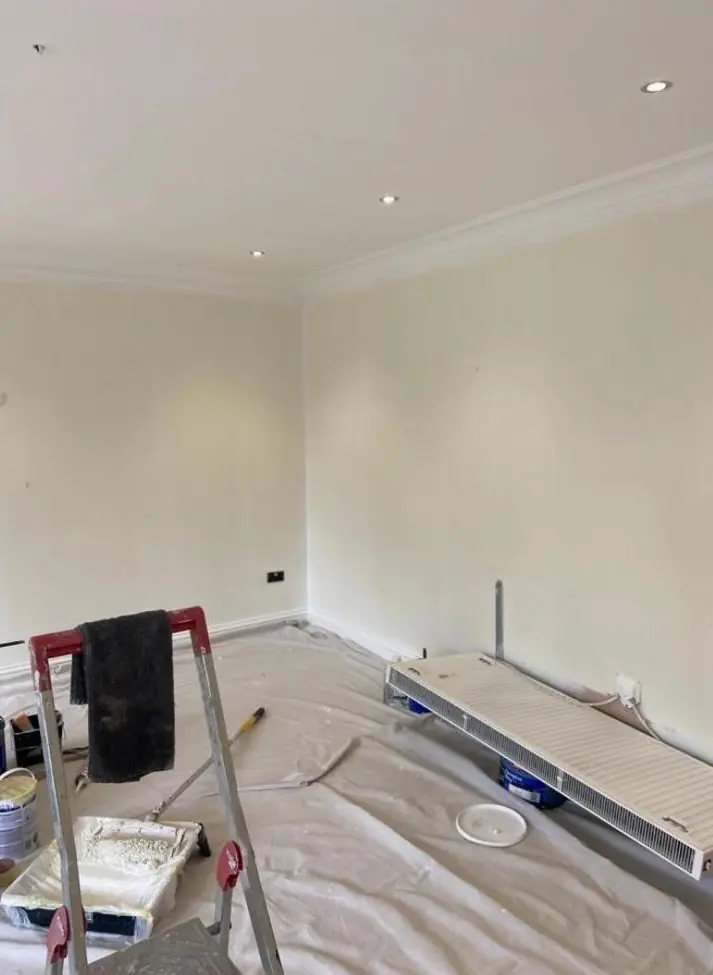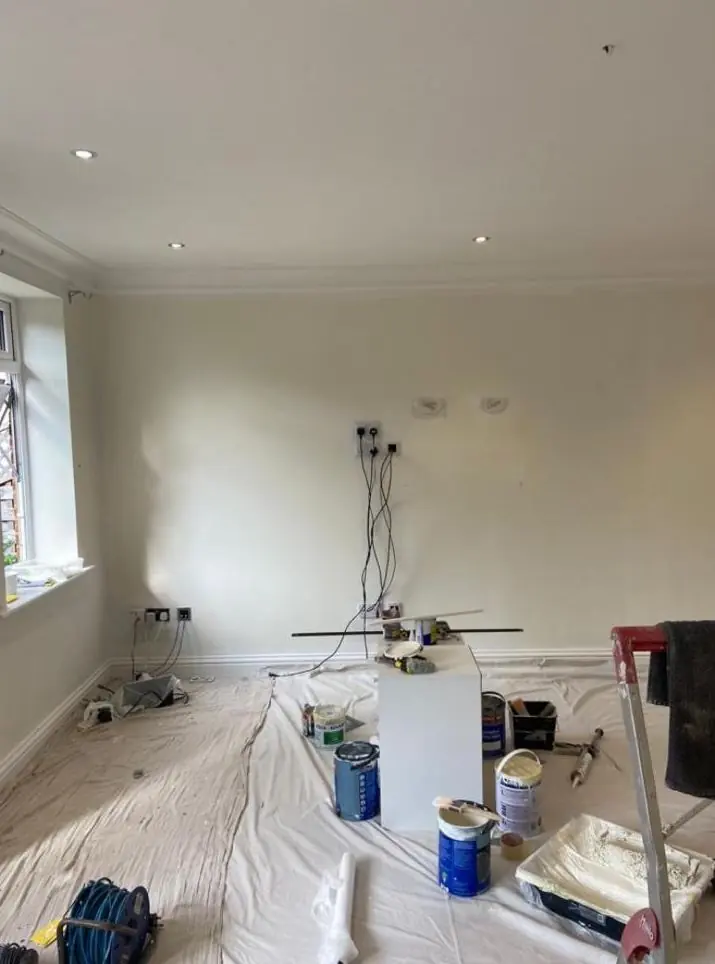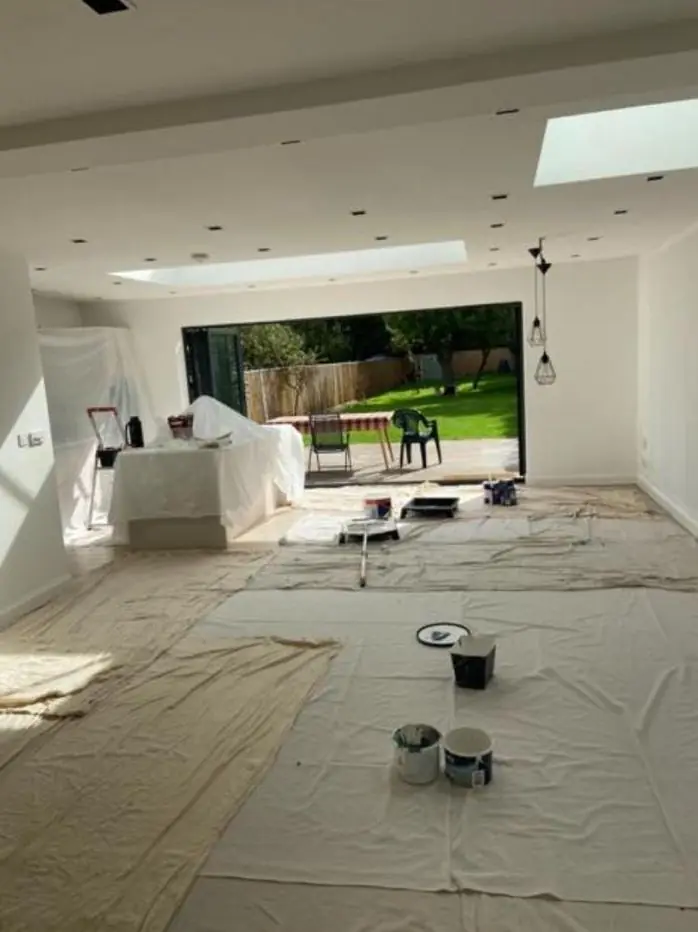
Dean paints new plaster in Overstone Leys, on Northampton's north-eastern edge between Moulton and Overstone. Here fresh plaster usually comes from builder's snagging repairs, garage conversions and early extensions, and every patch needs a mist coat before any vinyl emulsion goes on.
Where fresh plaster turns up on a brand-new estate
It sounds odd to talk about new plaster on houses that are themselves only a few years old, but on Overstone Leys it comes up in three ways.
- Snagging repairs. Housebuilders fixing cracks, damaged corners or replaced sections under warranty leave patches of new skim or filler. These are usually left bare or given a quick roll of emulsion that never quite matches.
- Garage conversions. Where a house has an integral or attached garage, converting it is one way to gain a study or playroom, and the converted room is plastered from scratch.
- Extensions. Rear kitchen or garden-room extensions on homes from the earliest phases bring large areas of new plaster and new joinery.
The mist coat, and why patches show through
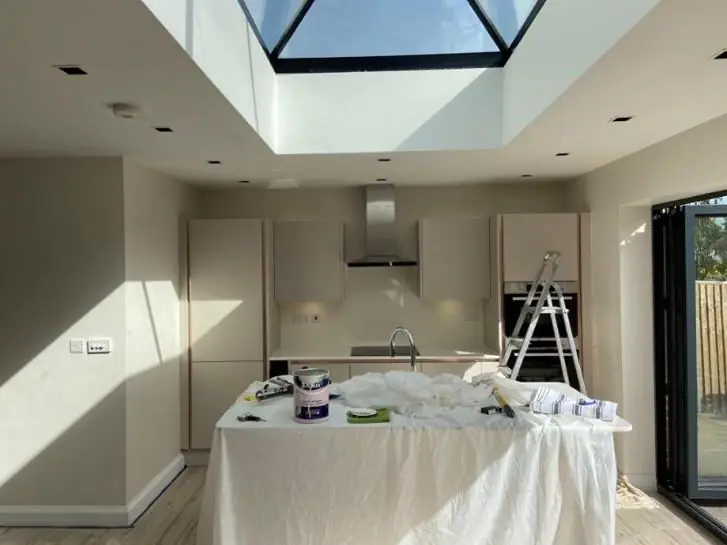
Bare plaster is very absorbent. A normal vinyl emulsion rolled straight onto it forms a skin on the surface rather than soaking in, and that skin can peel later. A mist coat (a diluted, breathable matt emulsion) soaks in and gives the later coats something to grip. Our guide to painting new plaster with a mist coat explains the ratios and drying times.
Snagging repairs bring a specific problem here. The surrounding wall is still in the original contract emulsion, while the repair is raw plaster. Even with the right colour, the two surfaces absorb paint differently, so the patch “flashes”: it shows as a dull or shiny square in raking light. The fix is to mist-coat the repair, then take the finish coats across the whole wall, corner to corner, instead of touching in the patch.
Checking it is dry enough
Skim coats usually need several days to a couple of weeks to dry, depending on thickness, season and heating, while a fully plastered extension on new blockwork can take longer. Signs that plaster is ready are an even pale pink colour with no dark patches, especially in corners and behind where radiators will go. On a converted garage, the former garage floor and walls have often been closed up with new insulation and boarding, so we check corners and the base of the walls carefully before painting.
The joins between old and new
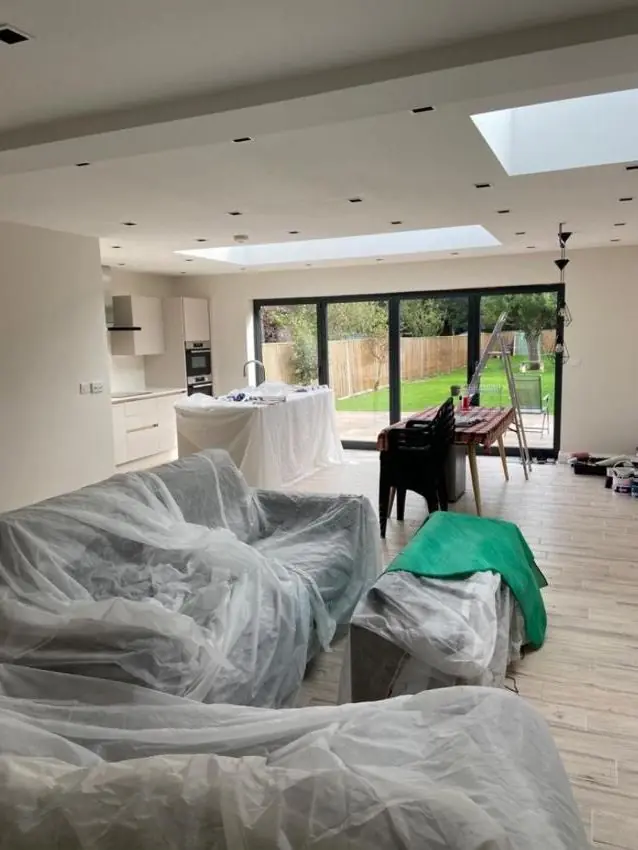
On an Overstone Leys extension the “old” house may only be five or six years old, and it is still drying out itself. The junction where the extension meets the original wall is where a crack is most likely to open as both structures settle. We caulk that line rather than filling it hard, and we usually advise taking the decoration across the whole of the original room so the extension does not look obviously newer than the rest.
| Source of new plaster | Typical extra step |
|---|---|
| Warranty snagging patch | Mist coat the patch, then repaint the full wall to stop flashing |
| Garage conversion | Check dryness at floor level; new door linings and skirtings primed |
| Rear extension | Flexible caulk at the join with the original house; full-room finish |
Booking and where we cover
Dean works out of Northampton and fits plaster jobs here around the trades on site. If the plasterer or builder is still on site, tell us the finish date and we can work out a sensible start. The full scope of an extension decorating job (ceilings, new woodwork and so on) is on our main new plaster and extension painting page, and the wider neighbourhood is described on our Overstone Leys page.
Last updated by Dean, DH Painter & Decorator.