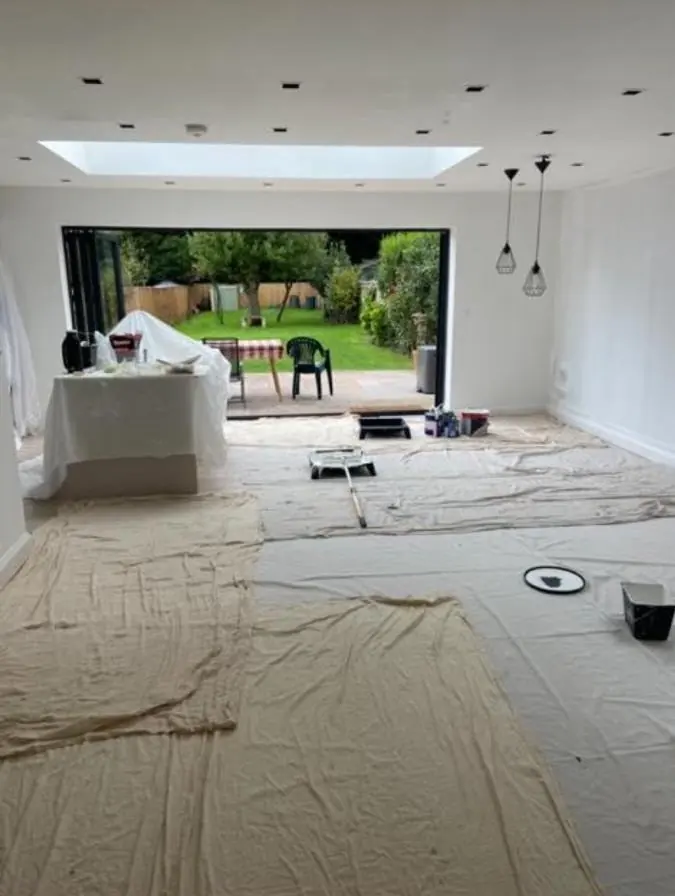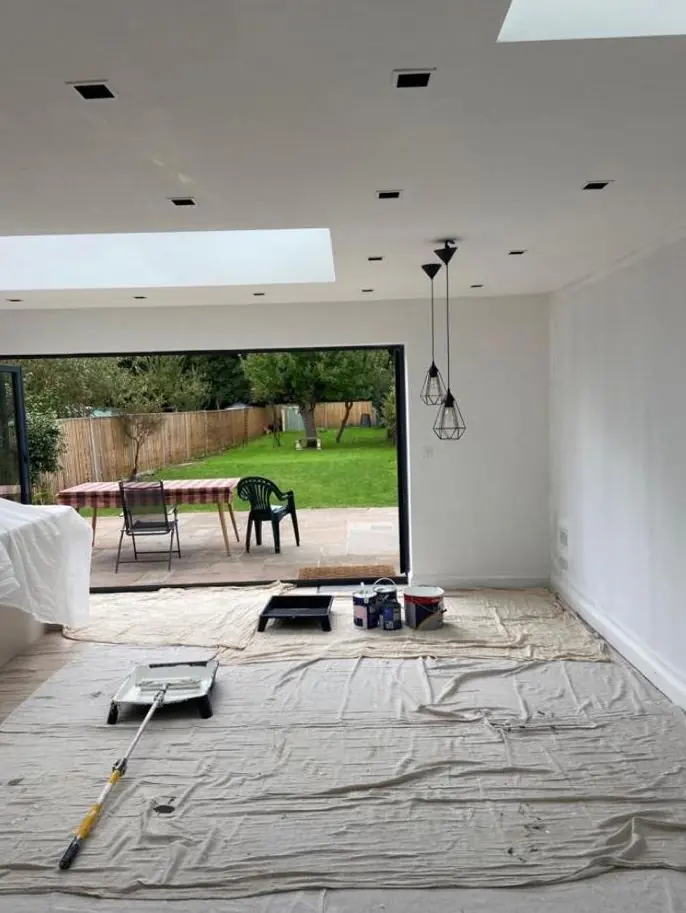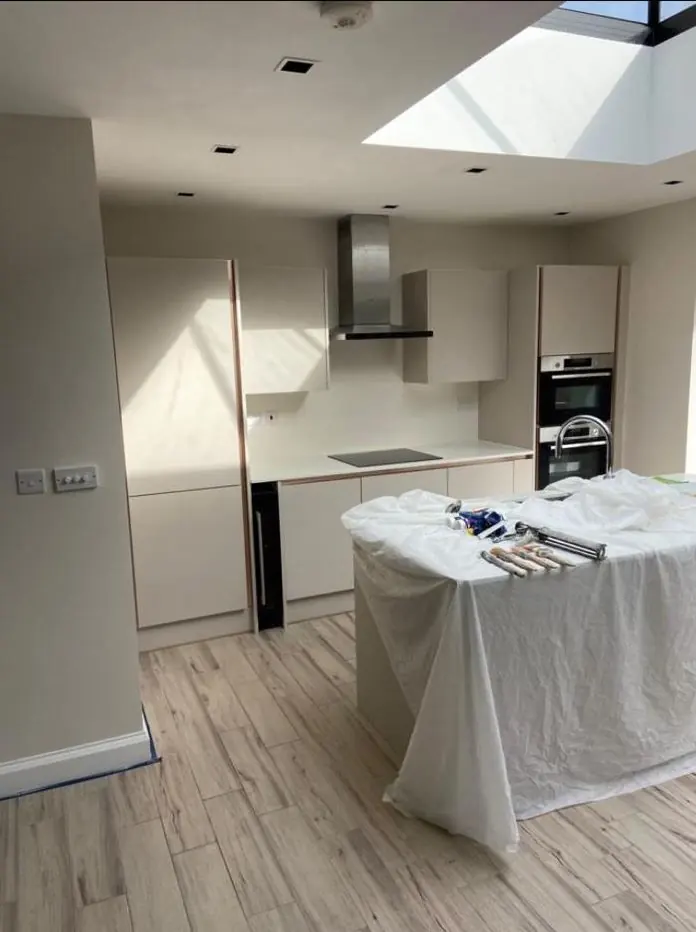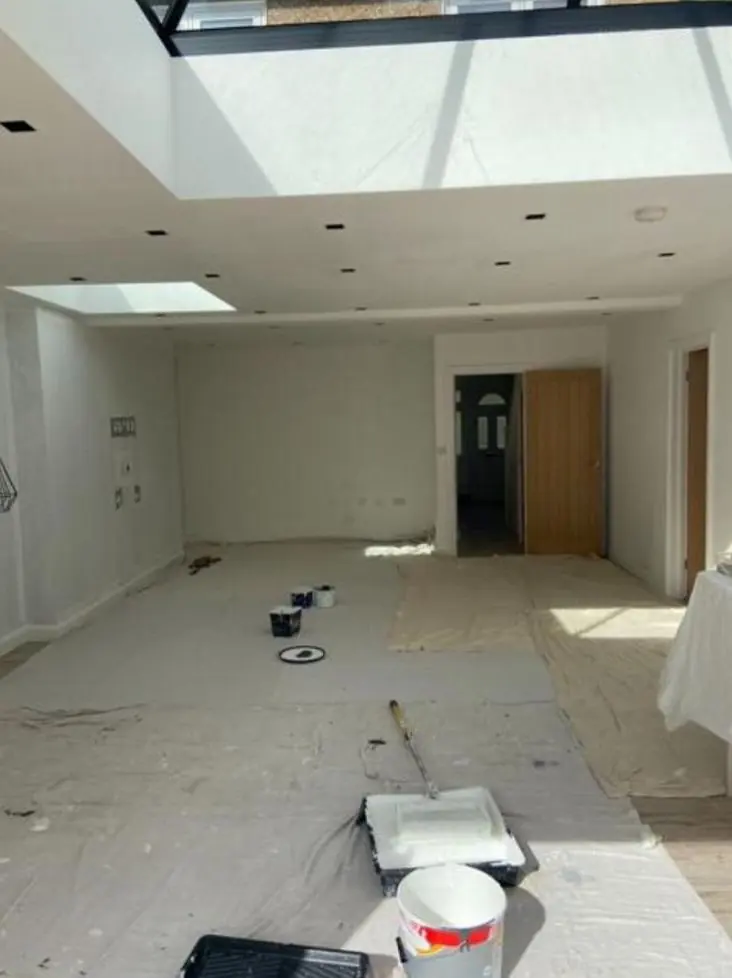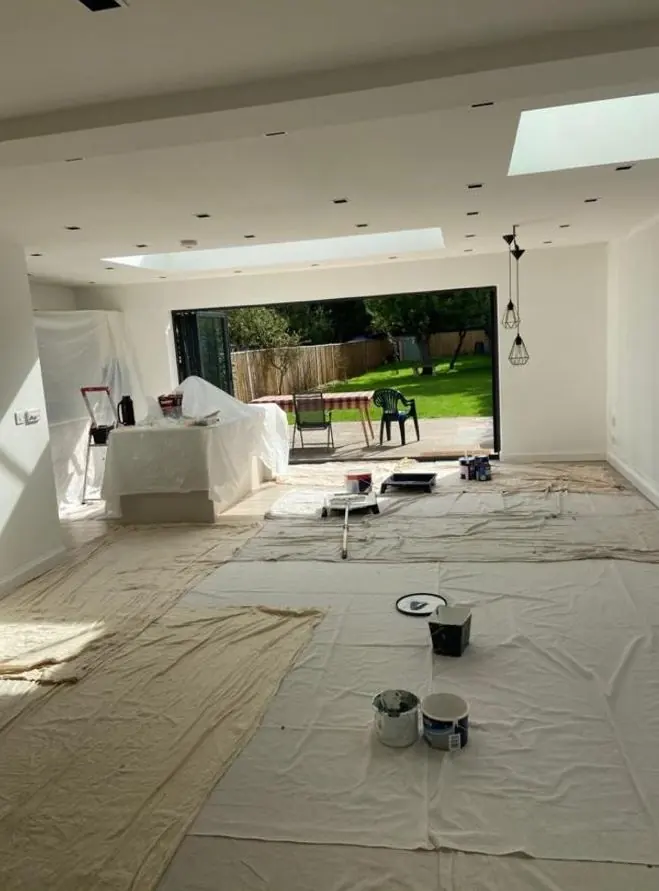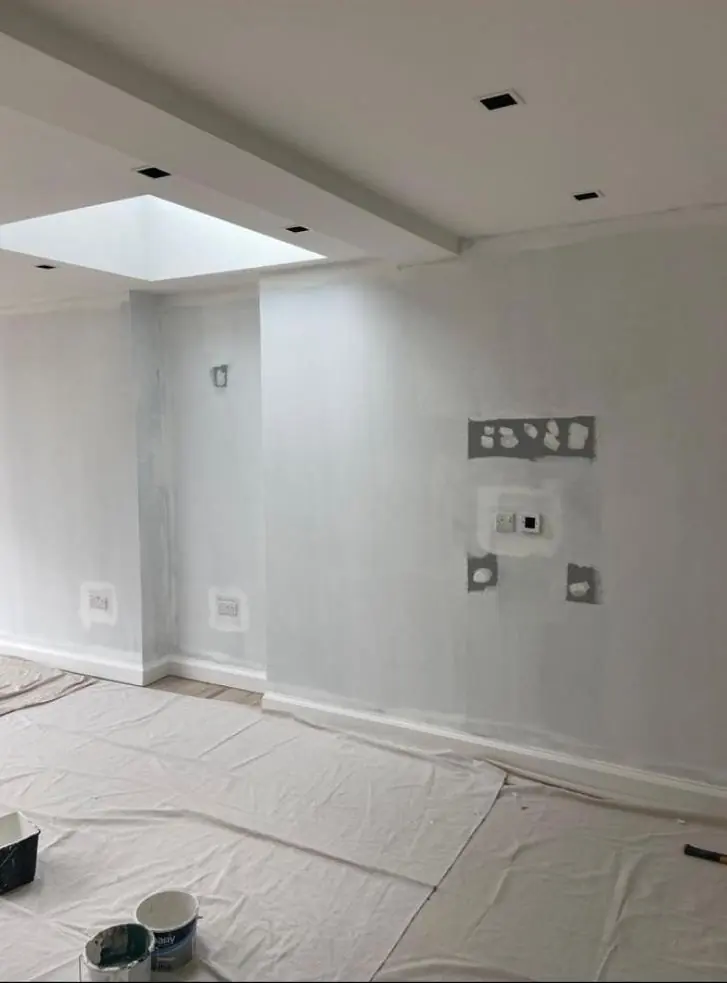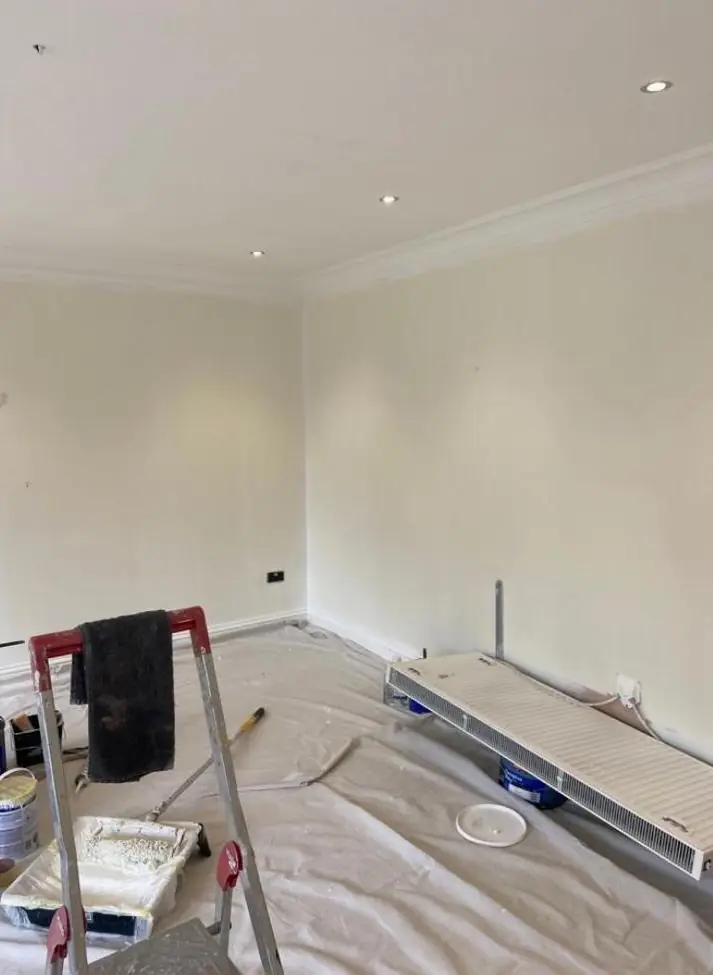
DH Painter & Decorator paints new plaster, re-skims and extensions in Little Billing, NN3, about 3.2 miles north-east of Northampton town centre. Dean adapts the approach to whether the plaster is modern gypsum or traditional lime.
First question: gypsum or lime?
In Little Billing the right way to paint new plaster depends on which part of the village the house is in. The later houses, from Fishponds Road to orchard-named closes such as Russet Drive, Pearmain Court and Damson Dell, are where most extensions, knock-throughs and re-skims happen. Those jobs use modern gypsum plaster and follow the normal sequence of drying time, a mist coat, then finish coats. The ten listed buildings in the old core are different. If a plasterer has repaired a wall in one of the coursed rubble cottages with lime, as solid stone walls generally need, it behaves differently and must not be treated like gypsum.
The usual process for gypsum is on our main new plaster and extension painting page, with more detail in our guide to mist coats on new plaster. Here we focus on what is particular to Little Billing.
Extensions on the later houses
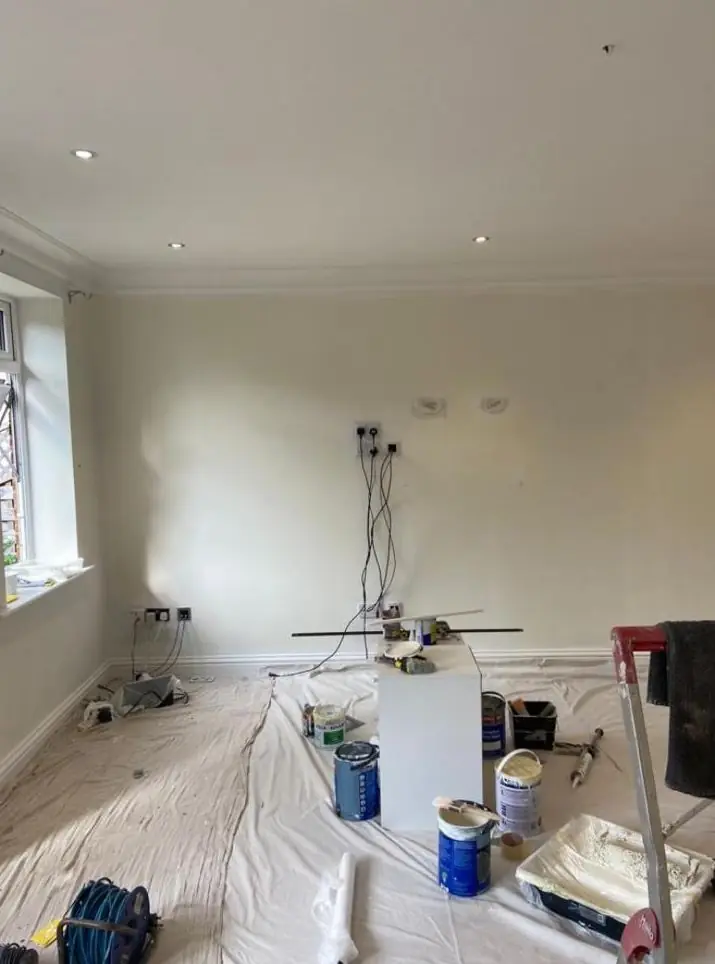
A single-storey rear extension or a converted garage on one of the closes is ordinary new-plaster work. Before any paint goes on, we check the plaster has dried evenly, which takes longer in winter and longer again on walls with little sun. That matters here: the rear of many Valley Road and Codlin Close houses faces the wooded brook corridor of the pocket park, which keeps the back of the house shaded and damp. A kitchen extension on that side may need more drying time, or some heating and ventilation, before the mist coat goes on.
Once the plaster is properly dry, we put on a thinned contract matt as the mist coat, fill and caulk anything it shows up, then apply the finish coats. New skirtings, architraves and doors in the extension are knotted, primed and painted at the same time, so the joinery matches the rest of the house.
Lime plaster in the listed cottages
Lime cures slowly by taking in carbon dioxide from the air, and it needs to keep doing that after it has been painted. The listed cottages in Little Billing are coursed rubble with thatch, and those walls need to let moisture out. A vinyl or acrylic emulsion over fresh lime plaster seals the surface, slows the cure and traps damp in the stone behind it. The paint then tends to flake, or the plaster to break down.
- Allow the full curing time the plasterer recommends, which is often several weeks, before painting.
- Use limewash, a mineral silicate paint suited to lime, or a clay-based paint.
- Match the finish on the surrounding old walls so the repair does not stand out.
- Make sure the repair itself, and any change of finish, sits within your listed building consent.
A repair against old walls that are already coated is harder. If they carry modern emulsion from earlier redecorations, it may need to come off before the room can be treated as one breathable surface. We assess that on site, not from a photo.
Timing your extension
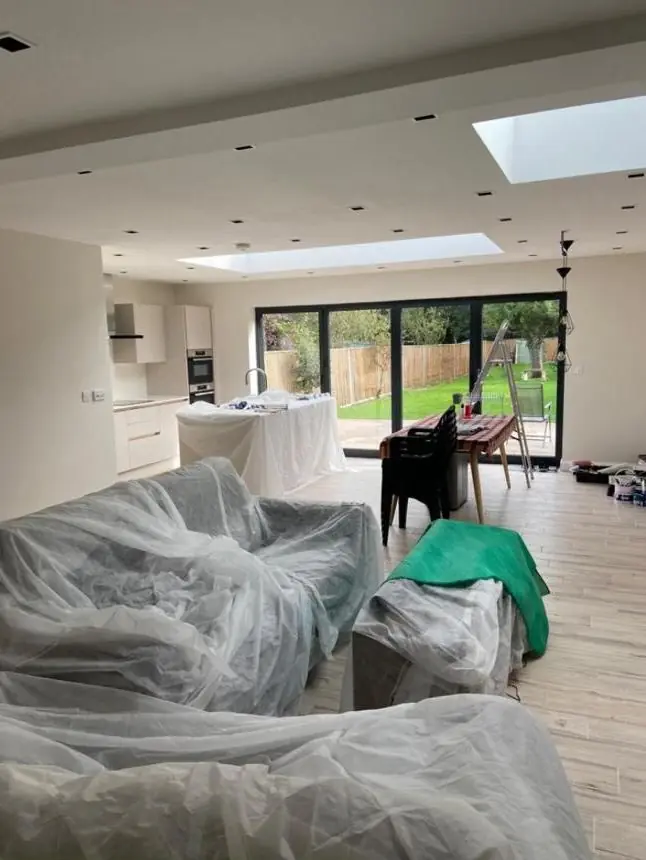
Book the decorating once the plasterer has a finish date, not after, so the drying check can be planned in. We cover Little Billing from our Northampton base and can look at the room before the plastering is finished if that helps you plan. More on the village’s houses is on our Little Billing area page.
Last updated by Dean, DH Painter & Decorator.