
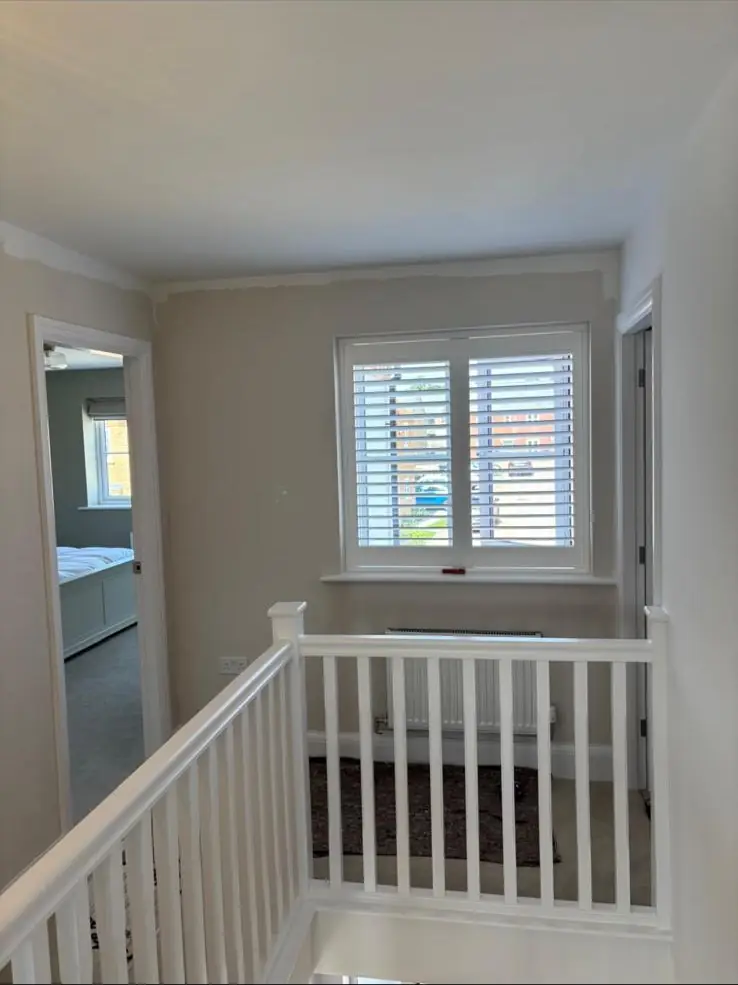
Dean paints internal and external woodwork in White Hills, NN2, about 2.8 miles north of Northampton town centre. Many of the estate's 1930s houses have suspended timber ground floors and old layers of gloss, and both decide how doors and skirtings are prepared before any new paint goes on.
Why skirtings crack along the floor in White Hills’ older houses
Energy certificates for the core White Hills postcodes show how many of the older houses are built: of 129 sampled, 58 record a suspended ground floor with no insulation. A suspended floor is timber boards on joists over a ventilated void, and it moves. Boards flex under foot and shrink and swell with the seasons, while the skirting is fixed to the wall. The joint between them opens and closes through the year, so a crisp gloss line along the bottom of the skirting cracks within months if it is painted rigid.
On these floors the gap is cleaned out and run with a flexible decorator’s caulk before the gloss or satin goes on, and the paint is cut in with a small gap left for the movement rather than flooded down onto the boards. Where a draught comes up from the void, the gap is sealed so the paint is not fighting an air current. Where the energy certificate records a solid floor instead, skirtings stay put and the joint can be filled hard.
| Fact | Detail | Source |
|---|---|---|
| Suspended ground floors | 58 of 129 sampled energy certificates: suspended, no insulation (assumed) | EPC register |
| Built 1930-39 | About 230 of 690 homes in LSOA 008C (VOA) | GOV.UK |
| Bungalows | About 25% of homes in LSOA 008C, about 170 of 690 (VOA) | GOV.UK |
| Height of the estate | About 101-113 m above sea level (Open-Meteo) | api.open-meteo.com |
Old gloss on 1930s doors and architraves
About a third of homes in the area were built in the 1930s, according to council tax records, and the original panelled doors and moulded architraves that survive have often been glossed many times since. Thick layers fill the panel mouldings, doors stick in their frames and the edges chip. Two things decide the preparation:
- Lead. Paint from before the 1960s can contain lead. Old layers are tested before anything is sanded, and if lead is found the work is done wet, with no dry sanding or burning off, and dust is controlled and cleaned up.
- Build-up. Where the mouldings have filled in, those areas are stripped back so the detail shows again; elsewhere the old gloss is keyed and the new coats go on over it.
Doors that stick are eased before painting, as another coat on a tight door only makes it worse.
Woodwork by house type
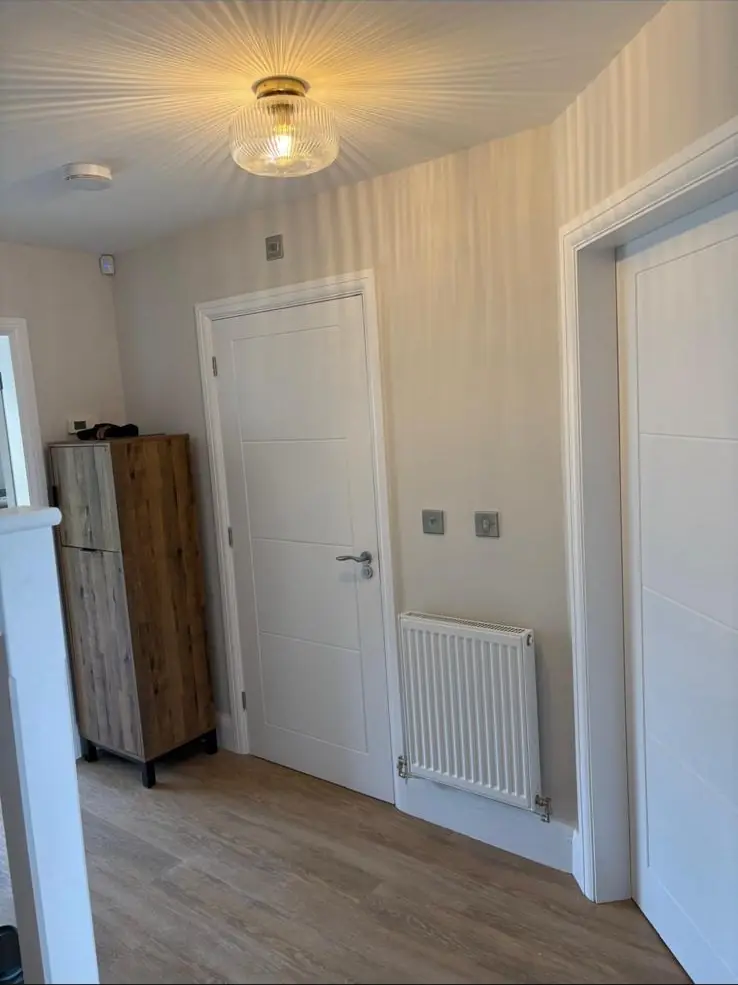
| Home | Typical woodwork | What it needs |
|---|---|---|
| 1930s semi | Panelled doors, deep skirtings, stair string and spindles | Lead test, stripping of clogged mouldings, flexible caulk at floor level |
| Bungalow | Every internal door off one hall | One continuous run of doors and frames, done in rotation so rooms stay usable |
| Post-war cavity-wall house | Flush doors, plainer skirtings | Keying and a durable satin; usually quicker preparation |
| Pines Close (2024) | Factory-primed MDF skirtings and architraves | Light sand, fill nail holes and joints, then first finishing coats |
About a quarter of homes in the area are bungalows, and in a bungalow a full woodwork job is a single run of doors, frames and skirtings all on one level. Doors are painted in rotation, a few at a time, so each room can be closed again by the evening. Hinges and handles are taken off or masked rather than painted round, which avoids the gloss-clogged hinges found on so many doors of this age.
Front doors on the higher plots
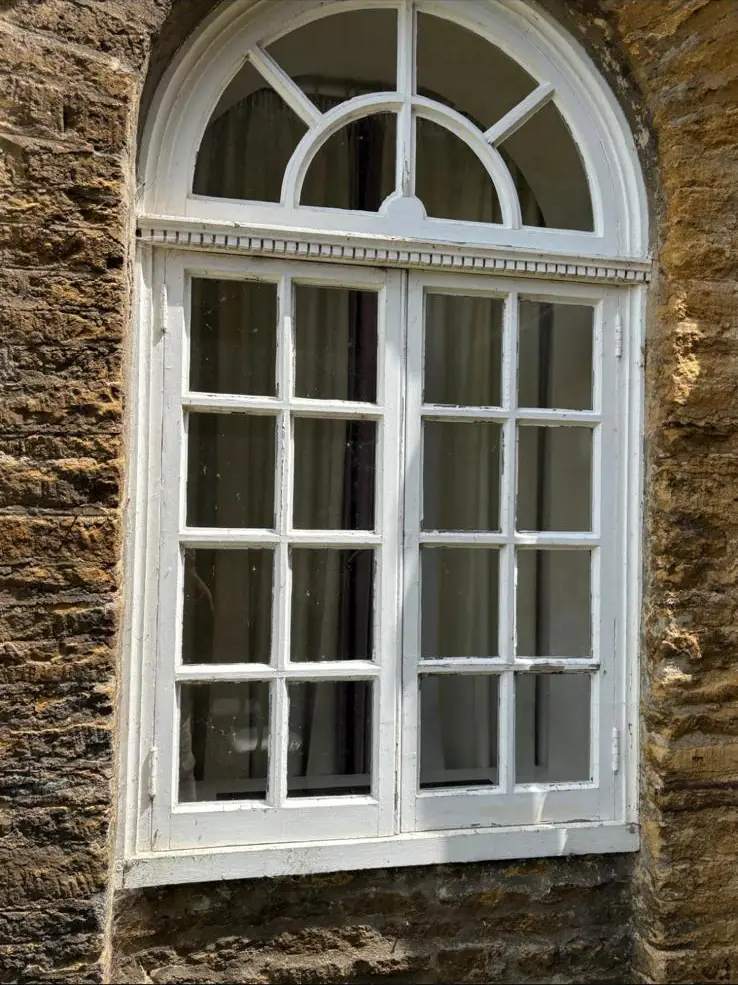
The estate sits on high ground at the open northern edge of the town, and timber front and back doors on the most exposed houses weather faster than internal woodwork ever will. The bottom rail and the joint between door and frame are where water gets in first. Those are filled, primed and given an exterior gloss or satin, and a timber front door on a south or west face is worth checking every few years. Outside timber more generally is covered on our White Hills exterior painting page.
Stair spindles and strings are often painted with the rest of the hall; see hall, stairs and landing decorating in White Hills. The general approach to woodwork, from primers to oil-based or water-based finishes, is on our main door and skirting painting page, and for what affects the price, see the cost guide. Everything else Dean covers on the estate is on the White Hills area page.
Sources
- Energy certificates, NN2 8EE, GOV.UK EPC register (accessed 2026-11-16)
- Council tax: stock of properties, 2025, Valuation Office Agency (accessed 2026-11-16)
- Elevation API, Open-Meteo (accessed 2026-11-16)
- Energy certificates, Pines Close NN2 8AB, GOV.UK EPC register (accessed 2026-11-16)
Last updated .


