Dean at DH Painter & Decorator hangs wallpaper and lining paper in White Hills (NN2), on the northern limit of Northampton, 2.8 miles out from the town centre. That covers feature walls in the 1930s estate houses and whole reception rooms in the larger detached homes on Harborough Road North, with a free quote after a visit.
Chimney breasts and alcoves on the 1930s estate
The houses built opposite Kingsthorpe Cemetery in the 1930s typically follow the classic inter-war living-room plan: a chimney breast with an alcove either side, and often a bay at the front. That shape suits paper well. A bold pattern on the breast alone gives the room a focal point without making it feel busy, and the alcoves can be painted in a colour picked out of the design. The catch is that inter-war chimney breasts are rarely perfectly square and the alcoves are rarely the same width, so the pattern has to be centred on the breast, not started in a corner. Dean marks a plumb line down the middle and works outwards from there, so the motif sits evenly either side.
The bay wall is the other common choice. Short lengths under and around a window are fiddly, and on a large repeat each one has to be matched by eye to the length beside it. Allow a little extra paper for those offcuts.
What usually comes off before anything goes up
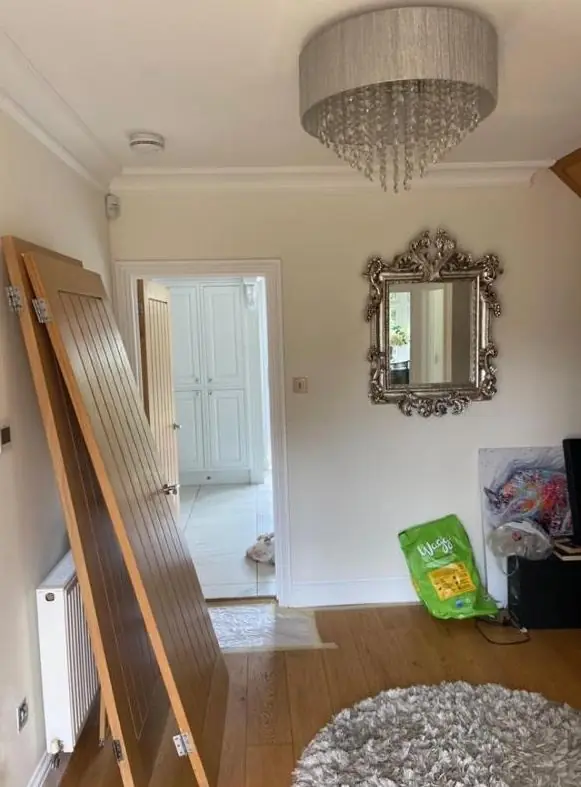
An inter-war house that has passed through several owners may have been papered and painted over more than once. It is common to find woodchip, painted vinyl or two papers on top of each other, and underneath them plaster that has been patched over the decades. Stripping is done with a steamer and patience. Where the face of the old plaster lifts with the paper, we make good, seal the repair, and hang lining paper so the new design has a sound, even surface. Skipping that step is why papers bubble or show every dip once the light hits them from the bay.
- Woodchip and painted papers are scored and steamed, never just painted again.
- Loose or powdery plaster is consolidated and filled before lining.
- Lining paper is hung horizontally so its joints never line up with the decorative paper’s.
Several reception rooms on Harborough Road North
The individually built detached houses along Harborough Road North are a different scale of job. A run of reception rooms, a long hall and tall stair walls mean a lot of rolls, and every roll must come from the same batch or the shade can shift visibly from one wall to the next. We measure the whole house, then check batch numbers and unroll each one before cutting. On long, uninterrupted walls a pattern drop of more than a few centimetres adds up quickly, so we calculate waste for the actual repeat rather than a rule of thumb.
Formal dining rooms and studies in these larger homes often take heavier papers: embossed designs, grasscloth-style finishes or non-woven papers where the paste goes on the wall. Each type has its own adhesive and handling, and some cannot be wiped, which matters for where they go.
Choosing a paper that copes with family life
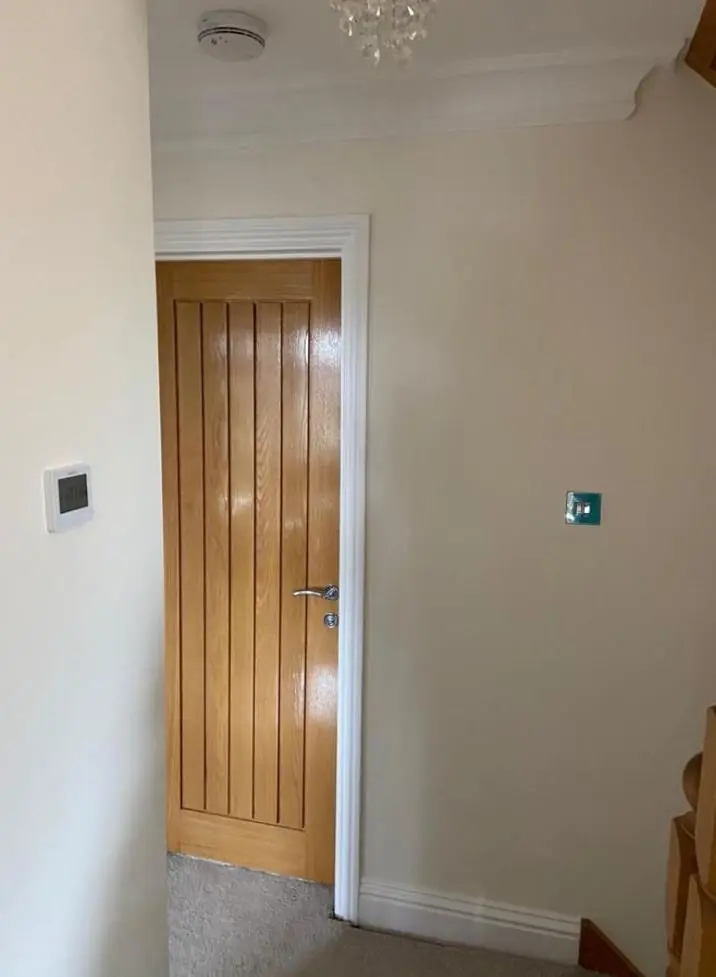
White Hills is a sought-after area for families, and that should steer the choice of paper in halls, landings and children’s rooms. A washable vinyl or a good non-woven paper will take a wipe-down after muddy hands; a delicate flat-printed paper will not. In a Wardington Court flat being readied for sale, the reverse can be true: a busy feature paper may be better removed and the wall painted a neutral shade, so buyers see a clean, simple room.
Arranging a visit
We cover White Hills from our Northampton base, about 2.8 miles north of the town centre. Dean looks at the walls, talks through the paper you have in mind and quotes in writing; our cost guide explains what affects the figure. More on how we hang paper is on our wallpaper hanging in Northampton page, and you can see the other services we offer locally on the White Hills page.
Last updated by Dean, DH Painter & Decorator.