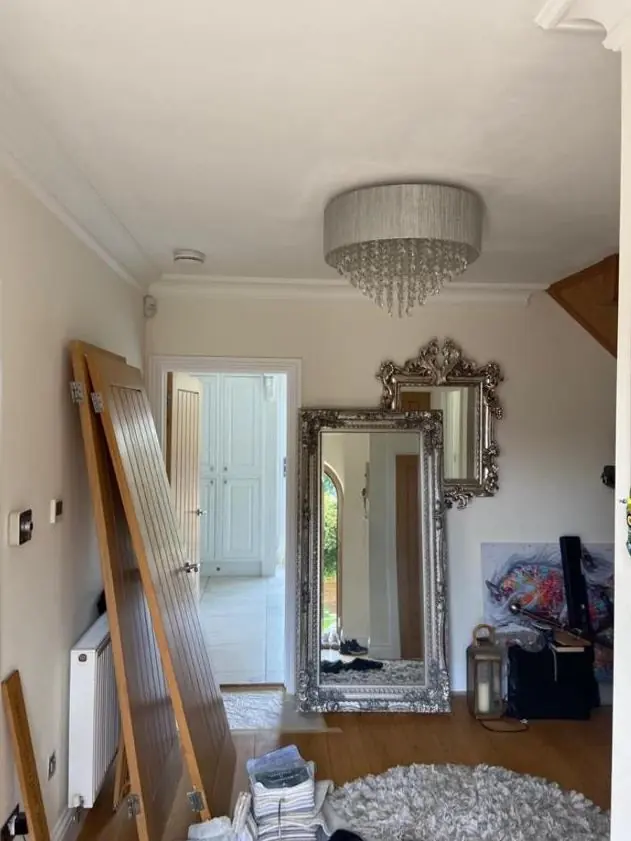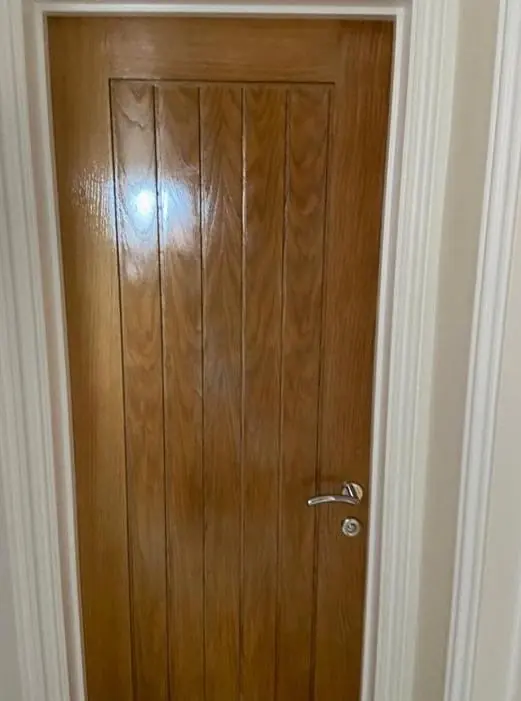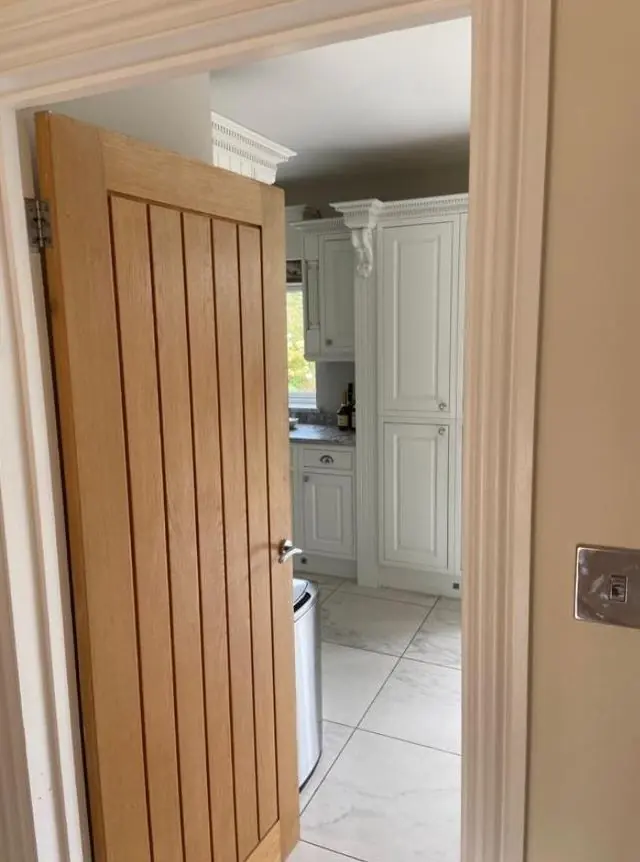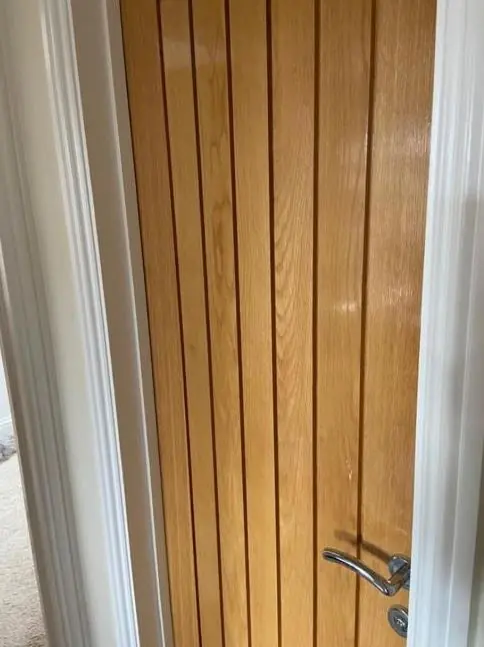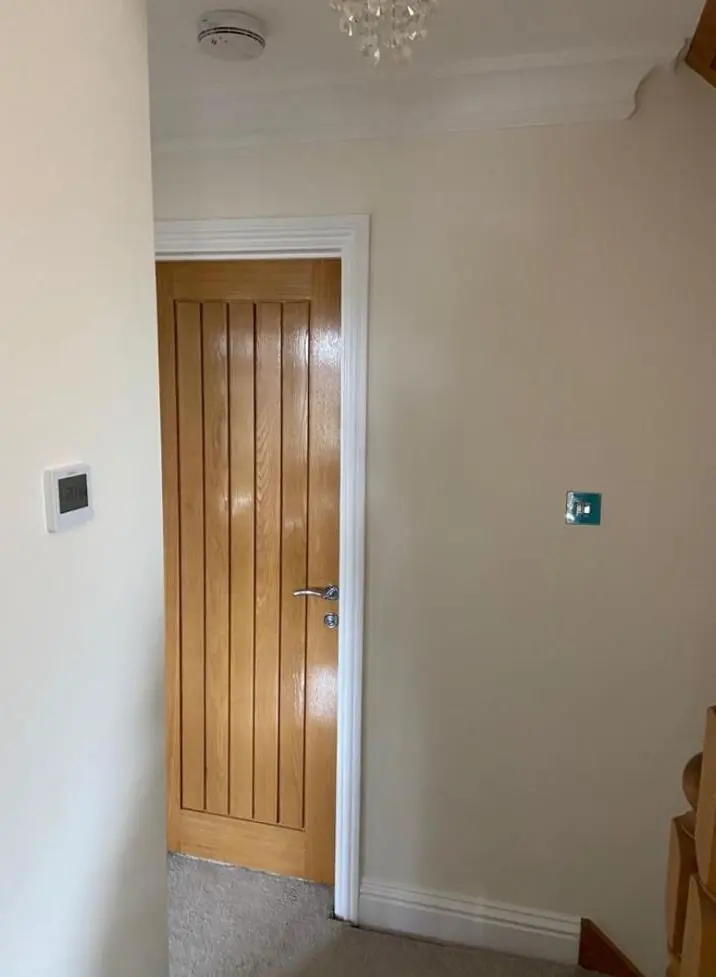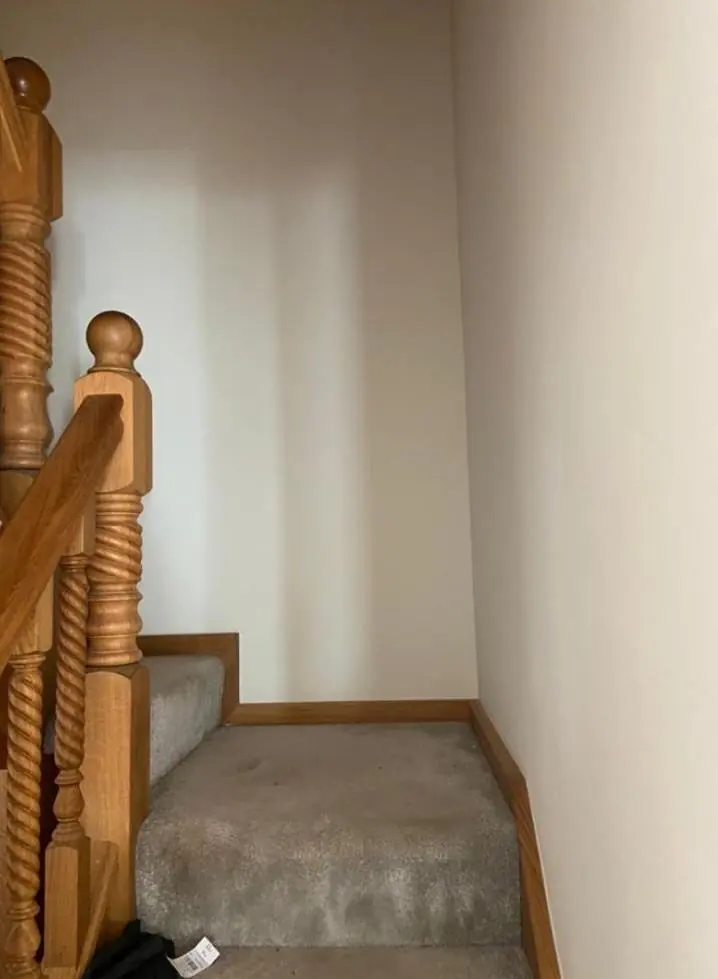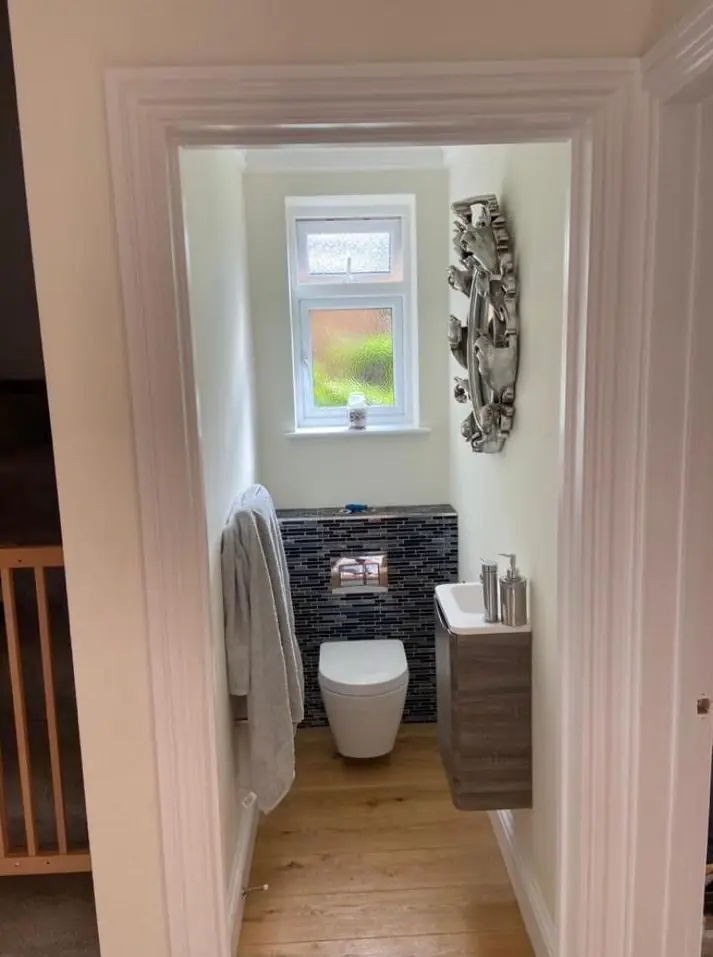
DH Painter & Decorator paints doors, frames, skirtings and architraves in Kings Heath, NN5, an estate on the north-west side of Northampton about 1.7 miles out. Most of the estate's woodwork dates from the early 1950s and carries many layers of old gloss, so the work is mainly careful preparation followed by a durable satin or eggshell finish.
Seventy years of gloss on post-war joinery
J L Womersley drew up Kings Heath in 1950 while he was Borough Architect, and the county’s historic records describe his houses surviving with very little change. For the woodwork, that usually means doors, frames and skirtings that are original to the house and have been glossed over again and again by successive occupiers. Each new coat went on over the last without the old one being taken back, so edges have rounded off, panel mouldings have filled up, and runs and drips from earlier jobs have hardened into the surface.
A straight recoat over that build-up looks tired within a year. The job here is mostly preparation:
- Washing down handle areas and skirting tops, which collect grime in busy family halls.
- Cutting back old runs and sags, then sanding the whole surface to a key.
- Filling dents, splits and old fixings, and spot-priming any bare timber.
- Caulking the gap where a skirting has shrunk away from a wall that has been repainted many times.
Paint on houses of this age can include coats applied before lead was taken out of decorative paints, so we avoid dry power-sanding old layers and use wet abrasives and dust sheets kept damp. If a door has so much paint on it that it no longer closes cleanly, stripping back is discussed before any brush goes near it.
Using the neighbours as a reference
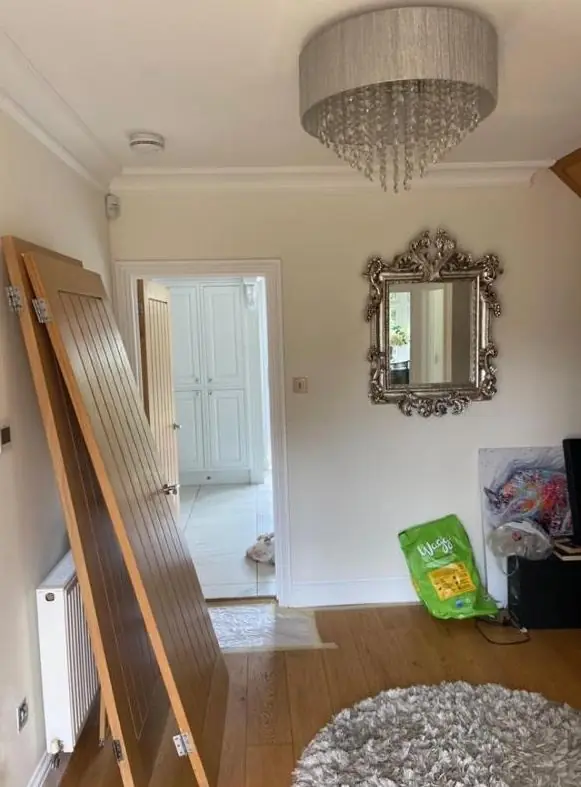
Most residential streets on the estate carry English river names, from Avon Drive and Severn Drive to Welland Way, Derwent Drive and Medway Drive, and they were built to one design. That helps when a house has lost its original features. Where one owner has kept the original internal doors and another has swapped them for flush or moulded replacements, the unaltered house shows what the frame profile and panel layout should look like. It is useful if you are deciding whether to keep, restore or replace before paying for a repaint.
Front doors are a slightly different question. With mixed ownership along a terrace, one front door is often next to another in a completely different colour, so we can talk through a colour that sits comfortably beside the house next door. Our main door and skirting painting page covers finish choices such as satin, eggshell and gloss in more detail.
New-build woodwork at Park Walk
Park Walk’s 2025 town houses need the opposite approach. Their doors and skirtings are new, often factory-primed MDF or softwood, and the house around them is still drying out and settling. Joints between skirting and wall open up in the first year as plaster dries and timber moves. We usually suggest letting that happen, then caulking the gaps, sanding the factory primer and applying finish coats, rather than painting everything the week the keys are handed over.
Working through a compact post-war house
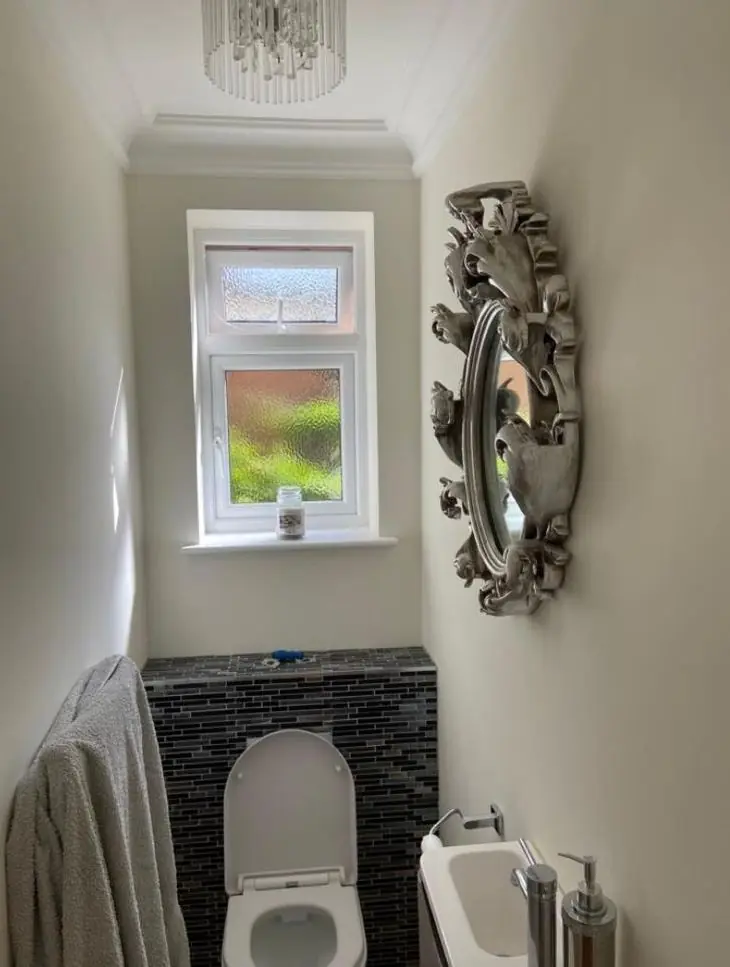
The original houses have compact layouts: a narrow hall, a straight stair, one main living room and smaller bedrooms. A whole-house woodwork job therefore moves room by room fairly quickly, but every door you shut to let paint dry also blocks a route through the house. We plan the order so bedrooms and the bathroom stay usable each night, and wedge doors open on dry blocks while the edges harden.
Woodwork jobs travel light, but a house fronting a path still means a walk from the van, which we allow for. Our Kings Heath area page covers the rest of the work we take on there. For a sense of how woodwork jobs are priced, see our painter and decorator cost guide.
Last updated by Dean, DH Painter & Decorator.