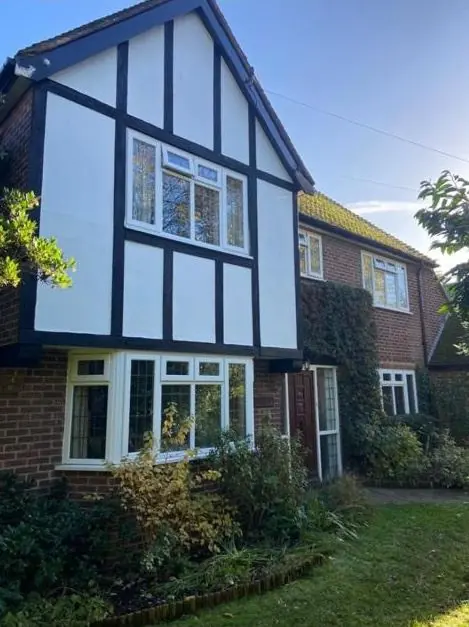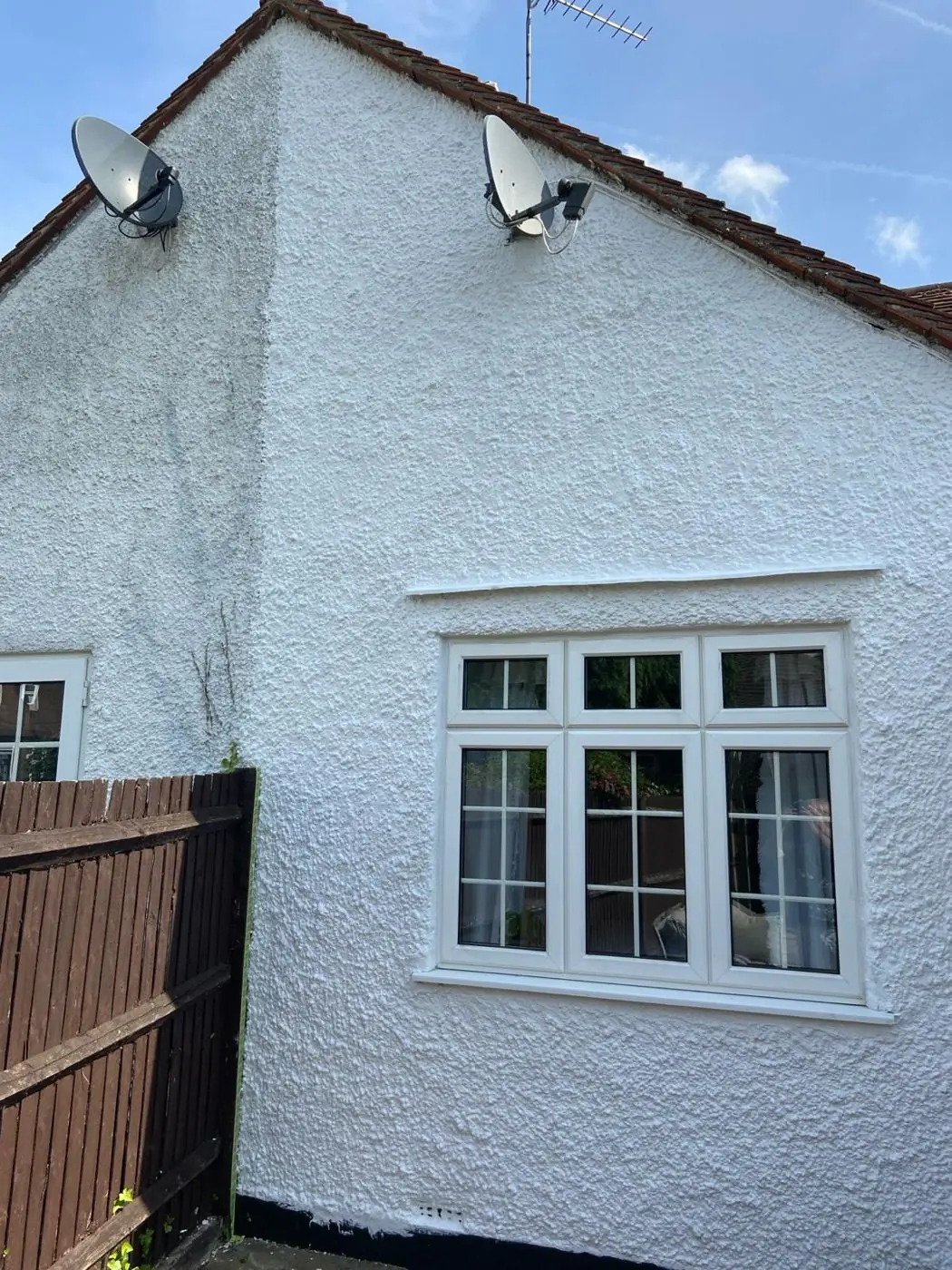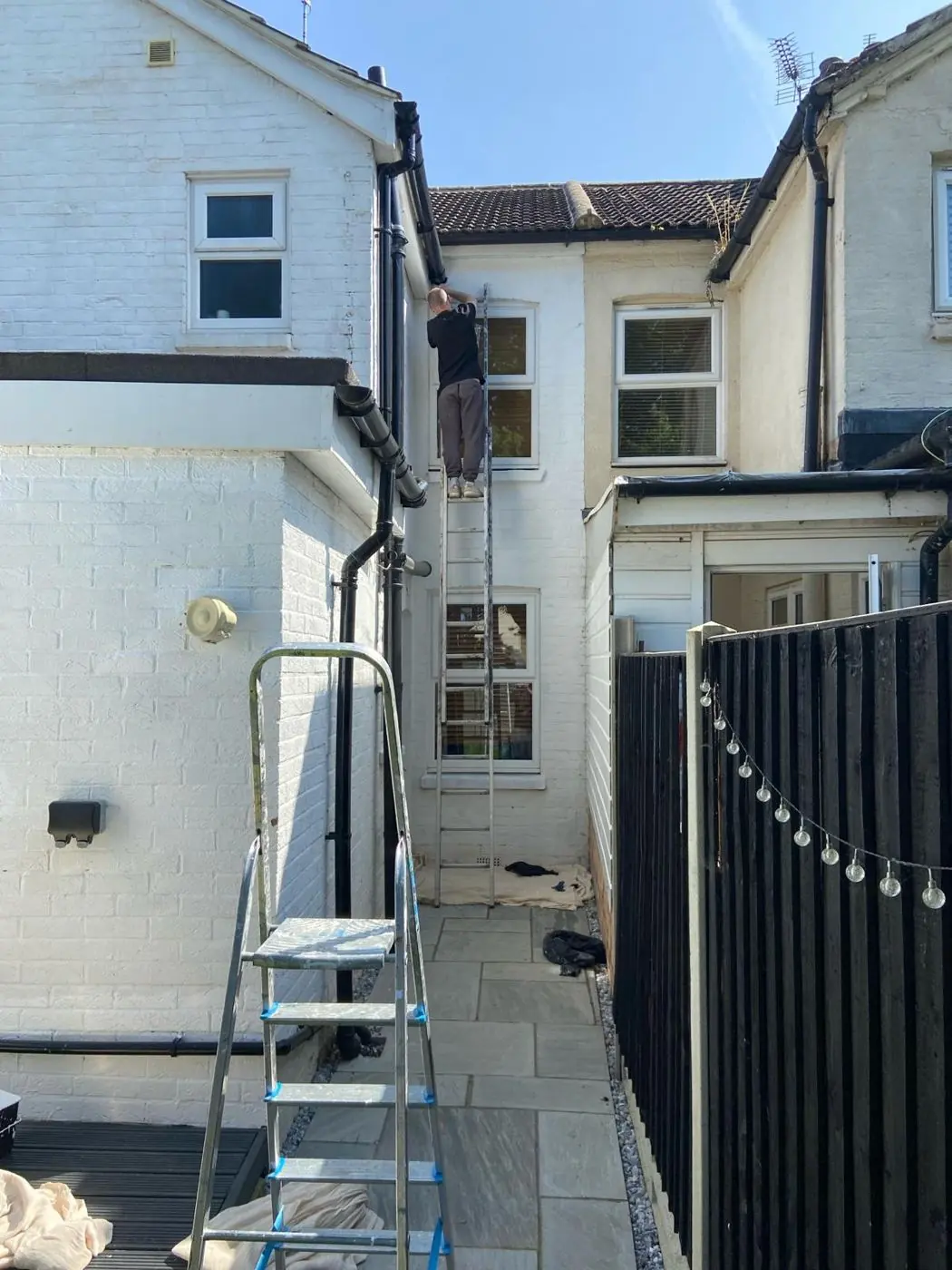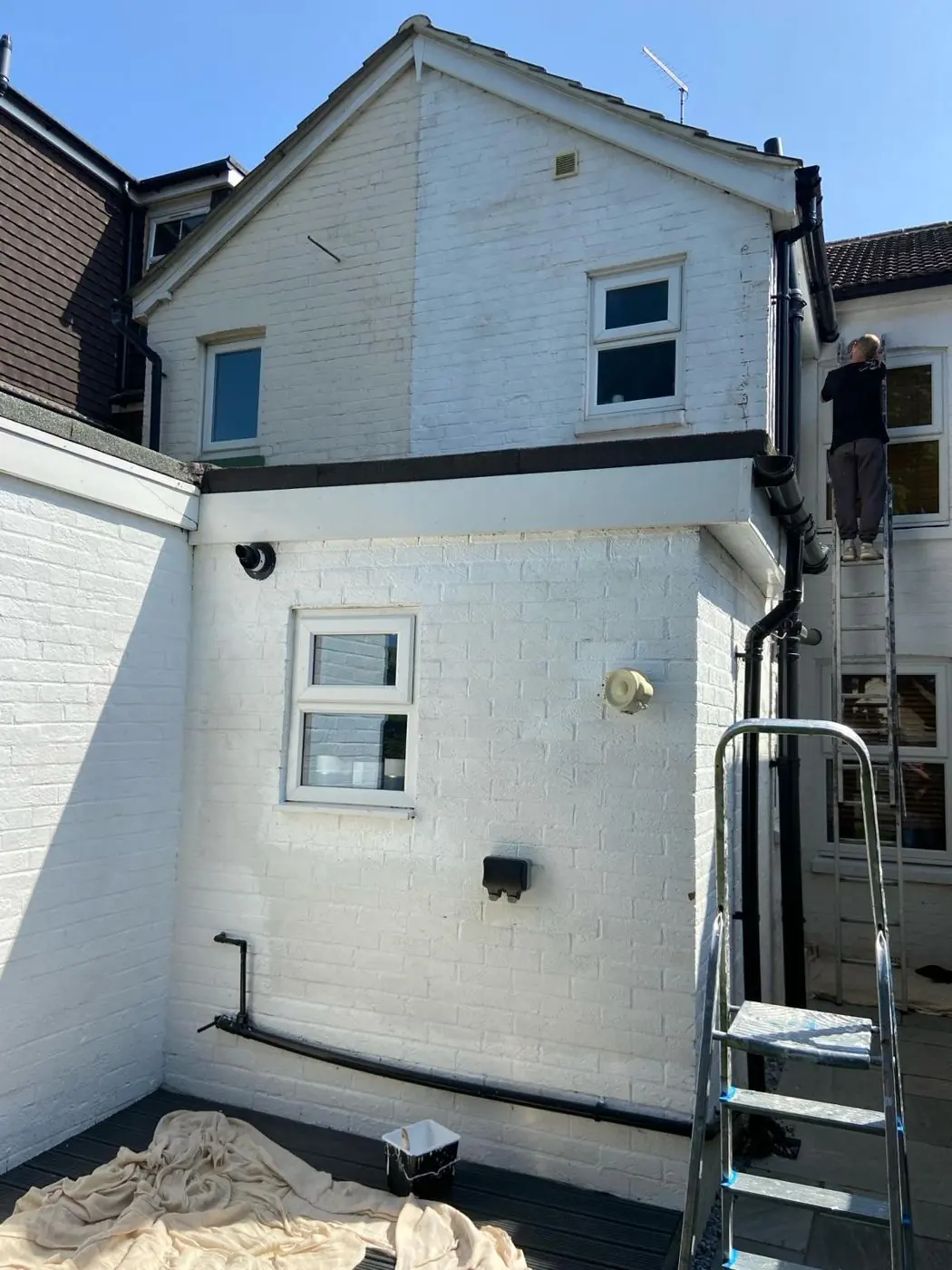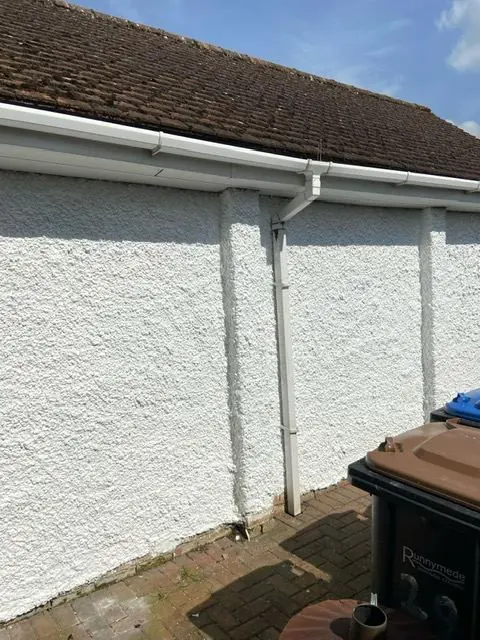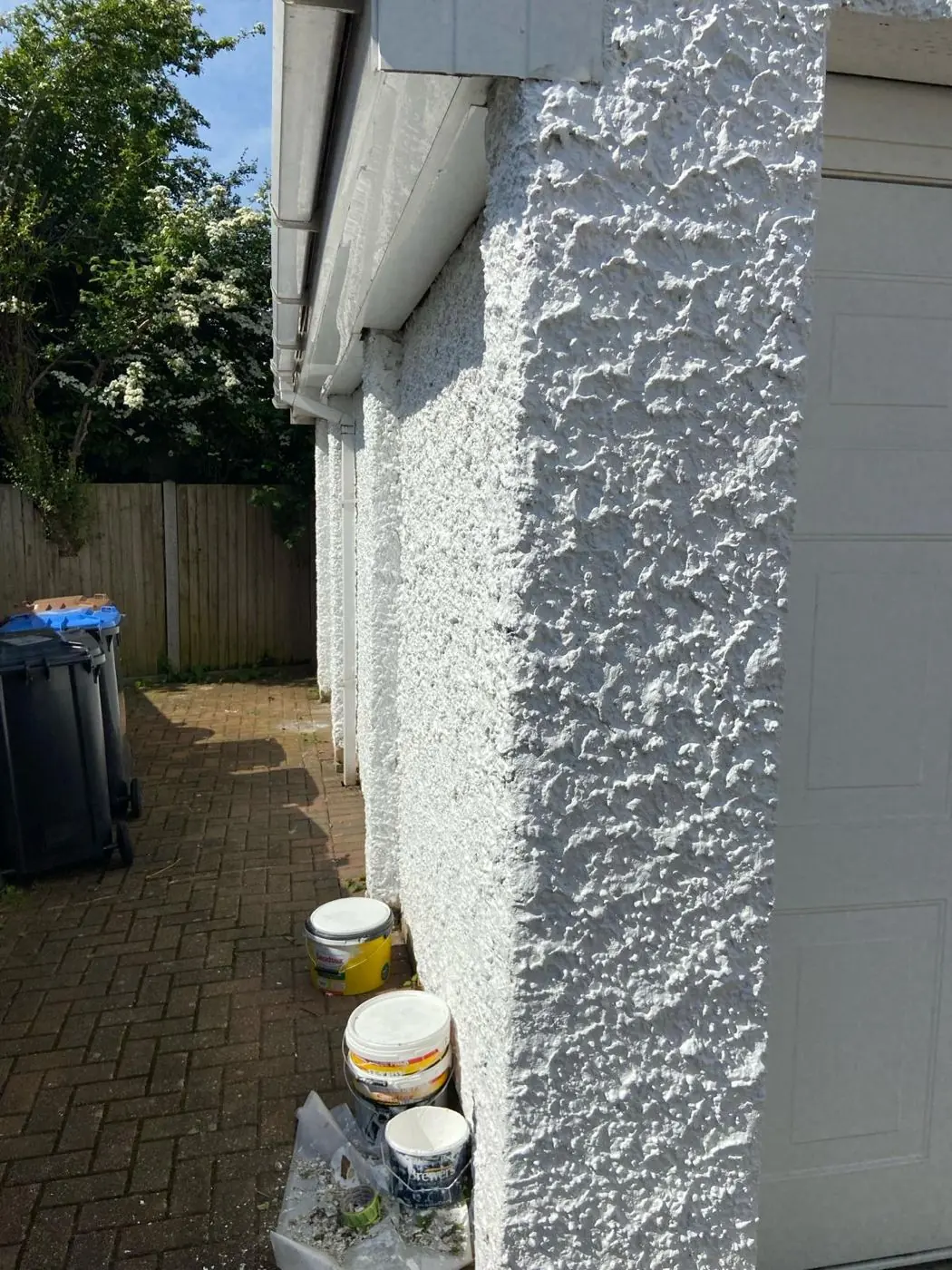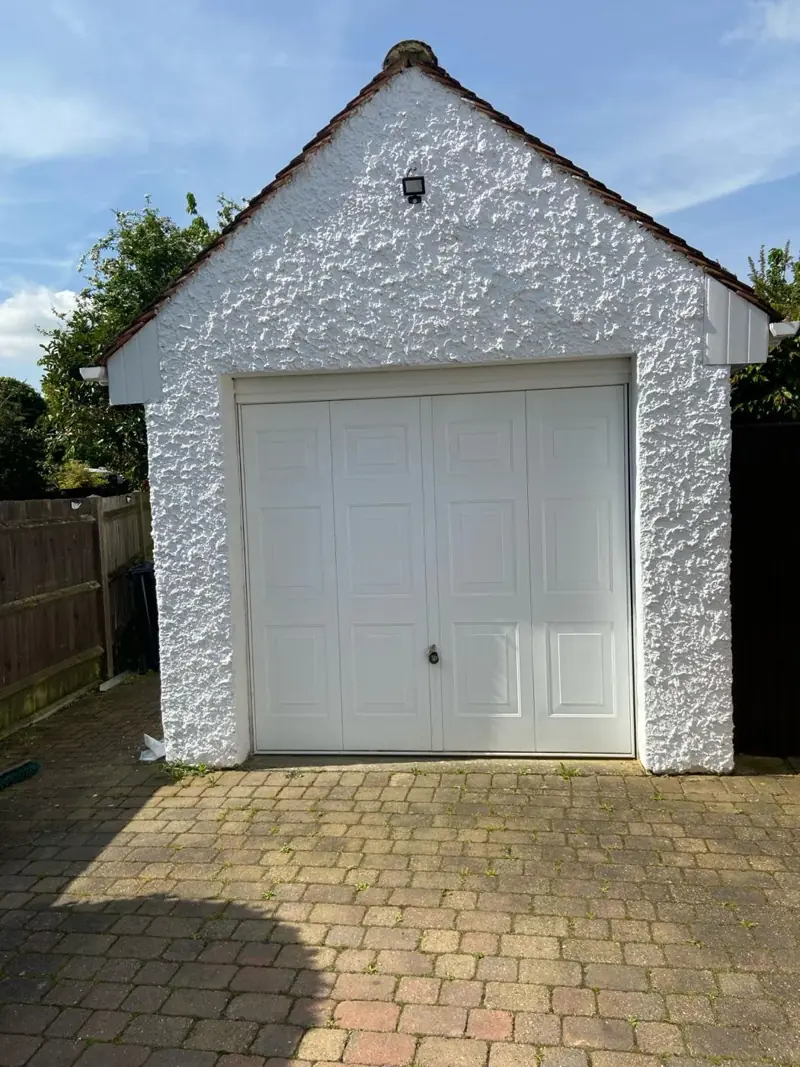
DH Painter & Decorator paints fascias, soffits, bargeboards and gutters in White Hills (NN2), about 2.8 miles north of Northampton town centre. Dean checks any surviving original timber for rot first, which matters on 1930s houses facing the exposed northern edge.
Original timber, or already uPVC?
The first thing to settle on a White Hills roofline is what it is made of. Houses on the 1930s estate opposite Kingsthorpe Cemetery would have been built with timber fascias, soffits and bargeboards, and some still have them. Others have had them replaced with uPVC, or capped, over the decades. Timber needs painting to survive; uPVC usually needs only a clean. A capped board can hide rot behind it, so if a cover looks loose or stained we mention it rather than paint over it.
On the individually built detached houses off Harborough Road North the rooflines are longer and often more complicated, with several roof faces and gables, so the length of board to prepare goes up quickly.
Finding soft wood before it is painted over
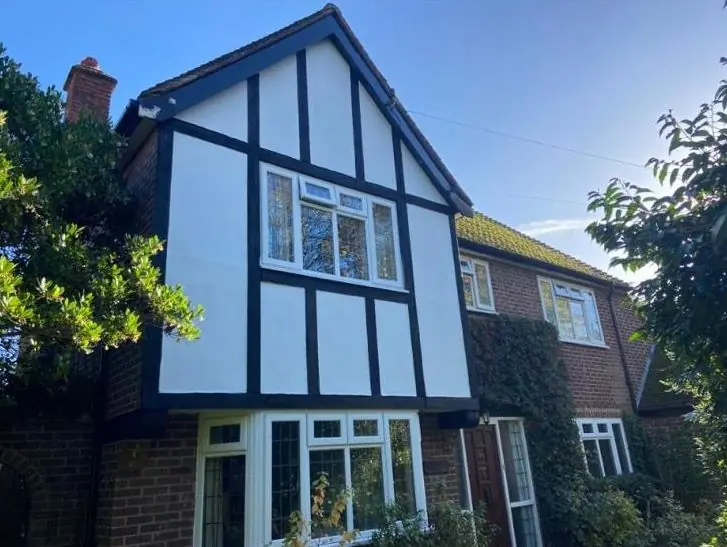
Timber that has been on a house since the 1930s has been through a lot of winters. Before quoting, Dean probes the places water collects:
- the ends of fascia boards where they meet the gable
- corners where two boards join
- the lower edge of bargeboards under the verge
- sections behind a dripping gutter joint or a blocked outlet
Small soft patches can be cut out and filled. A board that is soft along its length needs replacing by a carpenter before it is worth painting, and we will tell you that plainly rather than gloss over it.
Why the outer rows weather faster
White Hills marks the end of the built-up area. Beyond it lie Buckton Fields and then open land towards Boughton, so the rooflines on the outermost houses meet wind and rain with little shelter. Paint on north and west-facing fascias there tends to crack and lift sooner than on boards facing a sheltered inner street. Where a house is that exposed we spend longer on priming end grain and joints and use an exterior system rated for hard exposure, because those are the places failure starts.
Gutters and downpipes are usually done in the same visit. On a 1930s house that may mean old cast iron sections alongside plastic replacements, and each needs its own preparation.
Colour is open here. White Hills is not covered by a conservation area or an Article 4 direction in the sources we checked, so a change from white boards to a dark grey or black roofline needs no heritage consent. Darker colours do absorb more heat on south-facing boards, which is worth weighing on timber that already has some movement in its joints.
Ladders, towers and a trunk road
Getting to a roofline safely is a big part of the job here. Harborough Road North is mapped as a trunk road, so ladders on a front elevation there are set up with traffic in mind and kept within the property where possible. Bays on the inter-war houses often sit right under the front fascia, which means working around or over the bay roof. On larger plots the access is easier but the runs are longer, and plants under the eaves need tying back and sheeting before scraping starts.
Where a drive is shared, such as Anchor Drive, we talk to the neighbours before any equipment arrives. If the walls need doing as well, combining the jobs saves setting up access twice; our painter and decorator cost guide explains how that kind of planning affects a quote.
This page covers White Hills specifically. The general process is on our main fascia and soffit painting page, and other services in the district are on the White Hills area page.
Last updated by Dean, DH Painter & Decorator.