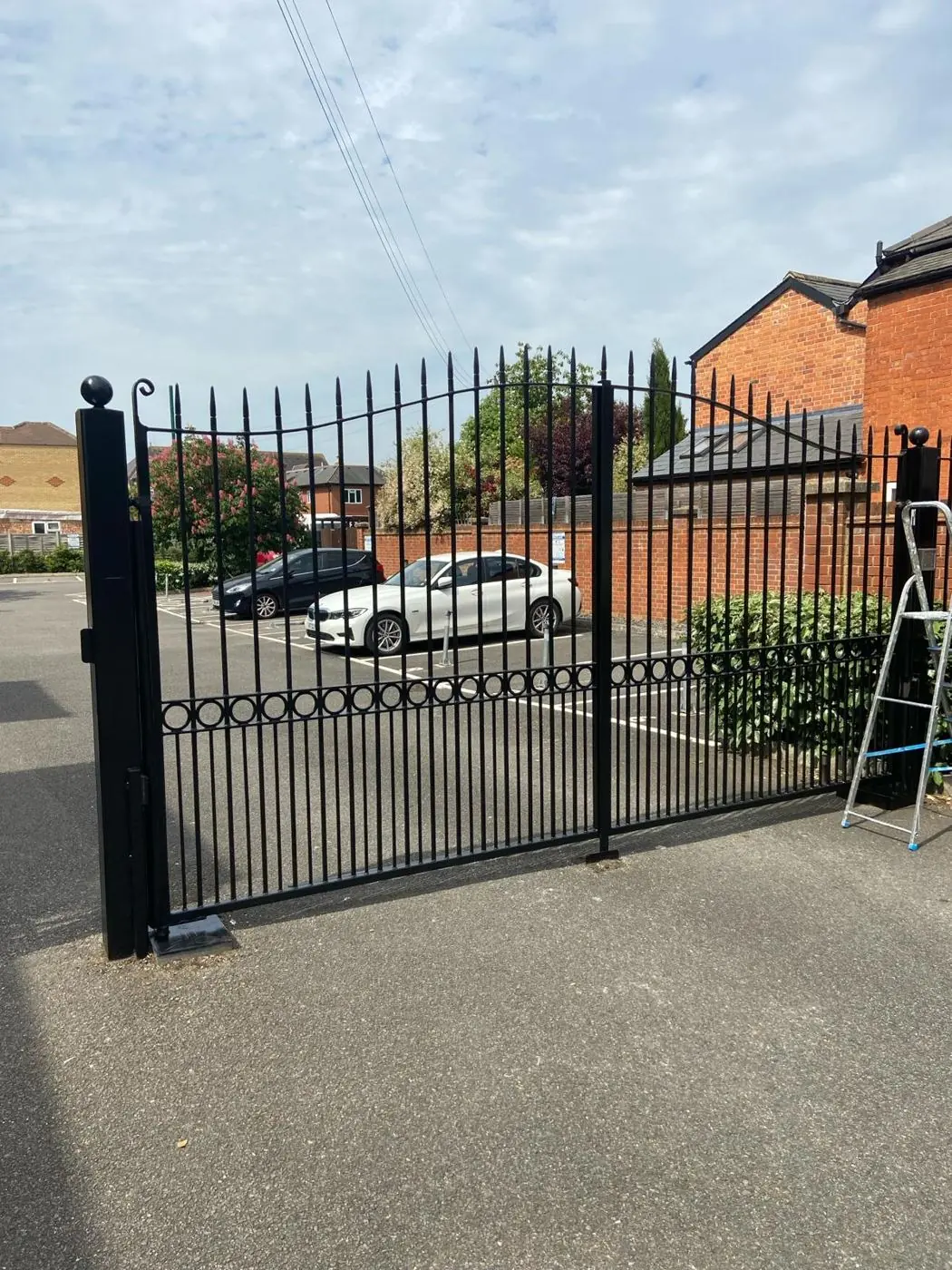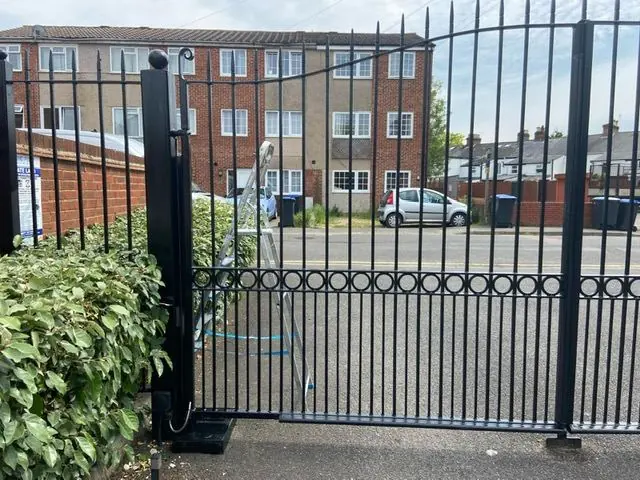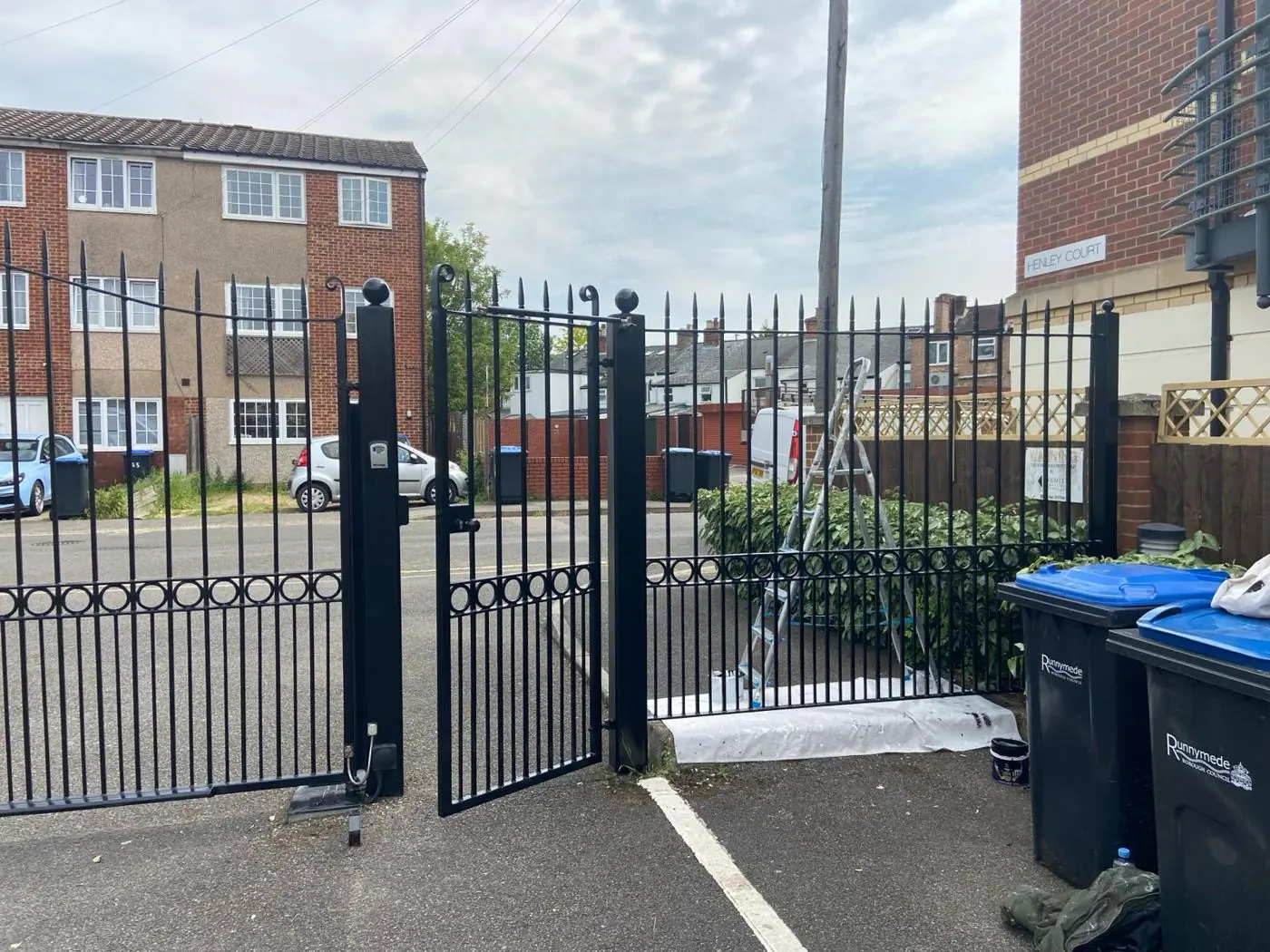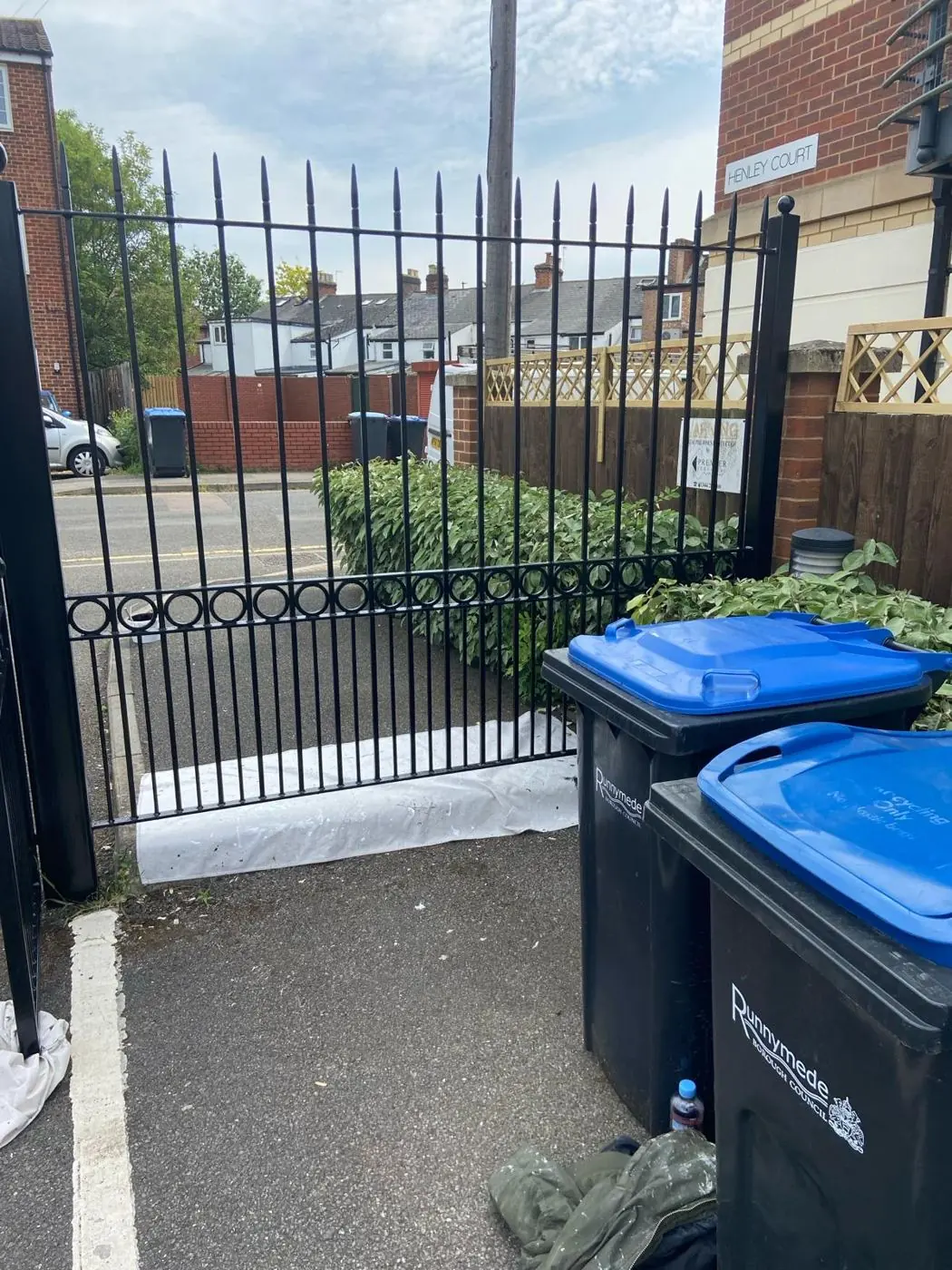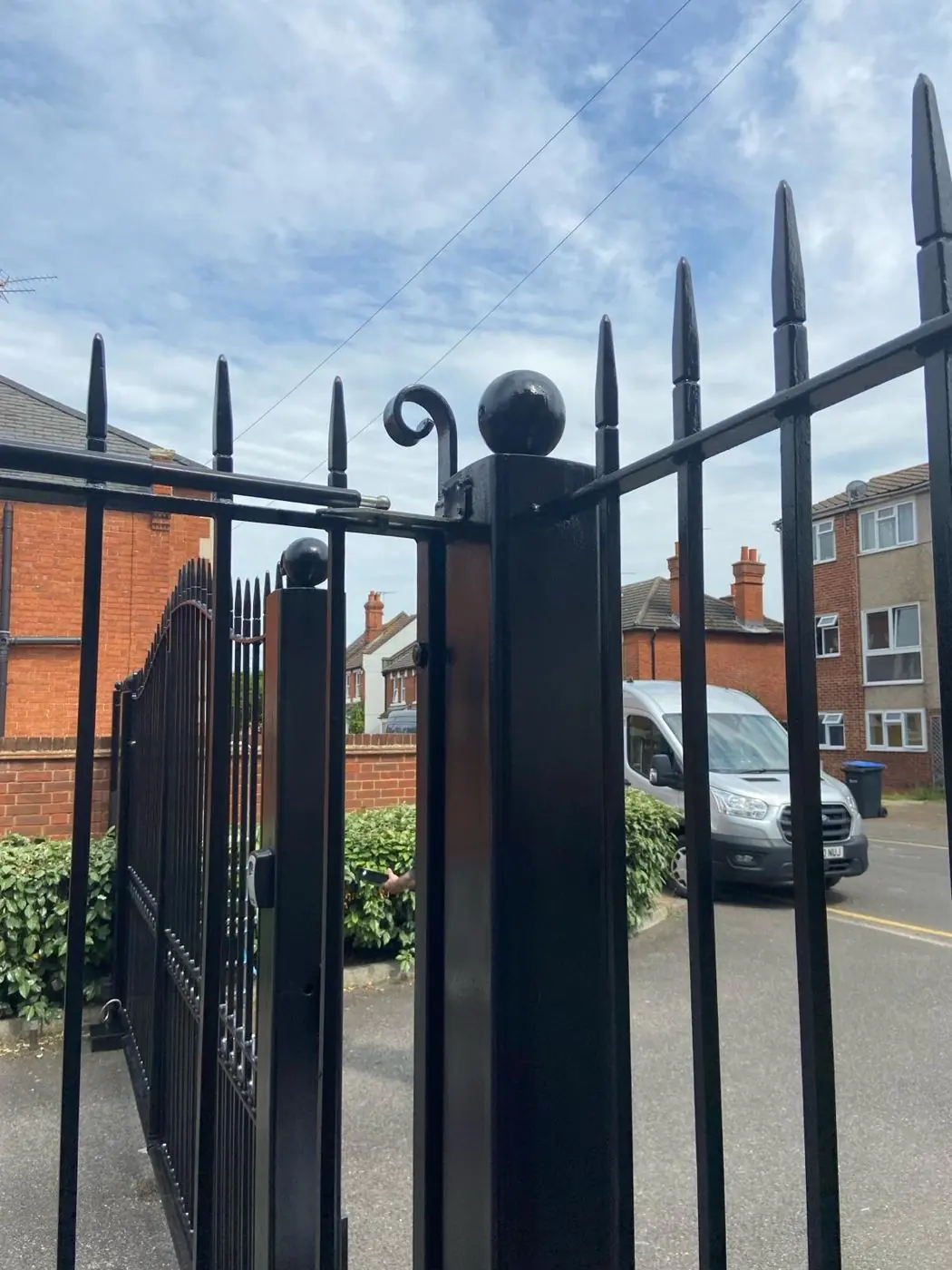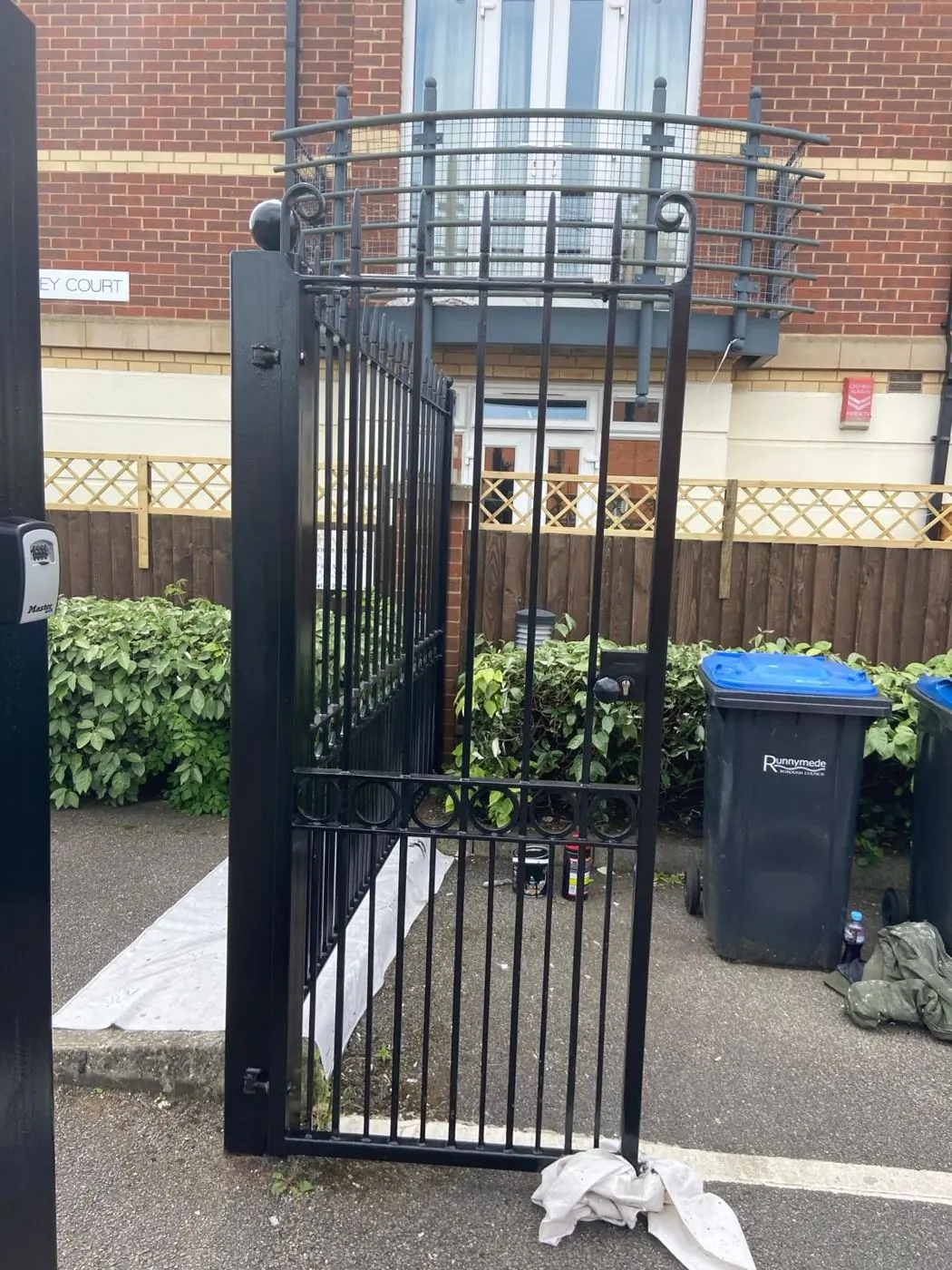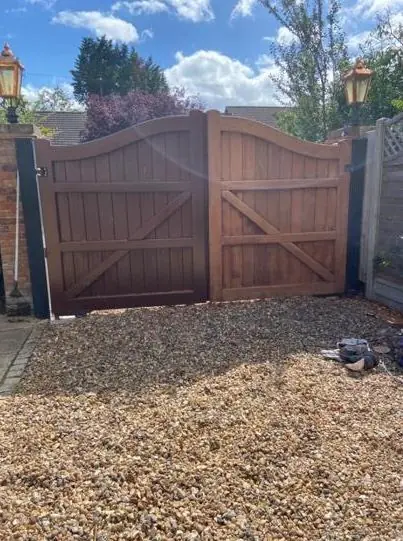
We stain and paint fences, gates and garden timber in White Hills (NN2), about 2.8 miles north of Northampton town centre. Work ranges from short estate-garden boundaries to the long fence runs and timber driveway gates around the large plots on Harborough Road North.
Plot size changes the job
Garden timber in White Hills comes in two scales. On the 1930s estate streets around White Hills Crescent and White Hills Way, a typical job is a back-garden fence, a side gate and perhaps a shed. On Harborough Road North it is a different order of work. One house there sits on about 0.4 acre with mature gardens wrapping around it, and plots like that can mean boundary fencing on three or four sides, timber driveway gates and garden structures as well. The approach is the same, but the time on site and the planning are not.
Working along mature planting
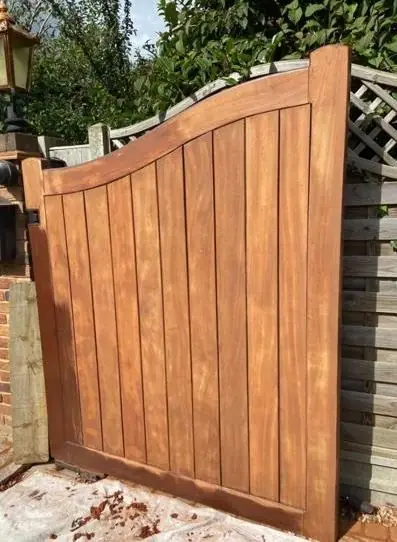
Long-established gardens are the main practical challenge here. Shrubs, climbers and hedging grow right up to the boards, and stain does not belong on leaves. Before the first coat we:
- tie back climbers and shrubs from the fence line, or ask you which can be trimmed
- sheet beds, lawn edges and paving under the panels
- clear moss and dirt from the overlaps and gravel boards so the stain soaks in evenly
- check posts at ground level for movement or rot before putting time into finishing them
Where a fence is the boundary with a neighbour, we only stain their side with their agreement.
Driveway gates on the bigger houses
Larger plots off Harborough Road North can have in-and-out driveways, and timber gates on those take more knocks and more weather than a garden fence. A gate is worth more careful work: the joints, the bottom rail and the top edge of each board are where water gets in, so they are cleaned back, allowed to dry and given extra attention. Hinges and latches are masked or removed so they keep working, and the underside of the bottom rail, which nobody sees but which sits closest to wet ground, is coated too. If a gate has dropped and drags on the drive, it is worth having it rehung before it is refinished, otherwise the fresh coat on the bottom edge is scraped off within weeks. If a gate is hardwood with a clear or tinted finish, we keep to a compatible product rather than switching to an opaque paint unless you want the change.
On a shared private drive such as Anchor Drive, gates and fences next to the drive are worked on so the other households can still get in and out.
Weather on the open side of White Hills
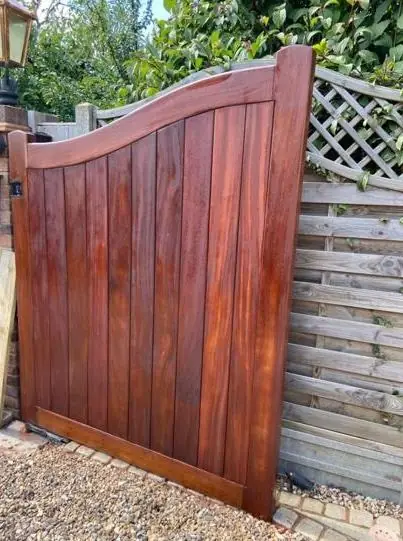
Fences on the northern edge of White Hills, where the houses look out towards Buckton Fields and open countryside, take more wind and sun than those sheltered between houses. Exposed panels fade and grey faster, and lap panels can dry out and split. On those runs a more pigmented stain usually holds its colour longer. Stain also needs dry timber and a dry spell after application, so we plan around the forecast; our guide on timing exterior work in the UK explains the conditions.
New fences on newer houses
Just north of White Hills, Buckton Fields is still being built in phases, and new-build gardens there tend to come with fresh pressure-treated fencing. New treated timber holds a lot of moisture, so it is usually better to let it weather before the first stain coat, following the product guidance. If you have moved into a new home there, we can tell you when the fence is ready rather than staining it too early.
For the materials and finishes we use, see our main fence and gate staining service. Other work we cover locally is on the White Hills area page.
Last updated by Dean, DH Painter & Decorator.