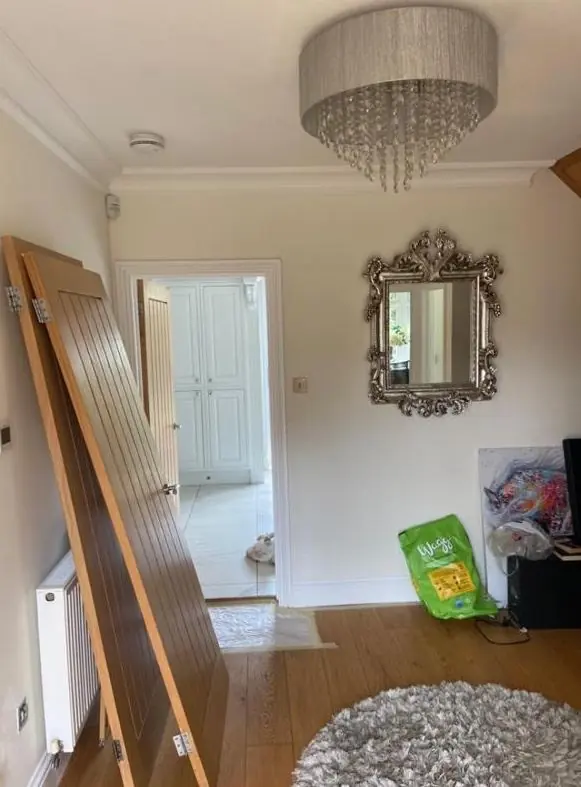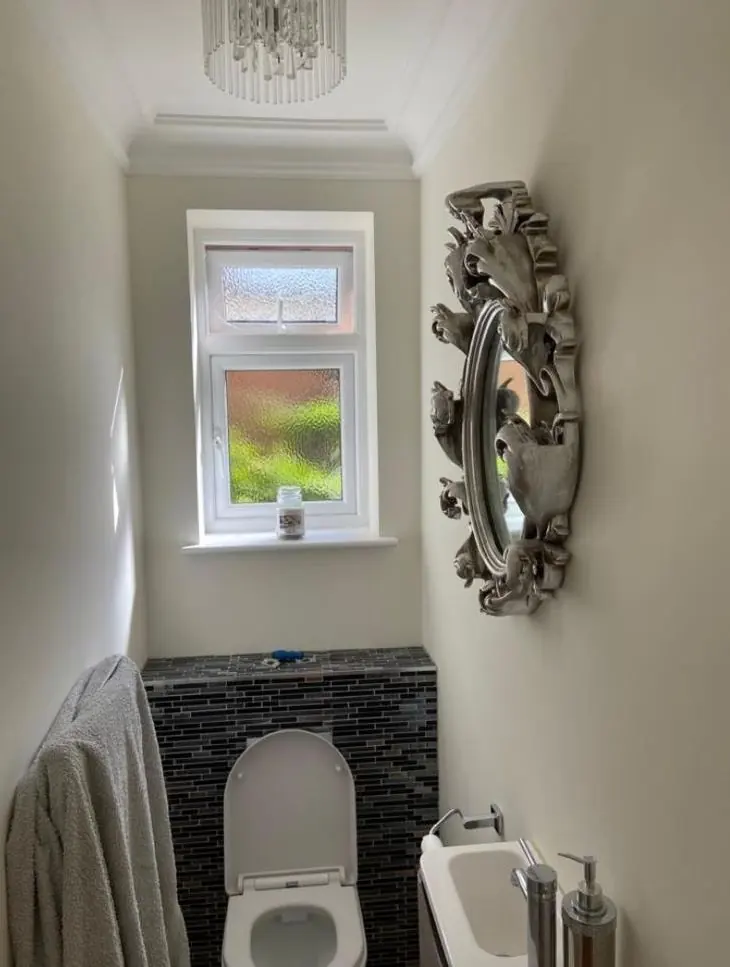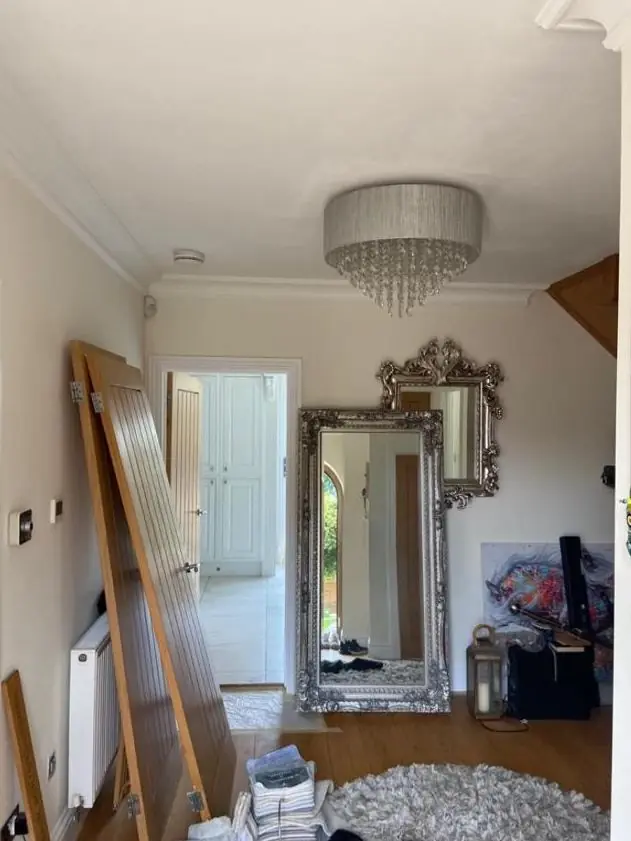
Dean paints doors, skirtings, architraves and window joinery in Boughton, the estate village 3.4 miles north of Northampton town centre in NN2. That covers the stone cottages on Church Street and Butcher's Lane as well as the newer Buckton Fields houses, with finishes chosen to suit each kind of timber.
What the joinery in Boughton’s old core is made of
The oldest houses in Boughton date from the 17th century and cluster around Butcher’s Lane and Church Street. The 2018 conservation area appraisal describes their woodwork closely: plank doors, small timber casements with small panes and lead lining, and timber lintels that are either painted black or left bare. Merewater on Church Street, the former Lion pub with its 1634 datestone, has a strap-hinged plank door. Obelisk Farm has timber-and-metal casements under a painted timber lintel. At 7 Butcher’s Lane, listed Grade II, some of the casements still hold original leaded lights and the ground floor keeps its original shutters.
None of that behaves like a modern panel door. Plank doors move with the seasons, so the finish has to flex with the boards rather than crack along every joint. We use microporous or oil-based joinery paints on this kind of timber and prepare by hand. Glazing bars on small-paned casements are fine, and lead cames are soft and easy to dent, so scraping and sanding around them is slow, careful work with no power tools near the glass.
The lintels raise a question before any paint is opened: should a bare lintel stay bare? On many cottages the answer is yes, and we will say so rather than add a coat that changes the look of the front.
A local palette written down in 2018
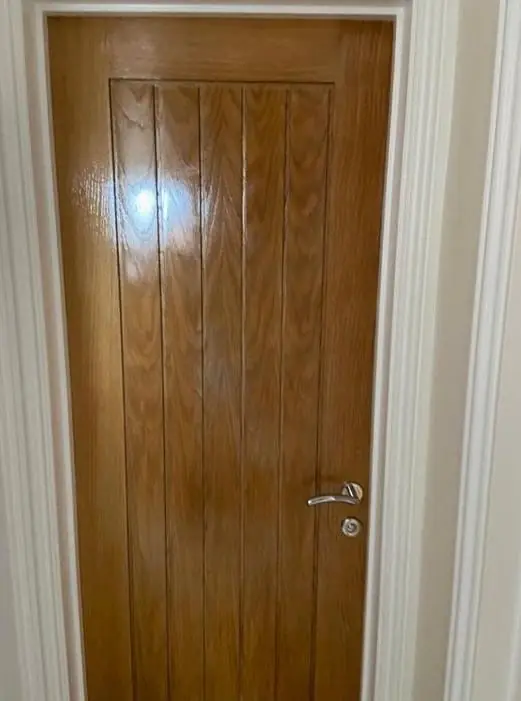
Most places leave joinery colour to taste. Boughton has a written reference. The appraisal records that windows in the core are usually white, sometimes pale green or pale yellow, and that a darker “Boughton estate green” survives at Nos. 6 and 8 Butcher’s Lane and No. 2 Swedish Houses. It recommends that painted replacement windows should be light, or a colour based on the original.
| Joinery colour | Where the appraisal mentions it | Practical note |
|---|---|---|
| White | The usual window colour in the core | Choose a non-yellowing finish on north-facing, shaded fronts |
| Pale yellow or pale green | Some core windows; suggested for replacements | Match the existing tone, not a catalogue name |
| Boughton estate green | Nos. 6 and 8 Butcher’s Lane, No. 2 Swedish Houses | Matched to the surviving paint on site |
On houses covered by the 2019 Article 4 Direction, such as Jasmin Cottage and The Old House on Church Street or Mullions on Humfrey Lane, changes to windows and doors on the front need planning permission. Repainting in the same colour is the safe route there. For the 26 listed structures in the parish, a change of exterior colour or stripping can need listed building consent, so the colour is settled with you before work starts.
Long-straw thatch above the door frame
Several cottages, including The Patch on Humfrey Lane and 7 Butcher’s Lane, are thatched in long straw. We never use a heat gun or a flame anywhere near thatch. Where old paint has failed, we remove it with chemical strippers or by scraping and sanding. Many layers of old paint on cottage joinery may contain lead, so we keep dust down and clean up as we go.
Buckton Fields: factory-finished doors and MDF skirtings
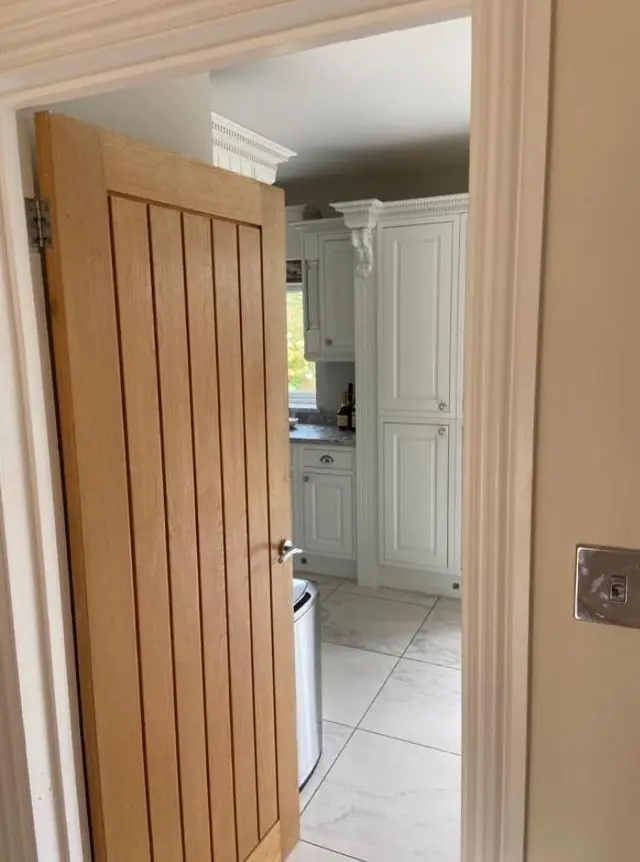
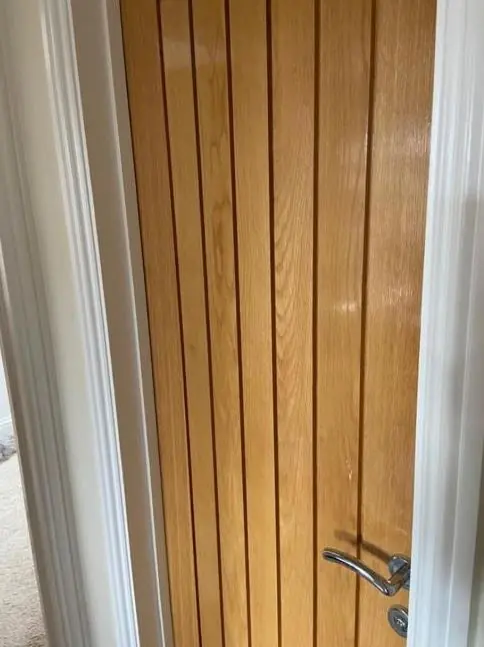
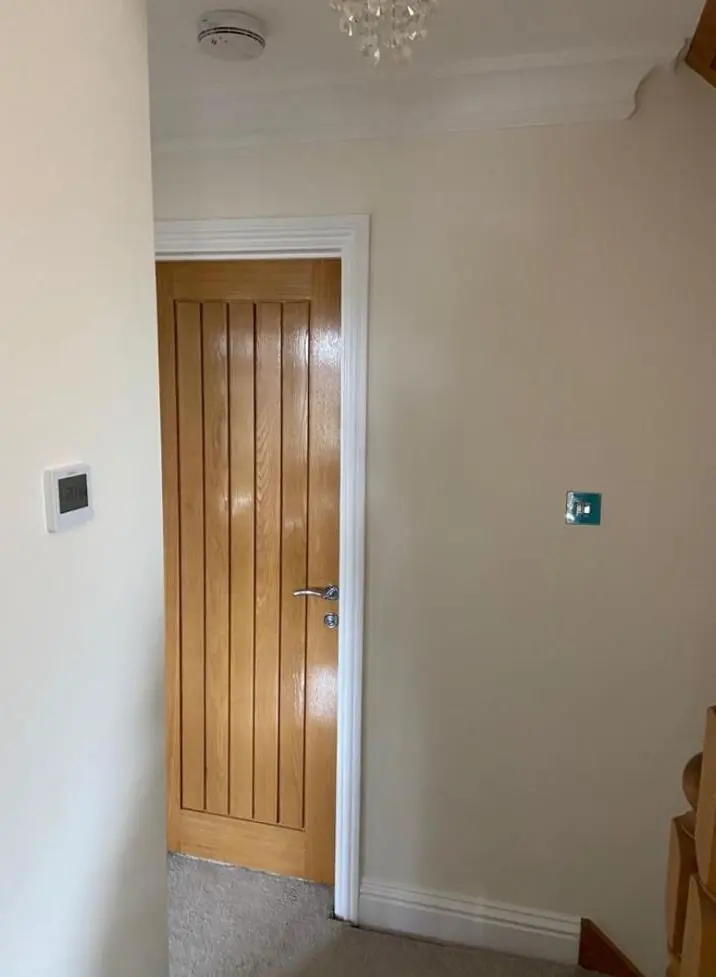
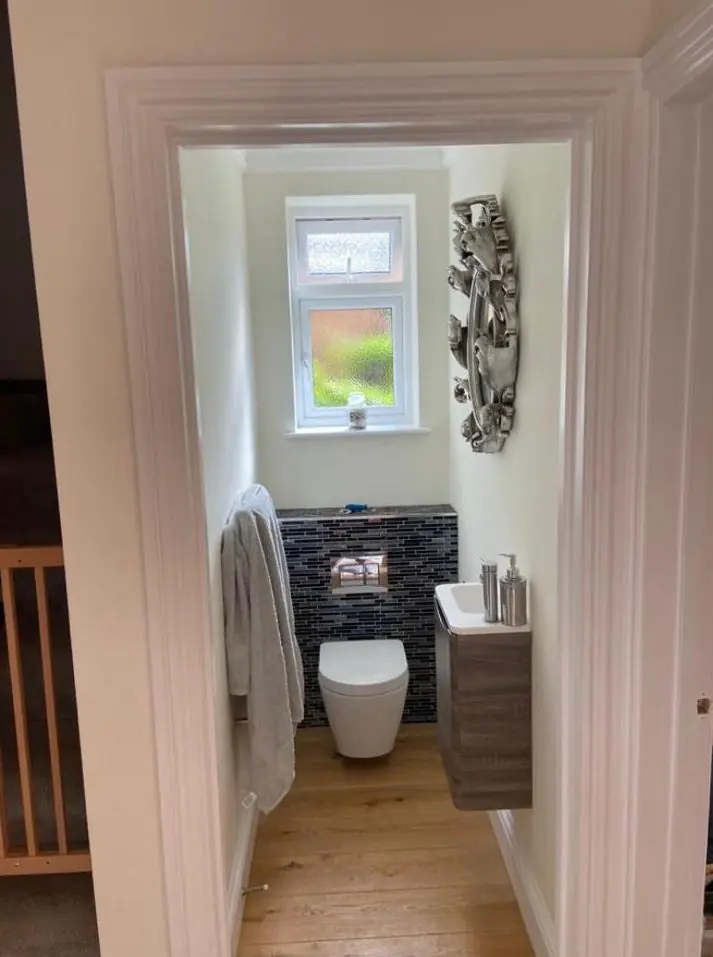
Buckton Fields has been built in phases since 2015, and its woodwork is a different job altogether. Skirtings and architraves are usually machined MDF, and internal doors arrive pre-primed or with a basic factory coat. The common faults in the first few years are open joints where skirtings meet in corners, gaps along the top edge as the house dries out, and scuffed door edges. We fill and caulk those, key the surface, and apply a hard-wearing satin or eggshell that cleans easily in busy family houses.
More on our preparation method is on the main door, skirting and woodwork painting page. For the other work we cover in the village, see our Boughton area page.
Getting to the front door on Church Street
Historic cottage fronts open almost straight onto the road, often with no porch, and Church Street is narrow with heavy peak-time traffic. Painting a front door there means the door may need to stand open to dry while traffic passes close by. We plan those days for quieter hours, avoid the school run on Moulton Lane, and keep the house secure with the door wedged on a chain or temporarily rehung if needed.
Last updated by Dean, DH Painter & Decorator.