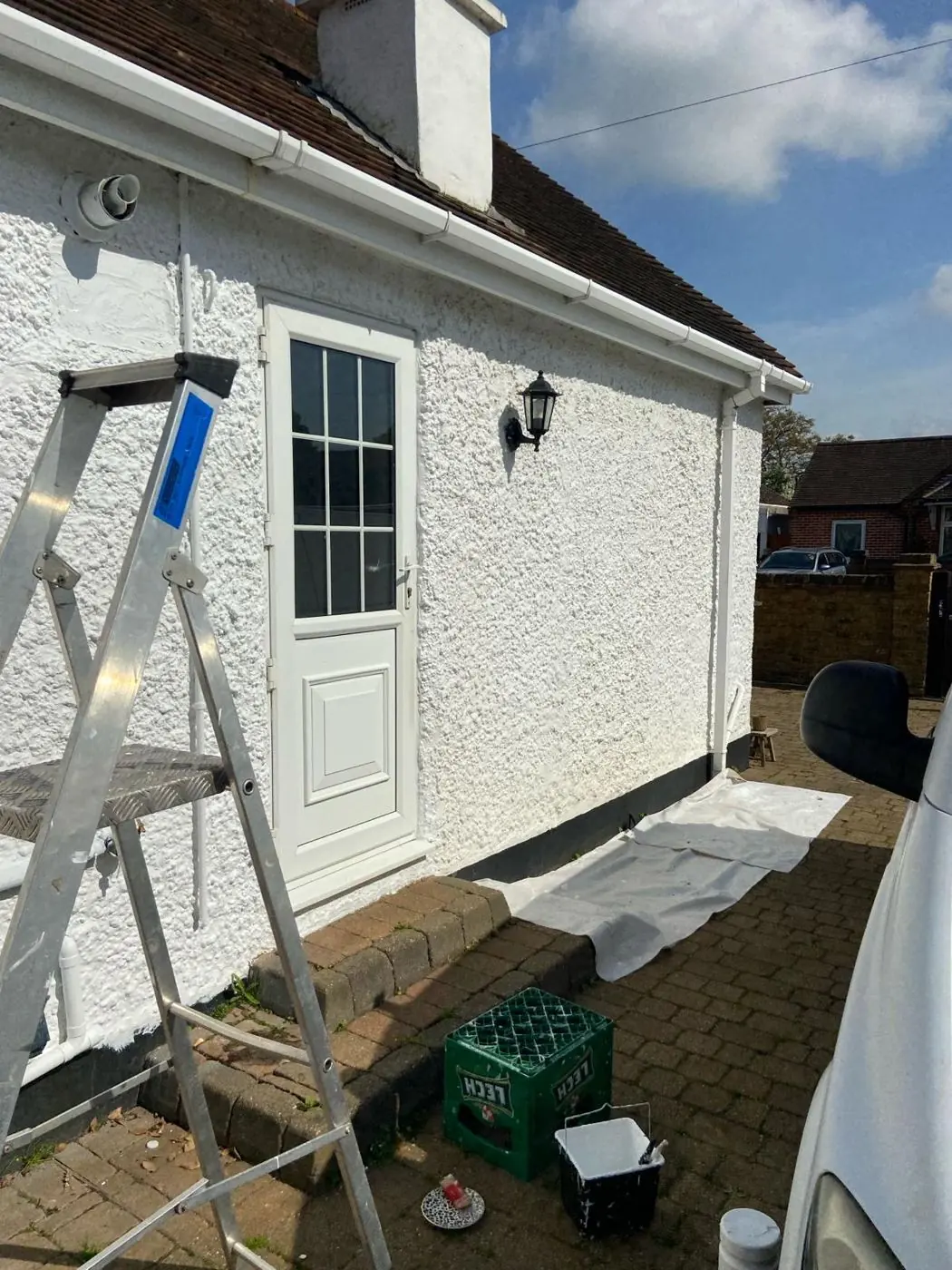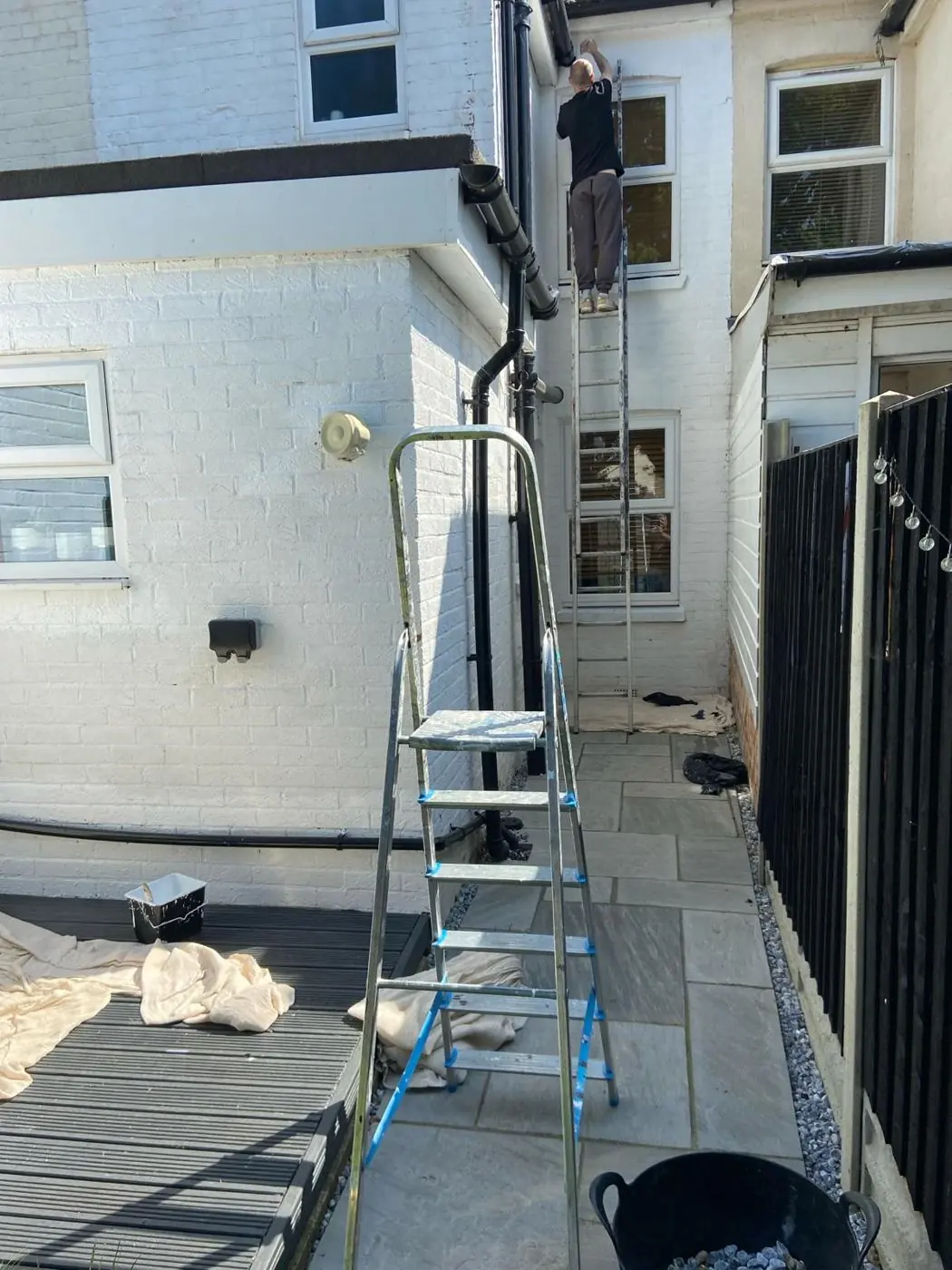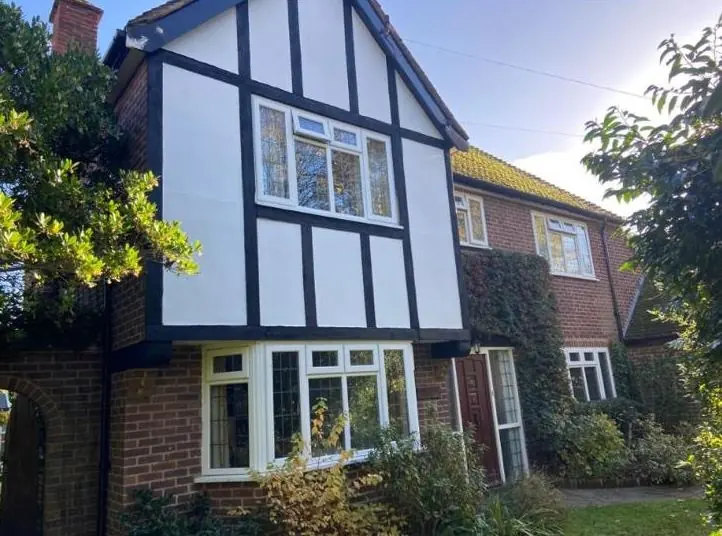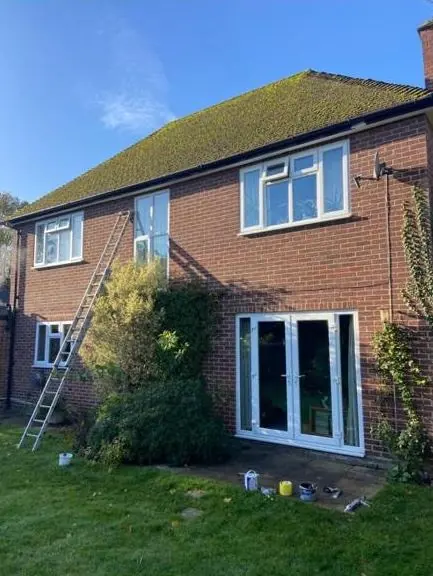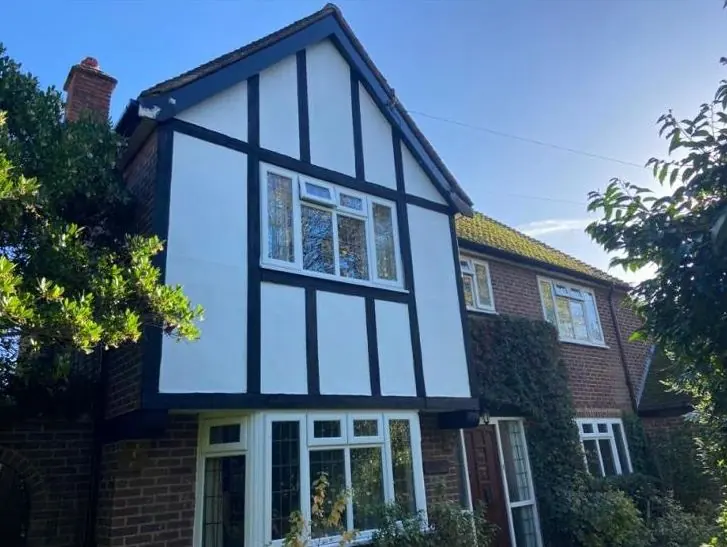
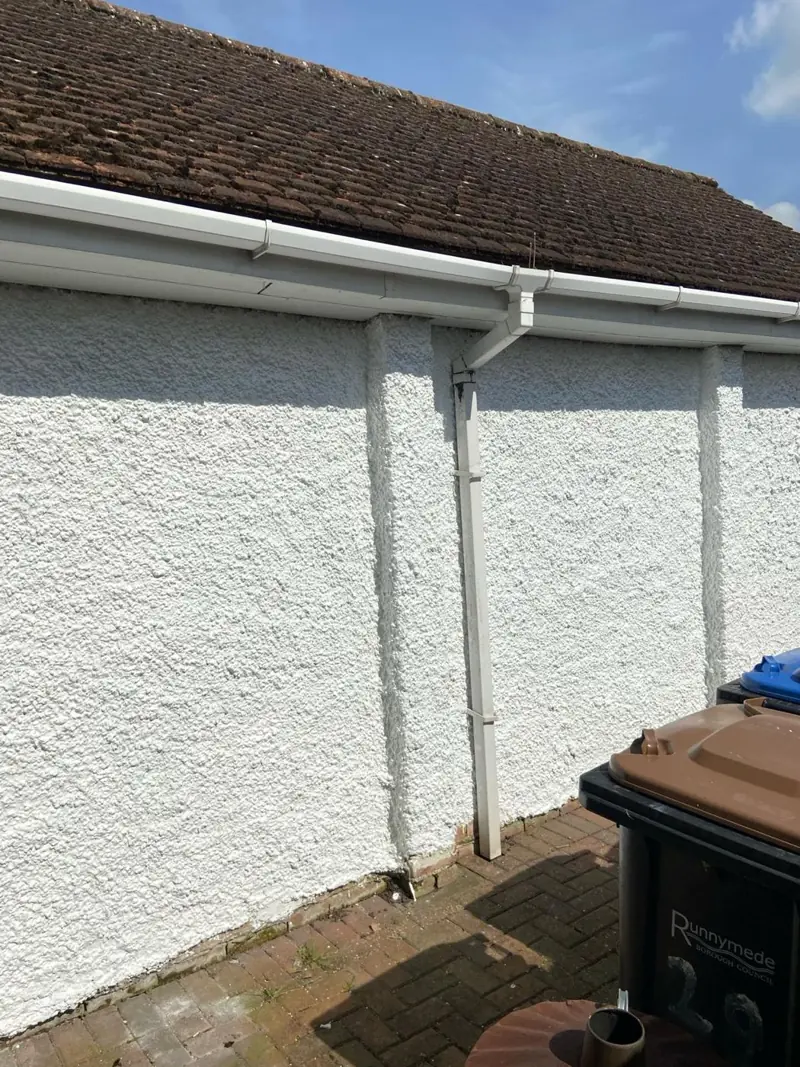
We paint rendered, roughcast and brick walls in White Hills (NN2), about 2.8 miles north of Northampton town centre. Dean starts every quote by checking the wall and its old coating, because many inter-war houses here mix facing brick with rendered upper floors.
Brick below, render above
The White Hills estate went up in the 1930s, and inter-war houses in this part of the country very often combine facing brick on the ground floor with a rendered or roughcast band on the upper storey or in the gable. That split matters for painting. A brick lower half may never have been painted and may be better left that way, while the rendered top half has usually had at least one coat of masonry paint in the past ninety-odd years, sometimes several, sometimes of unknown type. We cannot tell from a listing photo which pattern a given house has, so Dean checks each wall in person.
Questions to answer before any paint is opened
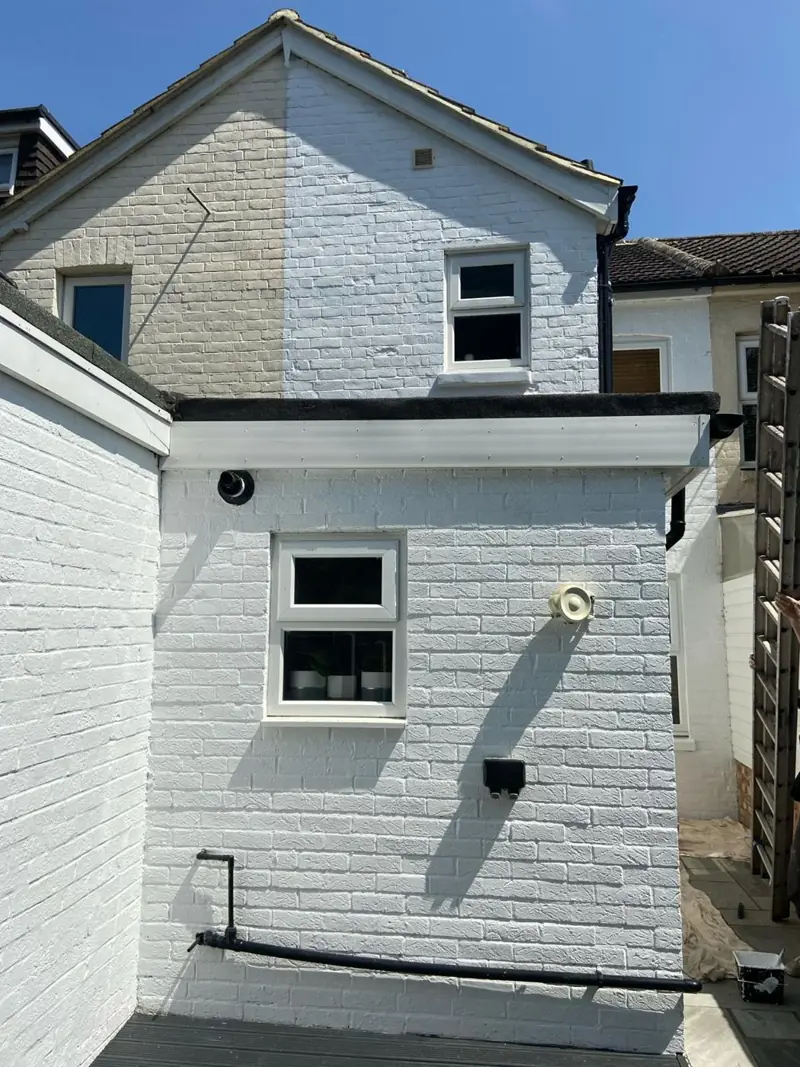
- Is the render sound? Tapping finds hollow patches where render has come away from the brick. Painting over blown render only hides a repair that will be needed anyway.
- Where are the hairline cracks? Fine cracking around window heads and at the junction with the brickwork is common on older render and needs raking and filling.
- What is the old coating? A chalky surface rubs off on a hand and needs stabilising. A dense, plastic-like coating may trap moisture, and we need to know that before choosing a breathable masonry paint.
- Are gutters leaking? A dark streak below a joint will come back through new paint unless the leak is fixed first.
Matching the approach to what is on the wall
| What we find | Likely approach |
|---|---|
| Sound render, old masonry paint, light chalking | Wash, stabilise, two coats of breathable masonry paint |
| Green growth on a shaded side | Fungicidal wash left to work, then brushed off before any coating |
| Hairline cracks | Rake out and fill with an exterior filler, then spot-prime |
| Hollow or blown render | Refer for render repair first; paint once it has cured |
| Unpainted facing brick | Usually left bare; we will talk it through if you want it painted |
Our guide to painting render and roughcast goes deeper into why breathability matters on older walls.
Shade, planting and the open edge
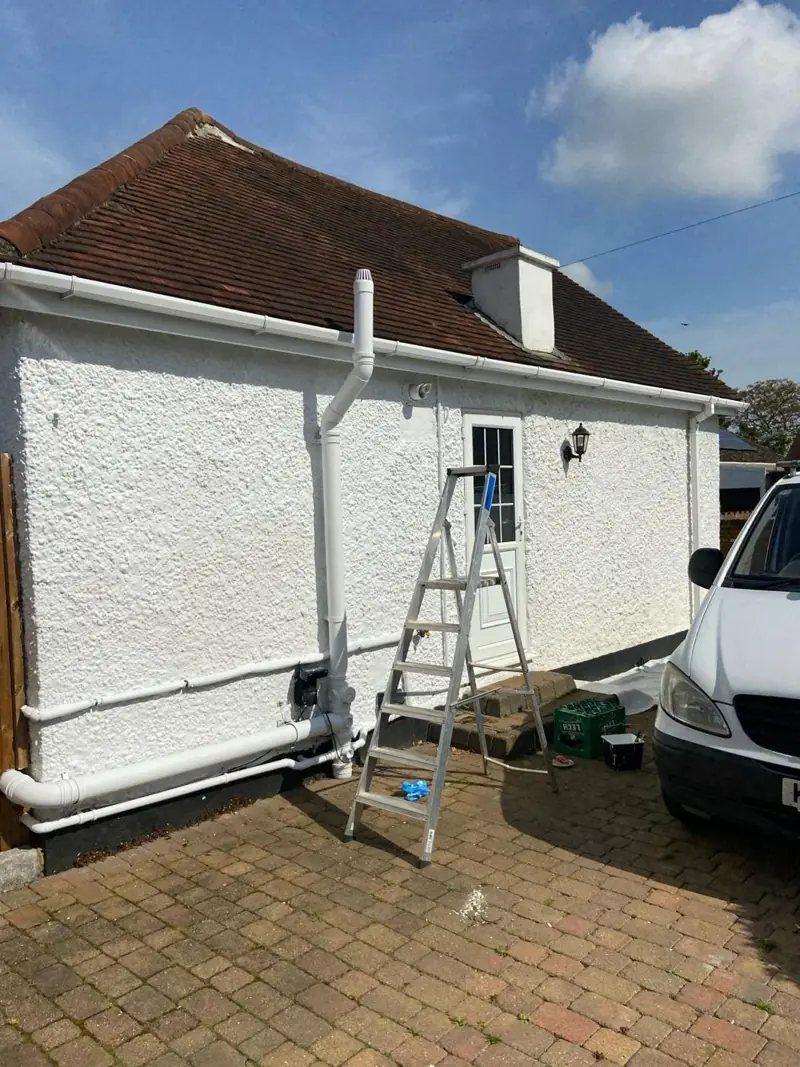
Two things about White Hills’ setting show up on its walls. The first is planting. The larger plots on Harborough Road North have mature wraparound gardens, and walls tucked behind shrubs or trees stay damp for longer and tend to grow algae. The second is exposure. White Hills is on the northern limit of the built-up area, with Buckton Fields and open countryside beyond, so houses on the outer edge take more wind-driven rain than those deeper in. On those walls we pay extra attention to fine cracks, because water driven into a crack is what makes paint blister and lift.
Walls on the A508 frontage get a different problem: traffic film. That has to come off before a masonry coat will bond, so a road-facing wall gets a longer wash than a back garden wall.
Planning, access and the neighbours
With no conservation area or Article 4 direction covering White Hills in the sources we checked, a change of masonry colour needs no heritage consent. The practical limits are access and weather. Upper-storey render on a house set close to its neighbour often means a tower or ladders over a neighbour’s path or drive, so we agree that before starting. Masonry paint needs dry days and mild temperatures to cure, so render work here is booked for the warmer months.
Render work in White Hills follows the same method as our main render and masonry painting service; the White Hills area page lists the other work we cover in the district.
Last updated by Dean, DH Painter & Decorator.