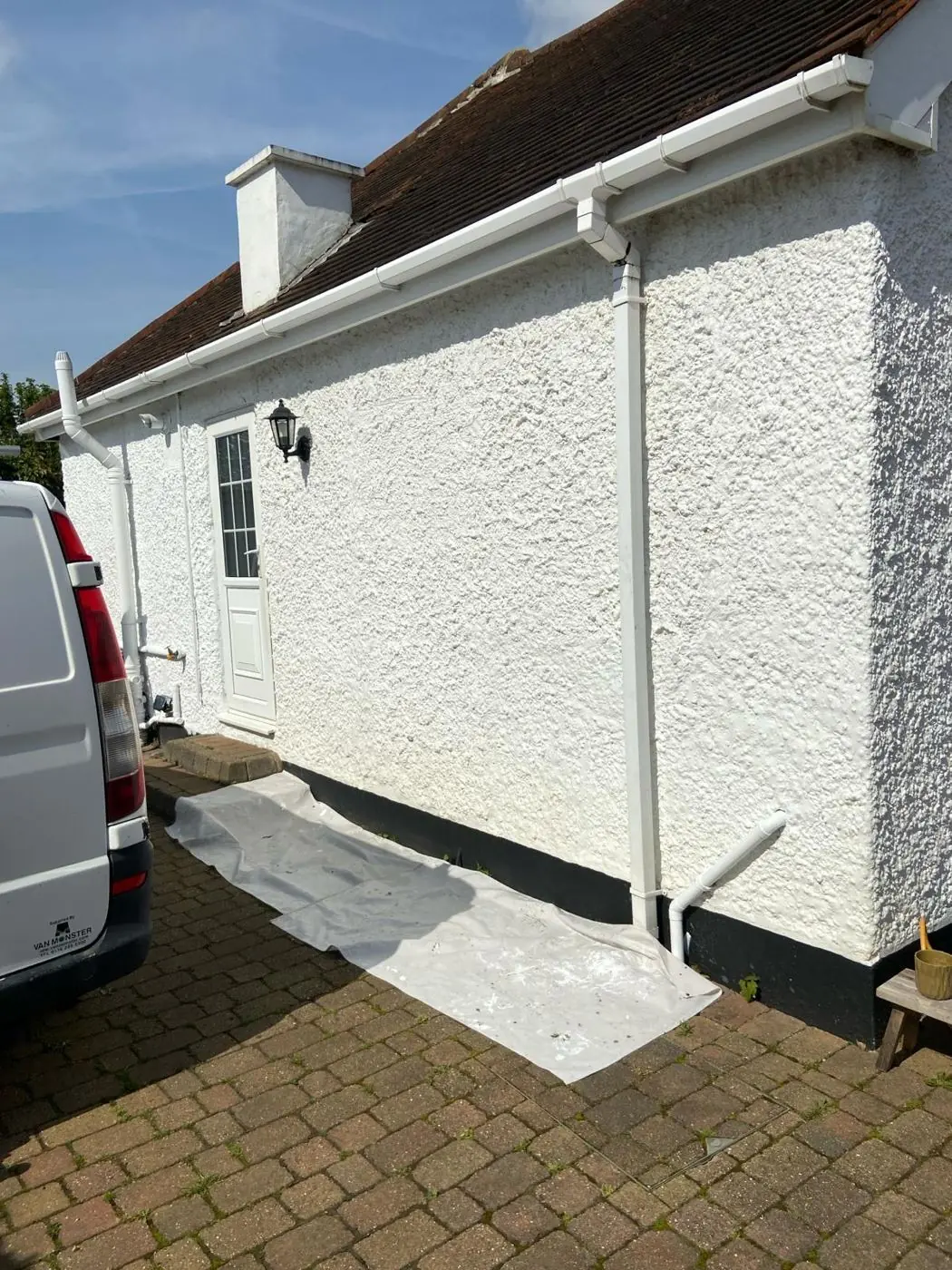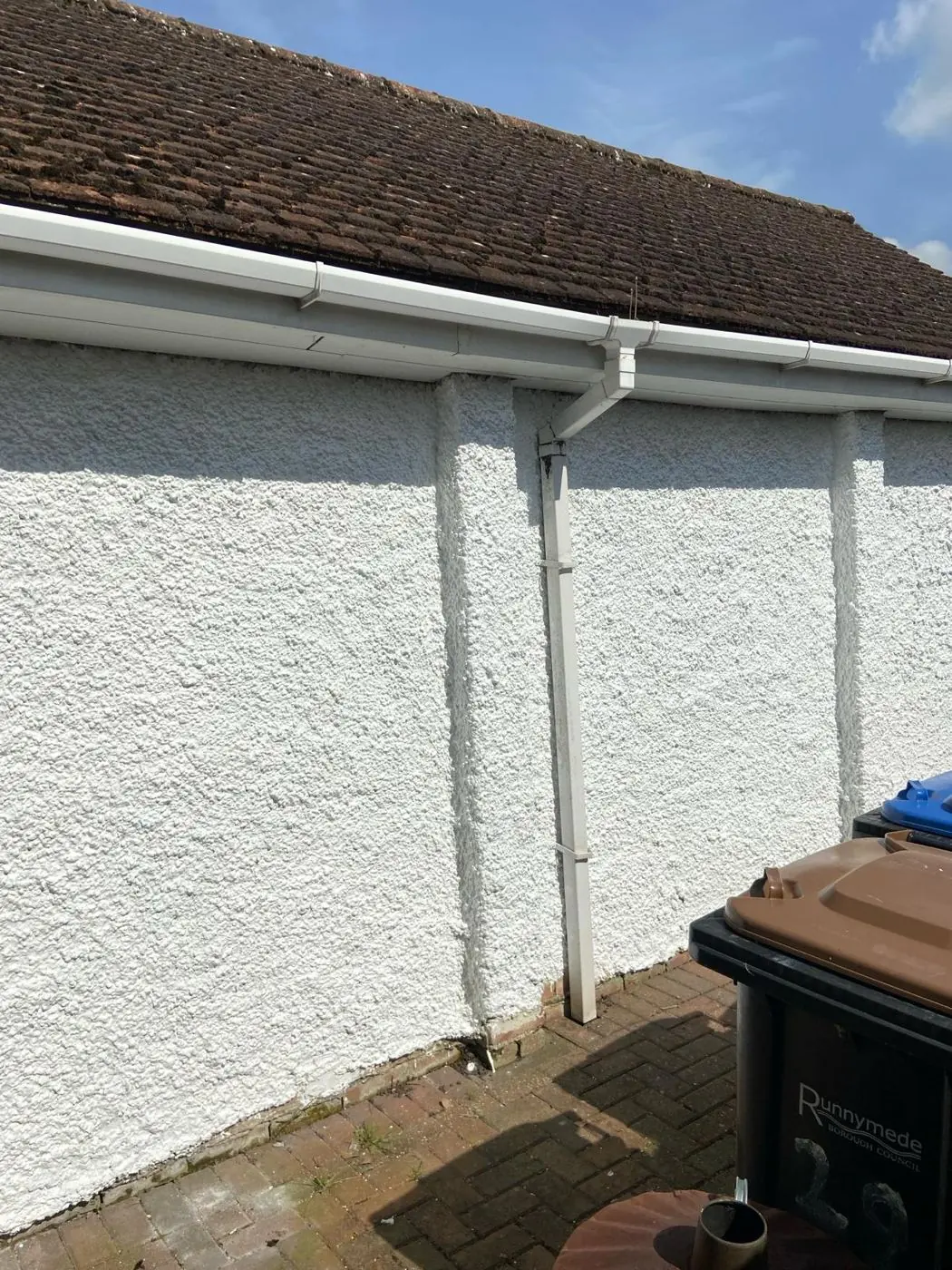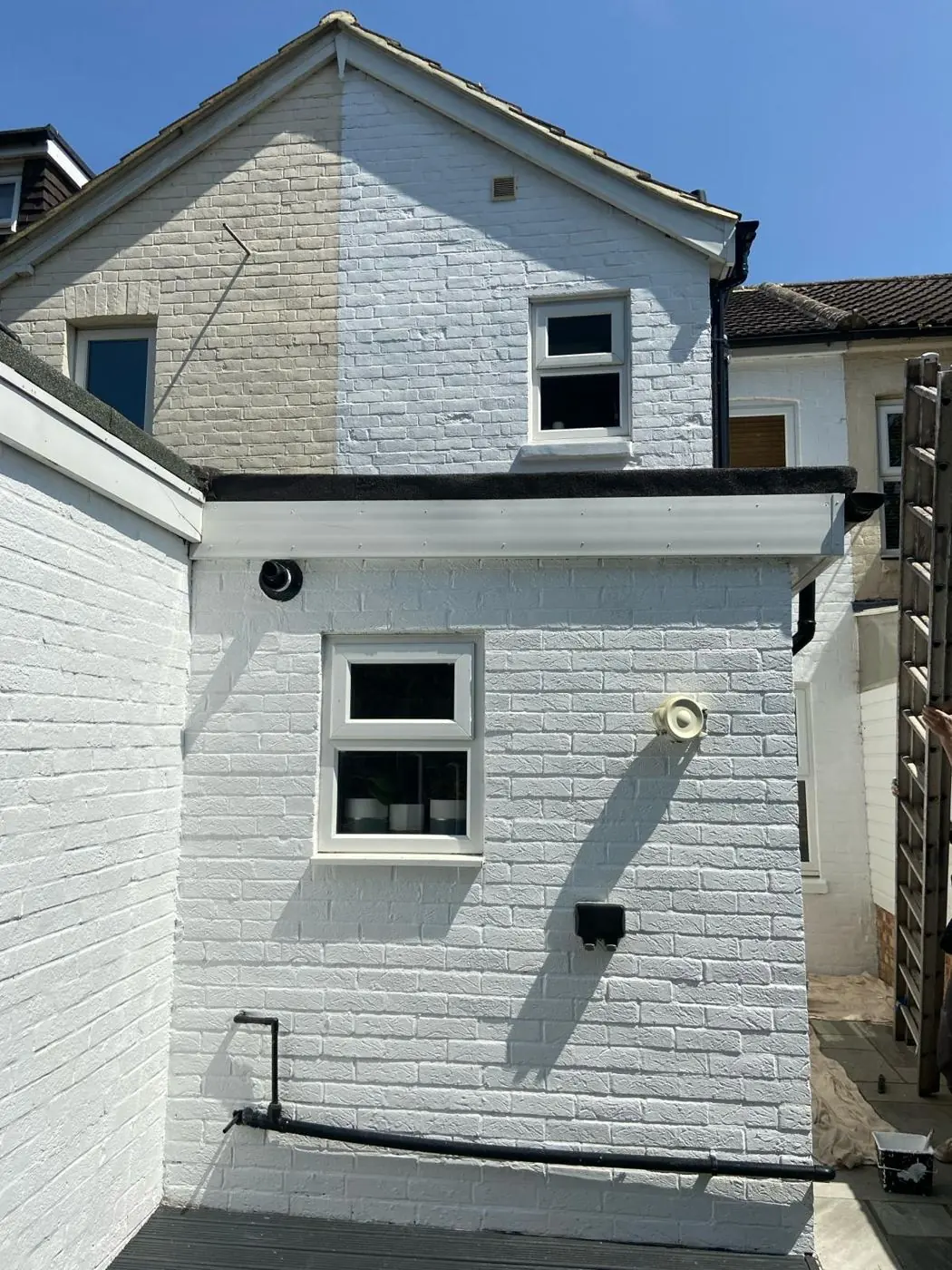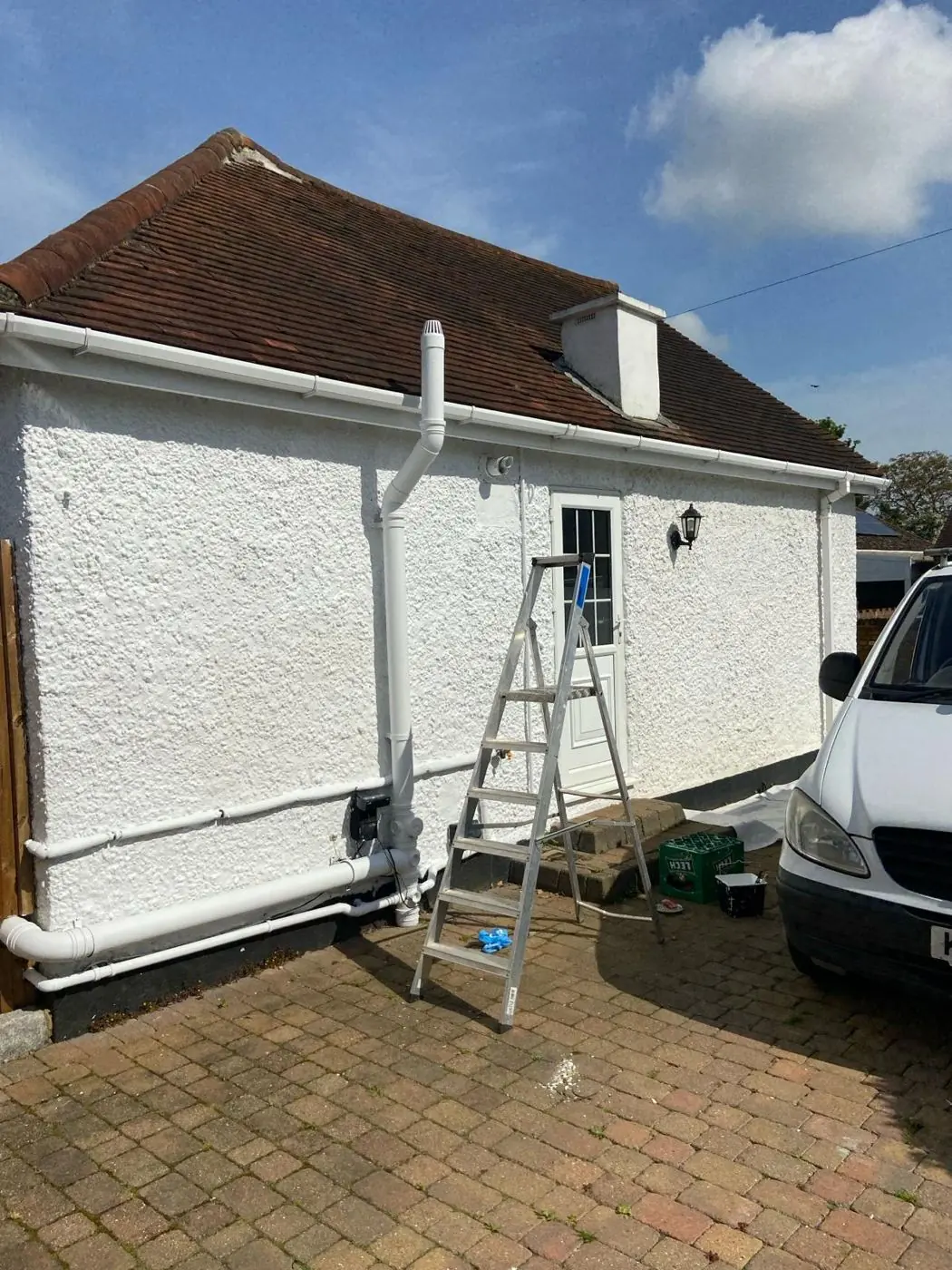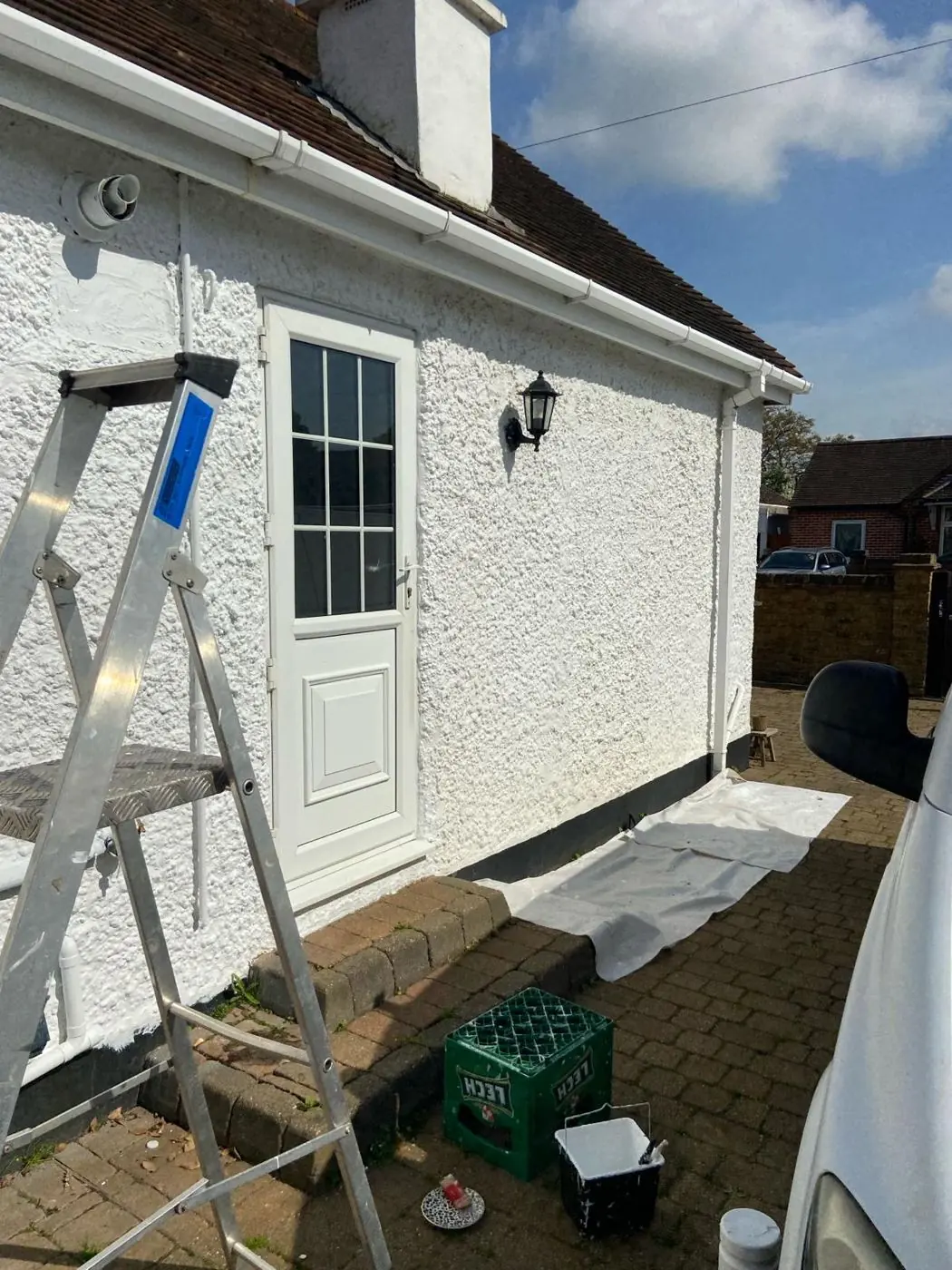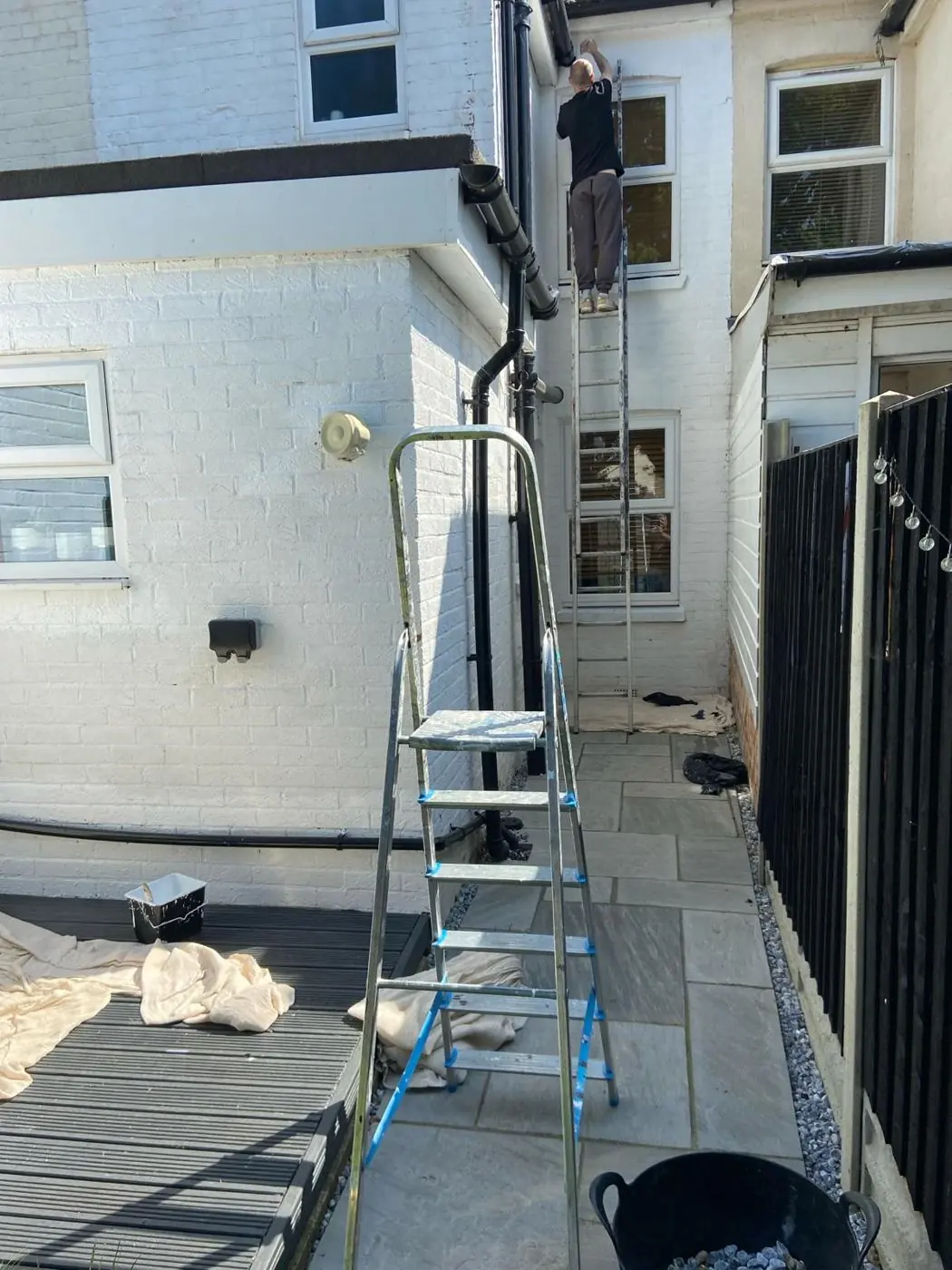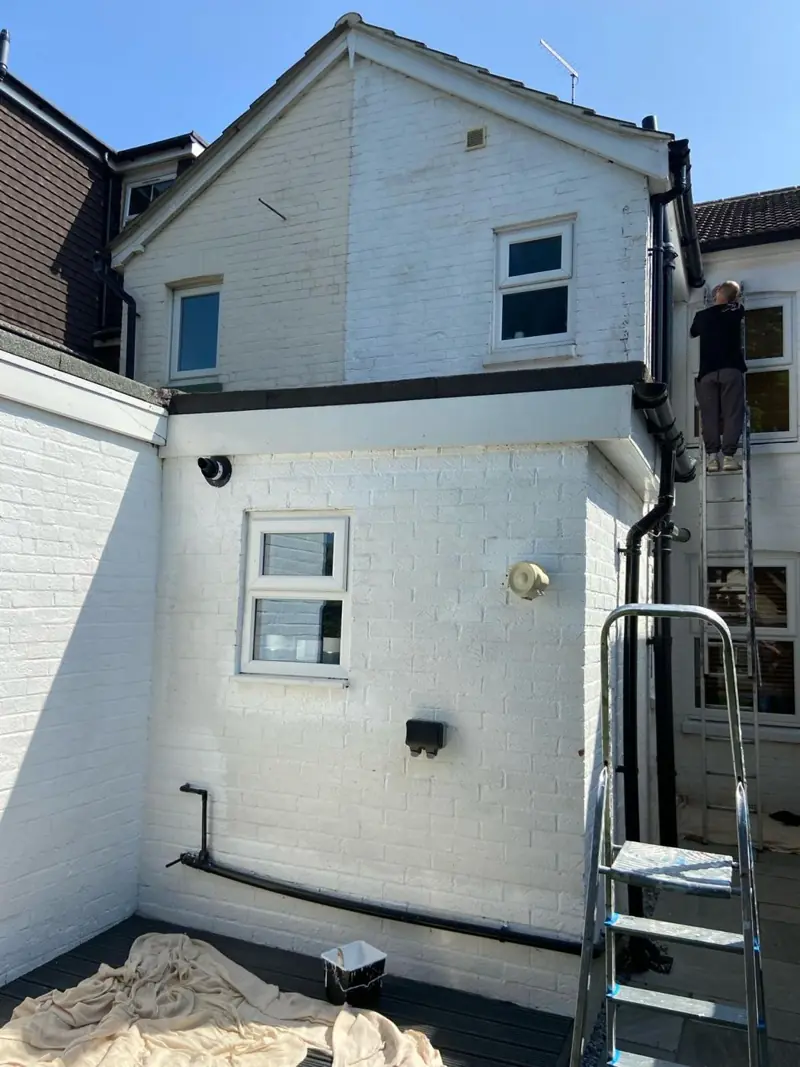
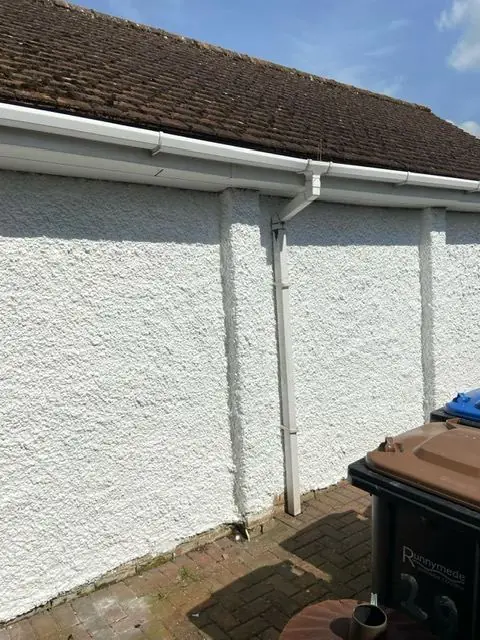
We paint fascias, soffits and bargeboards in Boughton, a village in NN2 about 3.4 miles north of Northampton town centre. The work suits the village's slate and tiled houses and the newer homes at Buckton Fields; thatched cottages have no conventional fascia at all.
Thatch has no fascia board
A good share of Boughton’s oldest houses are roofed in long-straw thatch, including The Patch on Humfrey Lane and the Grade II 7 Butcher’s Lane. A thatched roof runs out over the wall top and finishes in straw, not in a board and gutter, so there is nothing for this service to paint on those houses. What does carry fascias and soffits is everything roofed in slate or tile: 19th century cottages on Howard Lane and Moulton Lane, early 20th century detached houses on Spring Close and northern Butcher’s Lane, the 1960s estate along Howard Lane, and the newer homes at Buckton Fields.
Thatch still matters when the house next door has it. Where a slate-roofed cottage shares a wall or a close gap with a thatched one, we do not use heat guns or any flame at the eaves. Flaking paint on boards comes off by scraping and sanding, or with a chemical stripper where it is thick.
What the trees do to Boughton eaves
The appraisal lists cedar, pine, willow, chestnut and hornbeam through the village, and many are protected. For roof edges that means three things:
- gutters full of needles and leaves, which overflow onto the fascia and keep it wet
- sap and honeydew spotting on soffits beneath overhanging branches
- algae on the shaded underside of soffits, where sun rarely reaches
So a Boughton fascia job usually starts with clearing the gutter run and washing the boards with a fungicide. Paint applied over a damp, green soffit lets go within a season or two. We also keep ladders and towers clear of protected trunks, and we will not lop branches to gain room, since many trees here are under Tree Preservation Orders.
Three kinds of house, three kinds of board
On 19th century stone cottages the fascia is often a simple painted board below slate, sometimes rotten at the ends where the gutter has leaked for years. We probe the timber and flag soft sections for a carpenter before painting. The larger early 20th century detached houses on Moulton Lane and Spring Close sit back behind deep gardens; where one has high eaves or gable bargeboards, a tower standing in the garden is often safer than a ladder. Buckton Fields homes, built since 2015, mostly need their first maintenance coat on factory-primed or previously painted timber, where adhesion checks and a light key matter more than stripping. Where the boards are uPVC, we can clean them, but we do not paint plastic as standard.
Colour is usually simple. Most eaves are white or a dark colour that matches the gutters, and on Boughton’s conservation area houses the safe choice is to repaint in whatever is there now. If you would like to tie the fascia into window joinery painted in one of the appraisal’s historic colours, such as pale green or the darker Boughton estate green, we can do that, subject to any consent your house needs.
Planning around Boughton’s narrow roads
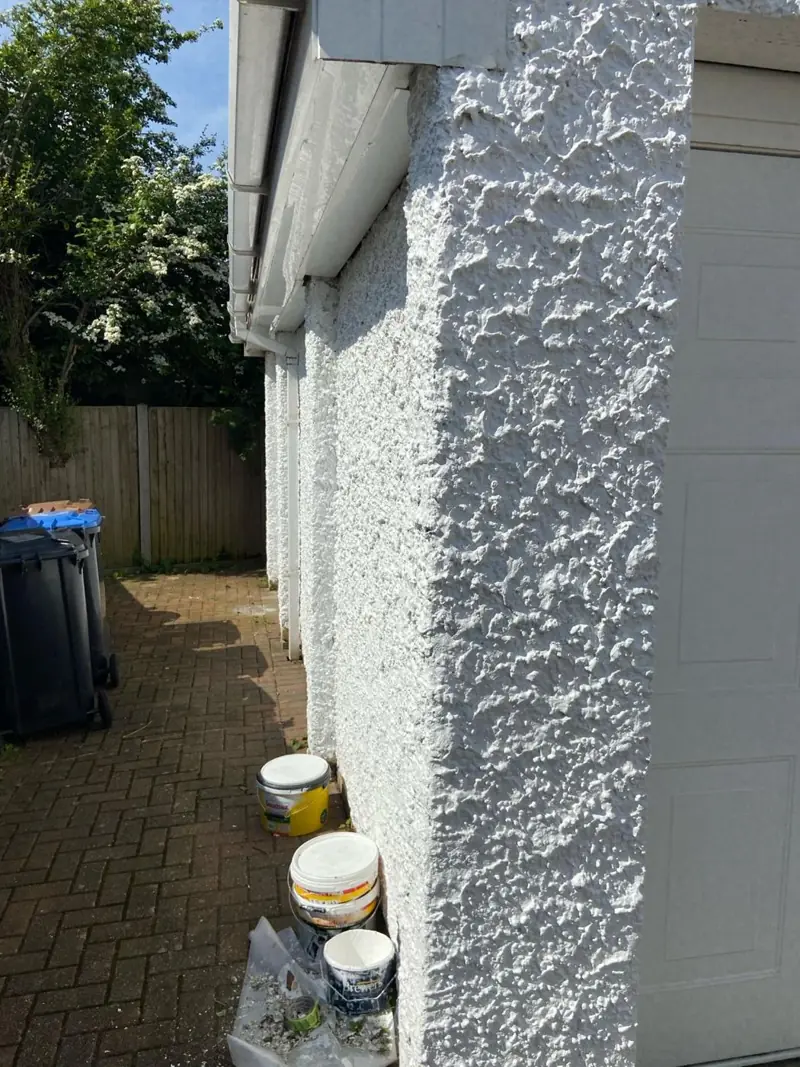
Butcher’s Lane and Spring Close have no pavements, and Church Street, Moulton Lane and Humfrey Lane carry heavy traffic and parking pressure at peak times. A tower at the eaves line takes up road width, so we set up outside school-run hours near Boughton Primary School on Moulton Lane, and with signage on the lanes. On the larger plots off Vyse Road, access is easier, as the gardens give room to stand ladders off the highway.
Our main fascia and soffit painting service explains the coating system we use on timber eaves, and the Boughton area page lists the other work we cover in the village.
Last updated by Dean, DH Painter & Decorator.