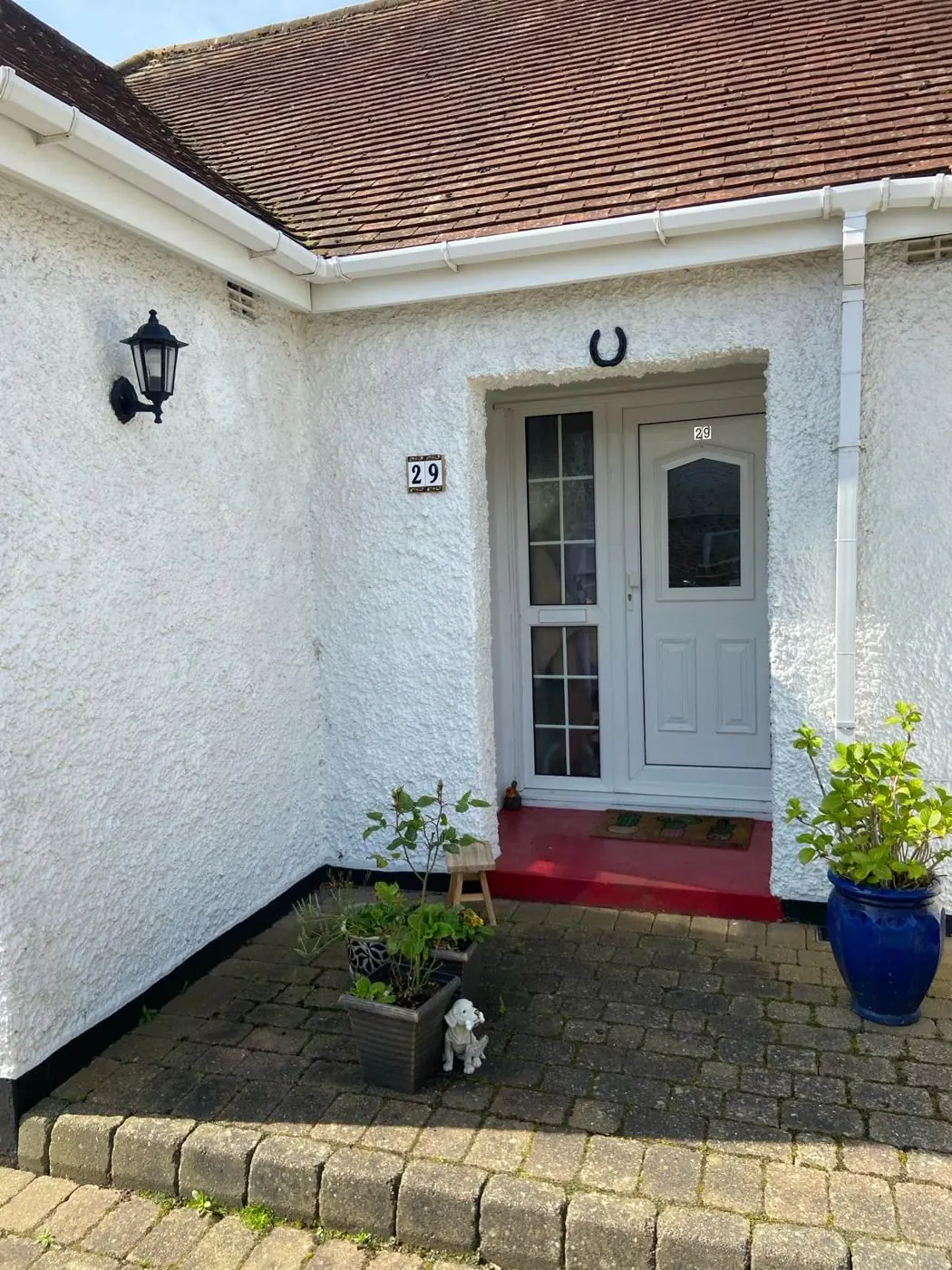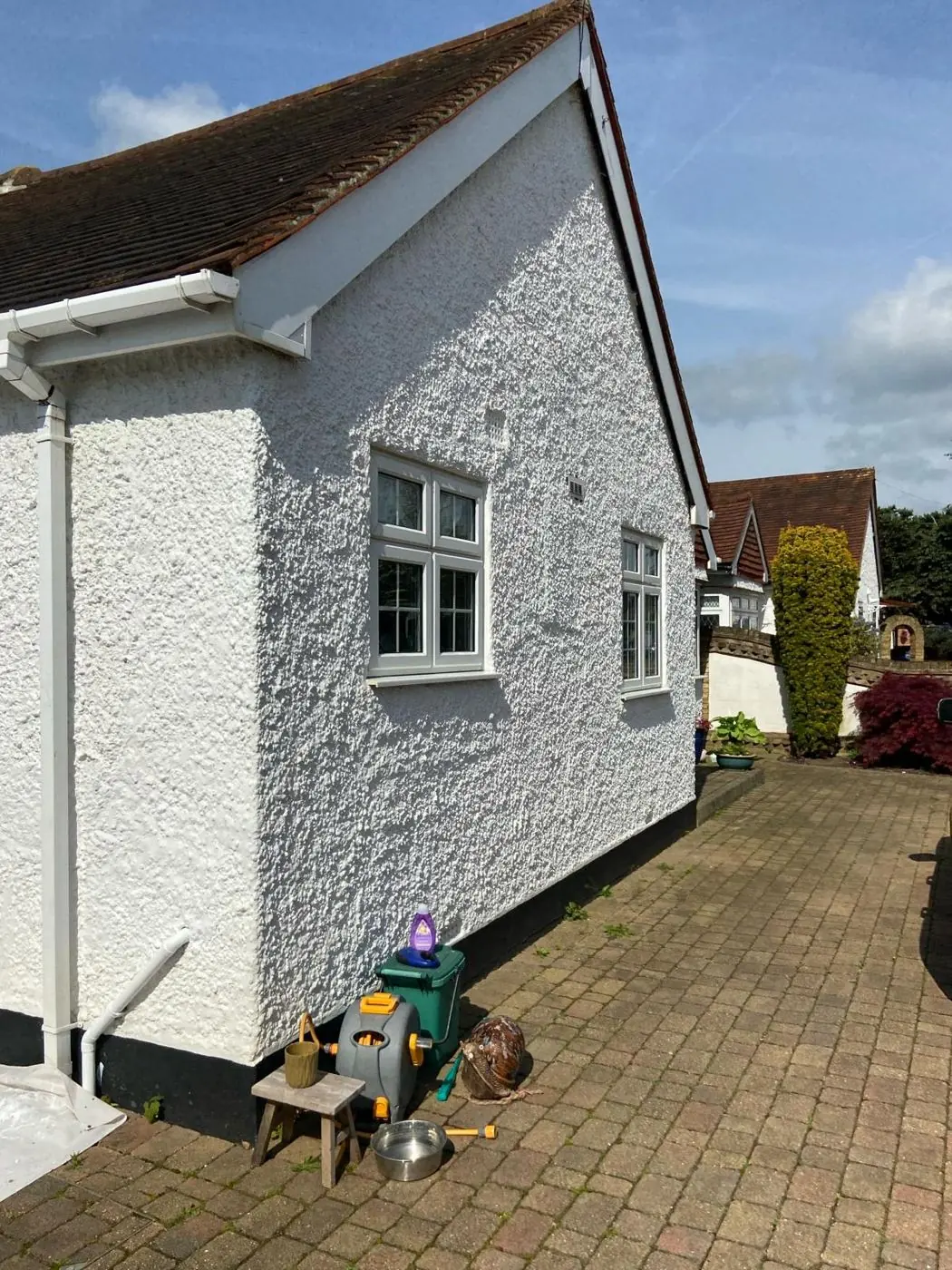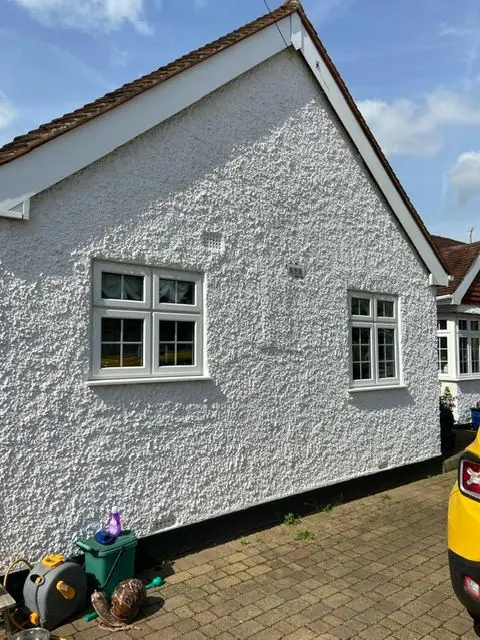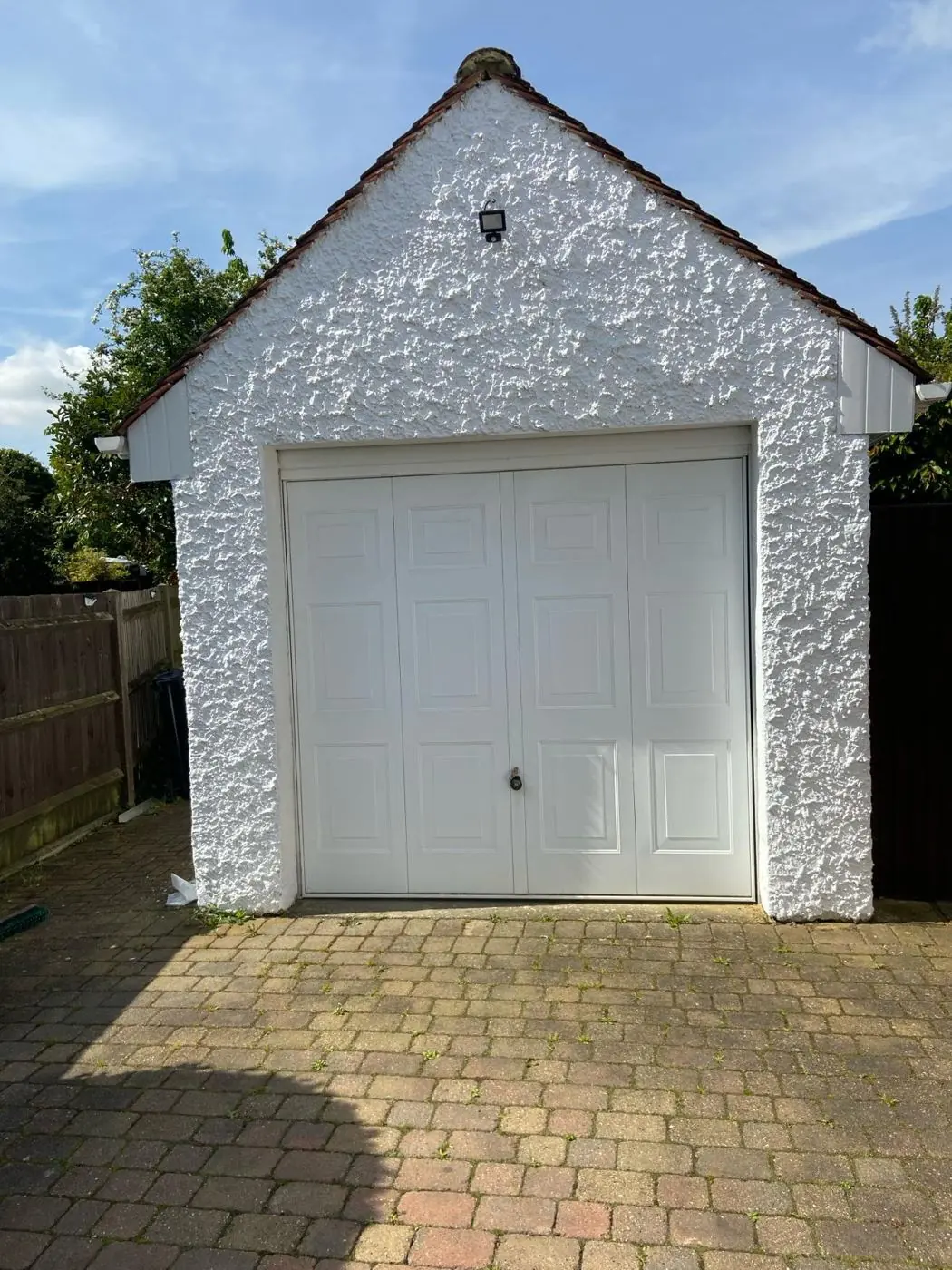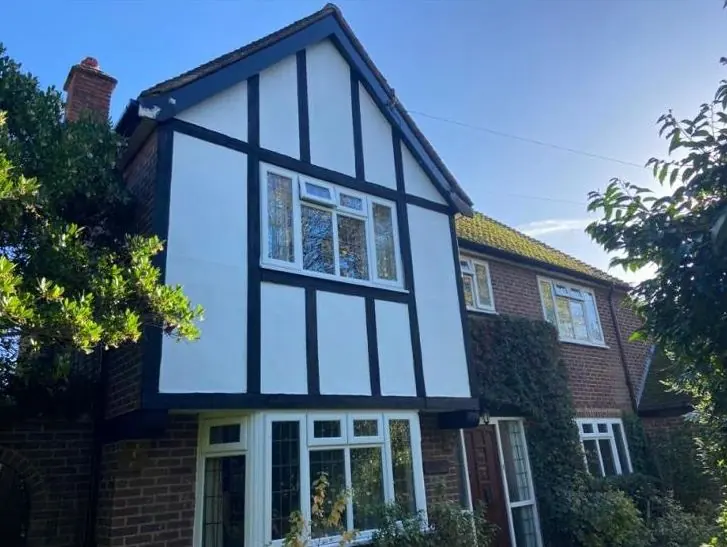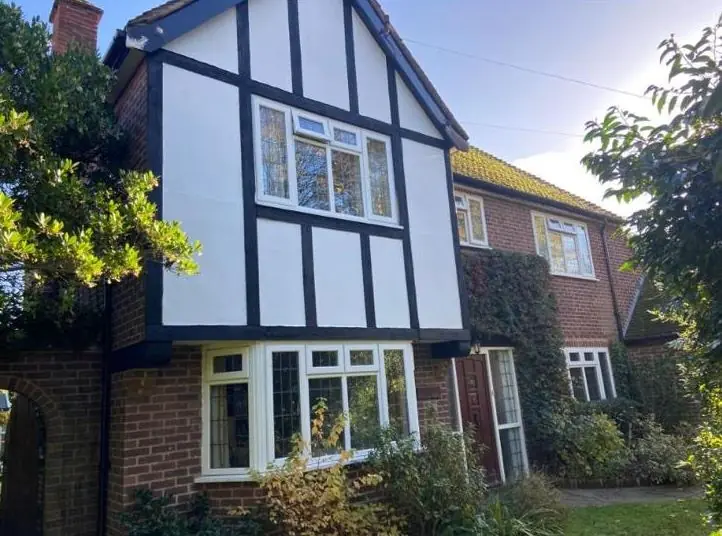
DH Painter & Decorator paints timber fascias, soffits and bargeboards in St David's, NN2, about 1.9 miles north of Northampton town centre. Low bungalow eaves on Eastern Avenue and Holdenby Road can usually be reached from ladders, while two-storey terraces need ladders or a small tower.
First question: is it still timber?
Many houses in St David’s may already have uPVC roofline boards. Before quoting we check what you have. Timber fascias and soffits can be prepared and painted. uPVC boards that are sound need little more than a clean, and repainting them is a separate decision with its own primer, so it is worth talking through rather than doing by default.
Where timber does survive, check the side, rear and any porch roof as well as the front, because boards were not always replaced in one go.
Bungalow eaves you can reach from the ground
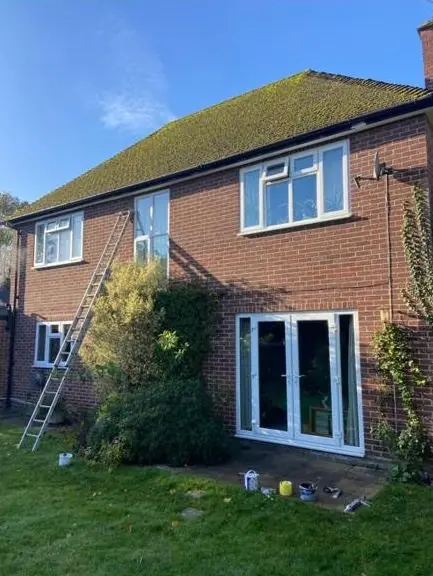
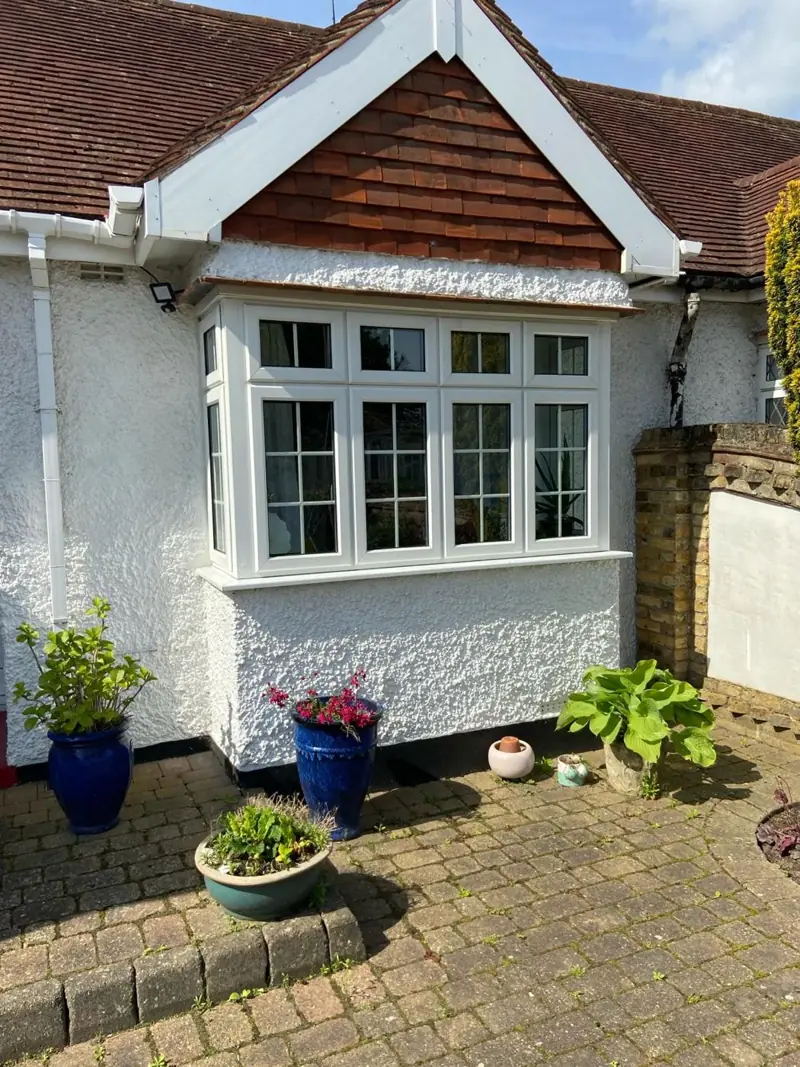
The semi-detached bungalows on Eastern Avenue North, Eastern Avenue South and Holdenby Road have low eaves, and that changes the job. A ladder or a low work platform puts the whole fascia run within reach, so there is no need for full scaffolding, and the gutter brackets, soffit vents and bargeboard ends can all be inspected closely while the work is going on.
Low eaves also make the condition easy to see from the garden, which helps with timing. If the paint at the corners and joints is cracking but the timber underneath is still firm, that is the point to repaint. Leave it a few more winters and soft spots at the joints mean cutting out and splicing in new timber before any painting can start.
The two-storey 1950s semis on Bondfield Avenue and Helmdon Road sit between the two. Front and rear eaves are a ladder job from the garden, but the gable side with its bargeboard can need a ladder stand-off, or a small tower where a side garage or lean-to roof is in the way. We note which applies on the quote visit.
Two-storey terraces and shared runs
On the interwar terraces of Hastings Road, Cranford Road, Rosedale Road and Barnwell Road, the fascia sits at first-floor eaves height. The front is usually reached from ladders on the pavement; the rear may need ladders brought through the house or, where the ground is awkward, a small tower.
Terraces raise a point that detached houses do not: the roofline often runs straight across several homes. We paint your section up to the party line, and we can match a neighbour’s colour if you want the run to look continuous. On streets where many houses are owned by a social landlord, the boards on either side of yours may be maintained by someone else on a different cycle, so a clean line at the boundary matters.
What we look at along the eaves
- Soft or split timber at joints and mitred corners, which is where water gets in first.
- Leaking gutter joints dripping onto the fascia face and keeping it wet.
- Soffit boards that have dropped or lost fixings.
- Bargeboards on gable ends, which on semis and end-terraces catch the weather harder than the front.
Gable ends on the semis and end-terraces facing St David’s Open Space and the greens take the weather with little shelter, and their end grain holds water for days after rain, so we book roofline jobs for settled spells. Our guide to the outdoor painting season explains the conditions we look for.
Our main fascia and soffit painting page covers the preparation and coating system in full. On a terrace with uPVC windows, the fascia and front door are often the only painted items left outside, so they are worth doing in the same visit. The rest of our coverage in the area is on the St David’s area page.
Last updated by Dean, DH Painter & Decorator.