We hang wallpaper and lining paper in homes across Boughton, a village about 3.4 miles north of Northampton town centre. Walls in the 17th century core are rarely square, so the job there is about lining and pattern choice, while newer Buckton Fields walls mostly need sealing before the first length goes up.
Why a cottage wall in the old village fights a straight pattern
Most of Boughton’s oldest houses stand on Church Street and Butcher’s Lane. They are stone cottages from the 17th to 19th centuries, with thick walls laid in lime mortar and plastered inside. Over a few hundred years those walls have moved. Corners lean, the ceiling line drifts and a window reveal can be a different depth at the top than at the bottom.
A bold geometric or a tight stripe will find every one of those faults. Hang the first drop true to a plumb line and the pattern runs off the ceiling by the far corner; follow the ceiling and the stripes lean. In these rooms we usually talk you towards papers that hide the problem:
- Small, random or all-over patterns, such as trailing florals or sprigs, where a mismatch at a corner goes unnoticed.
- Papers with a free match or a soft texture, rather than large straight-match repeats.
- Patterns with a pale ground, which help in rooms where small-paned casements let in limited light.
If you have your heart set on a stripe or a large repeat, we will tell you where it will drift and decide with you where to hide the final join, usually behind a door or in the least visible corner.
Lining paper first, almost always
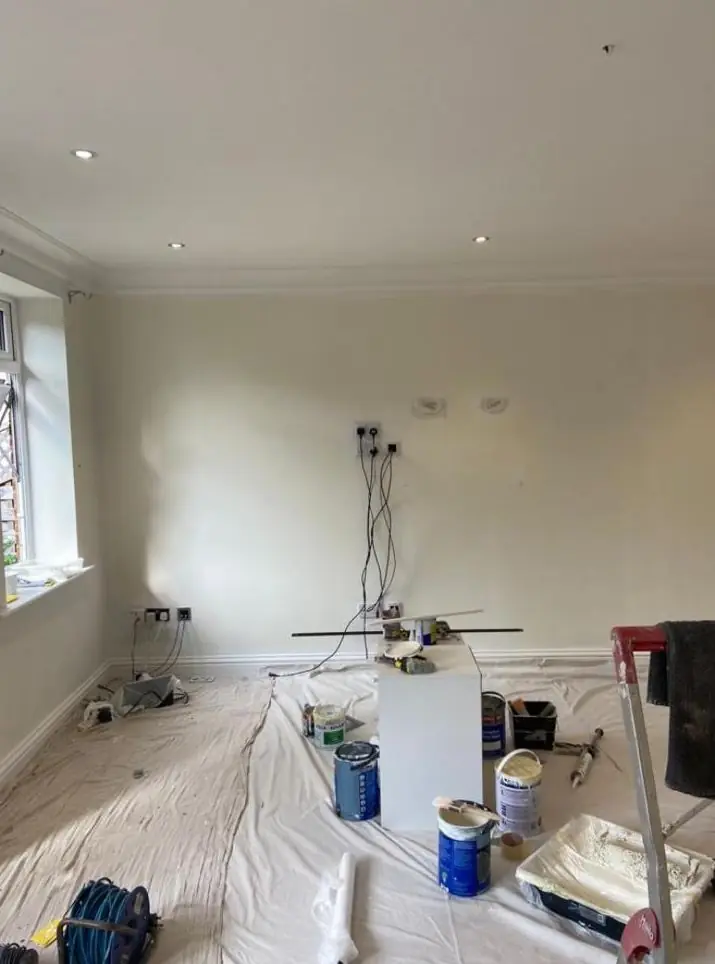
Old lime plaster is often patched with modern filler, cracked and slightly soft. Hanging a decorative paper straight onto it shows every lump and makes the paper harder to remove next time. A cross-lined base, with lining paper hung horizontally so its joints never sit under the joints above, evens out the surface and gives the finish paper a consistent grip.
There is a balance to strike, because lime walls also need to breathe. Where a wall is damp-prone, such as a ground-floor external wall of solid stone, we may suggest paint rather than paper, or a breathable paper and paste. The fuller lining process is on our wallpaper hanging page.
A caution for listed houses: the parish has 26 listed structures, and the listing for 7 Butcher’s Lane records a reputed wall painting inside. Before stripping old paper in a listed home we go gently, because what is underneath may be historic and worth keeping.
Buckton Fields: flat walls that still need sealing
The newer homes in Buckton Fields, built in phases from 2015, give the opposite starting point. Walls are flat and corners are close to square, which suits a feature wall in a large-scale print or a full room of stripes. The catch is the surface. Plasterboard and new skim are very absorbent, and builder’s emulsion is thin. Paste soaks in unevenly, seams can open as the paper dries, and if the paper is ever stripped it can tear the plasterboard’s face paper with it.
So before hanging in a newer home we seal the walls, typically with a size or a wallpaper primer, so the paper can be slid into position and later removed without damage. Where a newer extension has fresh plaster, it needs time to dry out fully before anything is hung on it.
Tight stairs, low ceilings and the drop length
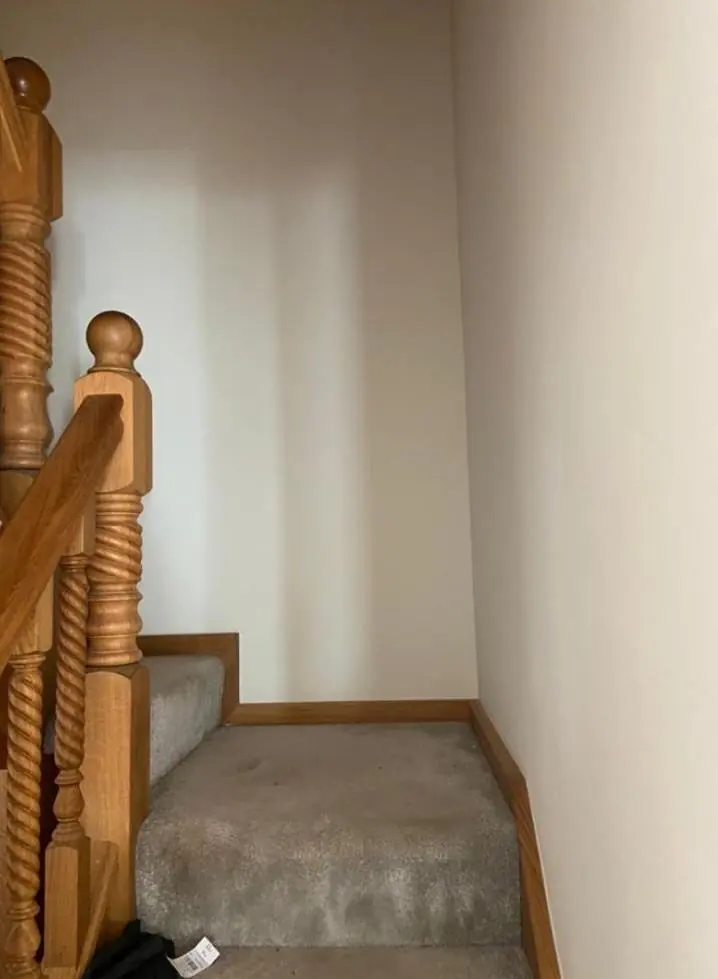
Old cottages in the village often have dog-leg or narrow stairs and low ceilings, and 7 Butcher’s Lane is an example of that plan. Low ceilings mean short drops, which sounds easy, but a large pattern repeat on a short drop wastes a lot of paper, so we work out roll quantities with the repeat in mind before you order. Narrow stairwells need a safe platform rather than a ladder leaning on the stair treads, and we bring the right kit for that.
In a Buckton Fields hallway the stairwell is higher and straighter, and the long drops there need the paper booked and soaked consistently so the colour and stretch stay even from top to bottom.
Wherever you are in the parish, more about the village is on our Boughton area page.
Last updated by Dean, DH Painter & Decorator.