We strip, line and hang wallpaper in St David's, the NN2 neighbourhood just east of Kingsthorpe village. Dean works there from our Northampton base, roughly 1.9 miles north of the town centre, and gives a free quote once he has seen the walls.
Who papers their walls in St David’s
Most of the wallpaper demand in St David’s comes from owner-occupiers. Many streets here are mostly social housing or private lets, and landlords tend to prefer plain painted walls that are easy to touch up between tenants. Eastern Avenue North is different: roughly six in ten of the homes sampled there were owner-occupied. The 1950s houses on Bondfield Avenue and Holdenby Road are the other main source of papering work. That is where people tend to stay long enough to want a papered chimney breast, a patterned bedroom wall or a fully papered dining room.
We hang the full range: lining paper, non-woven papers that paste the wall, traditional paste-the-paper prints, vinyls for kitchens and bathrooms, and embossed papers for ceilings with cracks.
Lining comes first on the interwar walls
The streets built up to 1939, including Hastings, Cranford, Rosedale, Barnwell and Langdale Roads, have the oldest walls in the area, and you can tell when you strip them. Old paper often hides cracks, blown patches and earlier layers painted straight over the paper. Hang a fine patterned paper on that and every flaw shows through.
So on these houses we usually strip back to the plaster, fill and sand, size the wall, then hang a lining paper horizontally. The decorative paper then goes on vertically, so its seams never line up with the lining paper’s joints. It adds a day to the job but gives the new paper a flat, even surface to sit on. On the pre-1920 houses along St Davids Road we check for lime plaster first, because soaking it with a steamer can loosen it.
Bungalow ceilings and semi-detached stairwells
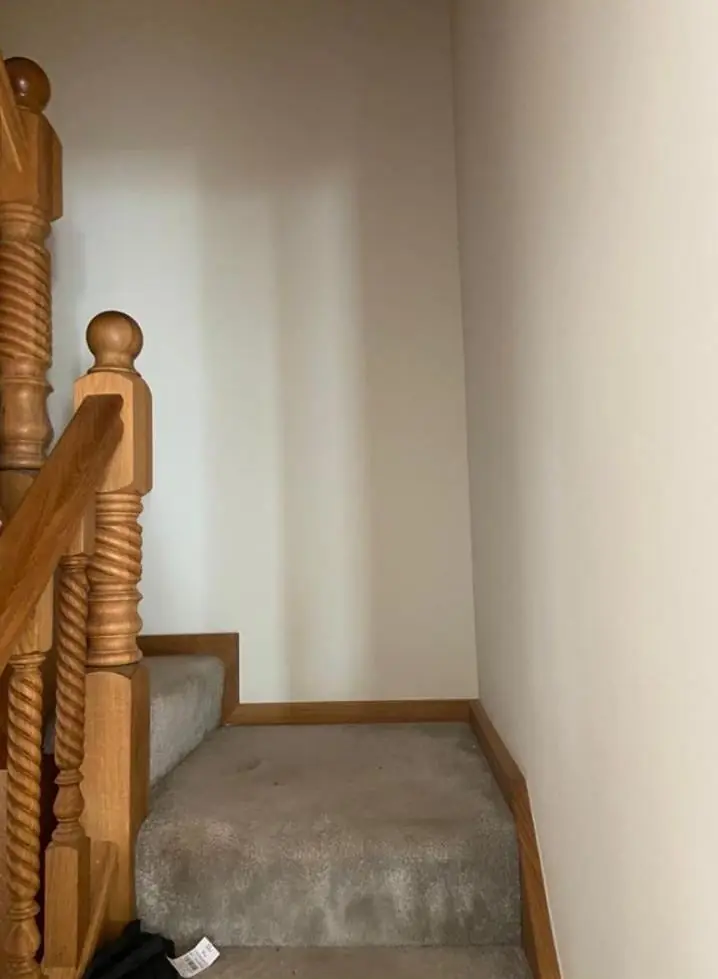
The single-storey homes off Eastern Avenue and on Holdenby Road are straightforward to paper. All the rooms are on one floor and ceiling heights are ordinary, so a feature wall in a lounge or a full bedroom is usually a short job. The two-storey post-war semis bring the one awkward area on the estate: the stairwell, where the drop from landing ceiling to hall floor needs a proper platform rather than a stepladder balanced on a stair tread. Long drops of patterned paper have to stay level all the way down. That is easier with two fixed working heights than by moving one ladder about.
Papering a Newnham Road or Drayton Walk flat
In the 1970s flats on Newnham Road and Drayton Walk, one papered wall is usually enough in a compact living room. We keep pasting tables and rolls inside the flat rather than in the communal hallway. If the flat is rented, we check with you that the landlord or housing provider allows wallpaper before we order any.
Choosing a paper for a compact room
The interwar terraces off Hastings Road have small bedrooms, and a large-scale pattern can overwhelm them. Smaller repeats, or a bold paper on just the chimney breast with the other walls painted to match, usually sit better. Our colour and finish advice covers choosing a paint to go with the paper. Order every roll from one batch, plus one spare, because a later batch can differ slightly in shade and a terrace bedroom is too small to hide the change.
The full detail of stripping, preparation and paper types is on our main wallpaper hanging in Northampton page. Our St David’s area guide covers the neighbourhood more widely.
Last updated by Dean, DH Painter & Decorator.