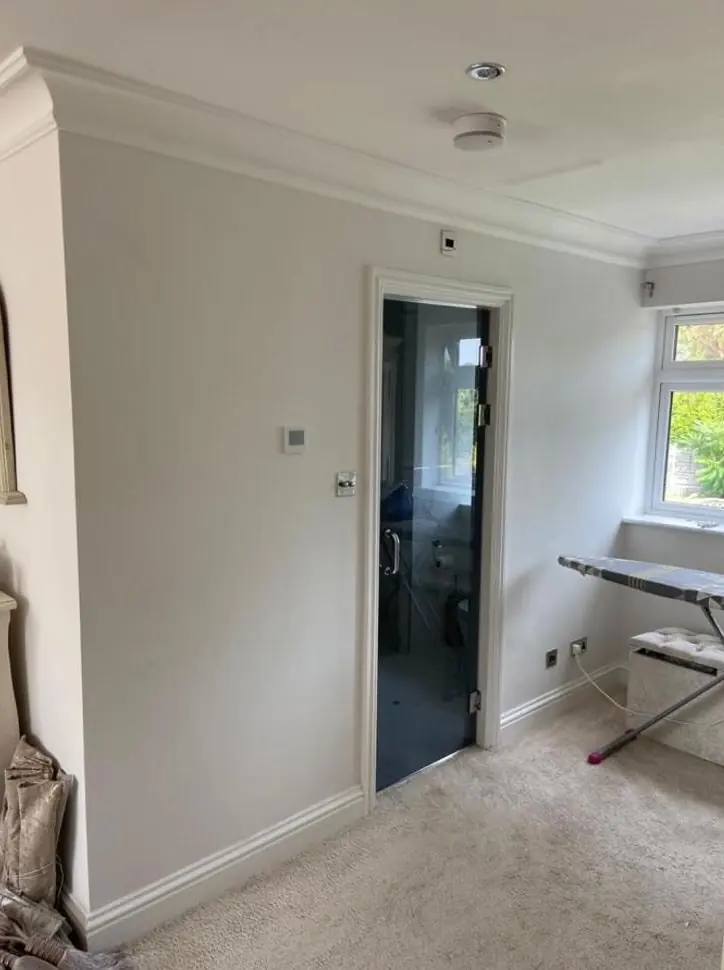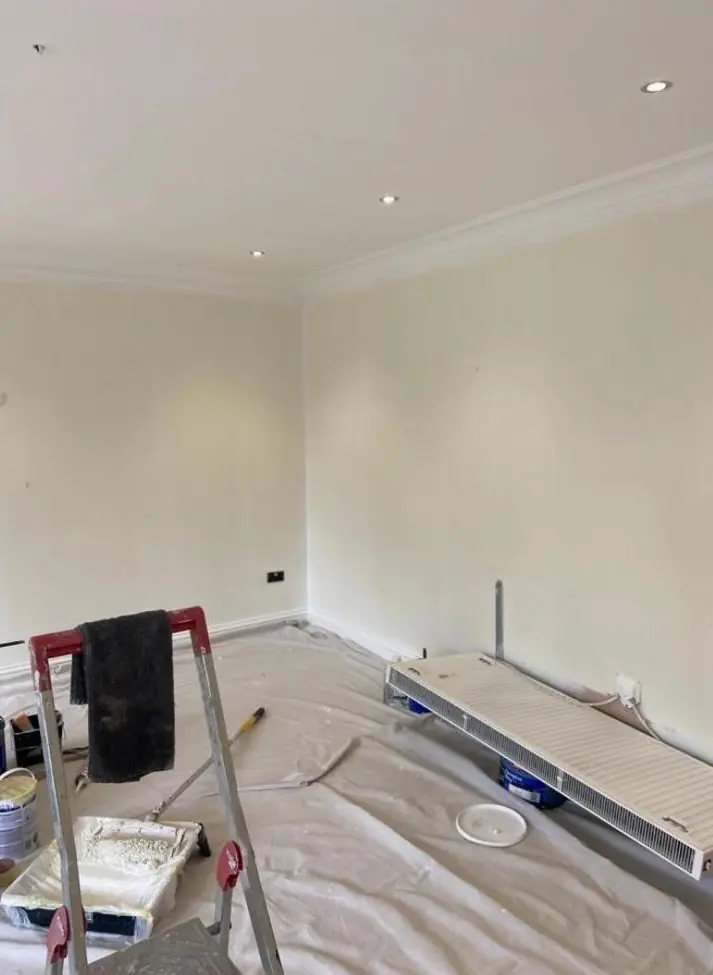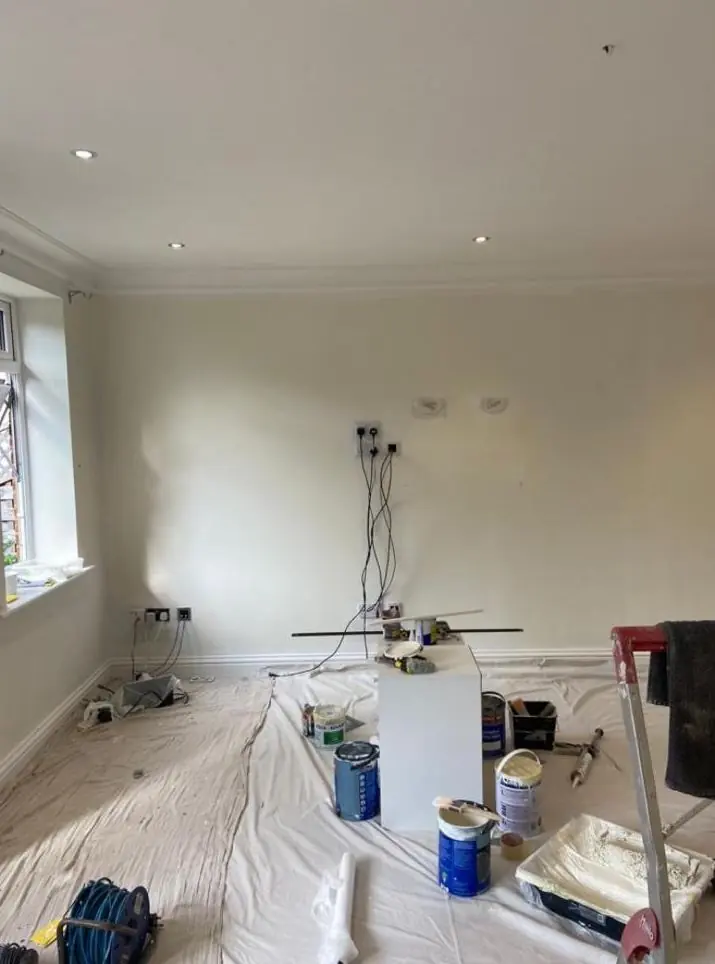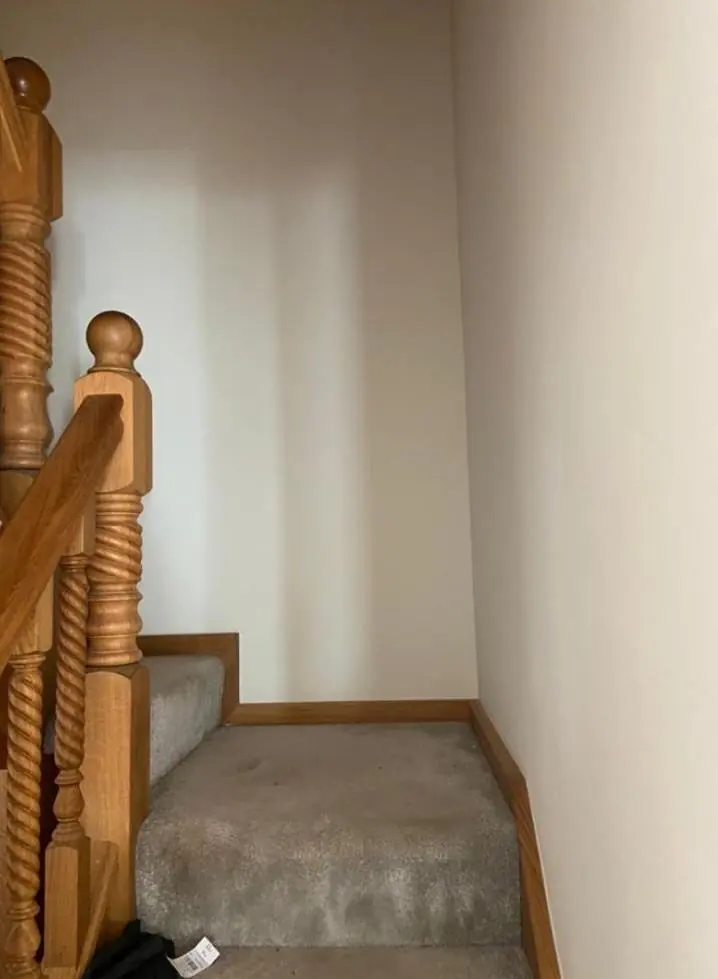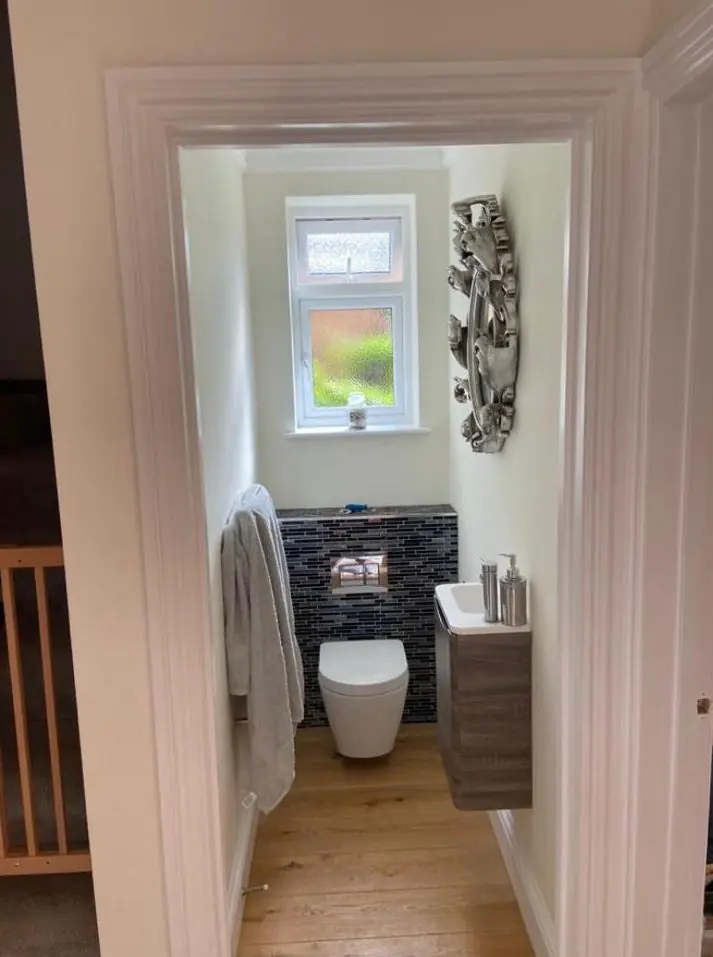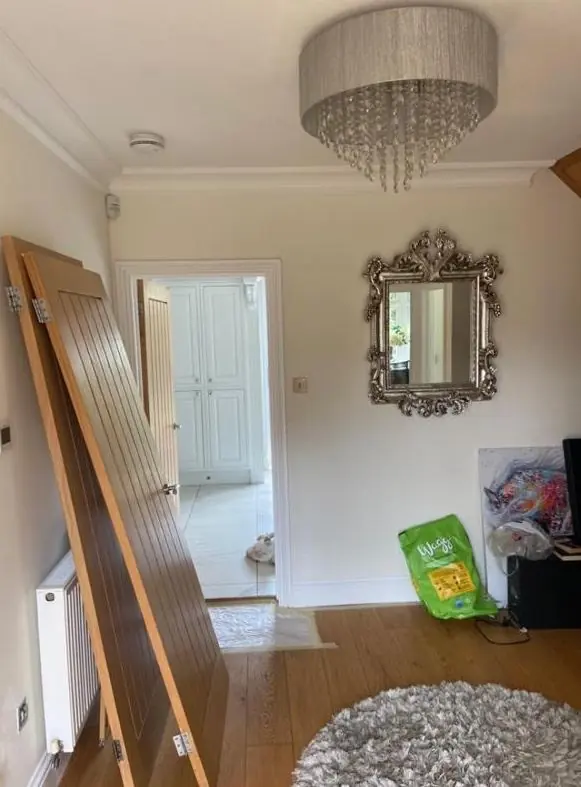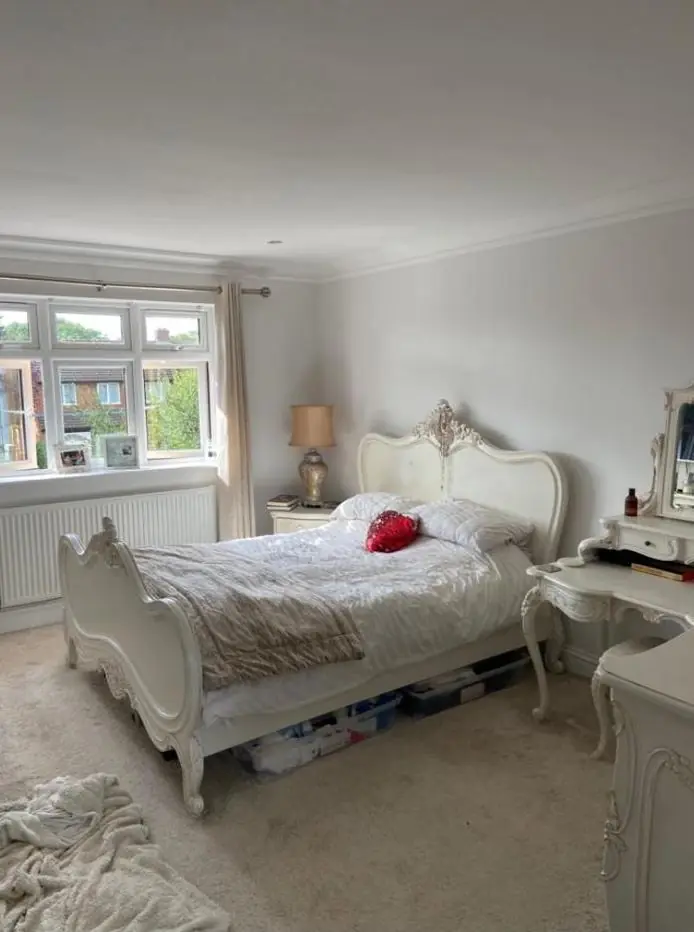
Dean paints the interiors of houses and flats in Delapre, the interwar estate facing Delapre Abbey across London Road, about 0.9 miles south of Northampton town centre. Most homes here are 1930s solid-brick terraces and semis, so cold outside walls and old layers of gloss shape almost every job.
Why the outside walls of a Delapre terrace run cold
Energy certificates for Delapre Crescent Road, Eastfield Road, Forest Road and Queen Eleanor Road describe the same construction again and again: solid brick, uninsulated as built. A 1930s solid wall has no cavity to break the cold, so the plaster on the inside of a front or back wall sits several degrees cooler than a partition wall. Warm, moist air from cooking, showers and drying washing condenses on it, and the result is grey speckling behind wardrobes, in the top corners of bedrooms and around bathroom windows.
Painting straight over that only hides it for a season. On these houses the first coat is usually not paint at all. We wash the affected areas with a fungicidal treatment, let them dry, and seal any brown or grey staining with a stain-blocking primer so it cannot bleed back through. Only then do the finish coats go on, and on the coldest walls we often suggest a breathable or anti-condensation emulsion rather than a standard vinyl matt.
Damp that starts outside the house
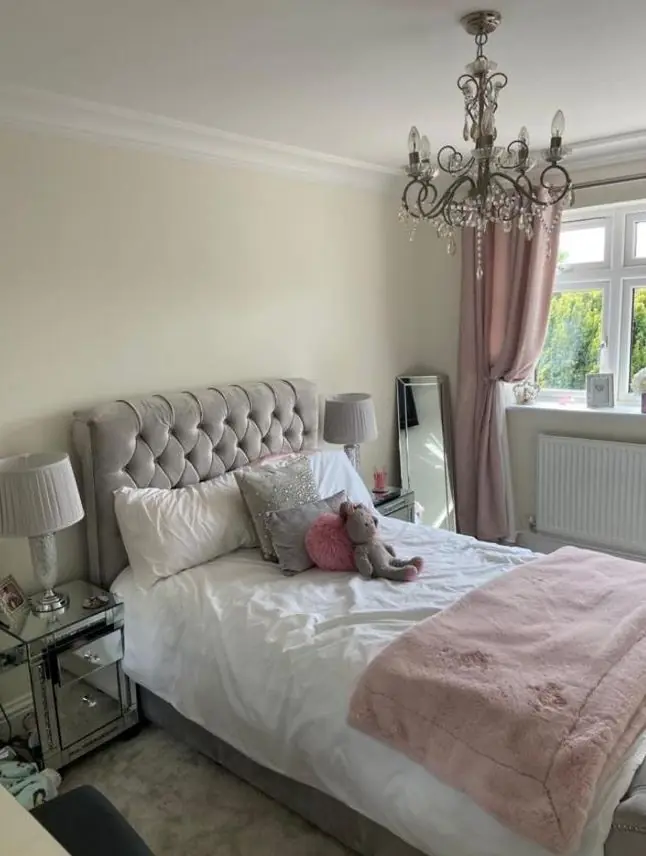
Because there is no cavity, a blocked gutter or a patch of failed pointing shows up on the inside of a Delapre house quickly, as a tidemark or a patch of blown plaster. Lower-lying homes nearer the Nene flood plain can also have salts coming through ground-floor walls. Before quoting, Dean looks at where the staining sits and whether it lines up with a downpipe, a sill or the base of the wall. If the cause is outside, we will say so and suggest it is sorted first. Redecorating a room only to watch the same patch return is money wasted.
EPC entries show external wall insulation at a few addresses on Forest Road, Eastfield Road and Queen Eleanor Road, and one on Delapre Crescent Road is recorded with internal insulation. Those rooms behave differently: warmer walls, far less mould, and, where boards went on inside, new plaster that needs a proper mist coat. Our guide to painting new plaster explains why.
Original interwar woodwork
Plenty of Delapre homes keep their picture rails, original panelled doors and deep skirtings. These have usually been glossed many times, and the oldest layers on a house of this age can contain lead. We test before sanding, use wet abrasion or chemical stripping where lead is present, and keep dust contained. Sharp edges on the panel mouldings and a clean line along the picture rail make more difference to a 1930s room than the wall colour does.
What each room usually needs
| Room | Typical problem here | Our approach |
|---|---|---|
| Front bedroom | Mould on the outside wall and window reveal | Fungicidal wash, stain block, breathable finish |
| Bathroom | Condensation on solid brick, peeling ceiling paint | Scrape back, prime, moisture-resistant finish |
| Front room | Picture rail and doors thick with old gloss | Lead check, rub down, fresh satin or eggshell |
| Hall and stairs | Narrow and scuffed by bikes and bags | Scrubbable matt or eggshell, see our hallway page |
Lets near the Waterside Campus
Ransome Road backs towards the Waterside Campus, and parts of Delapre fall under the HMO Article 4 directions made in 2017-2018. For landlords turning a terrace round between tenants, durable wipeable finishes and a short programme matter more than designer shades, and we plan the work around that.
We cover Delapre from our Northampton base. For the full scope of what we paint, see our main interior painting service, or go back to the Delapre area page.
Last updated by Dean, DH Painter & Decorator.