Dean carries out hand-painted decorative finishes in Delapre, the 1930s housing estate west of London Road about 0.9 miles south of Northampton town centre. Many homes here still have picture rails, panelled doors and fireplaces, which give a decorative scheme something real to work from.
Using the picture rail as a starting point
An original picture rail is the simplest decorative tool an interwar house has. It already divides the wall into a main field and a frieze, so a two-tone scheme looks intended rather than added. In Delapre’s front rooms we tend to suggest one of three approaches:
- A deeper colour below the rail, with the rail itself picked out in a contrasting eggshell and the frieze carried into the ceiling colour.
- Colour drenching: walls, rail and skirting all in the same shade at different sheens, which gives a small terraced room a calm, finished look.
- A fine painted line or stencilled band just under the rail, in place of a paper border.
Where a rail has been removed, a painted band at the same height can bring back the proportion of the room without refitting timber. The larger London Road semis, at around 100 to 120 square metres, have the wall height to carry a stronger contrast than a mid-terrace front room does.
Panelled doors, fireplaces and new panelling
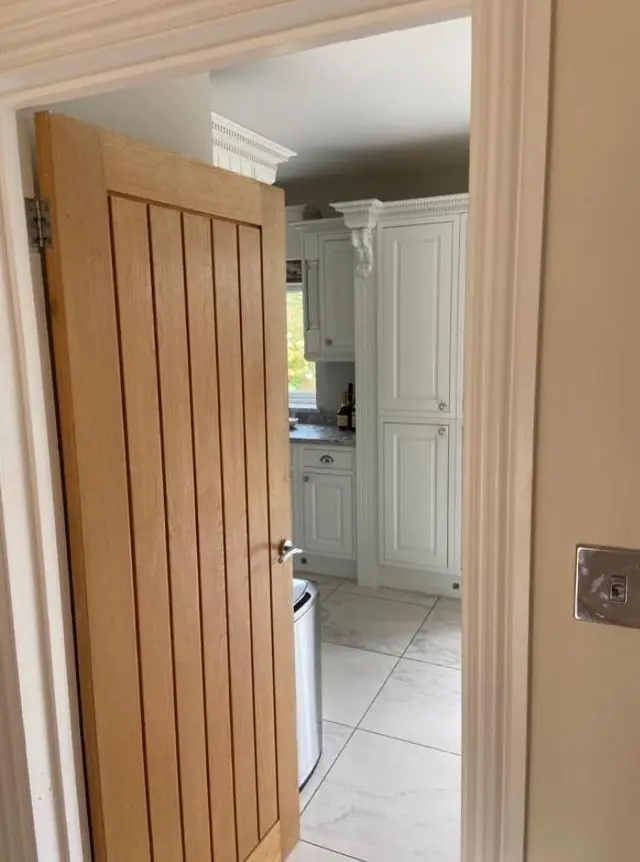
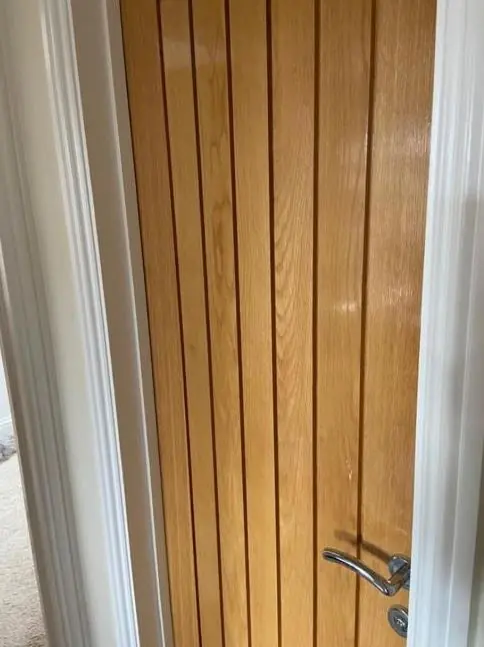
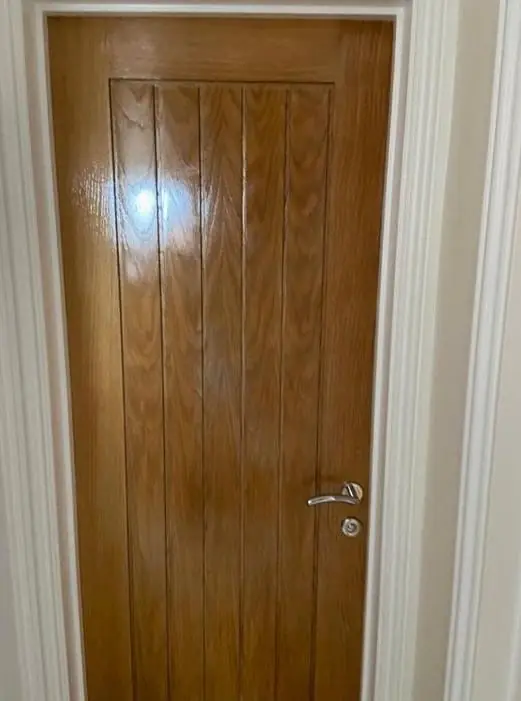
The original panelled doors in these 1930s houses lend themselves to picking out: a darker colour on the panels and a lighter one on the stiles and rails, or the reverse. It is slow, careful brushwork, and it only works if the old gloss has been properly prepared first. These houses are old enough that the bottom layers may contain lead, so we test before rubbing down.
Surviving fire surrounds can be painted in a satin or eggshell to frame a feature wall. On plainer walls, applied panelling is popular. Shaker-style or picture-frame panelling below dado height suits the scale of a Delapre semi better than full-height wall panelling, which can crowd a mid-terrace room. We prime MDF properly, caulk every joint and finish in a hard-wearing eggshell.
Choosing the right wall for an effect
Most of the houses on Delapre Crescent Road, Forest Road and Eastfield Road are solid brick with uninsulated outer walls. Those walls run cold and attract condensation, which can mark a glaze or a limewash-effect finish and lift it at the edges. A decorative finish therefore belongs on an internal wall or a chimney breast unless the outer wall has been insulated or is clearly dry. Panelling fixed to a cold outside wall also needs a gap or a breathable fixing approach so moisture does not get trapped behind it. Homes nearer the Nene flood plain with salts in the ground-floor plaster are a poor base for any decorative finish until the wall has been treated and dried.
A note on the abbey side of London Road
Delapre Abbey and several of its outbuildings are listed and sit inside the conservation area, and historic ironstone and lime surfaces need breathable mineral finishes rather than modern acrylics. Any decorative work on buildings there would go through listed building consent. On the residential streets west of London Road there are no such controls, so a homeowner is free to choose period-style or contemporary effects.
How it fits with the rest of the room
A decorative finish is usually one part of a bigger room job, alongside walls, ceilings and woodwork. We would normally do the plain painting first and the detail work last, so nothing gets marked. Our main decorative finishes service page explains the range of effects we do. For the other services we offer locally, see the Delapre area page, and for budgets see our painter and decorator cost guide.
Last updated by Dean, DH Painter & Decorator.