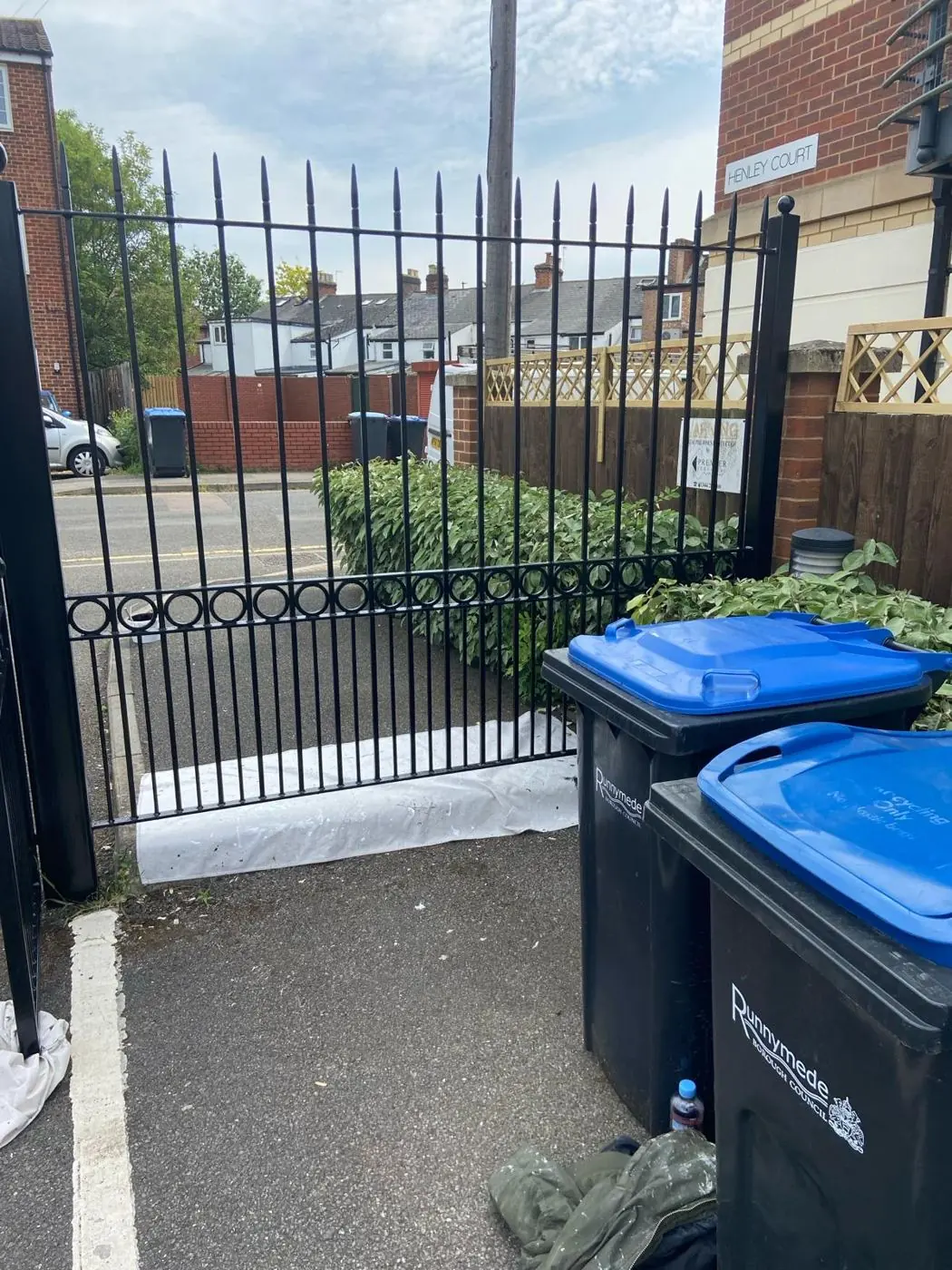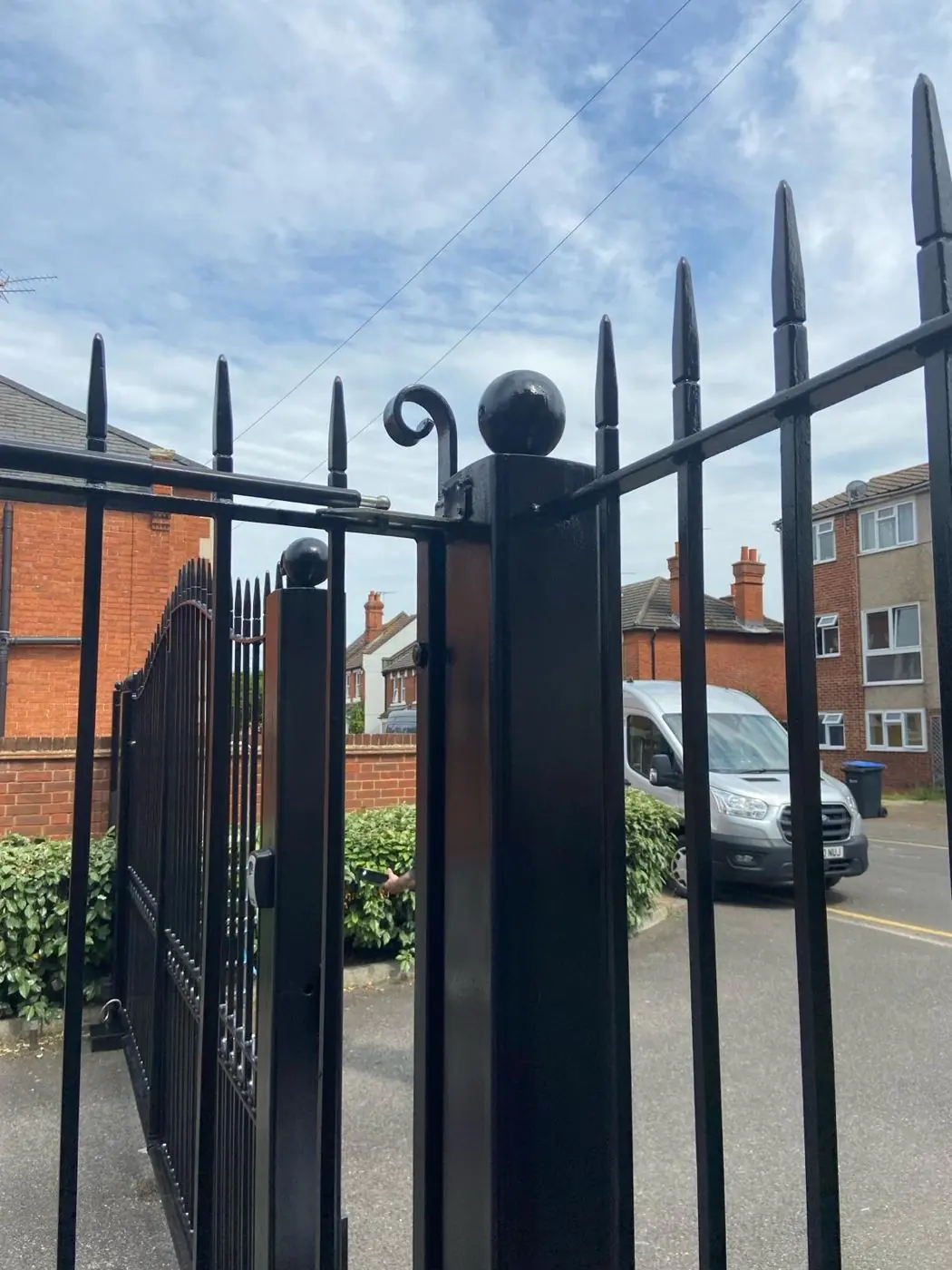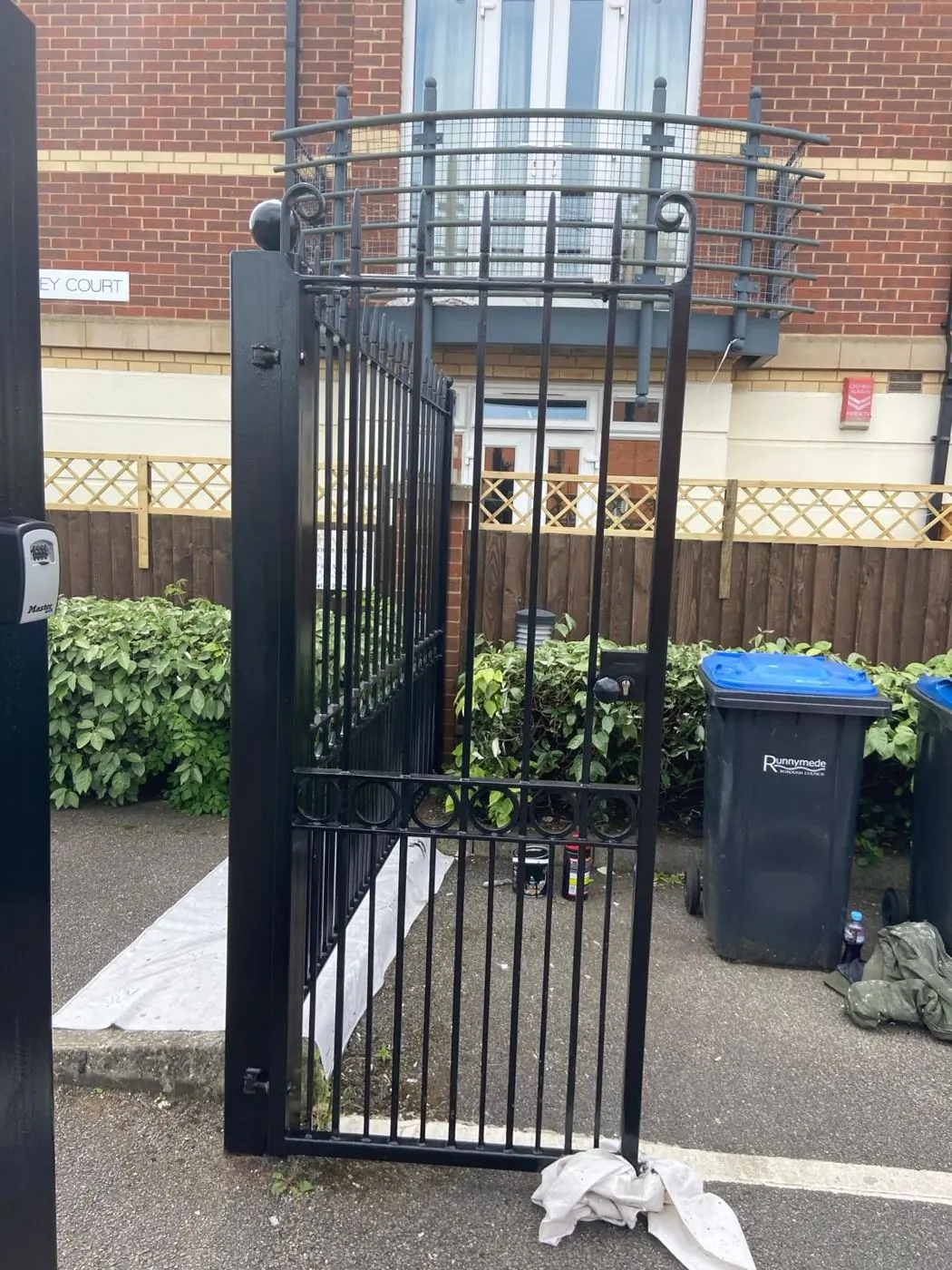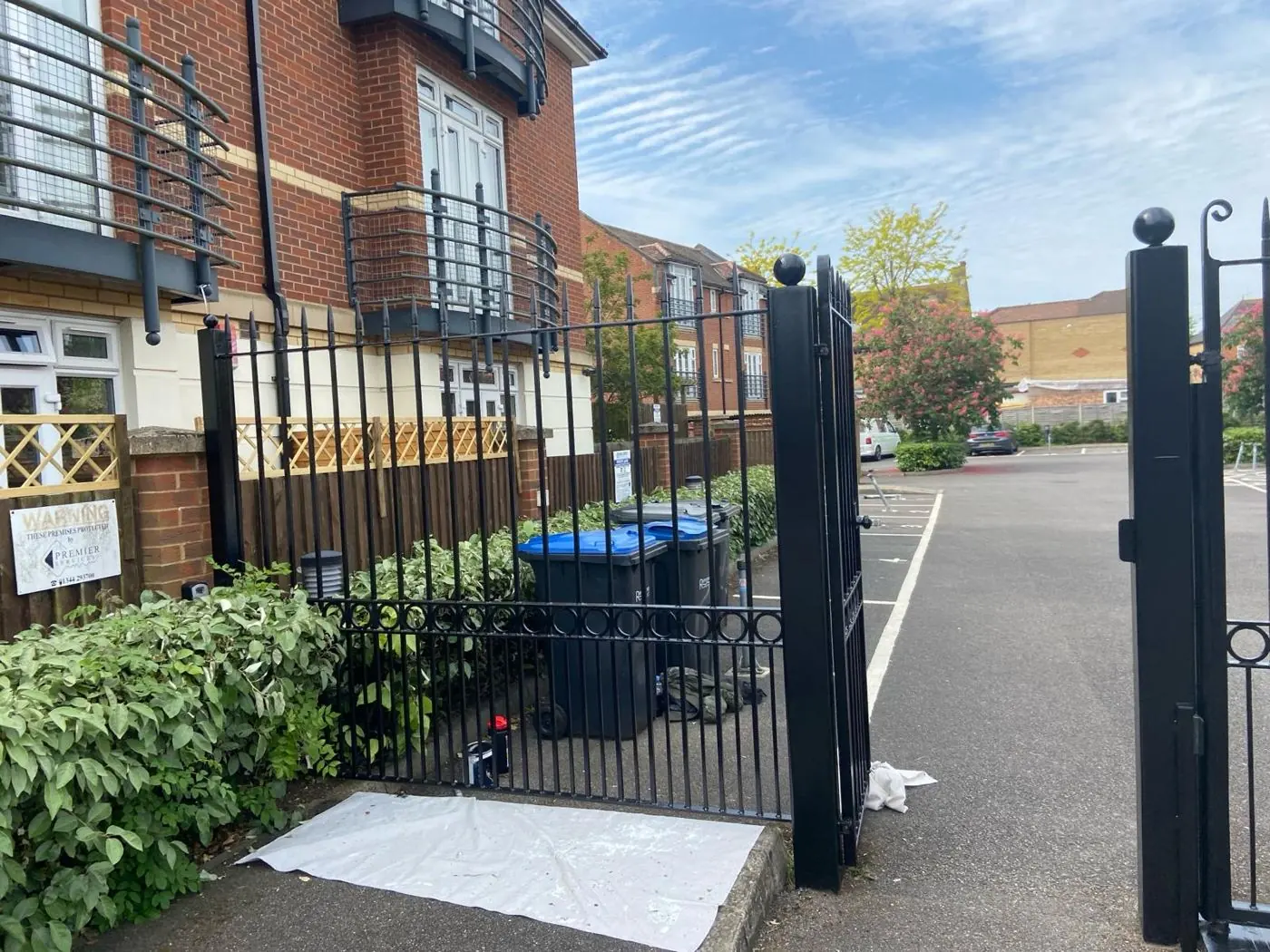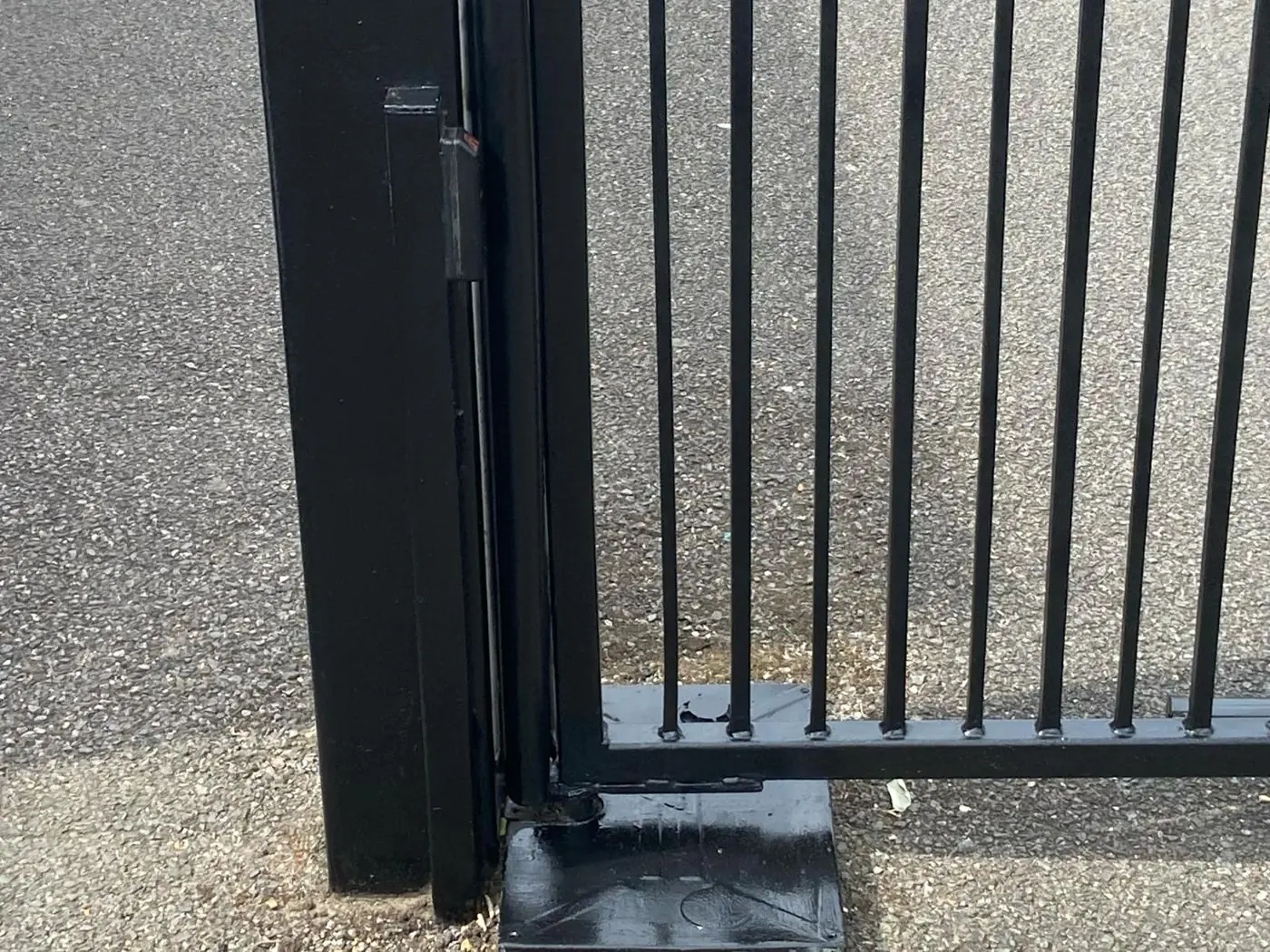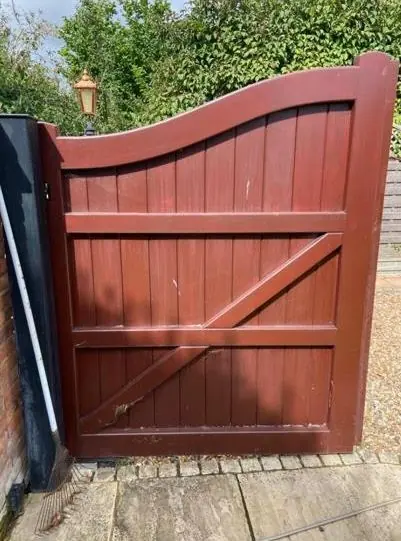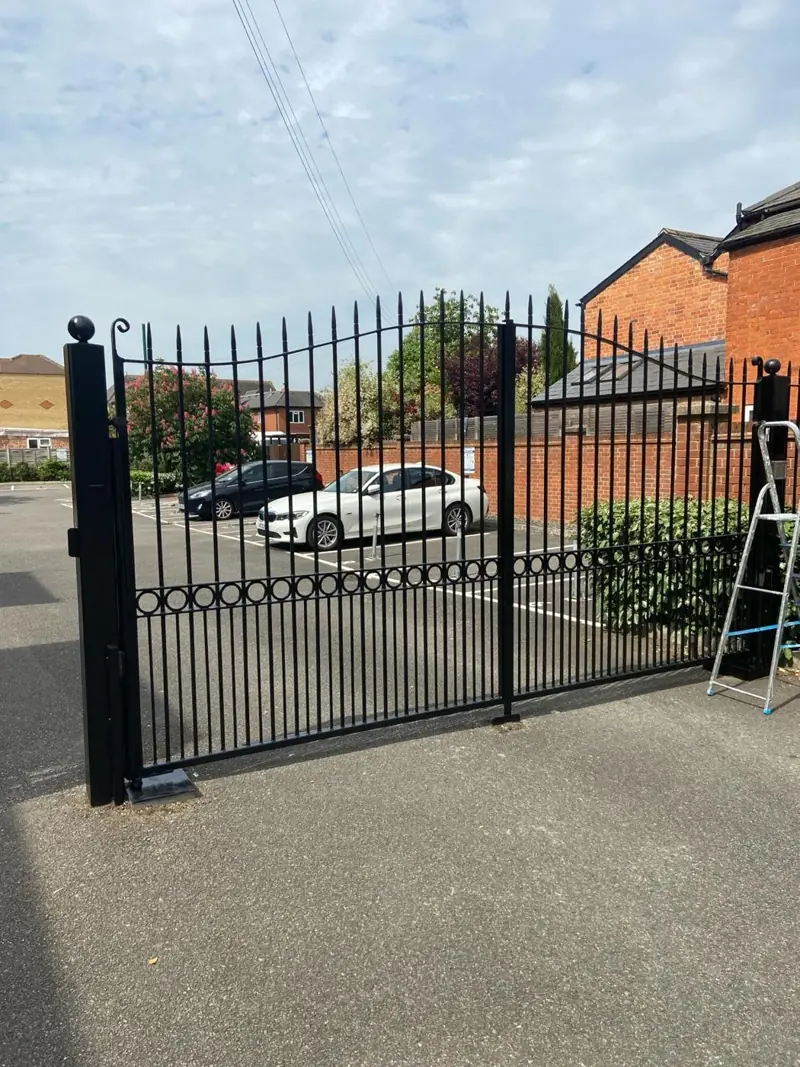
We stain and paint fences and wooden gates in Delapre, the interwar estate around 0.9 miles south of Northampton town centre. Rear gardens behind the terraces and semis are often shaded by mature trees, so cleaning and a fungicidal wash come first. Dean gives free quotes.
Shade, damp and green timber
Plenty of the back gardens behind Delapre’s 1930s terraces and semis catch shade from mature trees, whether their own, a neighbour’s or the tree cover around the abbey park east of London Road. Timber that rarely gets direct sun stays damp after rain, and damp timber grows a green film of algae and sometimes black mould. Stain brushed over that layer looks patchy and comes off early, because it is sitting on growth rather than soaking into the wood.
So the first visit on a Delapre fence is usually a clean. We brush off loose dirt and leaf debris, apply a fungicidal wash, give it time to work, then scrub and rinse. The fence then needs to dry fully before any stain goes on, and on a shaded boundary that can take several dry days rather than one afternoon. We plan the work for a settled spell rather than squeezing it between showers, which on most Delapre plots means late spring through summer. Our note on seasons and outdoor painting covers temperatures and drying in more depth.
Ground conditions near the flood plain
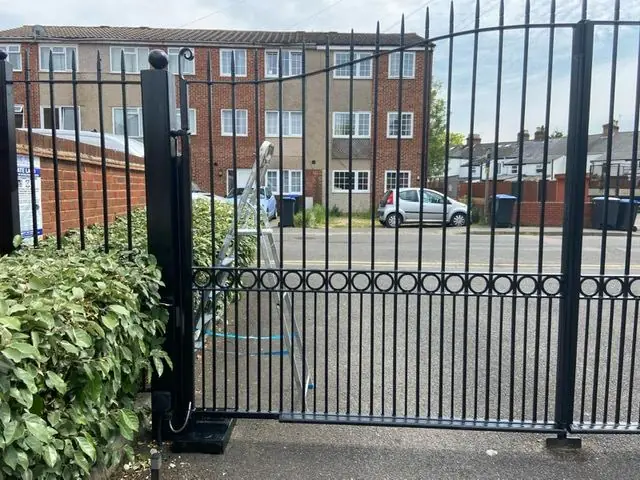
Delapre lies close to the Nene, with the river and the Grand Union Northampton Arm under a kilometre to the north and the Fullbrook stream nearby. Not every Delapre garden is low-lying, but where the ground holds water, fence posts and gravel boards stay wet at the base. We check for posts that rock or have softened at ground level, and for gravel boards that have split or sit in standing water after rain. Gates hung on soft posts drop and bind, which also wears the finish at the latch edge. Staining a fence whose posts are failing is wasted effort, so we will say so and leave the repair to a fencer before we finish the timber.
Getting to a back garden with no side passage
Plenty of Delapre’s mid-terraces were built without a passage between neighbours, so anything bound for the back garden travels through the hall and kitchen. For fence work that is just tins, brushes, sheets and a sprayer for the wash, which we carry through with floor protection down. It is easy to manage, but worth knowing when you book, because we will need the house open at the start and end of each day.
Boundary fences need a word with the neighbours too. We stain your side, and the other side only with your neighbour’s agreement. On a terrace where the fences run in a line, neighbours sometimes choose to do theirs at the same time so the colours match.
Choosing a finish for a Delapre garden
- Translucent stain shows the grain and wears away gradually, so recoating later is easy. It suits newer or good-condition panels.
- Opaque fence paint hides weathered, mismatched timber and gives a solid colour, useful where a run of panels has been replaced piecemeal over the years. Deep greens and charcoal tend to recede, which helps a narrow garden feel wider.
- Oil or stain on hardwood gates keeps a side or front gate looking like timber rather than a painted board.
Some Delapre houses are shared lets, and the council brought in HMO Article 4 directions for parts of the area in 2017-2018. Landlords there often want a finish that needs as little upkeep as possible between tenancies, and a solid fence paint is usually the easier one to touch up. We cover the full process on our main fence and gate staining page, and other outdoor work in the area on the Delapre page.
Last updated by Dean, DH Painter & Decorator.