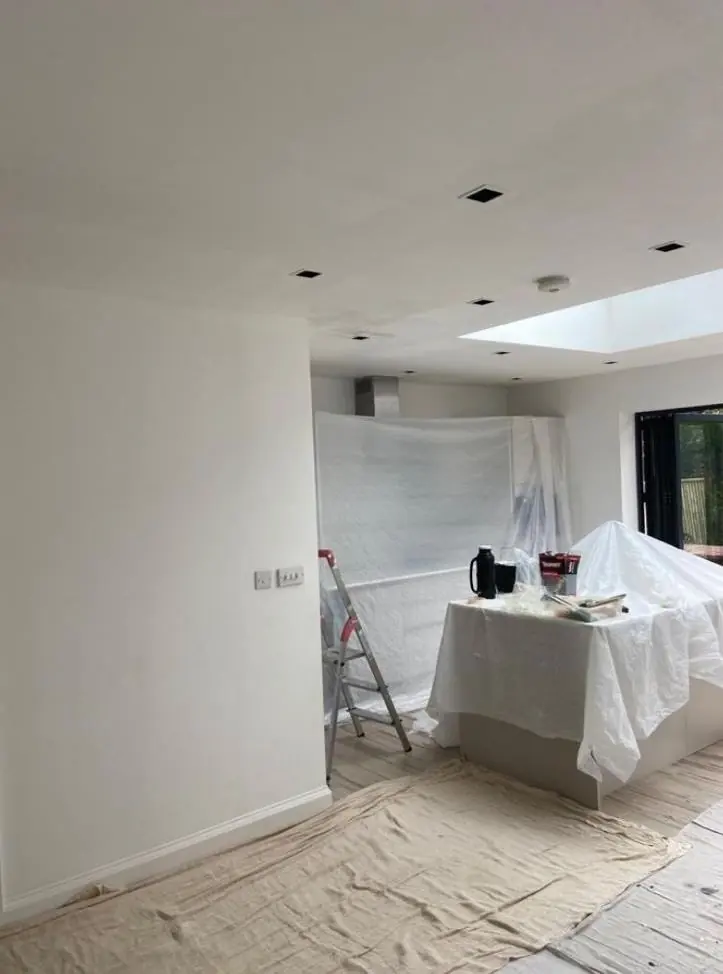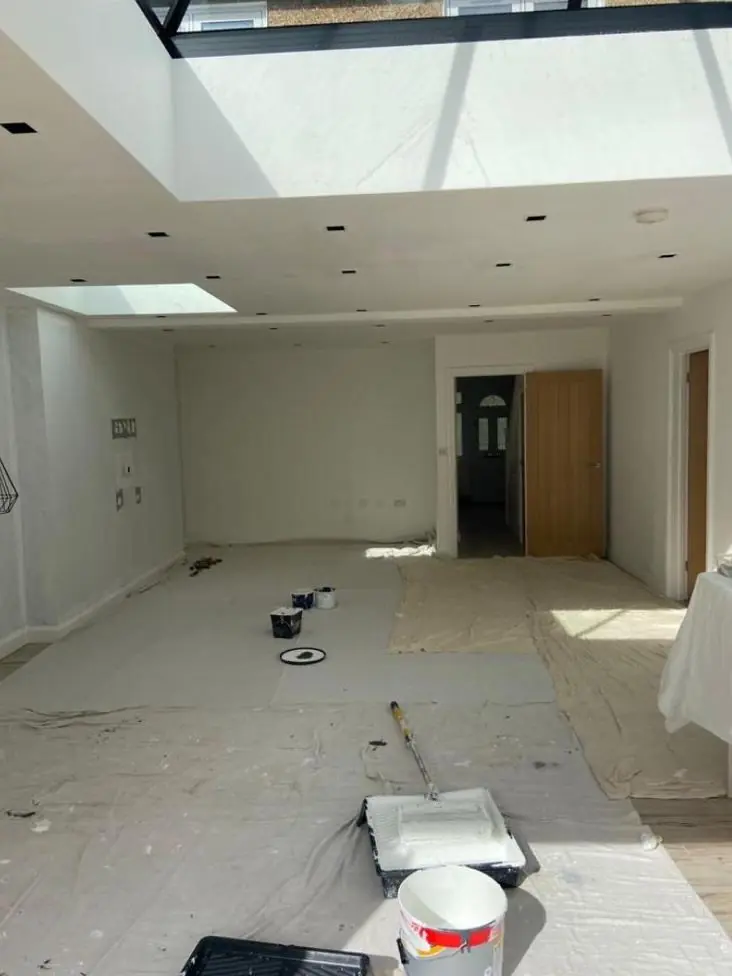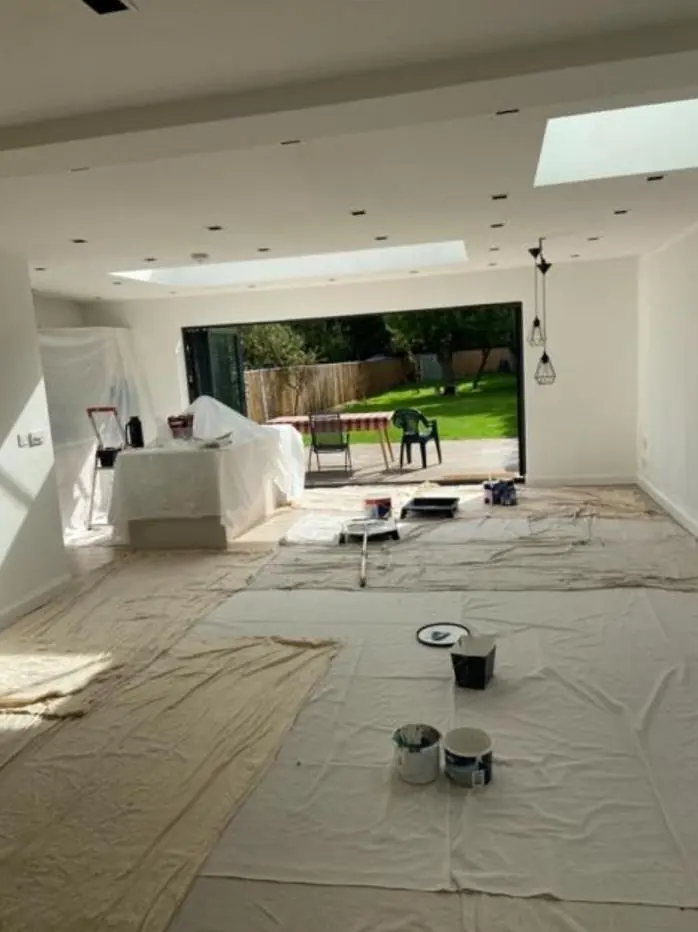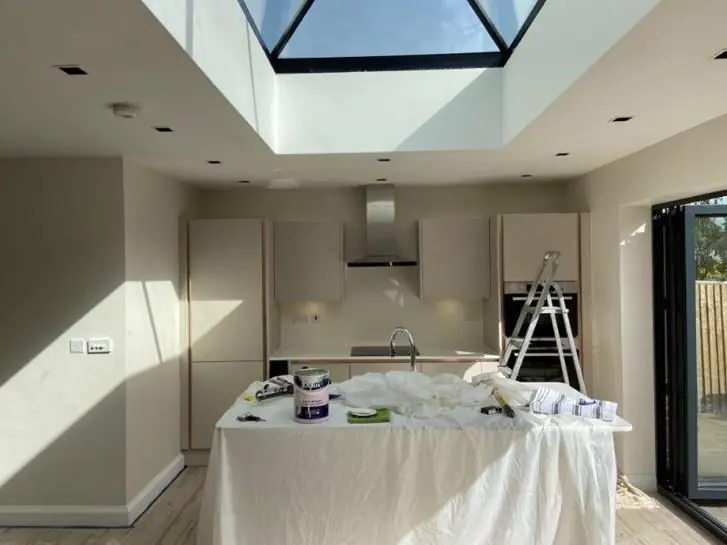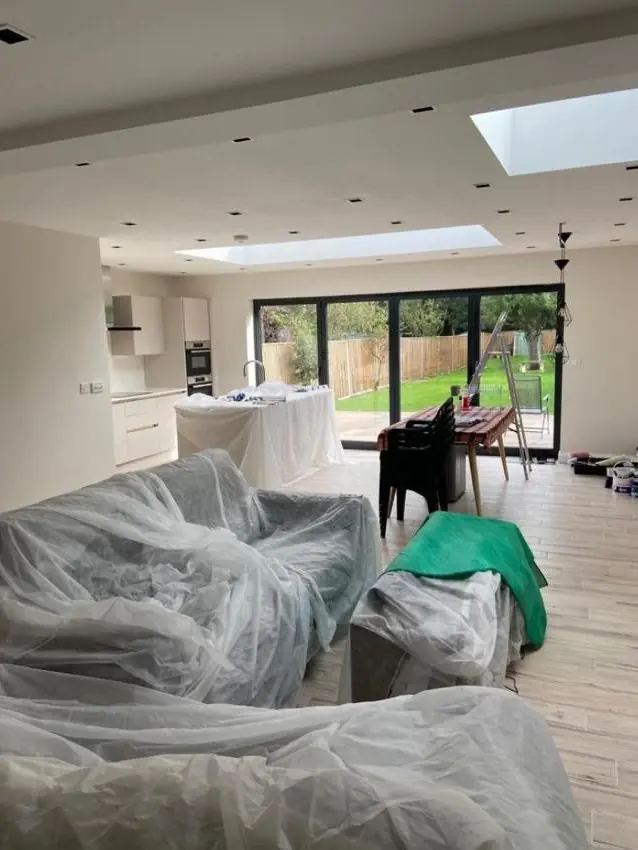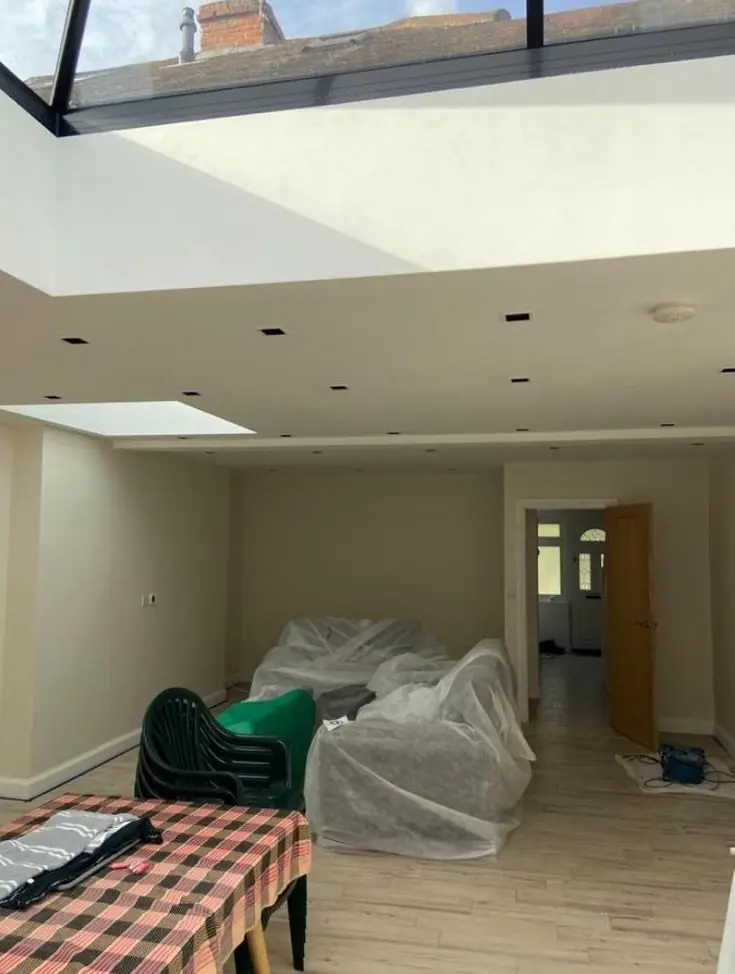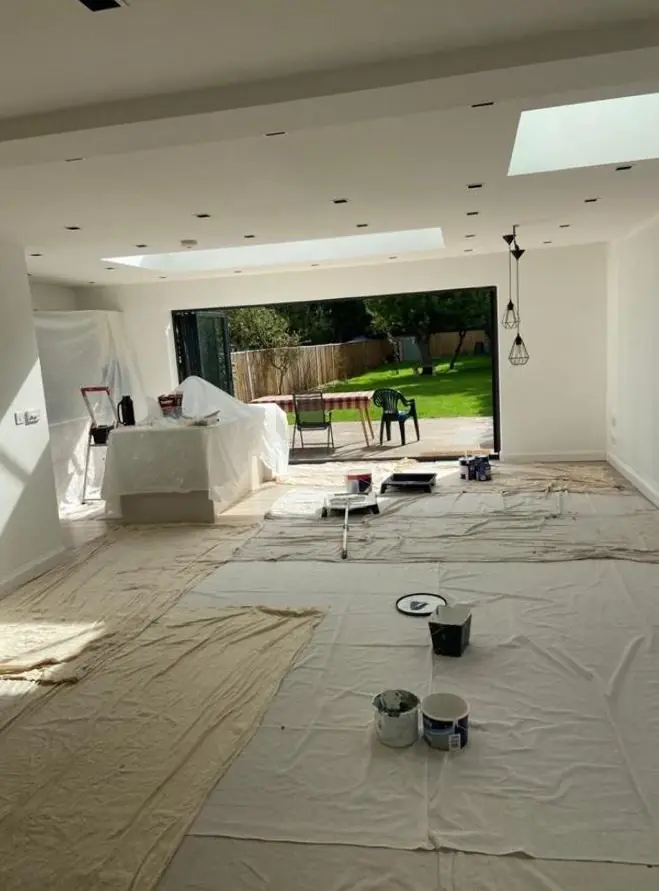
Dean decorates newly plastered walls, ceilings and extensions in Delapre, NN4, just under a mile south of Northampton town centre. In this area of 1930s solid-brick houses, new plaster usually follows damp repairs or internal wall insulation, so checking it has fully dried is the first and most important step.
What usually sends a Delapre wall back to bare plaster
The interwar terraces and semis west of London Road are built with solid brick walls, mostly uninsulated as built according to their energy certificates. With no cavity, water that gets into the brickwork has nowhere to go but inwards. A failed section of pointing, a cracked downpipe or a blocked gutter can soak through to the plaster, which then blows or stains and has to be hacked off and redone. Older homes on lower ground near the edge of the River Nene flood plain can also have plaster loaded with salts from past damp.
The other route is insulation. At least one property on Delapre Crescent Road is recorded with internal insulation, which normally means insulated board fixed to the outside walls and skimmed. Either way, the decorator inherits a room of fresh pink walls. Our general method for this work is on the main new plaster and extension painting page, and the mist-coat stage is explained step by step in our mist coat guide.
Drying time is longer on a solid wall
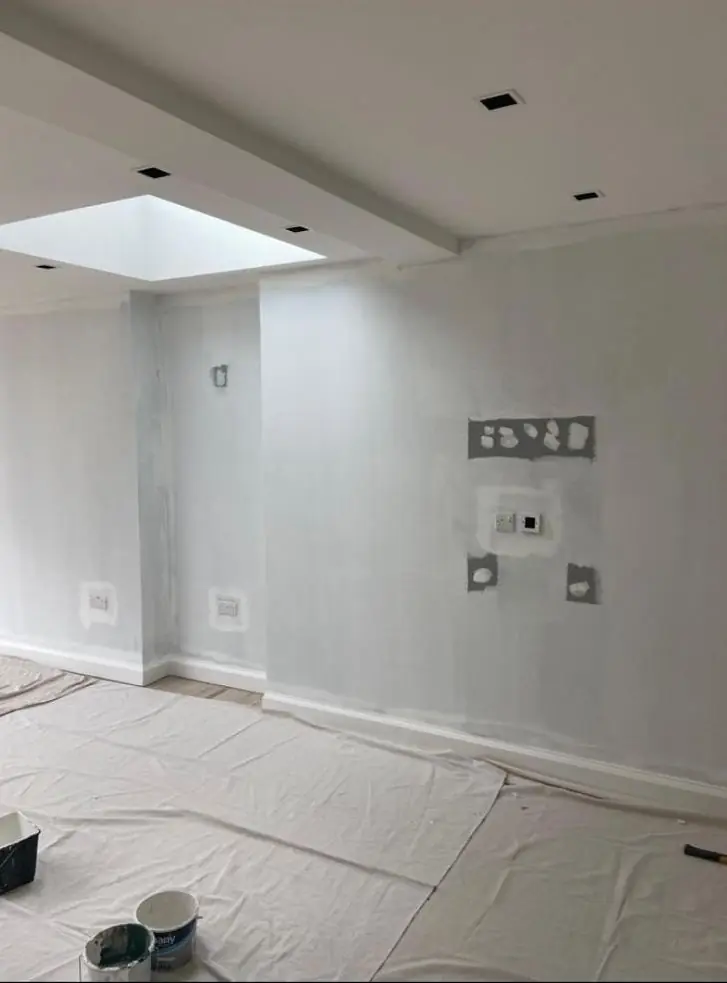
A skim on plasterboard dries within days. A thick backing plaster on a solid brick wall that has just been treated for damp can take weeks, because the brick behind it is still giving up moisture. Painting too soon traps that water, and the result is flaking, bubbling or patches that never quite match. Before the first coat goes on we check:
- Colour: even, pale pink across the wall, with no darker patches in corners or behind where radiators will go.
- Moisture readings at several heights, paying attention to the bottom metre where rising damp would show.
- Any white fluffy crystals on the surface, which are salts working out of the wall.
If salts appear, they are brushed off dry and the wall is left longer. Sealing them in with paint just pushes them to bloom again under the new finish. On walls that were salt-affected, a breathable finish gives the masonry a way to dry out over time.
Insulated outside walls: where the joins show
When an outside wall is lined with insulated board, the new surface sits forward of the original plaster. The weak points are where it meets things that did not move:
| Junction | What tends to happen | How we deal with it |
|---|---|---|
| Wall to ceiling | Hairline crack as the board settles | Flexible decorator’s caulk after the mist coat |
| Window reveals | New beads meet old plaster around the double glazing | Fill, sand and spot-prime before finish coats |
| Corner to the party wall | Old plaster and new skim absorb paint differently | Mist coat both sides so the sheen evens out |
| Behind skirtings and picture rails | Rails refitted on the new face leave gaps | Caulk and paint the joinery after the walls |
Putting the 1930s detail back
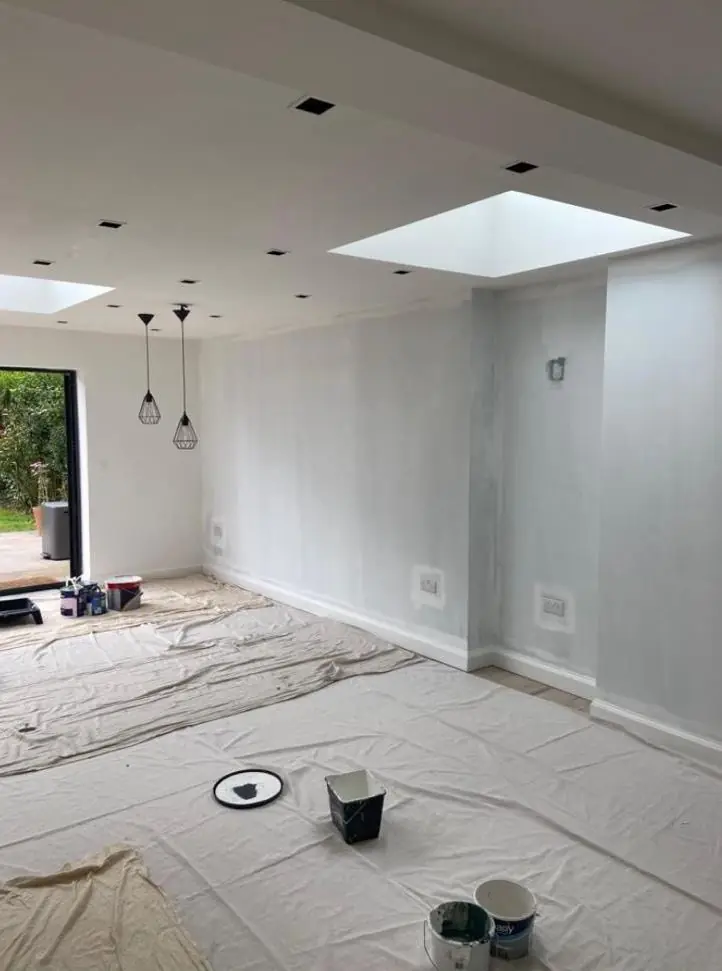
Replastering often means skirtings and picture rails come off and go back on, or are replaced with new MDF lengths that do not quite match. We seal and prime raw MDF edges, fill nail holes and paint the joinery to match the rest of the house so the replastered room does not stand out from the others. If you plan to wallpaper a feature wall in the front room later, a properly sized and sealed surface now saves trouble then.
Extensions on the semis and end terraces
The semis and end-terrace houses have more room at the back for a single-storey extension than the mid-terraces do. New extensions bring the usual jobs: mist coat, snagging, finish coats, plus new doors and architraves. On a mid-terrace there is no way round to the garden, so materials and dust sheets come through the house, and we plan that route with you. Costs depend on the size of the job; our cost guide explains what affects them, and the Delapre area page covers the rest of what we do locally.
Last updated by Dean, DH Painter & Decorator.