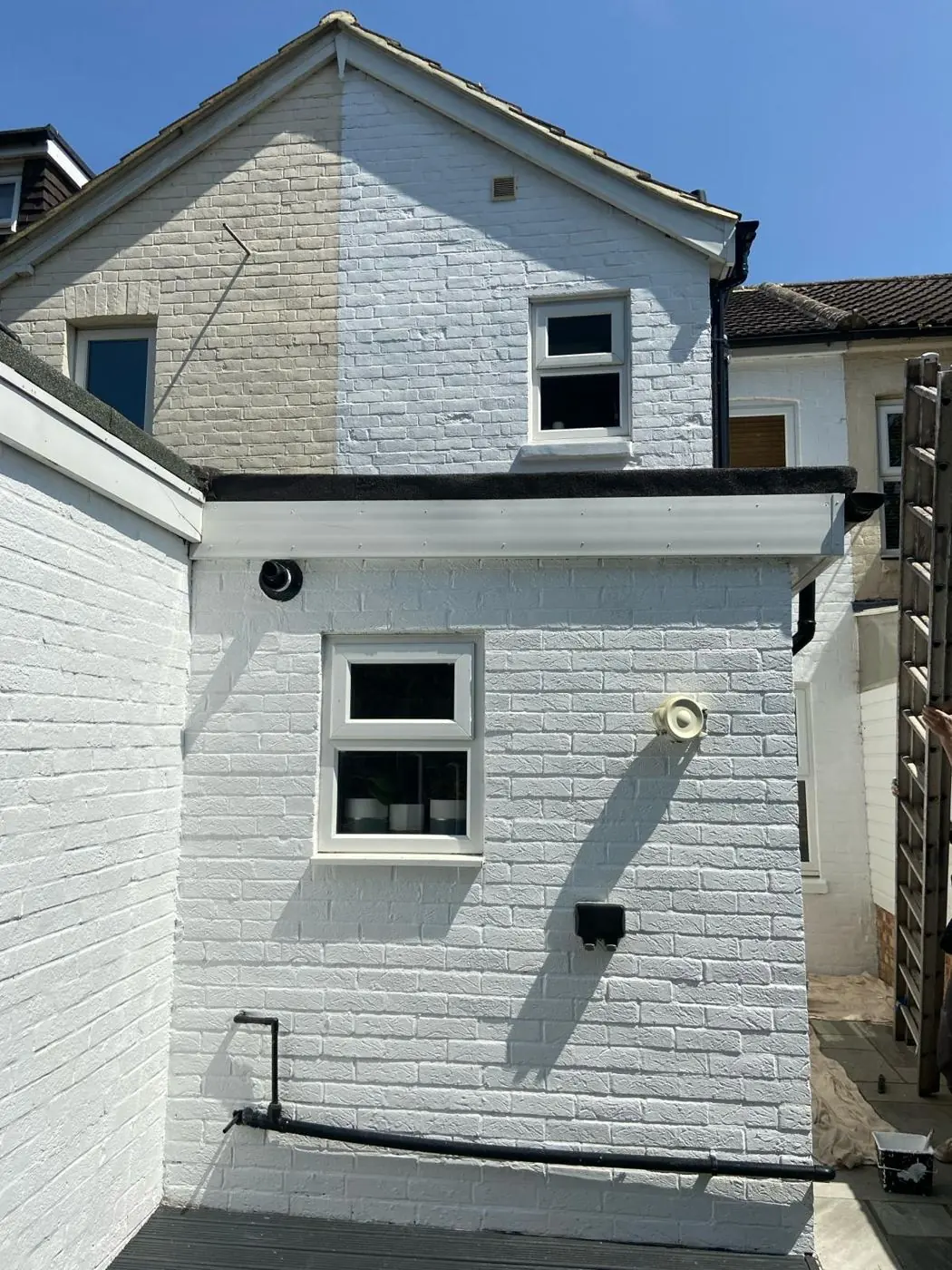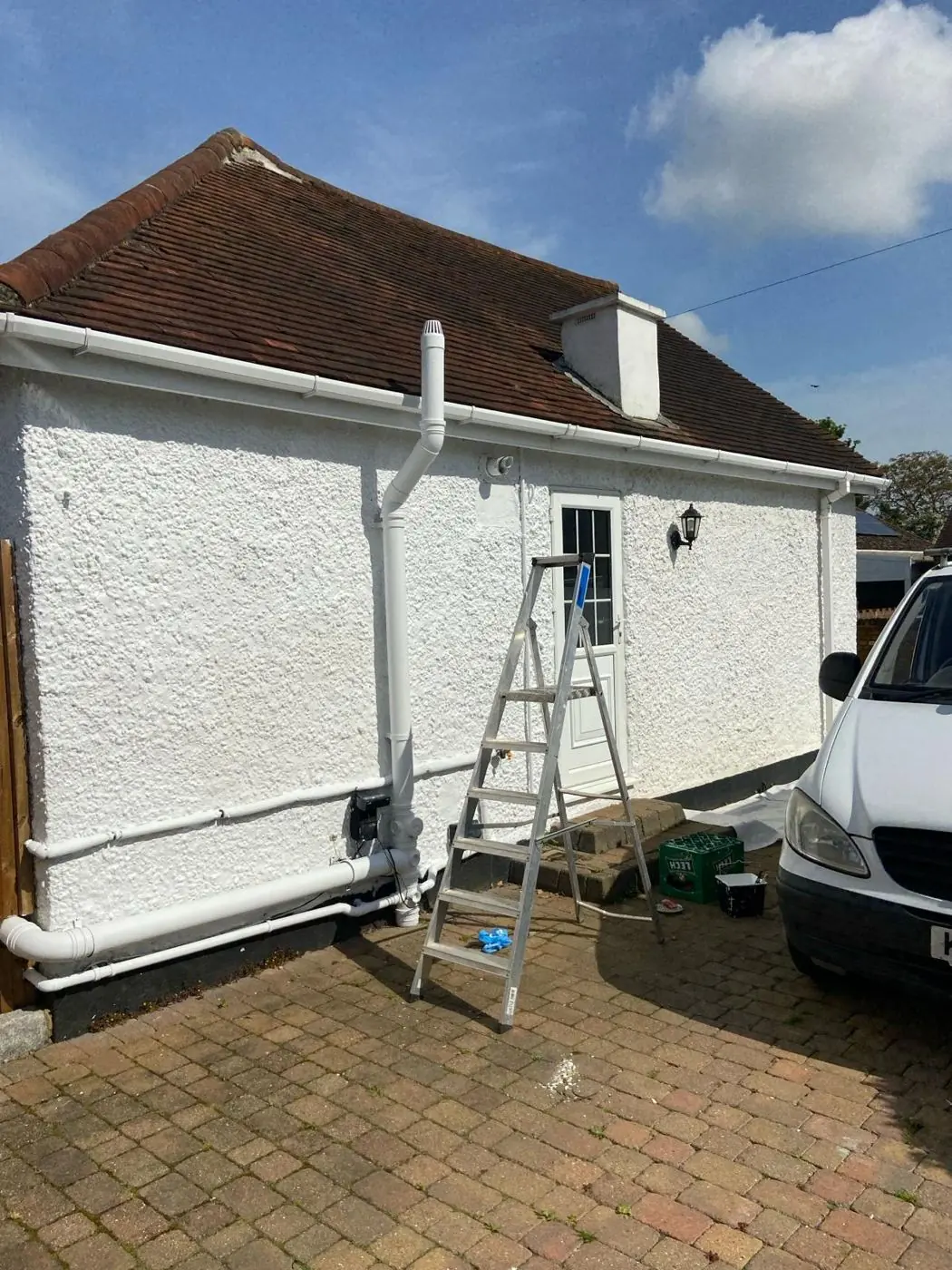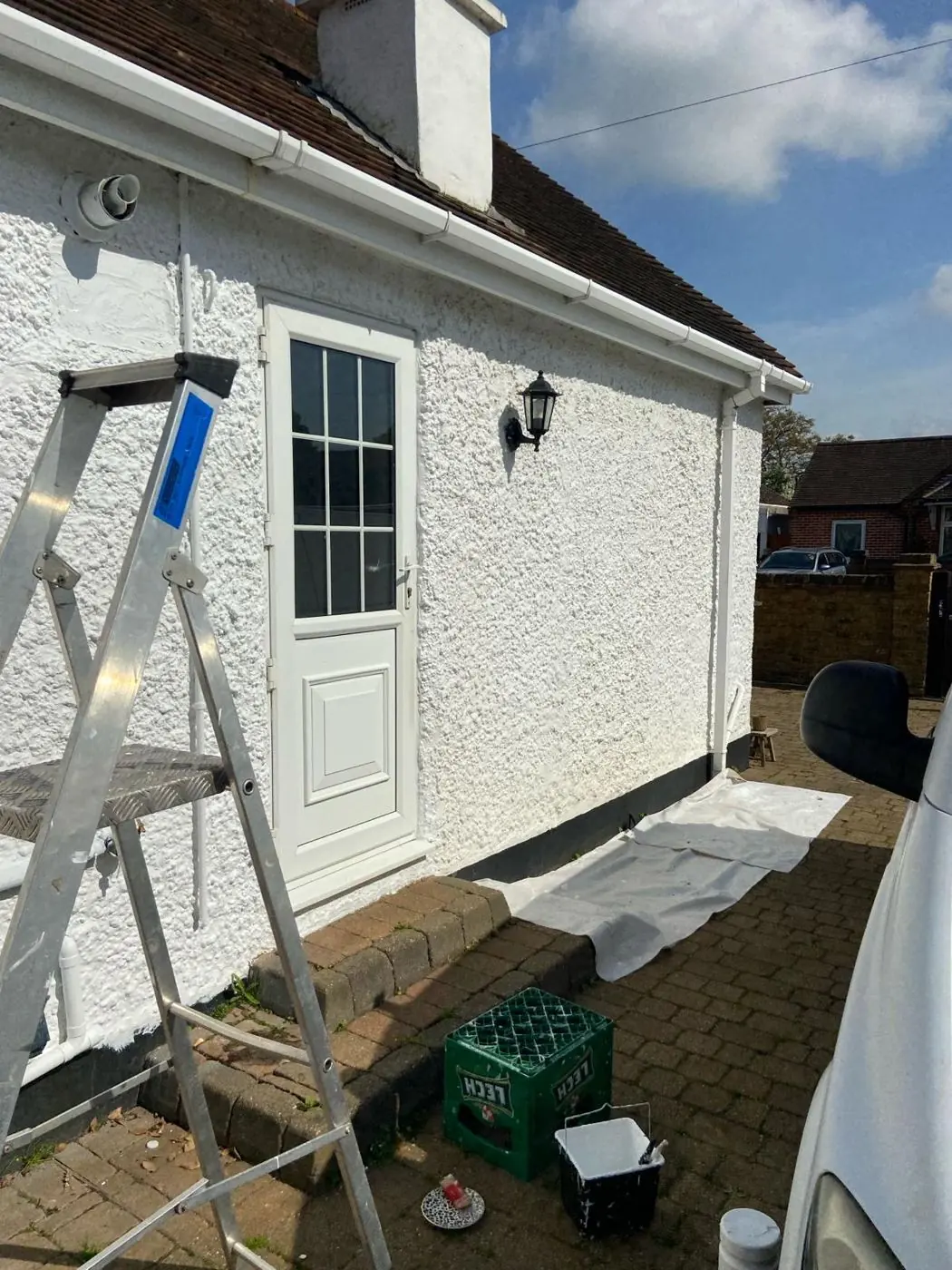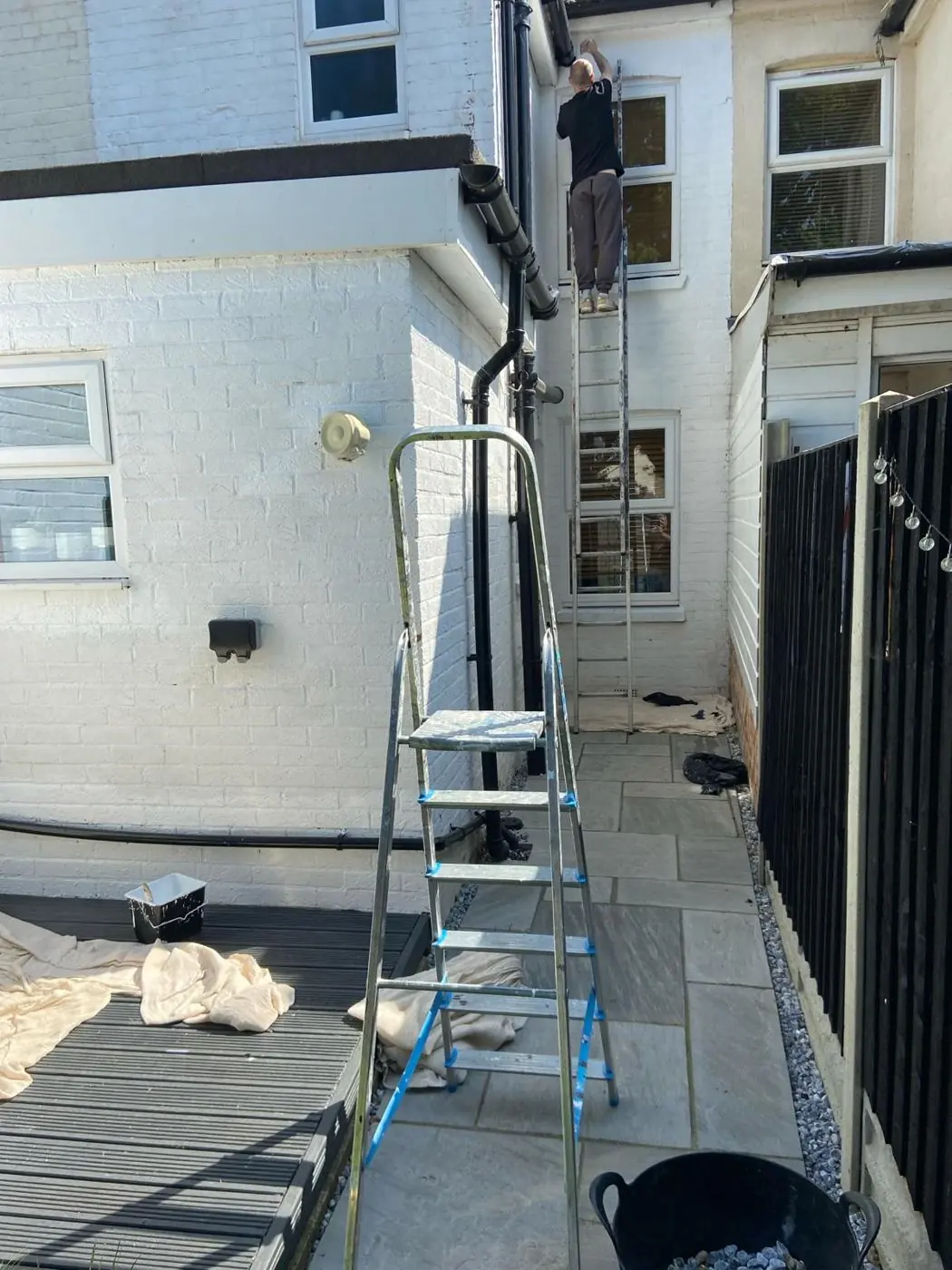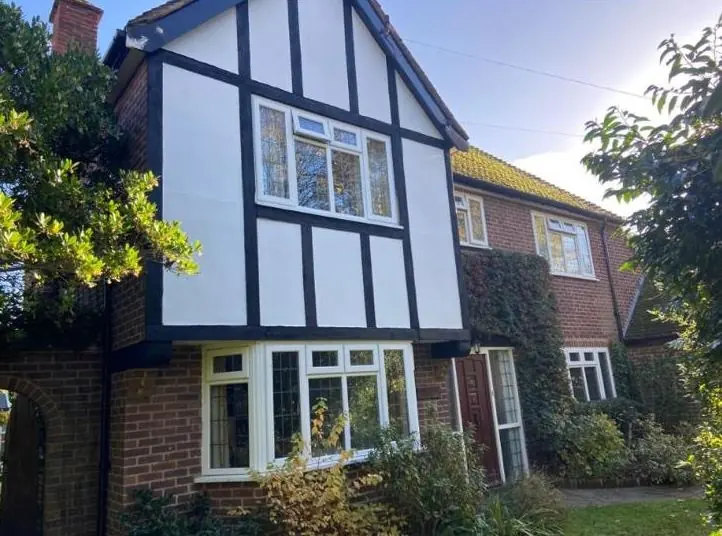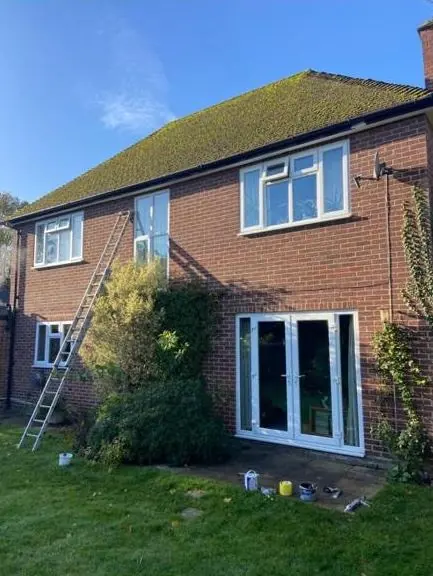
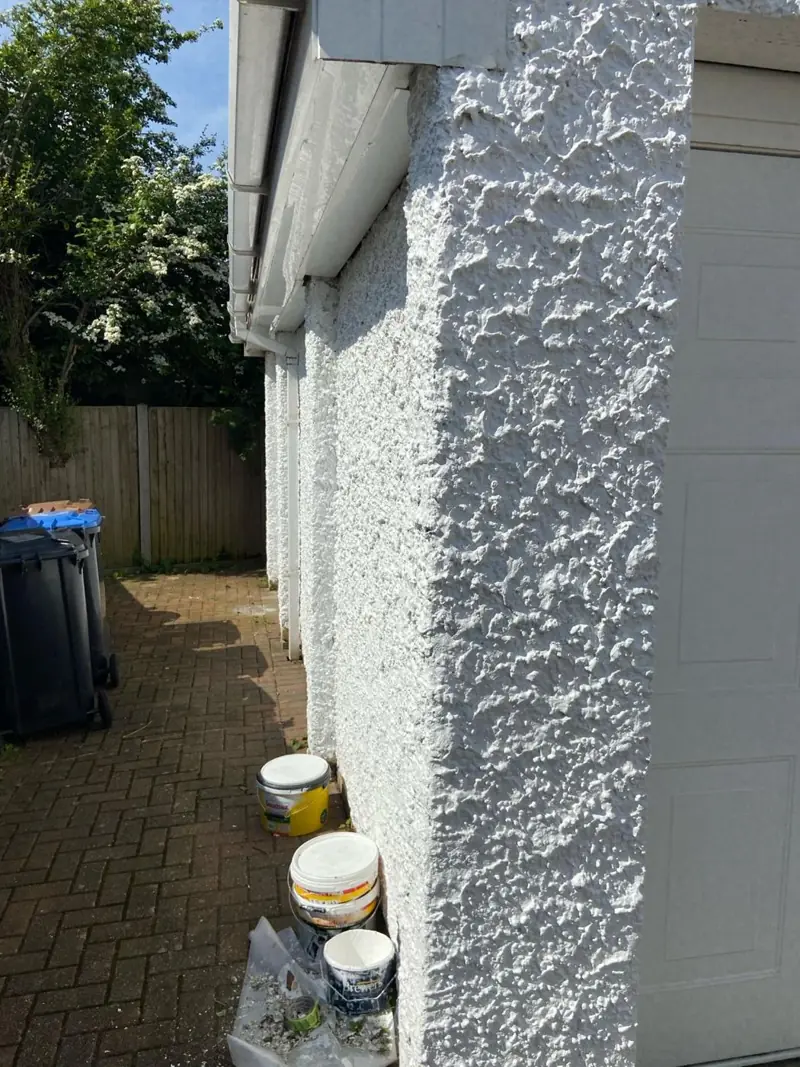
We paint rendered and masonry walls in Delapre, the 1930s district 0.9 miles south of Northampton town centre on the west side of London Road. Much of the call here is for insulated render fronts on Forest Road, Eastfield Road and Queen Eleanor Road, which need a flexible, breathable coating. Dean gives free quotes.
Insulated fronts on interwar brick
Delapre’s terraces were built in the 1930s with solid brick walls and no cavity. Energy certificates for several houses on Forest Road, Eastfield Road and Queen Eleanor Road now record those walls as solid brick with external insulation. That means insulation boards fixed to the outside of the brick, finished with a thin render system, usually a basecoat with reinforcing mesh and a decorative topcoat.
That finish behaves differently from the thick sand and cement render on a post-war semi. It is thinner, it sits on a soft insulating layer, and it moves more with temperature. A heavy, rigid masonry paint or a textured coating can crack along the board joints or trap moisture behind it. So the first thing Dean does on an insulated Delapre front is identify the system if possible, then choose a coating the system can take: breathable and flexible, and applied in thin coats rather than built up.
- Check for hairline cracks along board lines and around windows, and any impact damage at ground level.
- Look at beads, starter tracks and sealant joints, which let water in if they have failed.
- Clean off algae with a fungicidal wash, gently, as pressure washing can damage thin render.
- Apply a coating suited to insulated render, with a primer only where the system calls for one.
If the render has come away from the boards or the mesh is showing, that is a repair for an insulation installer before any paint goes on.
One insulated house in a brick terrace
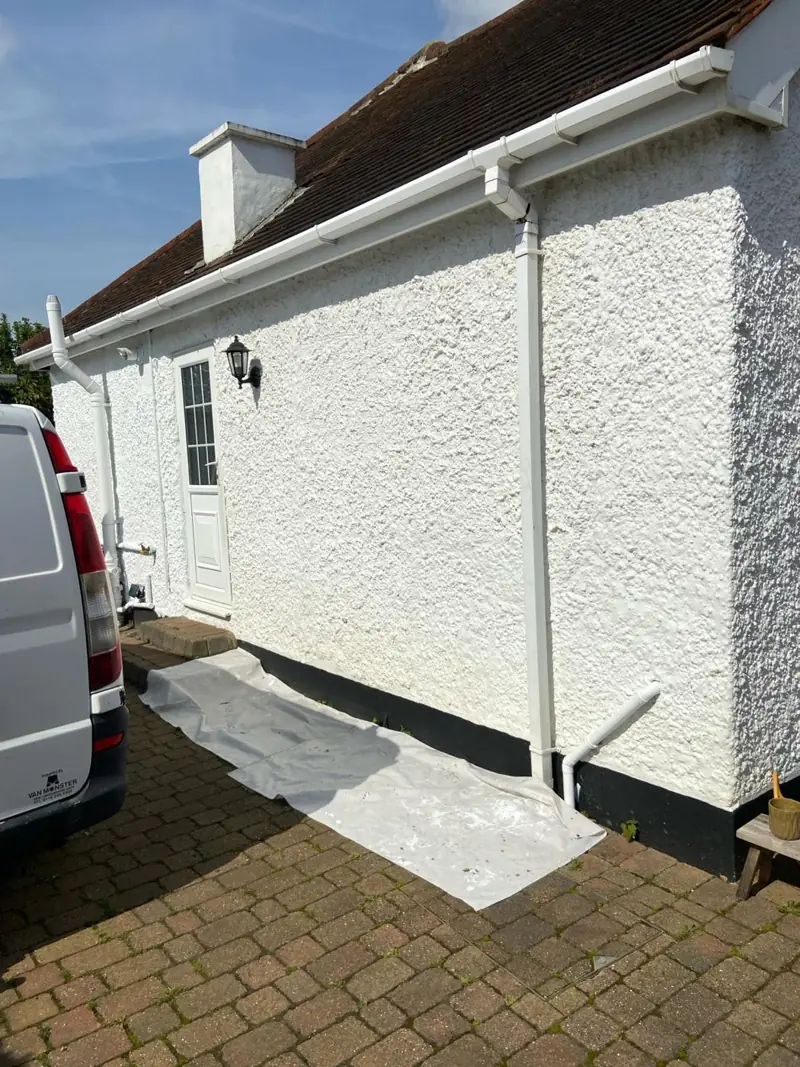
On these roads an insulated front often sits between neighbours that are still bare 1930s brick. Because the houses are outside the Delapre Park Conservation Area, the colour is your choice, but a rendered front in a bright shade can look out of place in a red-brick run. Off-whites, stone tones and soft greys usually sit more comfortably next to brick and against the trees of the park beyond London Road. The thickness of the insulation also stands the render a little proud of the neighbours, so we paint neat edges where it meets the next house’s brick and keep the brick itself clean.
Should solid brick be painted at all?
Often it should not. A solid wall relies on drying out through its outer face. Sealing unpainted 1930s brick with an unsuitable masonry paint can hold water in the wall, and on a house with no cavity that moisture comes through to the plaster indoors. If your brick is sound and simply dirty, cleaning and repointing may serve you better than paint. Where brick has already been painted, we keep it in good order with a breathable product rather than stripping it.
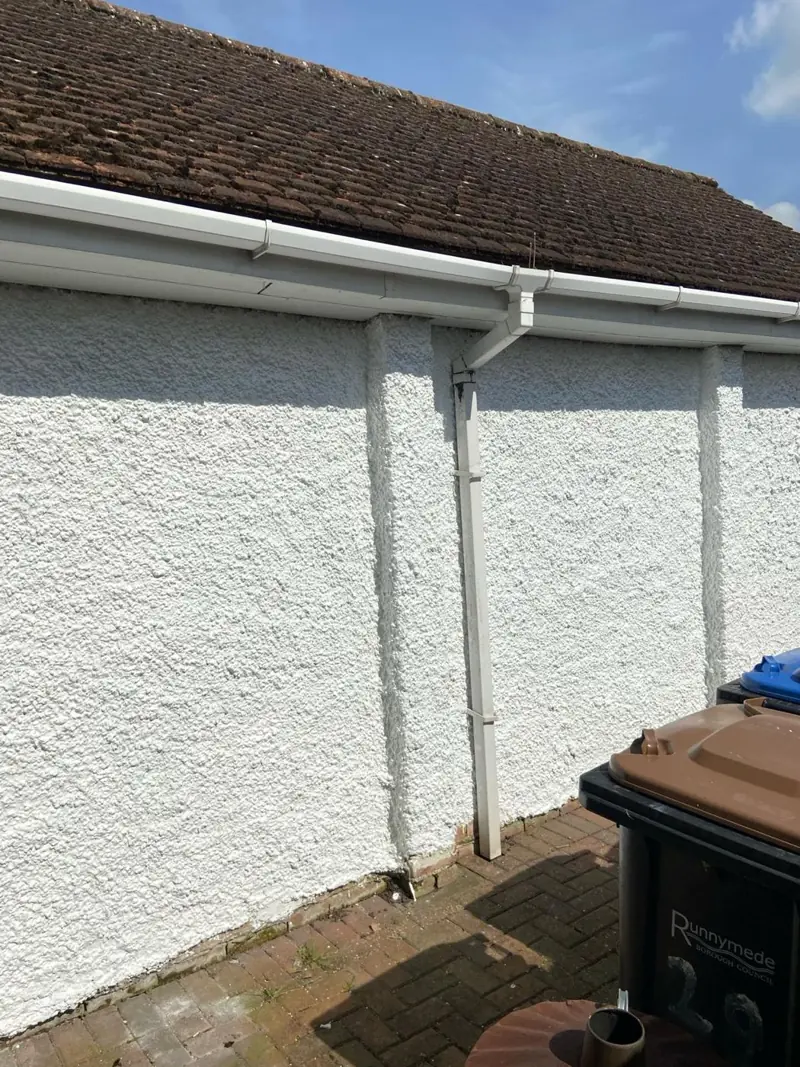
The cavity-wall terraces on Penrhyn Road and some on Ransome Road are a different case. Some have pebbledash rather than brick faces, which take a standard breathable masonry paint after a good clean. Our guide to painting render and roughcast covers that work in more detail, and the main render and masonry painting service sets out our full process.
Ironstone and lime across the road
The Grade II* abbey on the other side of London Road is mostly local ironstone, and its 19th-century library has a rendered elevation. Historic stone and lime need a breathable mineral paint or limewash, never acrylic masonry paint, and any work to listed buildings there needs listed building consent. That is specialist heritage work under the abbey’s own management, and it should not be confused with the interwar houses on the Delapre side of the road.
Last updated by Dean, DH Painter & Decorator.