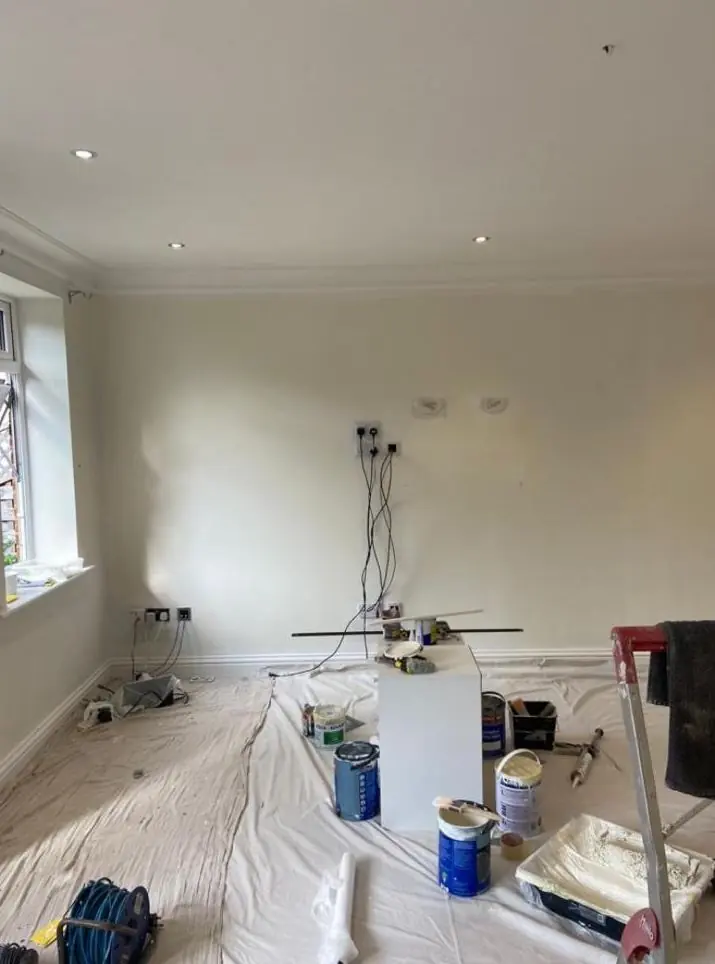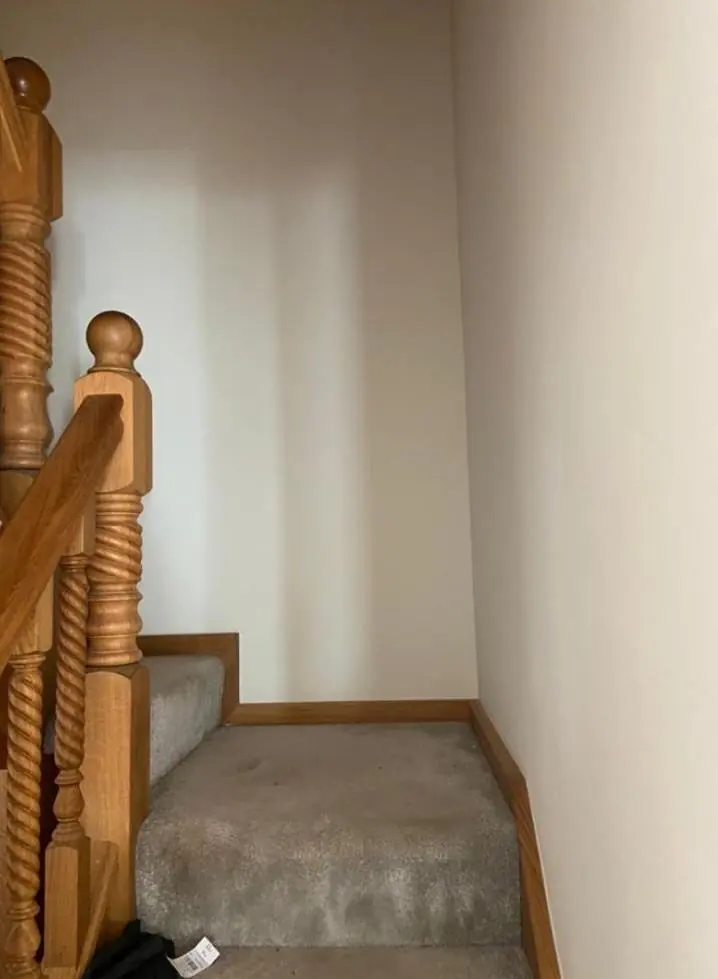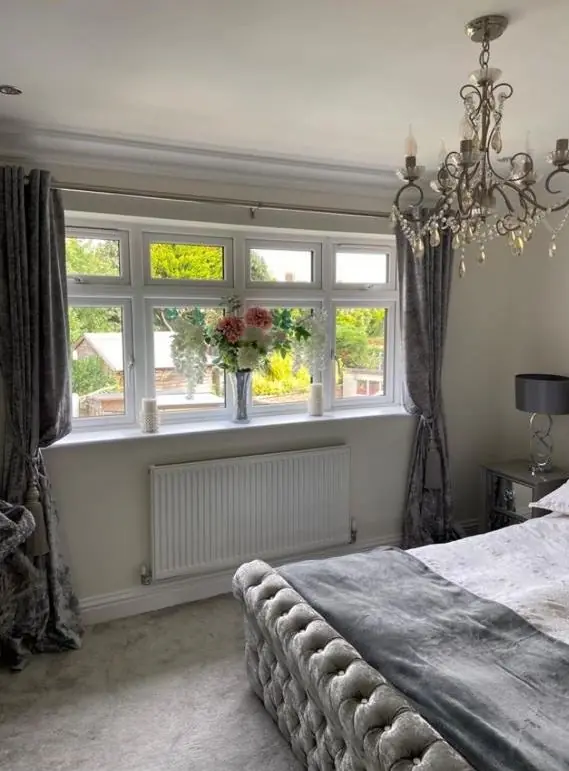
Dean paints the insides of houses and flats in Far Cotton, the NN4 suburb on the south bank of the River Nene, about 0.9 miles south of Northampton town centre. Most jobs here fall into three types: older terraces with tight hallways, semi-detached houses on the main roads, and the riverside estates built in the 2000s.
Three very different interiors within one postcode sector
Far Cotton grew up around the railway after Bridge Street station opened in 1845, and it kept growing in stages. That leaves NN4 8 with three distinct kinds of interior, and each one changes how a repaint is planned:
- Terraces on Abbey Road, Clinton Road, Euston Road, Penrhyn Road and their neighbours, with compact rooms and narrow halls.
- Semi-detached houses on Towcester Road and Gloucester Avenue, where rooms are usually larger and the front faces a busy road.
- 2000s and later homes on Riverside Wharf, Cotton End and Southbridge, plus flats such as River View / Mill House and Cotton Court and the cul-de-sacs around Harvester Way and Leah Bank.
We cover all of them from our Northampton base, which is just across the river.
Small rooms and steep stairs in the terraced streets
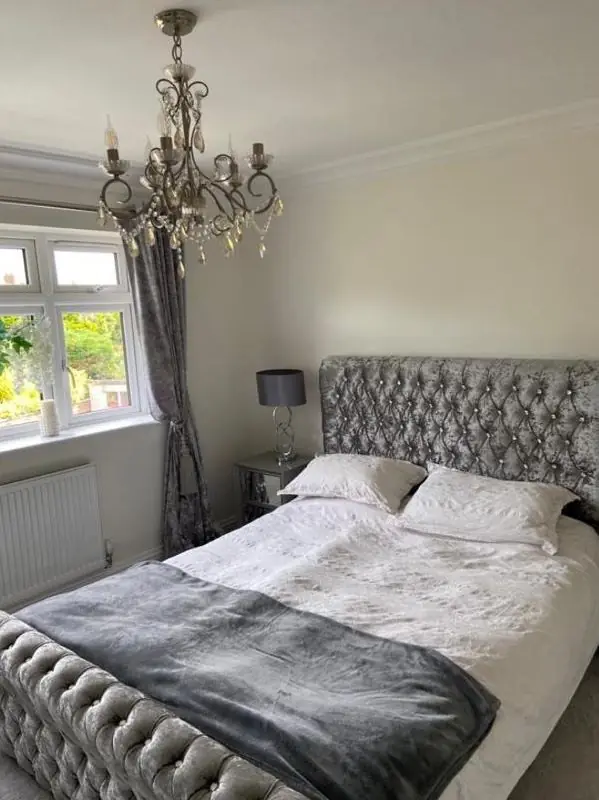
In the terraces, the hall and stairs usually take the most time. Hallways are narrow and the staircases are steep, so there is seldom room for a stair tower. Working from a hop-up with a short board bridged to the stairs lets Dean reach the stairwell ceiling without blocking the only route through the house for days.
Front rooms facing Towcester Road or London Road pick up a film of traffic dirt that settles on ceilings and around window reveals. A sugar-soap wash goes before any filling, because emulsion laid over that film can lift or show a dull band where the dirt sits.
These houses have also been decorated many times. Where there is woodchip, a textured ceiling or gloss built up over gloss on the skirtings, the quote says plainly whether we are painting over it or taking it back first.
Flats and estate houses that are due their first proper repaint
The riverside estates are now roughly 15 to 25 years old. Many still carry the builder’s original emulsion on the walls and the factory finish on doors and trims. That base is thin and often chalky, so it needs a good clean and, in places, a stabilising coat before the colour goes on. Settlement cracks along ceiling joints and around door frames are typical at this age and get filled and caulked first.
The flats bring their own conditions. River View / Mill House is leasehold, so we check what the lease allows, where we can park and unload, and the rules for using the shared stairs. Communal stairwells are protected with dust sheets and corner guards on the way in and out, because damage to a shared wall is a dispute with the management company that you don’t need.
Painting rooms that have been wet
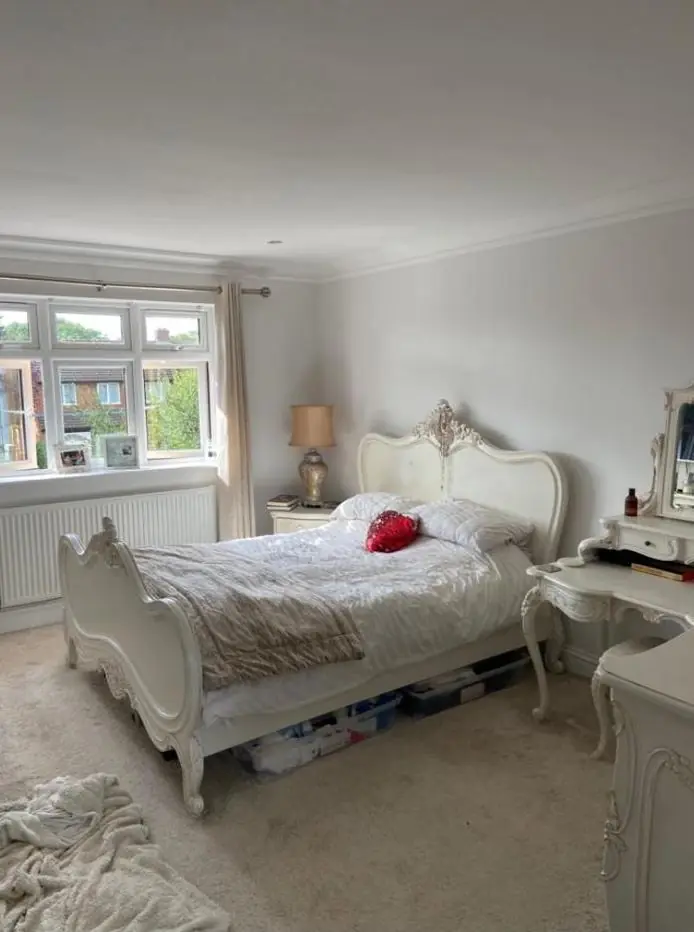
Parts of Far Cotton and Delapre lie on flood-risk ground beside the river, and the Good Friday flood of 1998 forced people out of their houses for a while. If a ground floor has been flooded or has had a leak, the replastered or dried-out walls must be dry right through before anything goes on them. Dean takes moisture readings rather than going by the date the plasterer finished.
Fresh plaster gets a mist coat. Older walls with a history of damp take a breathable emulsion, so residual water can still evaporate rather than being trapped behind a vinyl film that later blisters. Our guide to painting new plaster with a mist coat covers that step in detail.
What to expect from the job itself
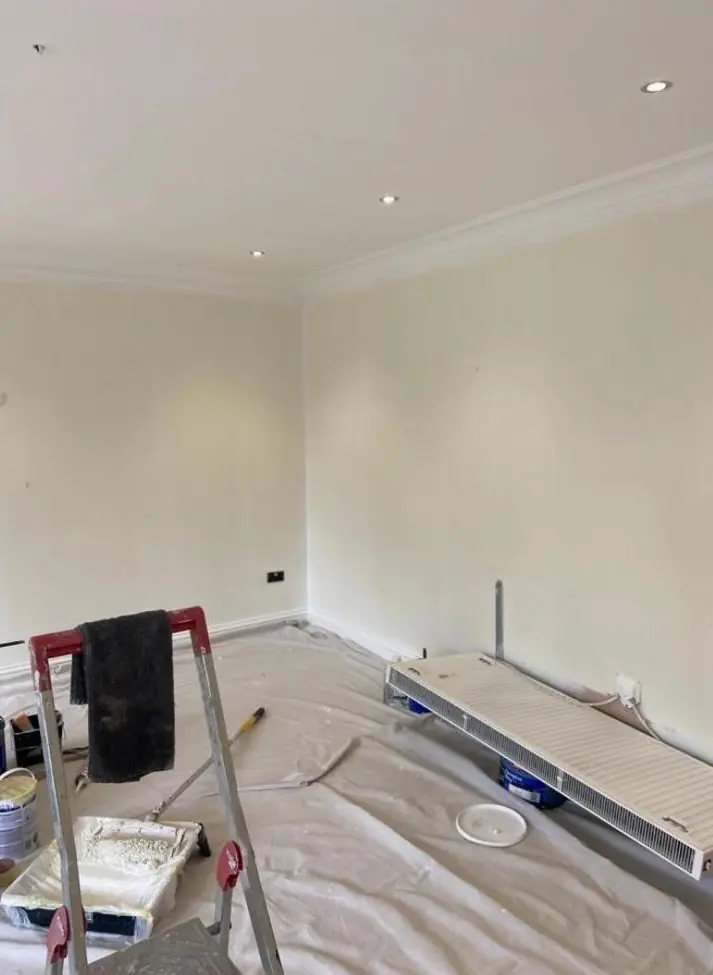
We work room by room, so you keep a kitchen and a bedroom in use, which matters in a compact terraced house. Furniture is moved to the middle and sheeted, and everything is cleared away at the end of each day. For the full scope of what we paint inside, from ceilings to spindles, see the main interior painting service page. For other work in the area, go back to our Far Cotton painter and decorator page.
Last updated by Dean, DH Painter & Decorator.