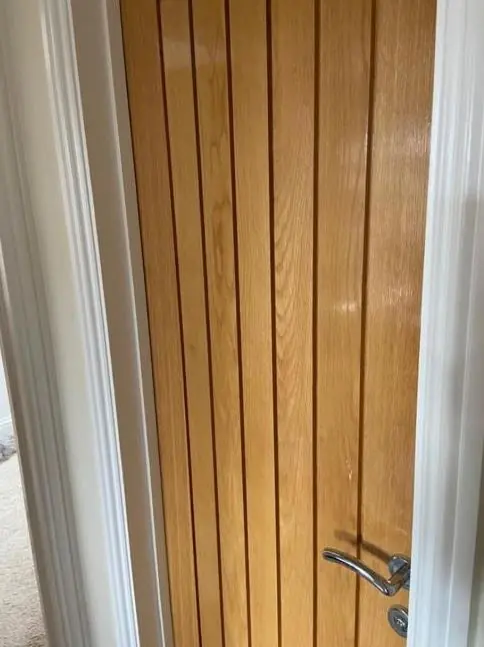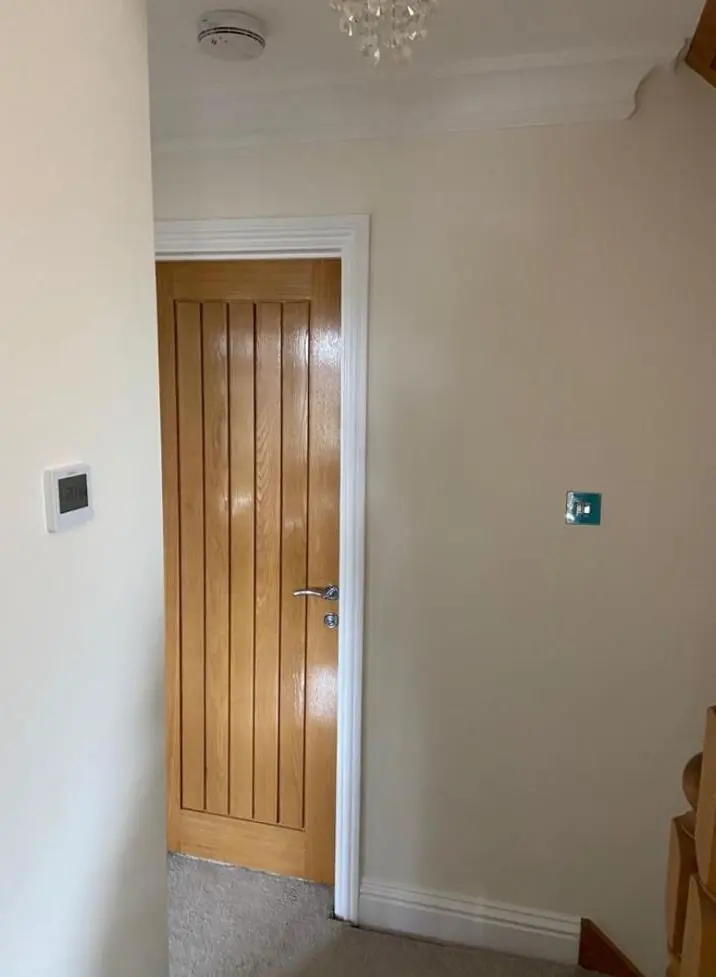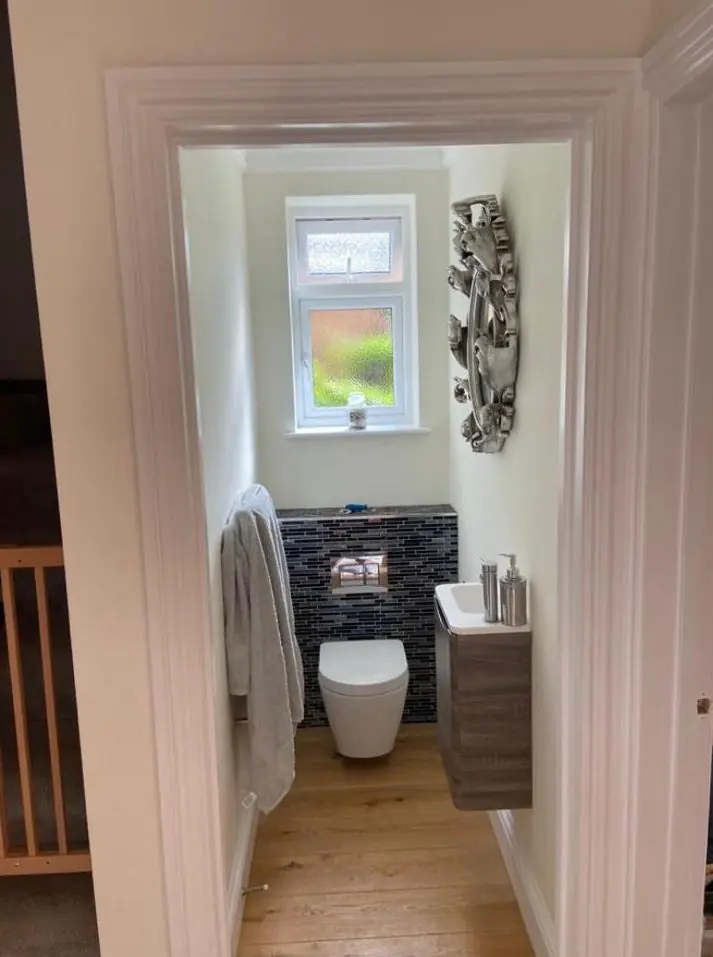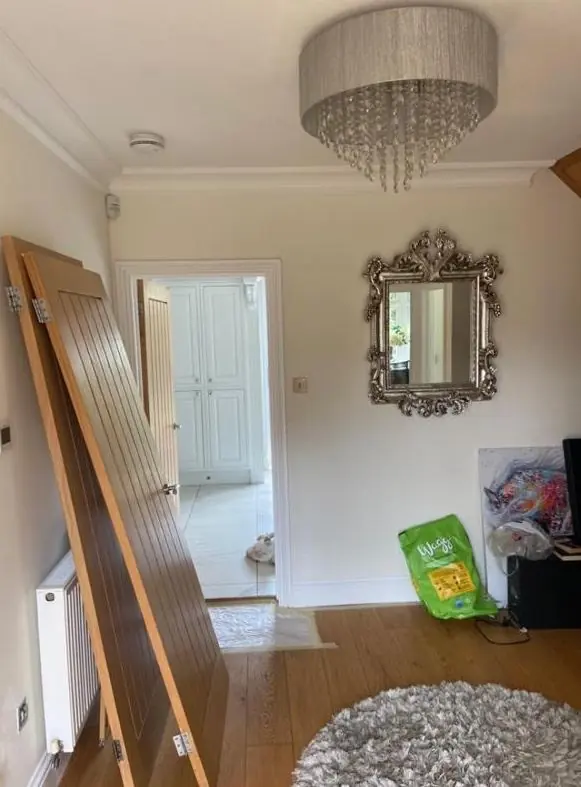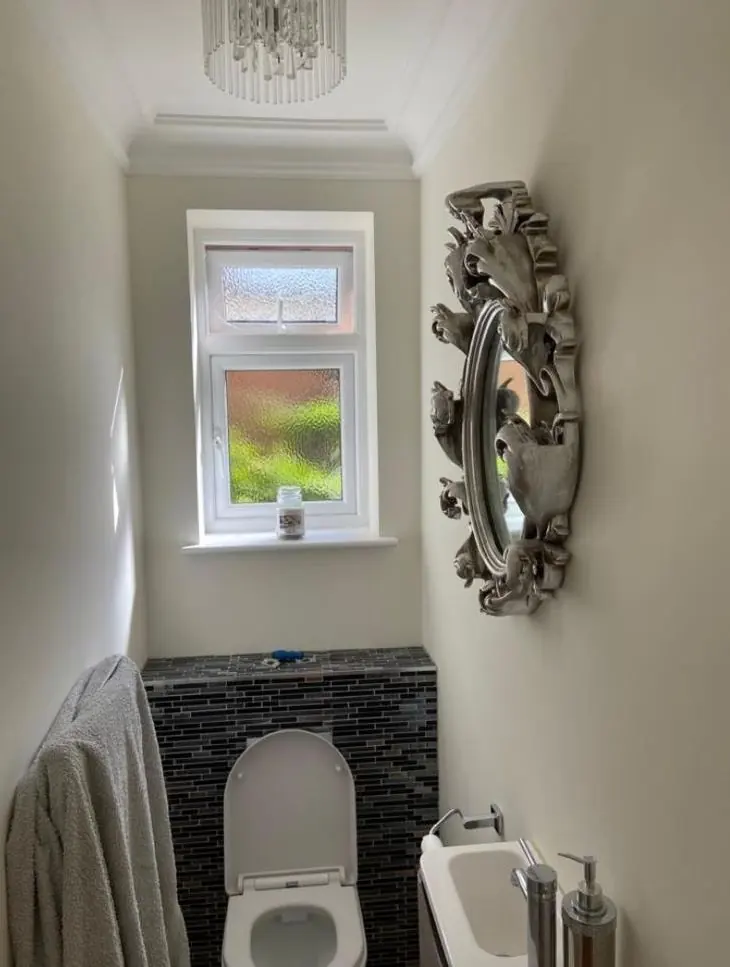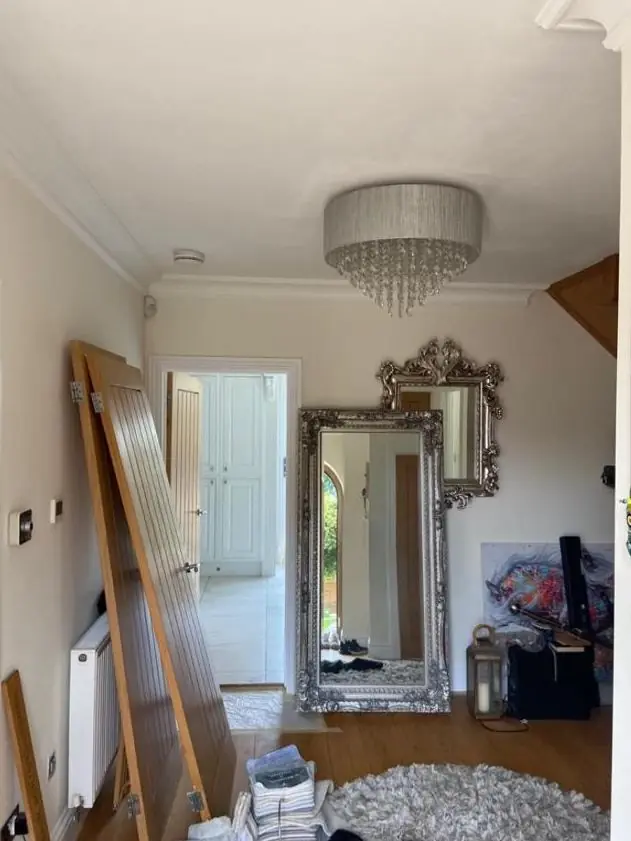
Dean paints internal doors, skirting boards, architraves and picture rails in Delapre, the interwar district 0.9 miles south of Northampton town centre. Interwar joinery on streets like Forest Road and Queen Eleanor Road often sits under decades of gloss, so careful, lead-aware preparation is the bulk of the work.
The joinery you find in a 1930s Delapre house
The streets west of London Road, among them Delapre Crescent Road, Eastfield Road, Forest Road, Queen Eleanor Road and Ransome Road, were built up in the interwar years. Houses of that age commonly kept their original panelled doors, deep moulded skirtings and picture rails, and plenty of Delapre homes still have them. That is good news for the finished room, because solid timber of that era takes paint well once it is sound. It is also the reason a woodwork job here takes longer than in a new-build: ninety-odd years of redecorating leaves thick, uneven layers of gloss, drips set hard in the panel mouldings and gaps where skirtings have shrunk away from the plaster.
Our main door, skirting and woodwork painting page covers the standard sequence of degreasing, keying, filling, knotting and priming. Below is what changes when the joinery is interwar.
Old gloss, and why we treat it as possibly lead-based
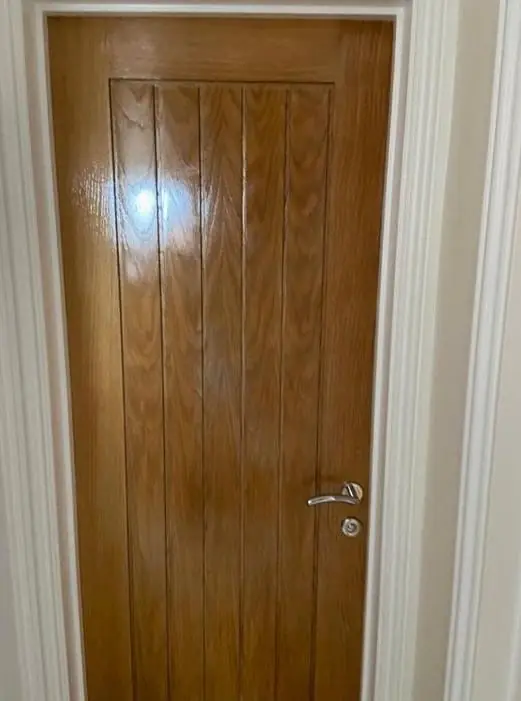
Paint applied before the 1960s often contained lead, and in a house built in the 1930s the bottom layers on a door or skirting may well date from then. We do not assume it is safe. Where the older layers are going to be disturbed, the approach is:
- Testing suspect layers before deciding how far to strip.
- Wet abrading rather than dry power sanding, so dust stays on the paper and the surface.
- No burning off with a blowtorch, which can release lead fumes.
- Sheeting floors and collecting debris with a vacuum fitted with a fine-particle filter.
- Where layers are sound, keying and overcoating rather than stripping, which keeps disturbance low.
On a panelled door with heavy build-up, a chemical stripper on the moulded edges can bring the detail back without heavy sanding. Whether that is worth doing depends on the door, and we will say so plainly when we look at it.
Skirtings on a cold outside wall
The EPC register lists these houses as solid brick, mostly without insulation as built. There is no cavity, so the inside face of an outside wall runs cold. In bedrooms and bathrooms, condensation tends to collect low down and in corners, which is exactly where the skirting sits. Before painting skirtings on those walls we look for:
| What we check | Why it matters in Delapre |
|---|---|
| Black mould along the top edge of the skirting | Cold solid brick and condensation; needs a mould wash and stain-blocking primer first |
| Swollen or soft timber at floor level | Damp coming through failed pointing or a leaking gutter shows straight through a solid wall |
| Salt bloom on the plaster just above | Lower-lying homes near the Nene flood plain can have salt-affected plaster that needs drying out first |
| Open joint between skirting and wall | Re-caulking stops a dark line of dirt and mould forming again |
If the cause is outside, such as a blown downpipe, it needs fixing before any interior woodwork is worth doing. We will point that out rather than paint over it.
The cavity-wall terraces on Penrhyn Road behave differently, with fewer cold-wall problems, so we check each house rather than treat the whole area the same.
Front doors, porches and the London Road frontage
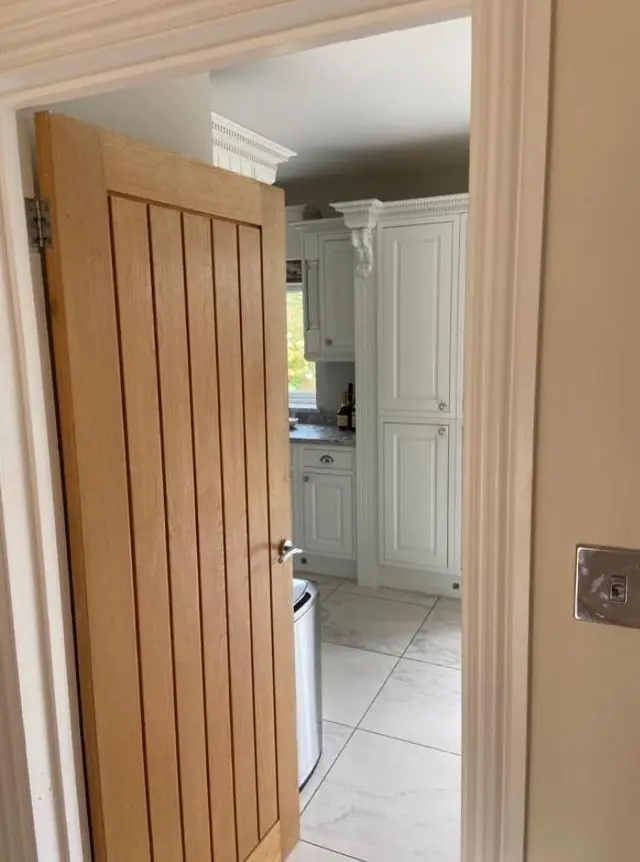
EPC records show Delapre houses as almost all fully double glazed, so the external timber left to paint is mostly front and back doors, porch joinery and frames. On the semis facing the abbey park along London Road, the outside of a front door gets traffic grime from the A508 and sap and leaf debris from the mature boundary trees. A thorough wash and degrease before sanding matters more there than on a quiet side road, and a hard-wearing exterior gloss or satin holds up better than a soft finish.
Choosing a finish for interwar woodwork
Satin and eggshell are the usual choices now, and both suit the proportions of a 1930s room better than high gloss. A deep skirting and a picture rail painted the same colour can tie a front room together, or the picture rail can follow the ceiling colour to make a narrow terraced room feel taller. Water-based trim paints yellow less over time, while oil-based ones level out better on a door that has been heavily filled. We talk through both on site. For a sense of what woodwork costs on its own or with a full room, see our painter and decorator cost guide, and for everything else we cover locally, the Delapre area page.
Last updated by Dean, DH Painter & Decorator.