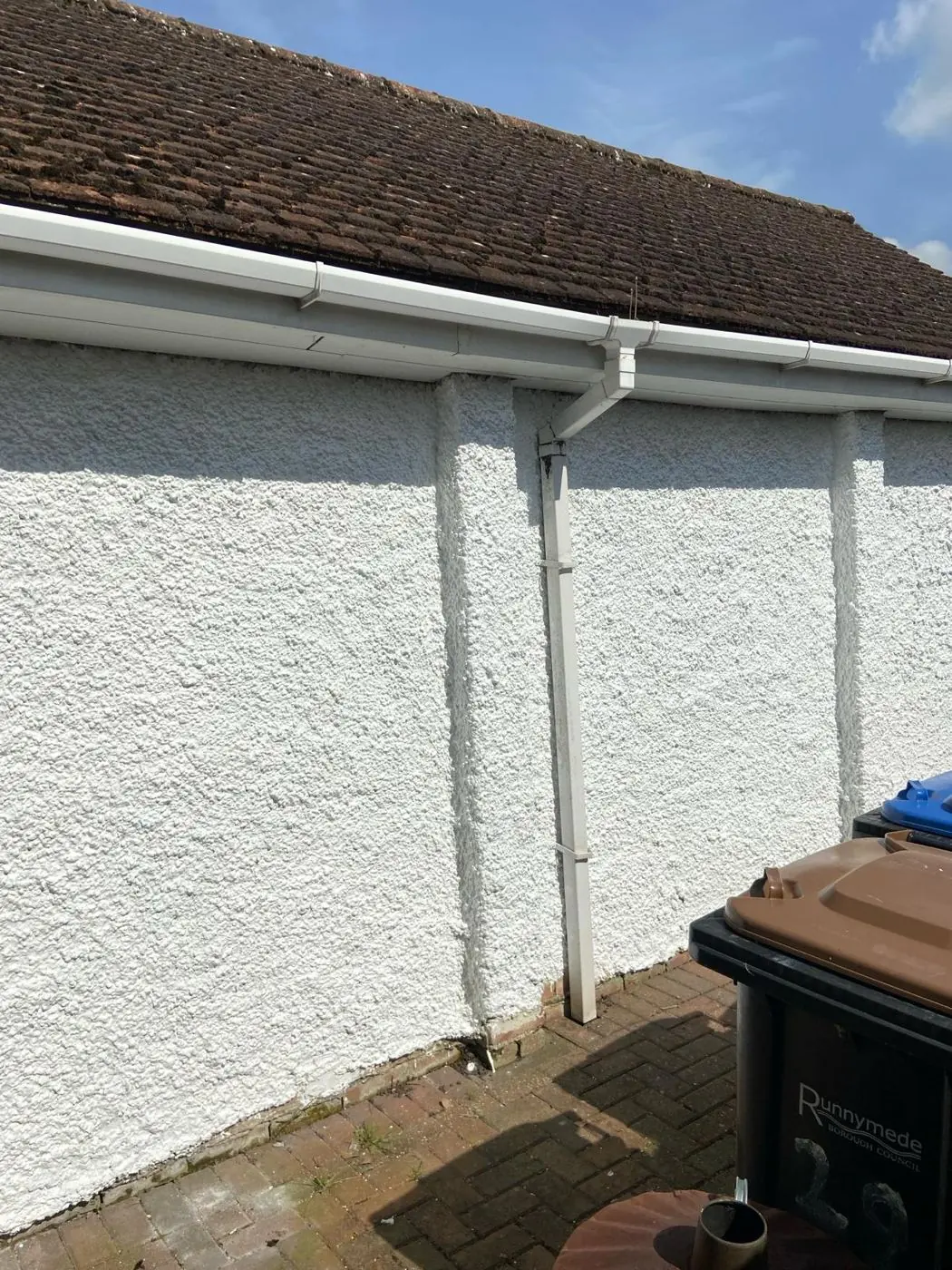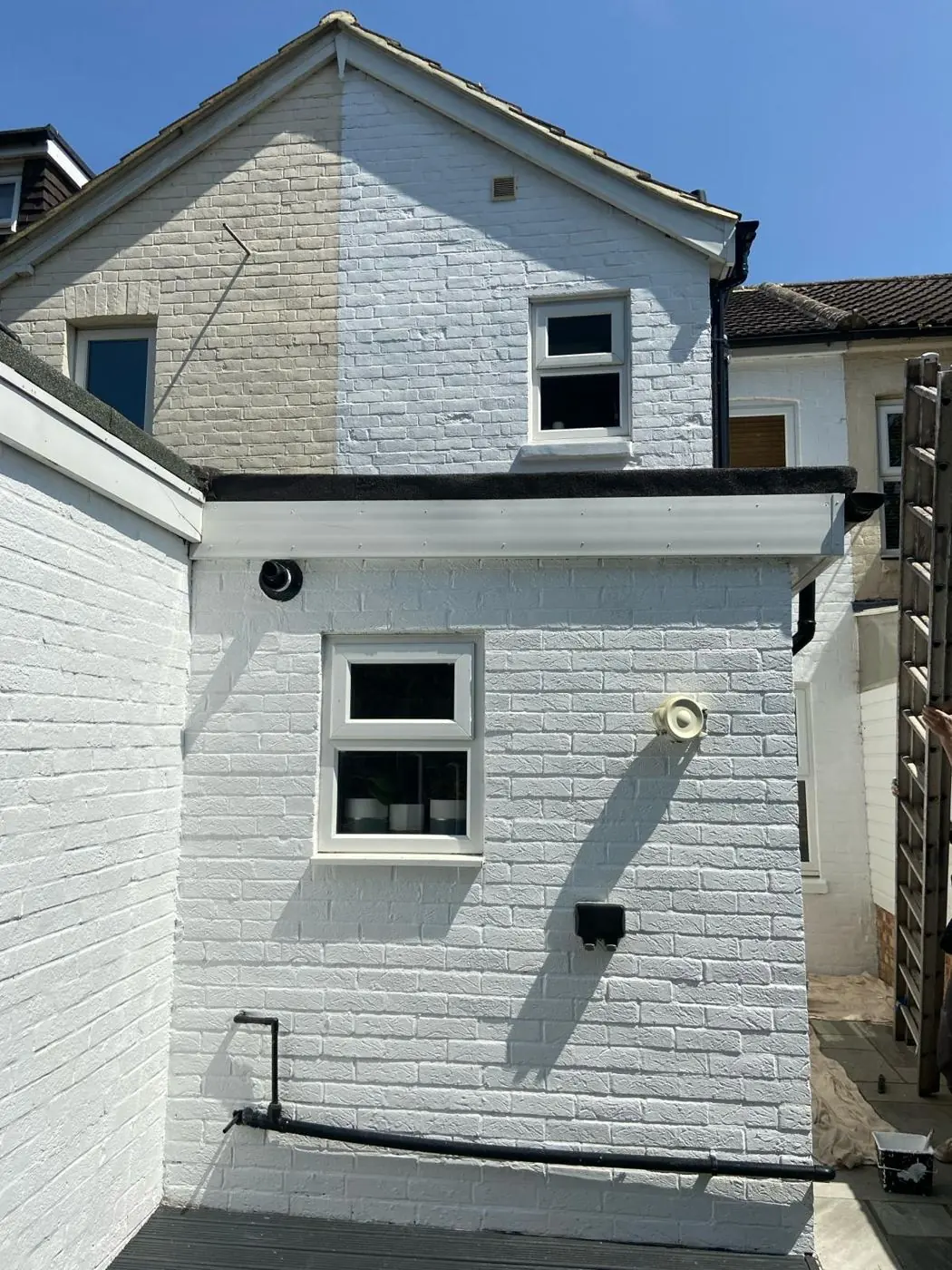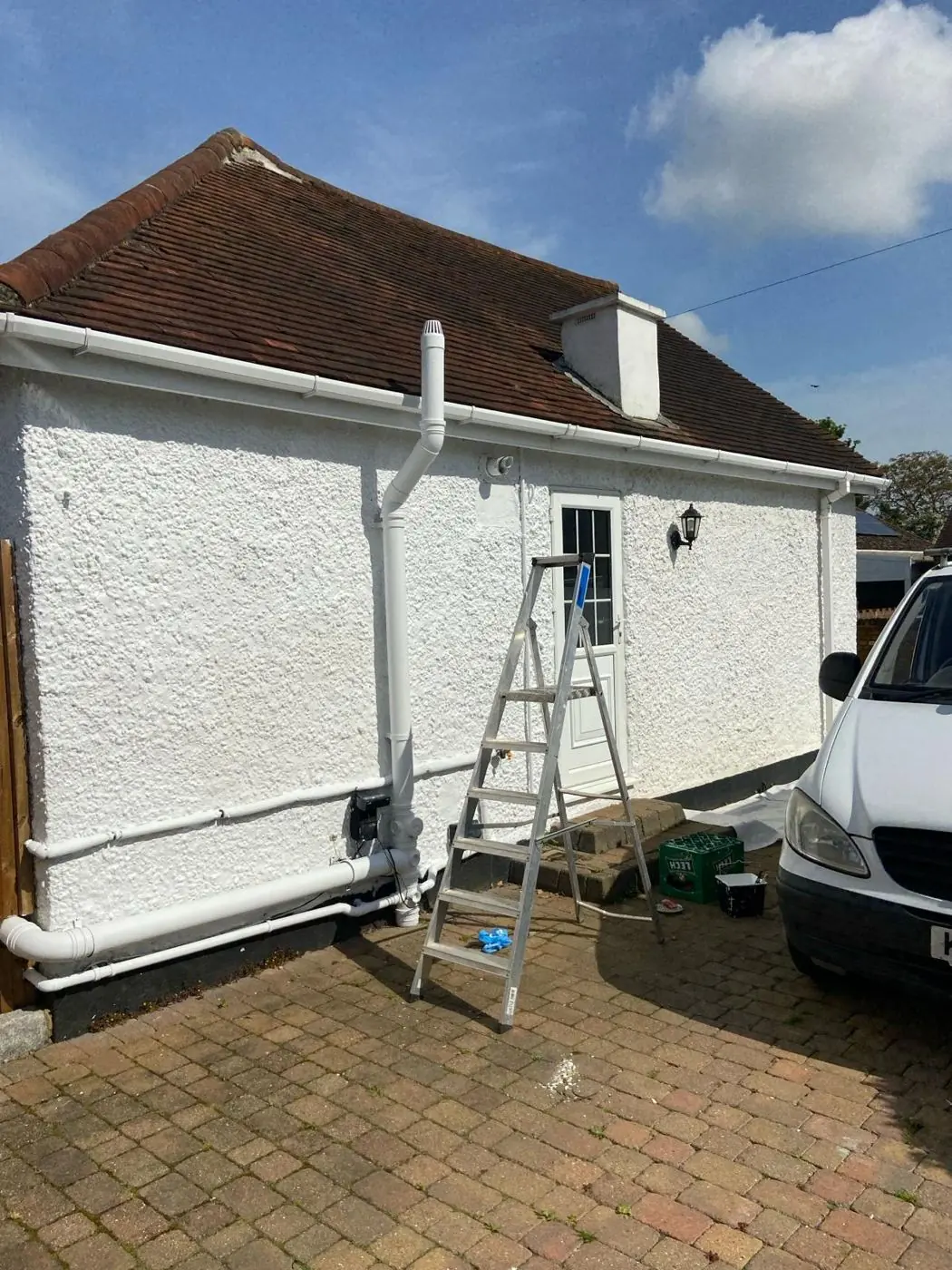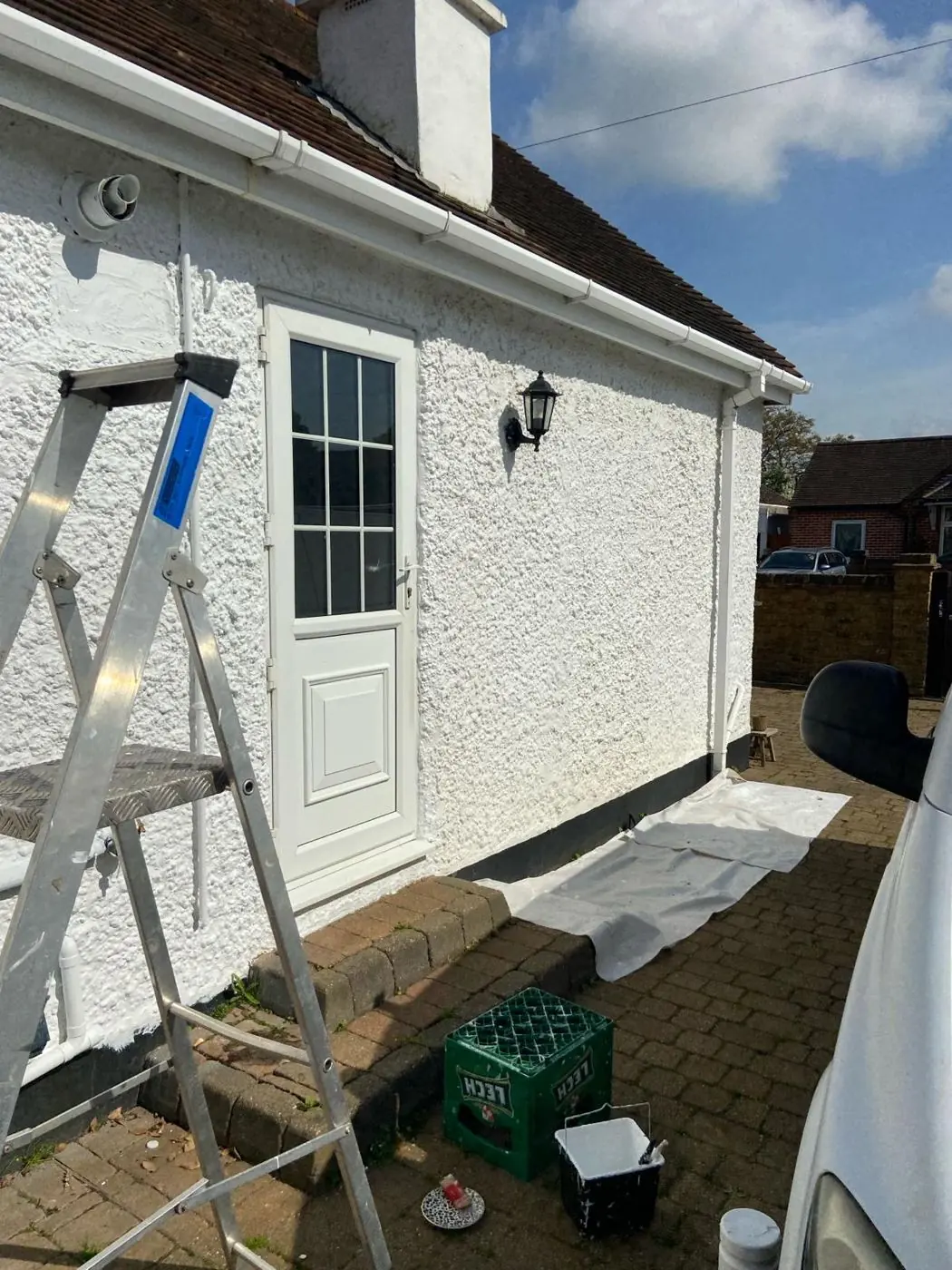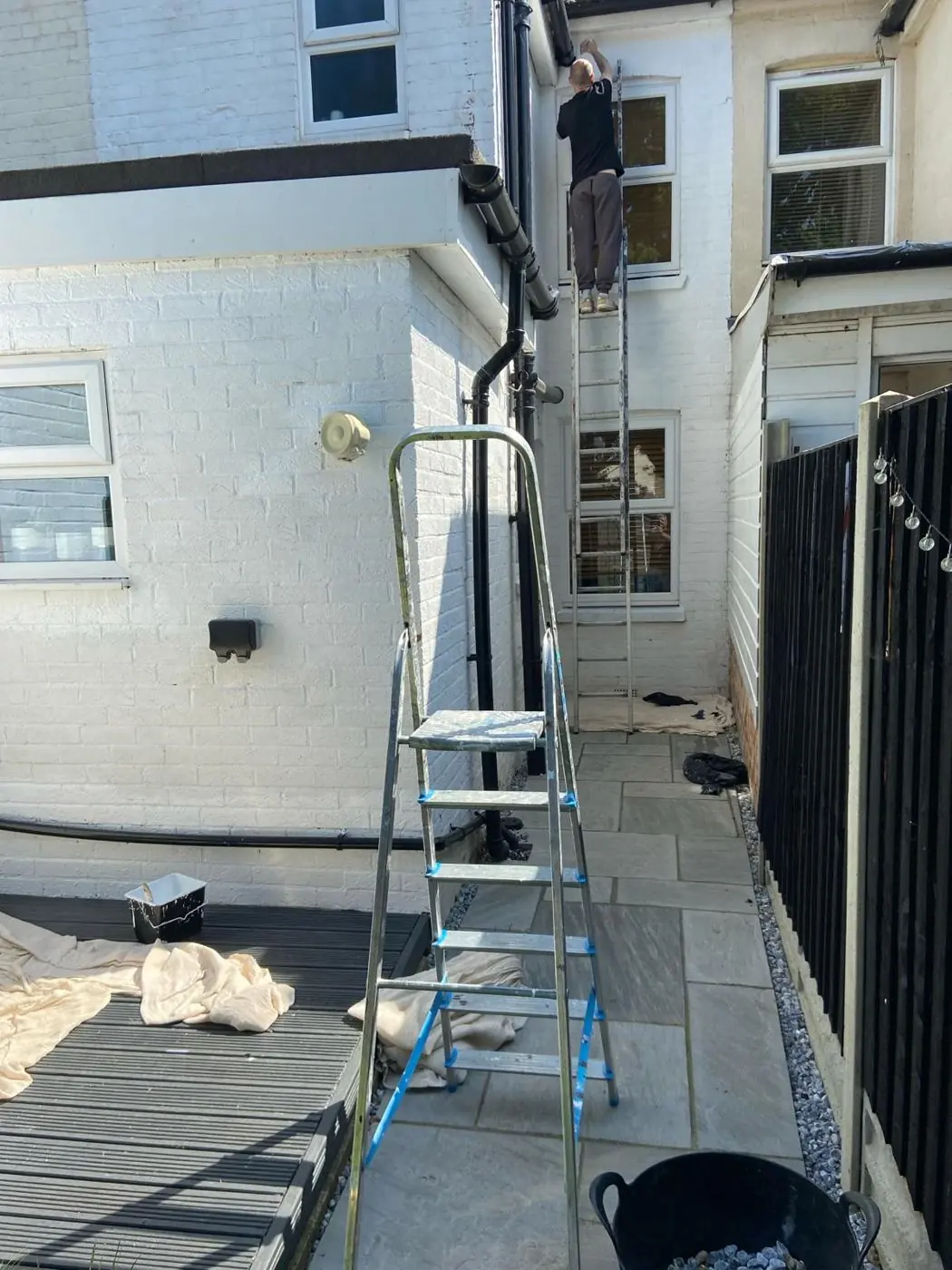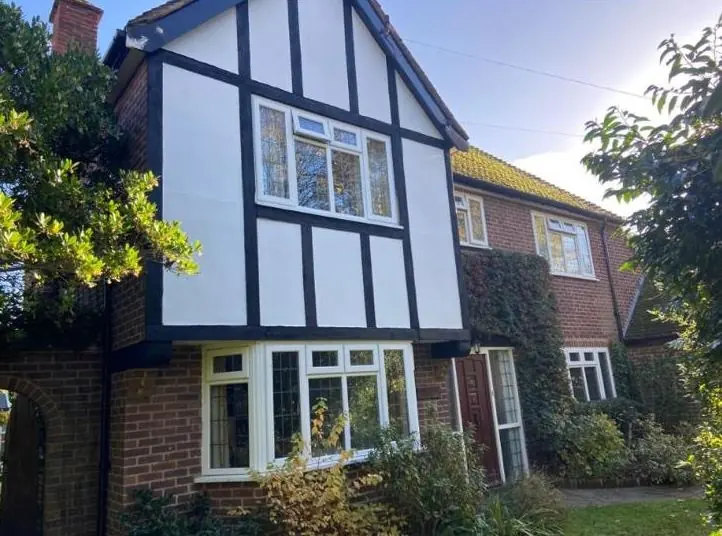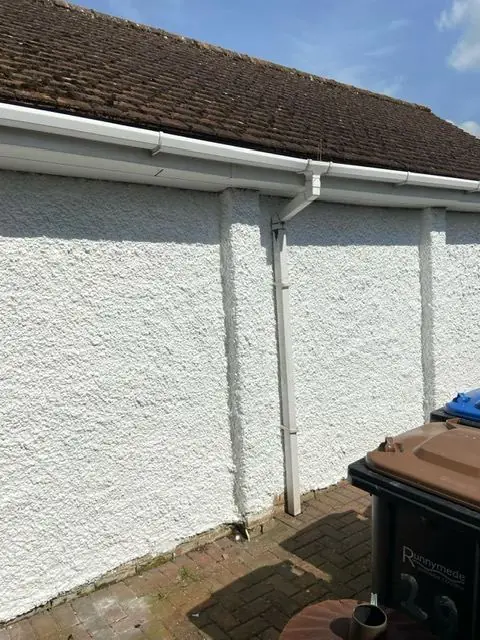
We paint render panels and previously painted brick on Ecton Brook houses in NN3 5, about 4.1 miles east of Northampton town centre. Because this is a modern estate rather than old stone, the job starts with identifying each wall and any coating already on it.
Modern estate walls, not village stone
Across Great Billing Way, the old village core of Great Billing is built in stone. Ecton Brook is a different story. It was put up from scratch in the 1970s and 1980s as a new-town estate, and the sources we have read do not record a single wall material for it. In practice the masonry we would expect to meet here is modern brick, some rendered sections and panels, and walls that an earlier owner has already painted.
That matters because the old-stone question, whether a lime-based wall needs a highly breathable finish, rarely comes up here. The questions instead are:
- Is this render, painted brick or bare brick?
- If it has been painted, what with, and is that coating still holding?
- Is the surface chalky, cracked or growing algae?
Finding out what is already on the wall
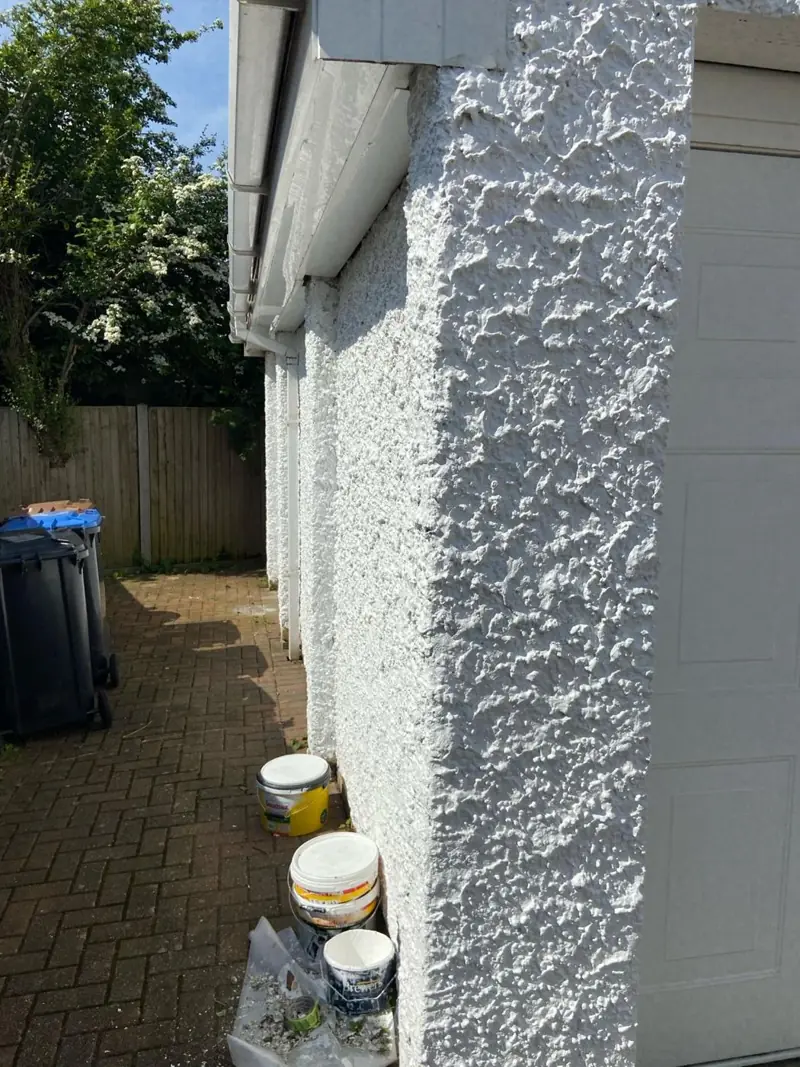
A 40-plus-year-old house may have had two or three exterior repaints by different owners, especially on an estate that began as public housing and still has a mix of owner-occupied, private-let and social-rent homes. Each repaint could have used a different product. Some modern masonry paints do not sit happily over older textured coatings, and a chalky surface will shed whatever is put on it.
So before we choose a paint, we test. A wipe of the hand shows chalking. A strip of tape pressed onto the wall and pulled off shows whether the existing coat is still bonded. We tap render panels for hollow sounds that suggest the render has come away from the wall behind. Where the old coating is failing, it comes off or gets a stabilising primer before anything new goes on. The general method is set out on our main render and masonry painting page and in our guide to painting render and roughcast.
Shaded walls and grimy walls
The estate’s position gives two kinds of dirty wall.
| Where | What builds up | What we do first |
|---|---|---|
| Homes backing onto Ecton Brook Linear Park and north-facing gables | Green algae in shade and damp margins under trees | Biocide wash, left to work, then brushed off once dead |
| Walls nearest the A45 Nene Valley Way and Great Billing Interchange | Traffic film that stops paint bonding | Thorough wash and full drying time |
| Open, sunny elevations facing the greens | Chalking and fading of old paint | Stabilising primer where the surface powders |
Painting over algae or road grime is the commonest reason a masonry finish lets go early, so this stage is not cut short.
Towers and ladders on shared footpaths
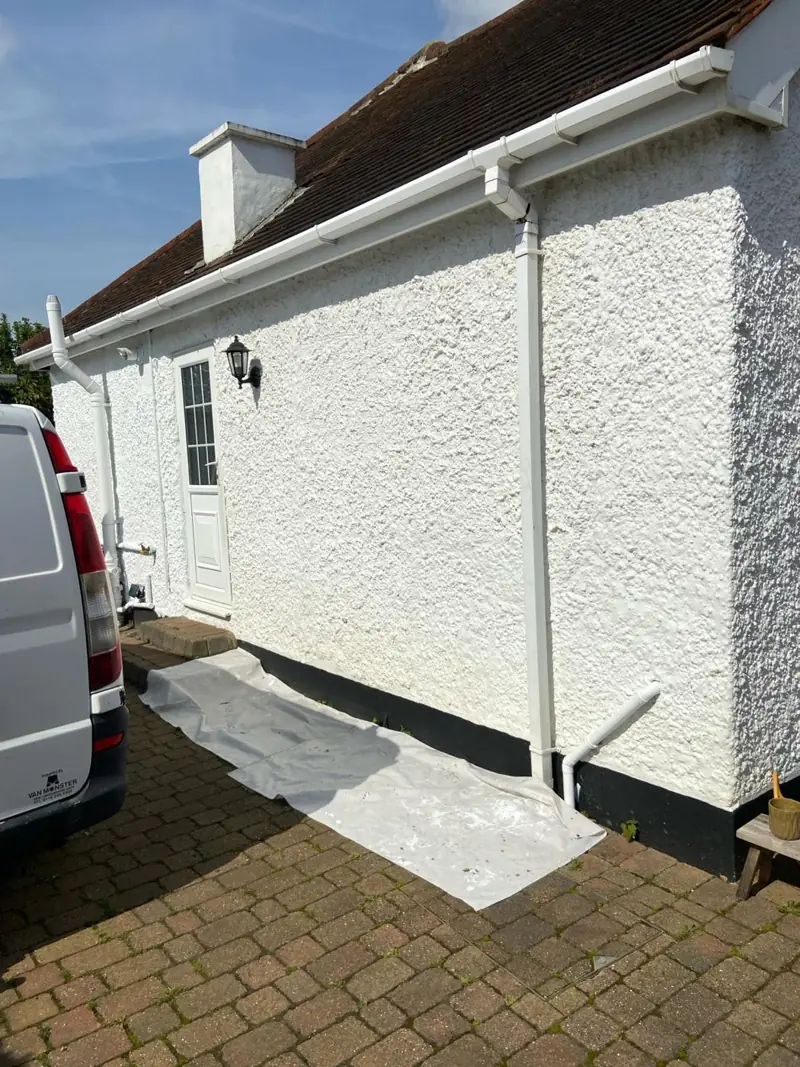
Ecton Brook is threaded with footpaths and cycleways, including the Ridgewalk and Three Mile Walk, and many terraces in the squares have their walls right beside a shared path. A gable end or a full front elevation often needs a scaffold tower, and that tower may have to stand on the path itself.
When that happens we keep a safe way past for walkers and cyclists, use barriers or cones around the base, and avoid leaving the tower up overnight on a busy route unless there is no other way. Spray-free brush and roller work keeps overspray off neighbouring doors and cars in the shared parking. On the detached roads with driveways, such as Ecton Park Road and Raisins Field Close, setting up is simpler.
Masonry colour is an open choice here, since the estate sits outside any conservation area, though on a terrace the houses either side are worth a thought. More about the estate itself is on our Ecton Brook overview.
Last updated by Dean, DH Painter & Decorator.