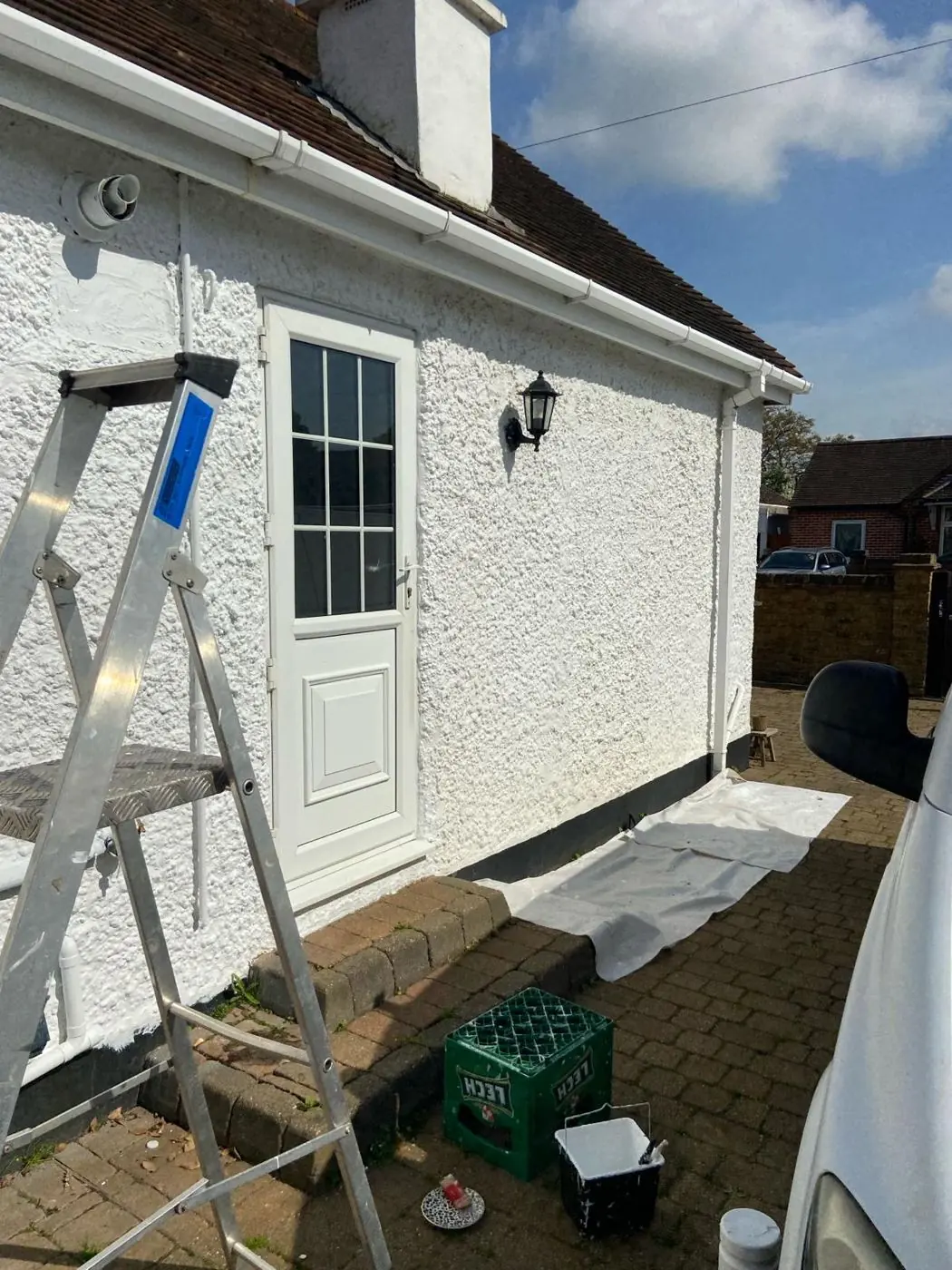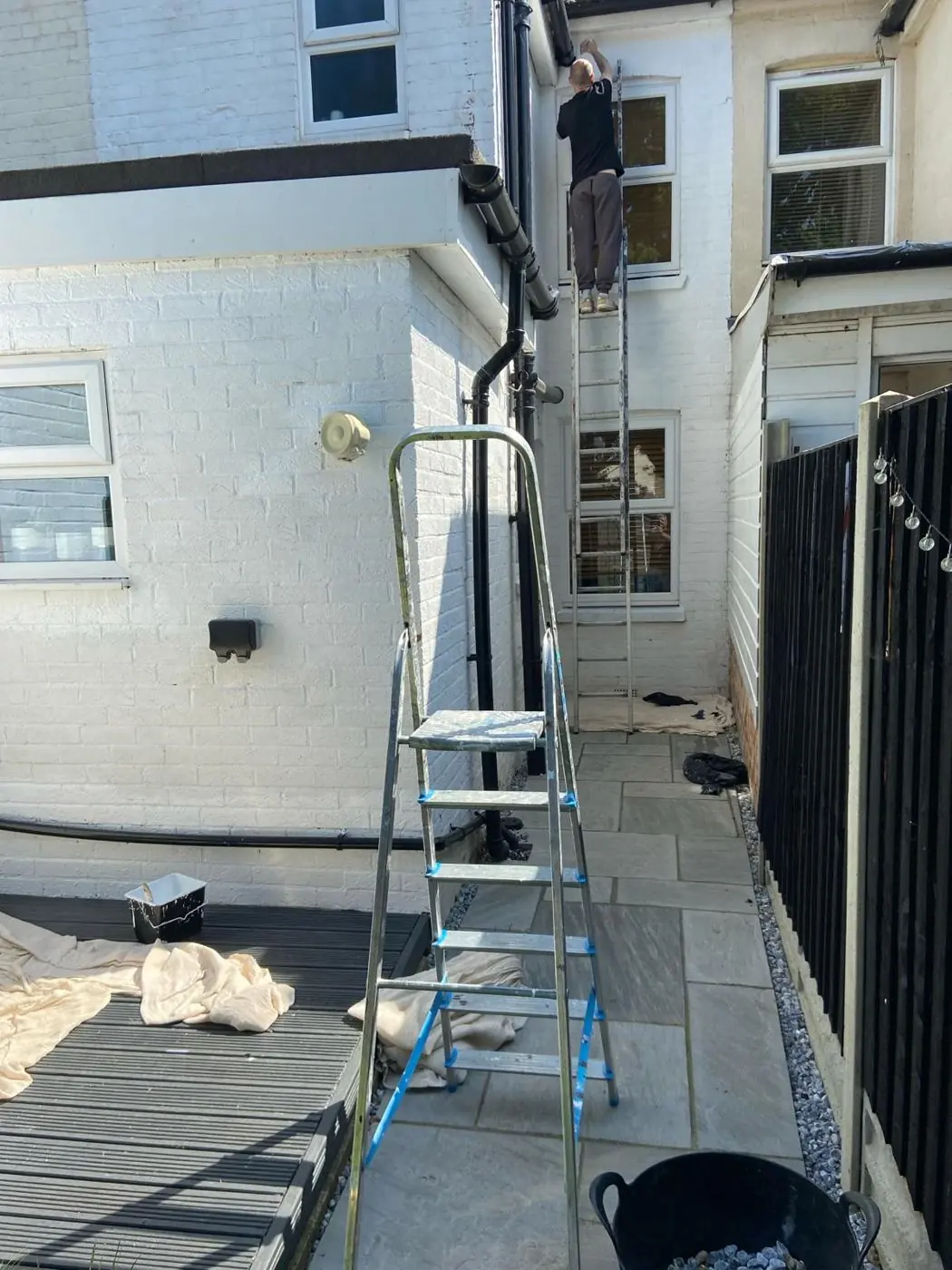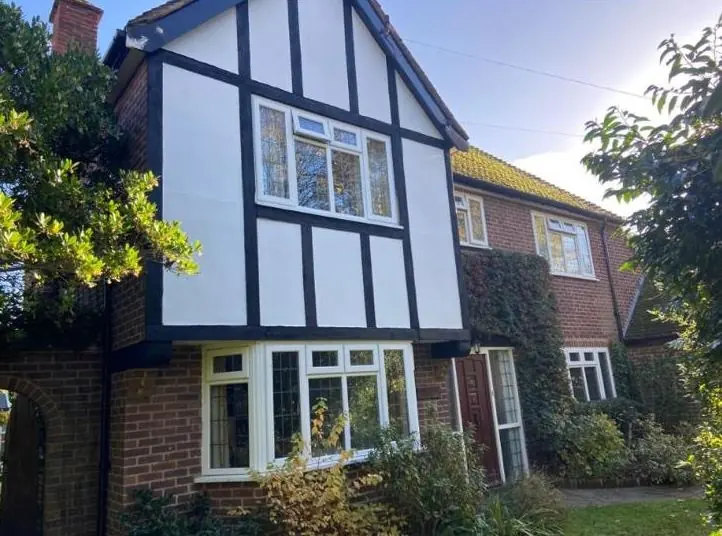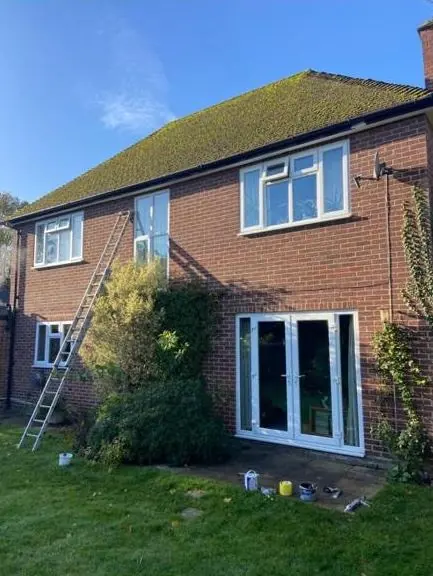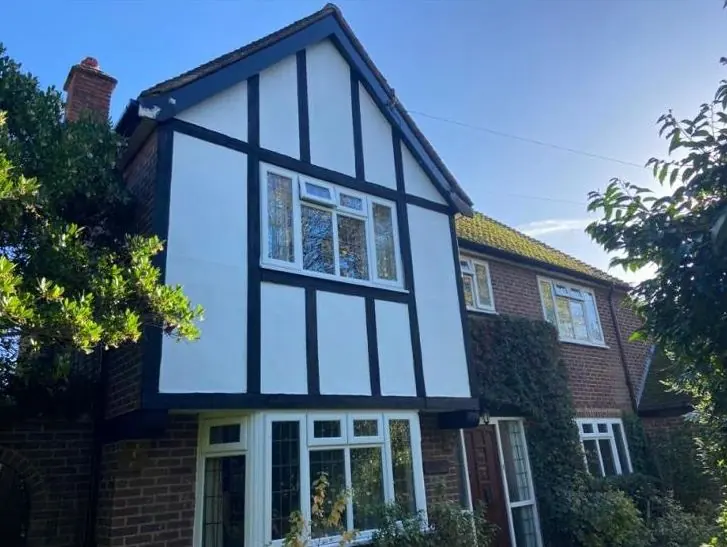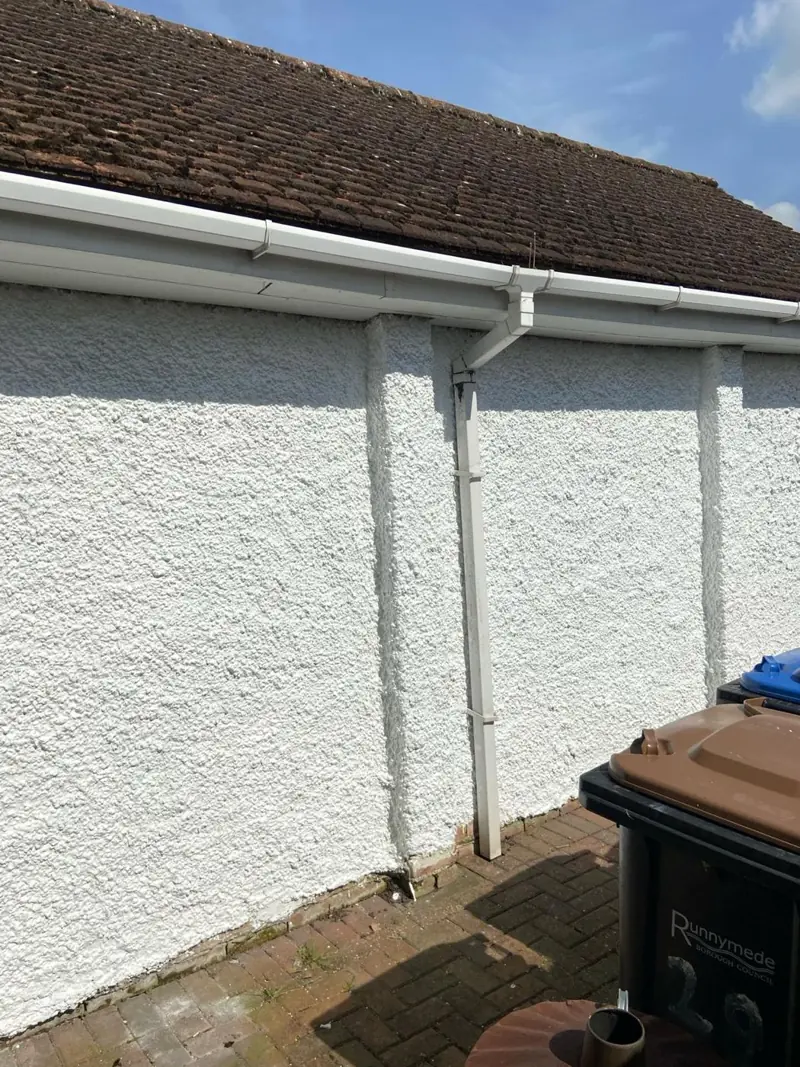
DH Painter & Decorator repaints rendered and already-painted masonry in Great Billing, NN3, around 3.9 miles east of Northampton town centre. In the conservation area that means a small number of walls, such as Chapel Row's rendered gable, done in breathable mineral paint; bare limestone and ironstone should normally be left unpainted.
A short list of walls that should be painted
Great Billing has very few rendered houses, and that changes what this service looks like here. The old village is built of coursed Pendle limestone with harder limestone quoins, plus ironstone on a handful of buildings. Those walls were never meant to carry paint. The 2018 conservation area appraisal names painting brick or stone walls, and hard cement repointing, as changes that erode the character of the village.
The walls that do take paint are the ones already painted or rendered: the rendered gable of Chapel Row, the part-rendered front of 15 High Street and the white-painted Church of Our Lady of Perpetual Succour with its Italianate tower. Those need keeping up, and the aim is a like-for-like repaint in a coating that lets the wall breathe.
Why acrylic masonry paint is the wrong answer on old stone
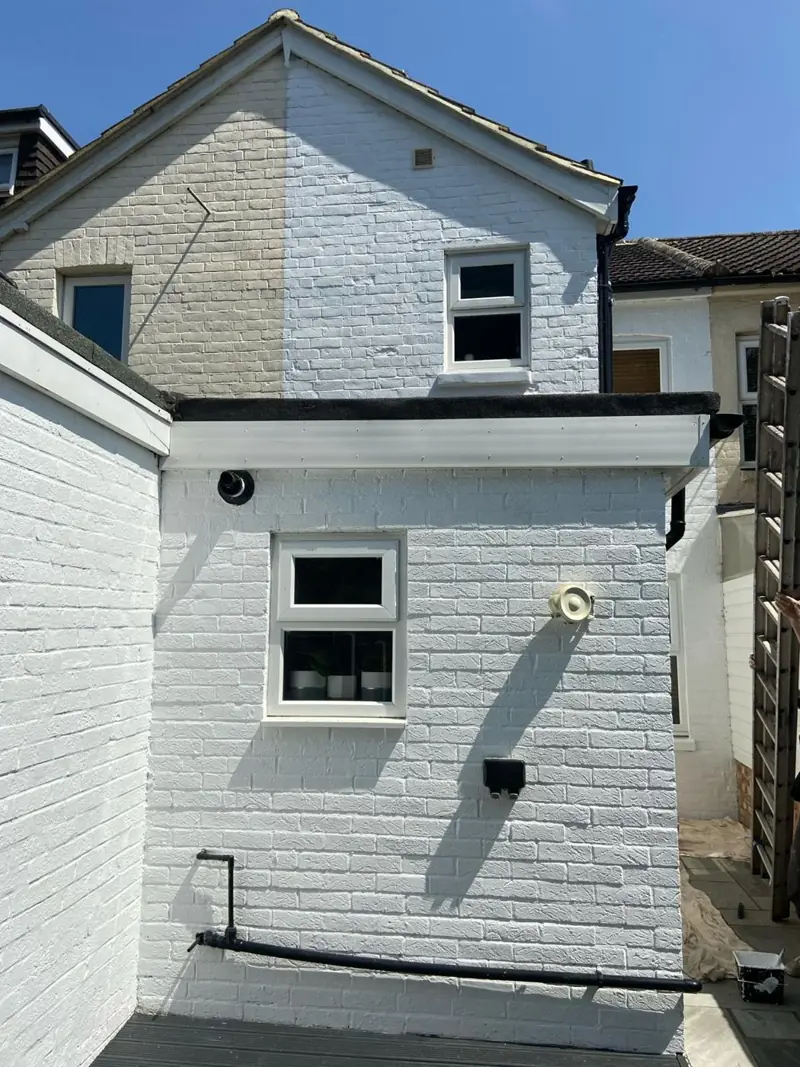
Rubble limestone walls of this age were built with lime mortar and move moisture through their full thickness. A modern acrylic masonry paint forms a skin that slows the moisture down, so it builds up behind the coating. The result is blistering, flaking and, in cold spells, frost damage to the face of the stone or the render beneath. On a sloping site like Great Billing, falling from around 84 metres towards the Nene, with open exposure to the south, damp and weather reach the walls easily, which makes this more likely, not less.
So on a painted older wall we test what is on it first. Where it is limewash, we renew with limewash. Where it is an older masonry paint over lime render, we usually suggest a silicate or other mineral paint that bonds to the substrate and stays vapour-open. Any cracked render is checked for hollowness, and patches are made good in lime, not cement, so the repair moves with the wall around it.
Painted walls on the modern estates
Outside the conservation area the picture is simpler. The houses around Lady Winefride’s Walk, Cumbrae Drive and Penfold Lane are mostly bare light-coloured brick, and we would not suggest painting facing brick that was built to be seen. Where a house has a rendered panel, a painted garden wall or a rendered garage, a standard breathable masonry system works well after a fungicidal wash, since tree cover across the village keeps many surfaces damp and green.
The full process for modern render, from algae treatment to stabilising and two finish coats, is on our main render and masonry painting page, and our guide to painting render and roughcast covers product choice in more depth.
Consent, colour and timing
| Wall | What we would normally advise |
|---|---|
| Bare limestone or ironstone in the conservation area | Leave unpainted; clean down and repoint in lime if needed |
| Already limewashed or painted older wall | Like-for-like repaint in limewash or mineral paint |
| Listed building with painted masonry | Check whether listed building consent is needed before any colour change |
| Modern render or rendered panel on the estates | Wash, stabilise and recoat in breathable masonry paint |
Limewash and mineral paints are sensitive to frost and fast drying, so we schedule them for mild, damp-free weeks and avoid the coldest months. Access matters too: Chapel Row is three storeys, and the narrow lanes of the old village restrict where a tower can stand. Dean will look at both before quoting. Wider notes on the village sit on our Great Billing painter and decorator page.
Last updated by Dean, DH Painter & Decorator.