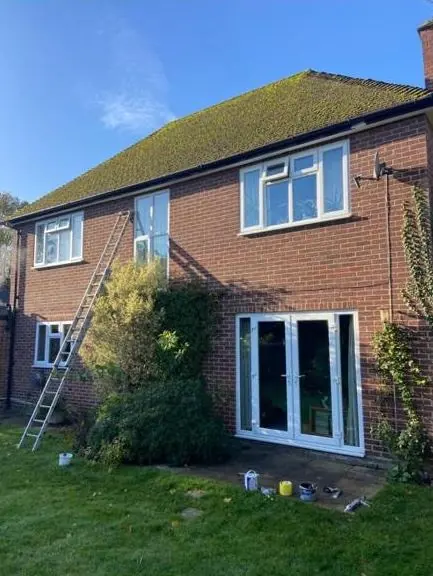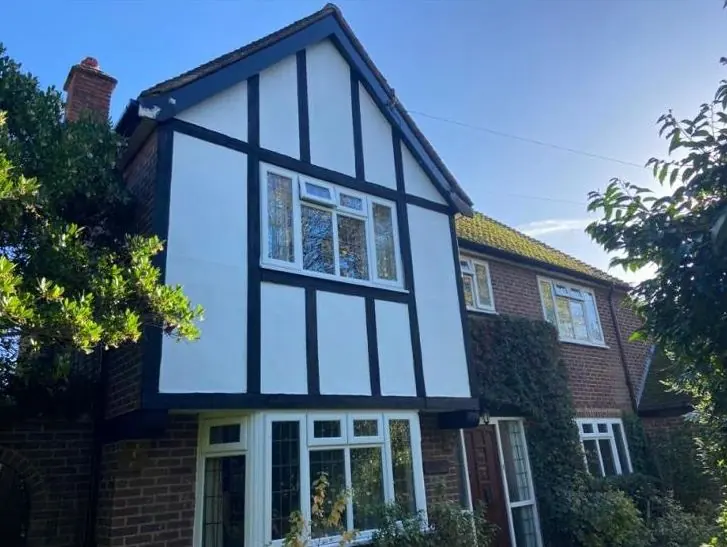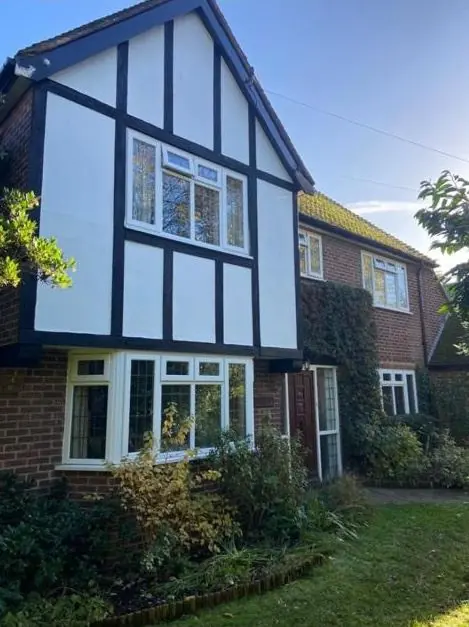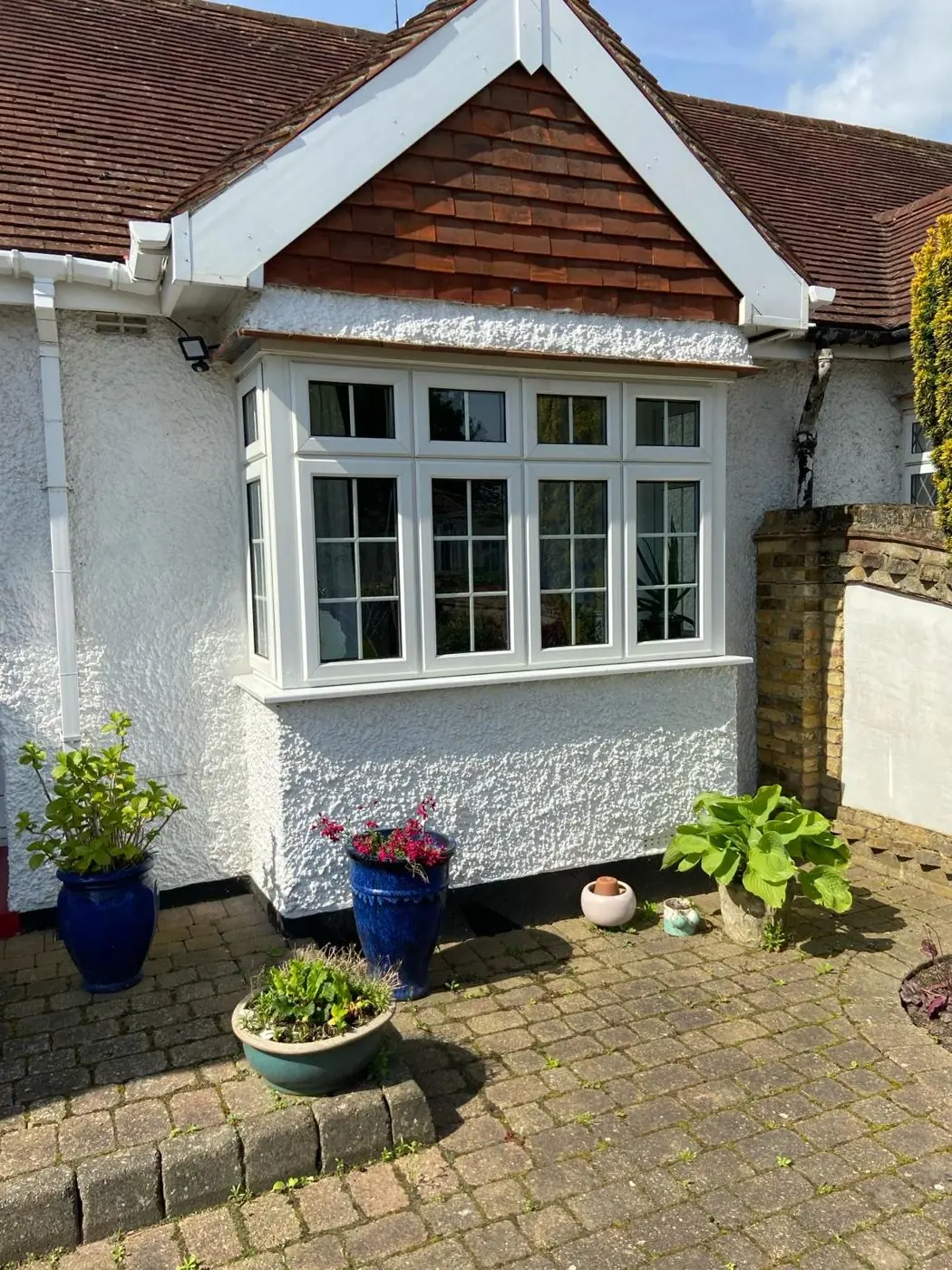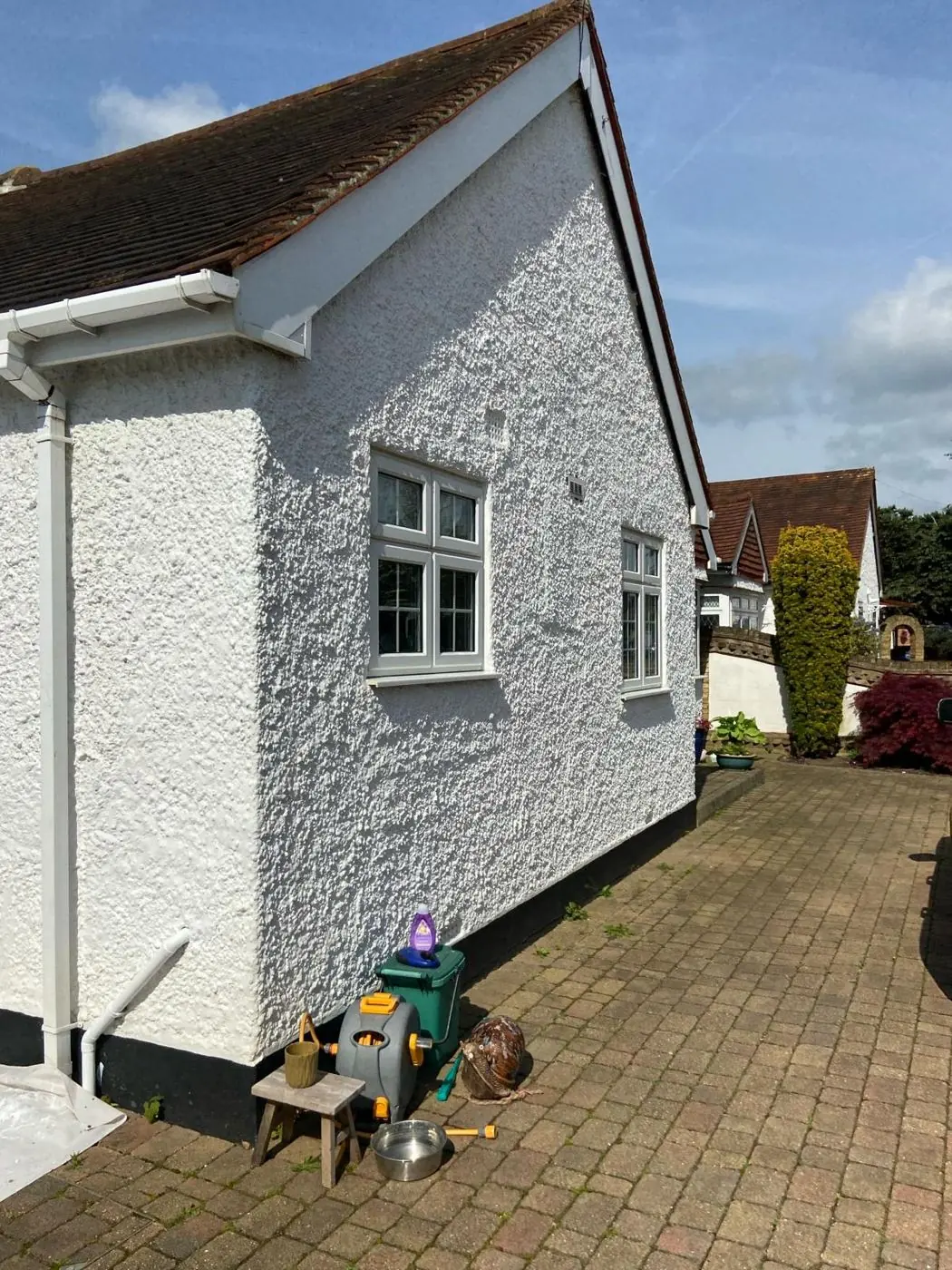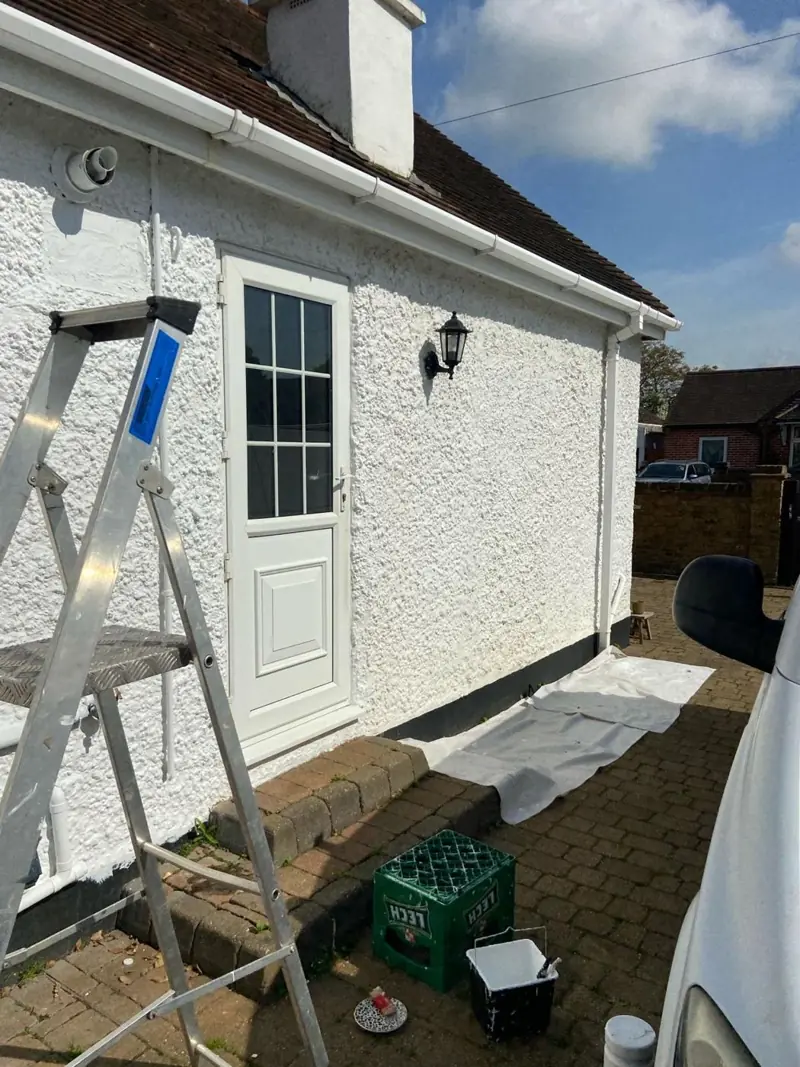
We repaint render and painted brick in Ecton, a conservation village around 4.9 miles north-east of Northampton, using breathable mineral or lime-compatible coatings on older walls. Much of the village is bare stone that should not be painted, so Dean starts by working out what each wall is made of and whether it has been painted before.
A stone village where most walls should stay bare
Ecton’s historic houses are built from squared and coursed lias, ironstone and golden-brown limestone, much of it Mears Ashby and “Pendle” stone, with ashlar on the higher-status buildings such as Ecton Hall, Ecton House and the Manor House. That stone was laid to be seen. Painting it for the first time hides the coursing that gives the conservation area its character and, on soft stone, can hold water in the face of the wall. If you own an unpainted stone house in Ecton and are wondering about masonry paint, our advice will nearly always be not to, and to talk to a stonemason about any pointing or weathering problems instead.
Render and masonry work in the village is therefore narrower than in a 1930s suburb. It covers the buildings that already carry a coating: the smooth painted render and painted red stock brick the 2017 appraisal records on some 18th and 19th century buildings, and the part-painted lias and brick of the Three Horseshoes.
Why the coating has to breathe here
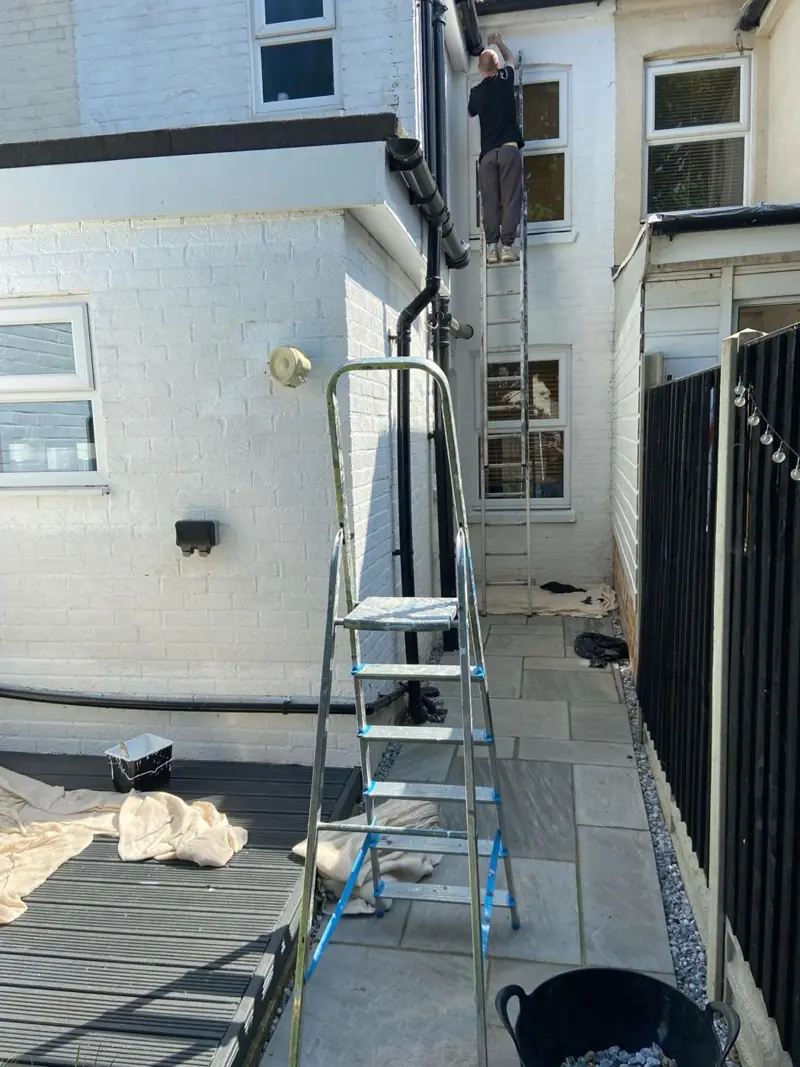
The village stands on the Nene valley slopes, where lias clay under Northamptonshire sandstone produces natural springs below the village. Add walls built straight onto the pavement with no gap from the footpath, and older front walls tend to carry moisture. A plastic-type masonry paint on a wall like that blisters and flakes as water tries to escape, and the damp shows up inside as stained plaster.
| What the wall is | What we would normally use |
|---|---|
| Lime render or lime-washed stone on a pre-1900 house | Limewash or a lime-compatible breathable finish |
| Older painted render of uncertain make-up | A mineral (silicate) masonry paint, after testing what is already on it |
| Painted brick on an 18th or 19th century building | Breathable mineral paint, matched to the existing colour |
| Cement render on a 20th-century brick house | Conventional breathable masonry paint |
One thing we check early is whether a modern acrylic has already gone over a lime surface. Mineral paints will not bond to it, so the choice is either a careful repaint in a compatible system or a conversation about removing the old coating, which on a listed building should go past the conservation officer first.
Repainting like-for-like in the conservation area
The appraisal and Neighbourhood Plan Policy 7 both favour traditional materials, and no Article 4 direction for Ecton appears on the council’s list, but listed status still applies to the many listed buildings in the parish. A like-for-like repaint in the existing colour is maintenance. A new colour on a listed building, or switching from limewash to a modern masonry paint, is a change that may need consent. We note the existing colour and finish before preparation starts so it can be matched.
Preparing the walls before paint goes on
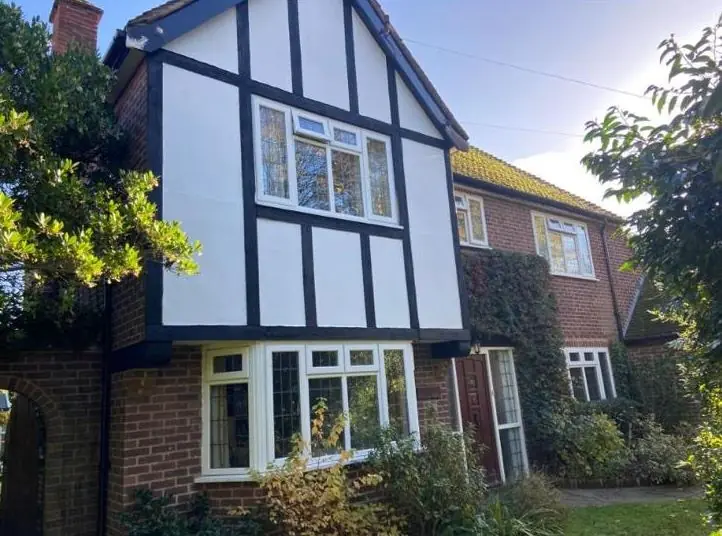
Where churchyard, Hall-grounds or wall-top trees shade it, and on north faces, render in Ecton often carries green algae. That gets a biocide wash, time to work and a brush-down before anything else. Then we look for hollow render, cracks at window heads and failed coatings, fill with a compatible material (lime for lime, not cement), and only then paint. Our guide to painting render covers the steps in more depth, and the main render and masonry painting page sets out the full process. For other work in the village, see our Ecton page.
Last updated by Dean, DH Painter & Decorator.