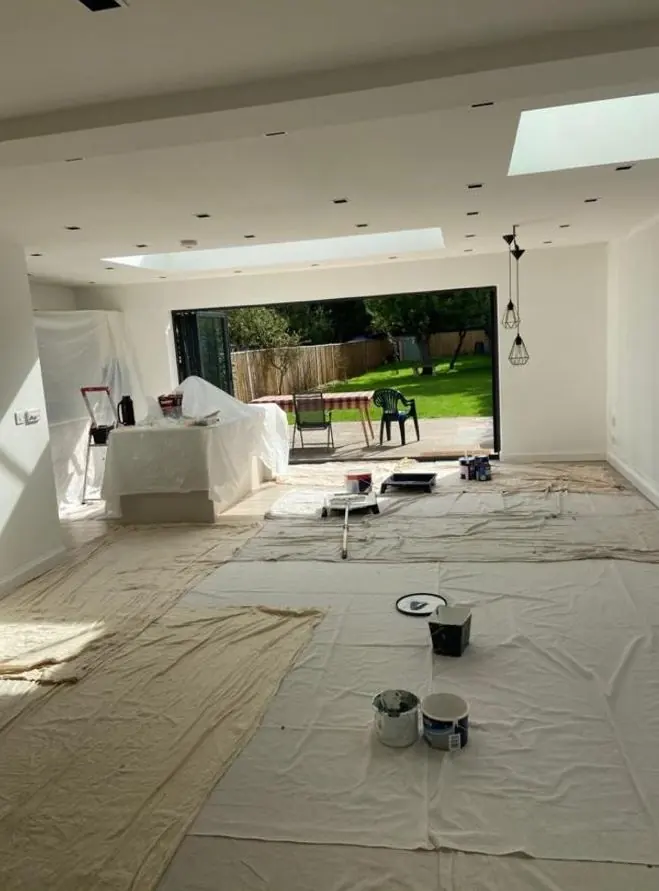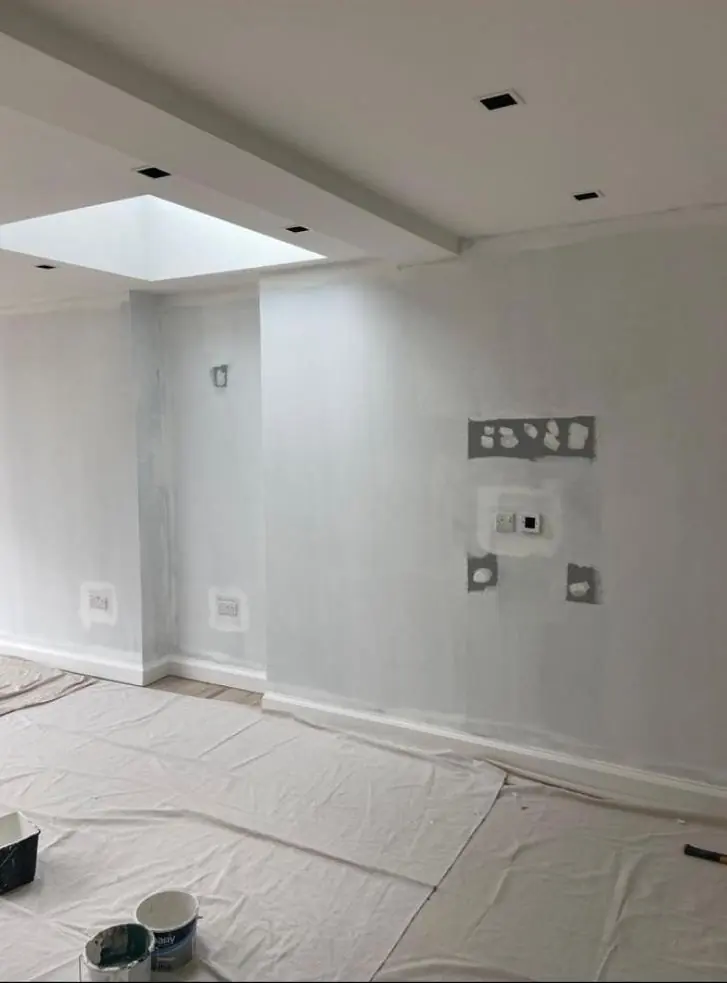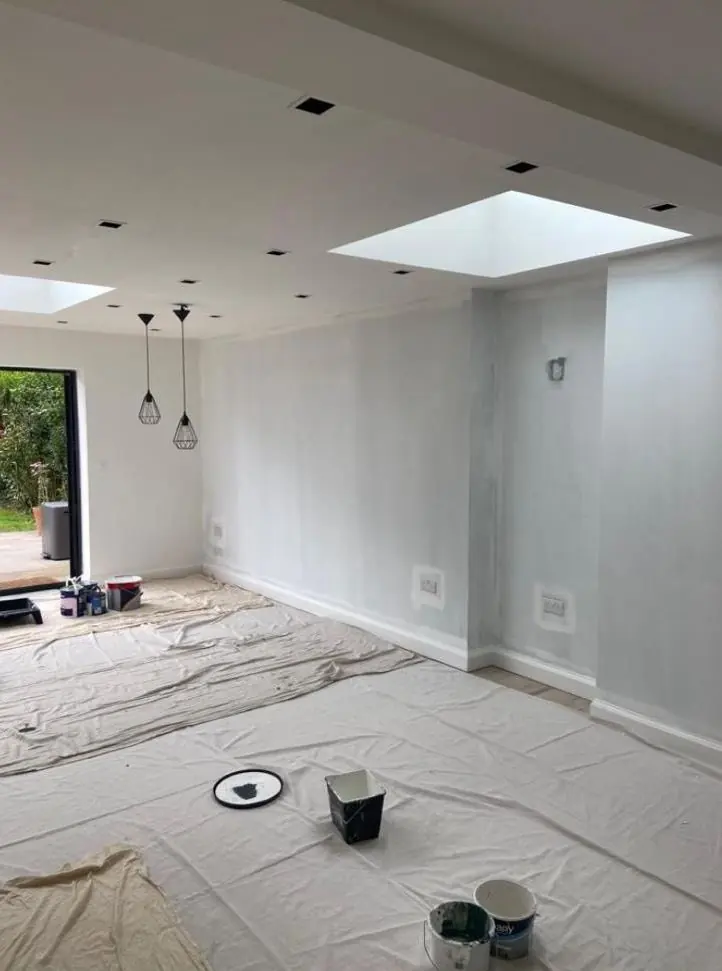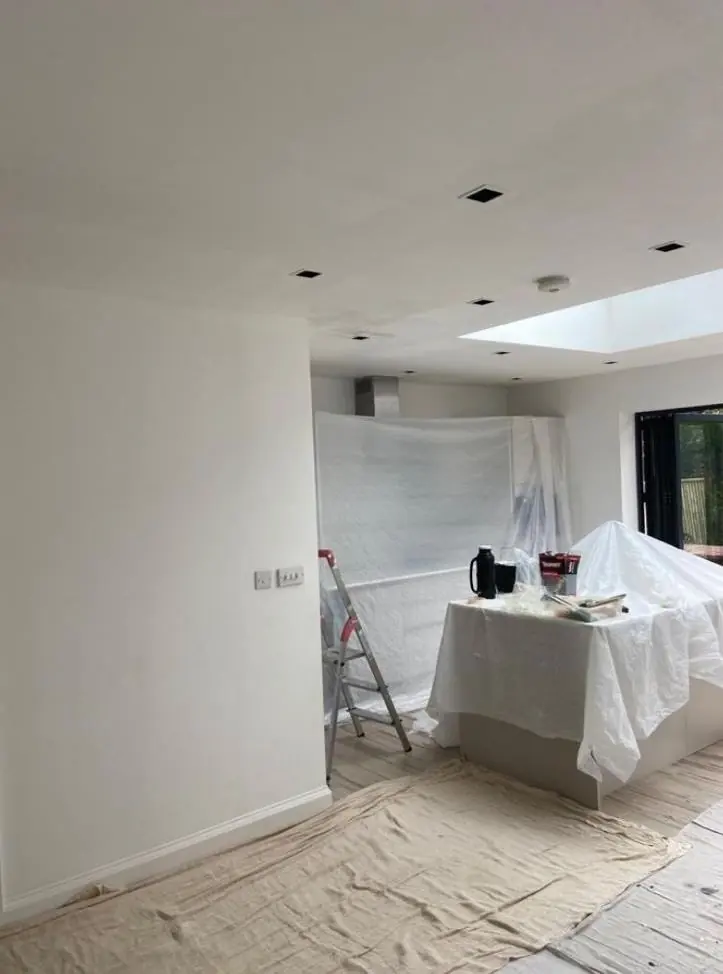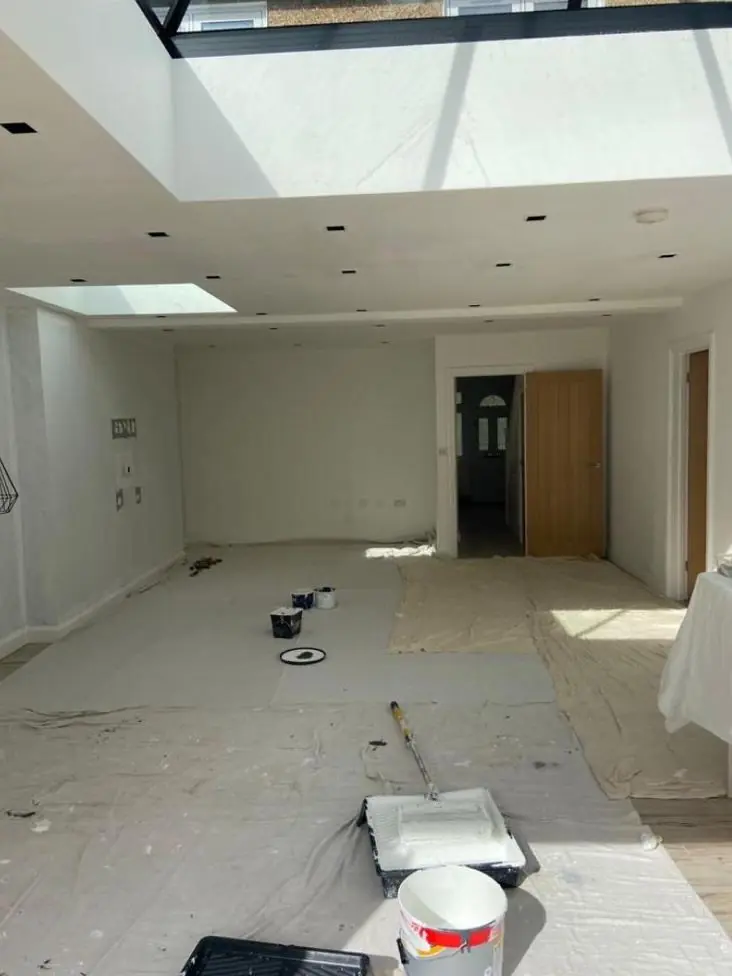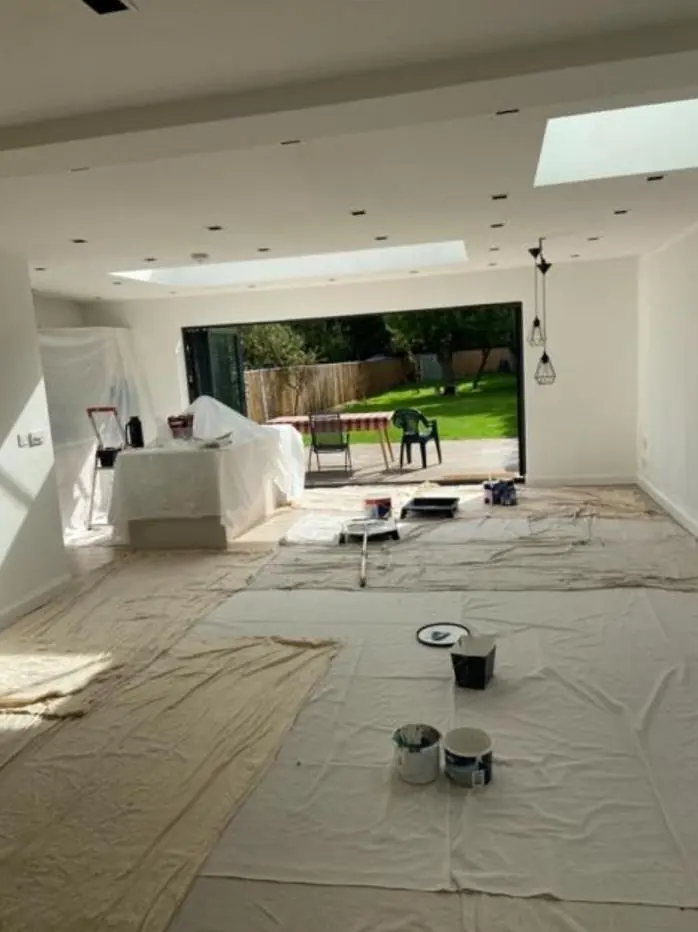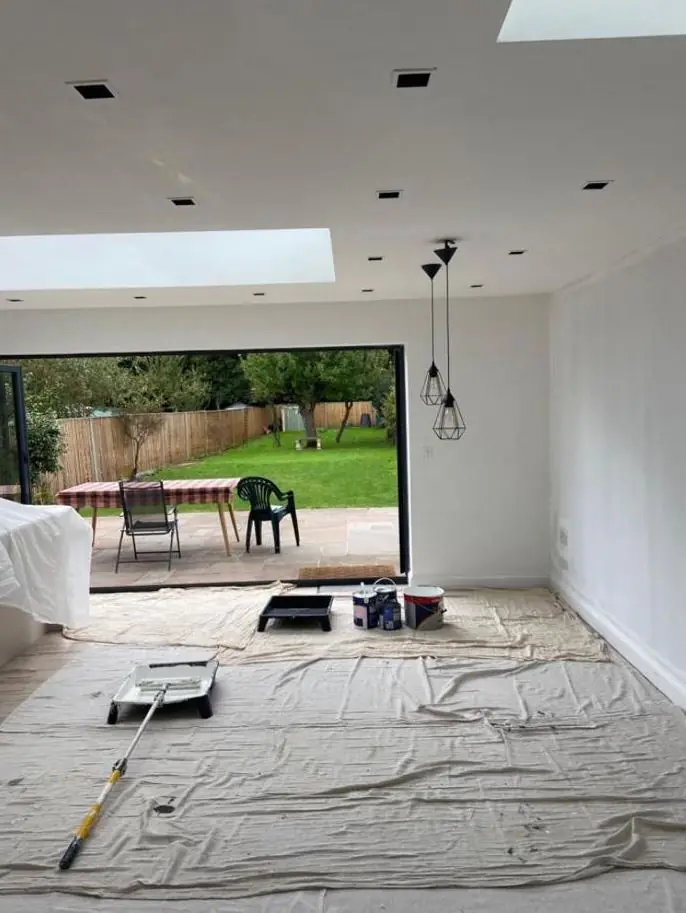
Dean decorates freshly plastered walls, ceilings and new joinery in Ecton Brook, NN3 5, about 4.1 miles east of Northampton town centre. The estate has a steady source of new plaster: infill housing on the former playing fields, 18 affordable homes due on the old care home site, and extensions to the detached houses.
Where the new plaster comes from on this estate
Ecton Brook is mostly 1970s and 1980s housing, yet it is not a finished place. Planning permission N/2015/1249 allowed new homes on the former Ecton Brook Playing Fields off Great Billing Way, and on 18 September 2025 the council’s cabinet approved 18 affordable homes on the cleared site of the former Ecton Brook care home, 12 for social rent and 6 for shared ownership, due to be finished in spring 2027. Add any extension to a detached or link-detached house on roads like Sheerwater Drive, Lakeside Drive and Newstead Close, plus rooms re-skimmed during estate-house refurbishments, and there is a fair amount of bare plaster waiting for paint.
Each of those starts in a different place, and that changes what we do first. Our full approach to drying checks, mist coats and finish coats is on the main new plaster and extension painting page, and the mist coat itself is explained in our guide to painting new plaster.
Three situations, three starting points
| Situation in Ecton Brook | What we usually find | What it means for decorating |
|---|---|---|
| Extension on a detached house | New plaster joined to forty-year-old painted walls | Mist coat the new areas, then blend the join so the old and new rooms read as one |
| Re-skimmed room in a terrace | Skim over old plaster, often only one or two walls | Check the skim is fully dry against the older walls before sealing |
| Newer infill home, first redecoration | Builder’s white emulsion and settling cracks | Rake out and fill the cracks, then repaint over the trade finish |
First redecoration on the newer homes
Houses built on the former playing fields, and in time the homes on the old care home site, are typically handed over with a basic trade emulsion. As the structure dries out and settles, fine cracks open at ceiling corners, around door frames and along plasterboard joints. That is normal for new construction, and it is the reason we suggest waiting until those cracks have shown before paying for a proper decoration. When the time comes, cracks are raked, filled and sanded, and the walls receive a better-quality emulsion that can actually be wiped.
The council’s scheme specifies air source heat pumps. Those run at lower temperatures than a gas boiler, so new plaster in a house heated that way relies more on ventilation and time to dry out. We check moisture with a meter rather than going by the calendar. Bare plaster that is sealed while still damp can trap moisture behind the paint, which later shows as blistering or patches that never quite dry to an even colour.
Extensions on the larger plots
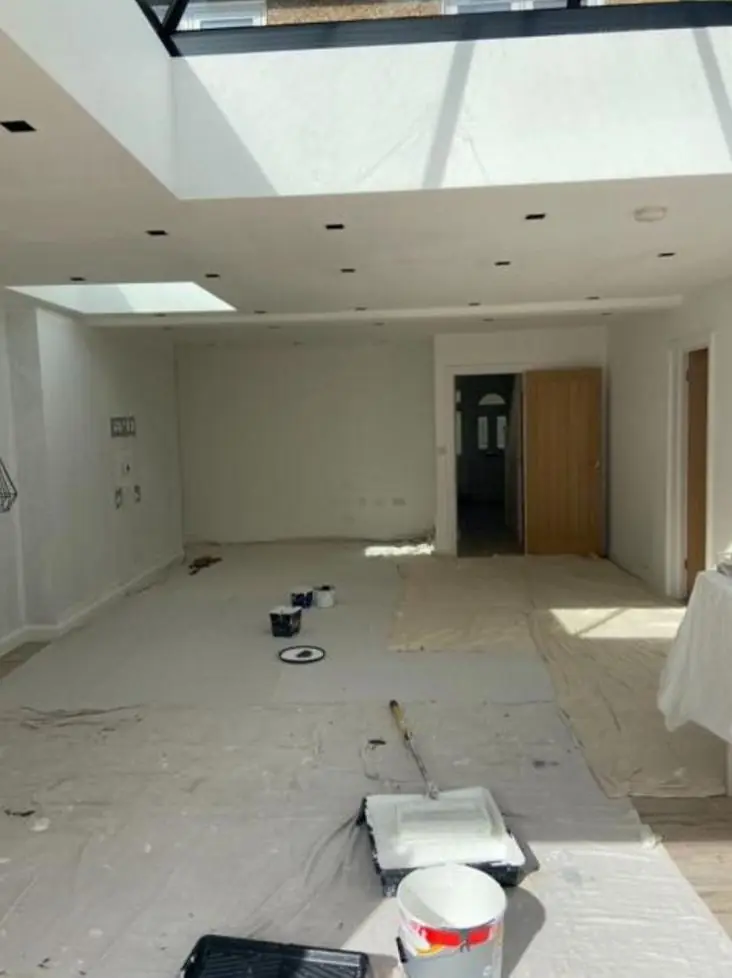
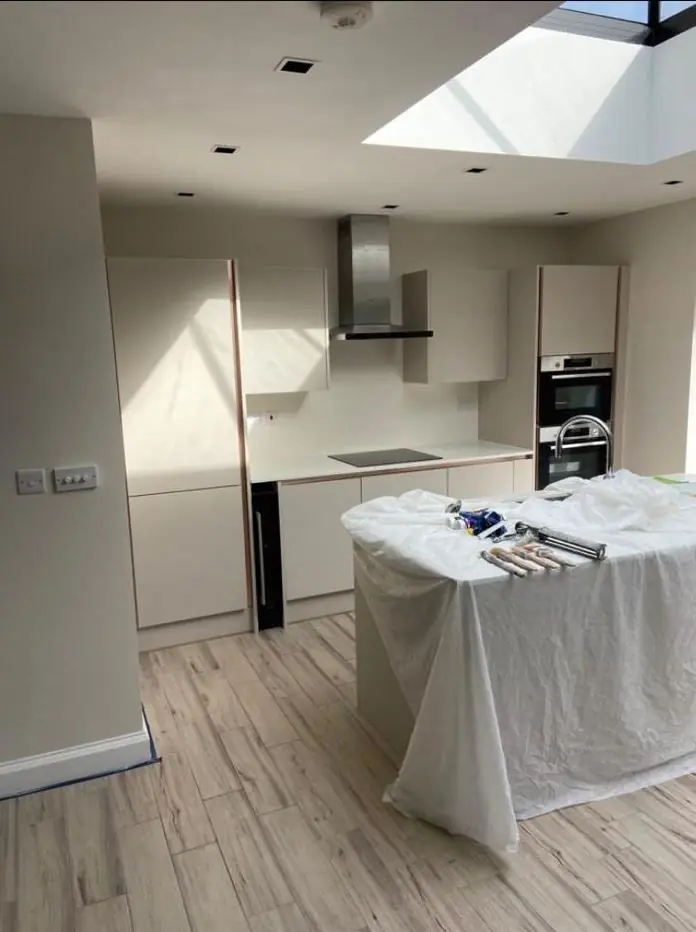
The detached roads in Ecton Brook have driveways, garages and more garden than the terraced squares, so they are where a single-storey extension or garage conversion is most likely to fit. That suits a decorator: kit can be unloaded on the drive and the new room is usually reachable through bifold or patio doors without walking through the house. The tricky part is the join with the existing house, where a new wall meets one painted in the 1980s. We make good that line and paint the new skirtings and architraves to match the rest of the house. New MDF joinery is sealed on its cut edges first, since raw MDF swells and furs up if painted straight from the builder.
For other painting work on the estate, see our Ecton Brook area page.
Last updated by Dean, DH Painter & Decorator.