Painter & decorator covering Northampton and surrounding areas

Render and Masonry Painting in Rectory Farm

Masonry paint for the rendered panels, porches and garden walls on Rectory Farm's 1970s and 1980s cavity-brick houses, using modern systems suited to their age.

  • Over 30 years experience
  • Free quotes & advice
  • Fully insured & trained
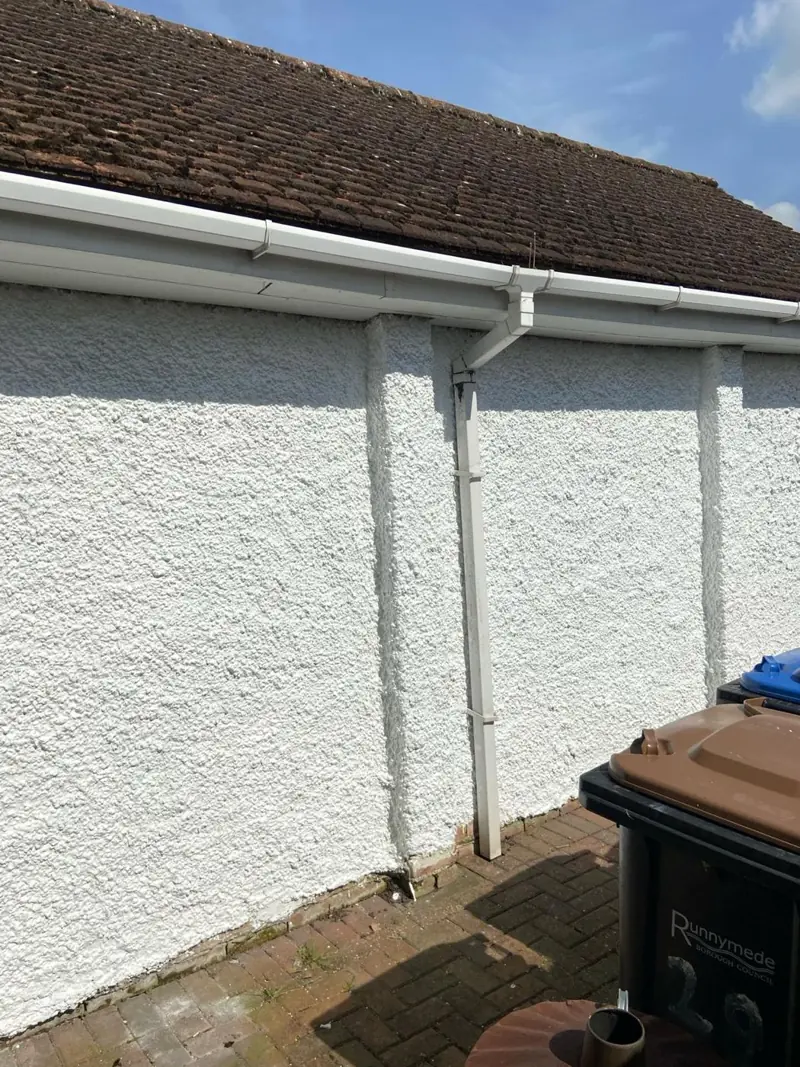
Bungalow side elevation in fresh white masonry paint, wheelie bins alongside

We paint rendered panels, porch walls, plinths and garden walls across Rectory Farm, NN3, an estate of brick homes 4.2 miles from Northampton town centre on its north-eastern edge. These are 1973-1992 cavity-brick homes, so the job is usually part of an elevation, not the whole house.

Small areas of masonry, not whole elevations

Masonry painting often means coating a whole rendered house front. Rectory Farm is different. The energy certificates we read for Olden Road, Crowthorp Road, Morgan Close, Bentley Close and Lowlands Close all record cavity walls, and nothing in the sources shows render as the standard finish. So on this estate masonry paint goes on the parts that were rendered or painted along the way: a panel under a window, a porch surround, a garage plinth, a garden or boundary wall, or brickwork a previous owner coated years ago.

That changes the quote. A rendered panel on a 1970s terrace might be a morning’s preparation and two coats. What takes the time is the edge work, where masonry paint meets face brick, a window frame or a uPVC sill, because a wobbly line on unpainted brick shows from the street.

Modern buildings, modern coatings
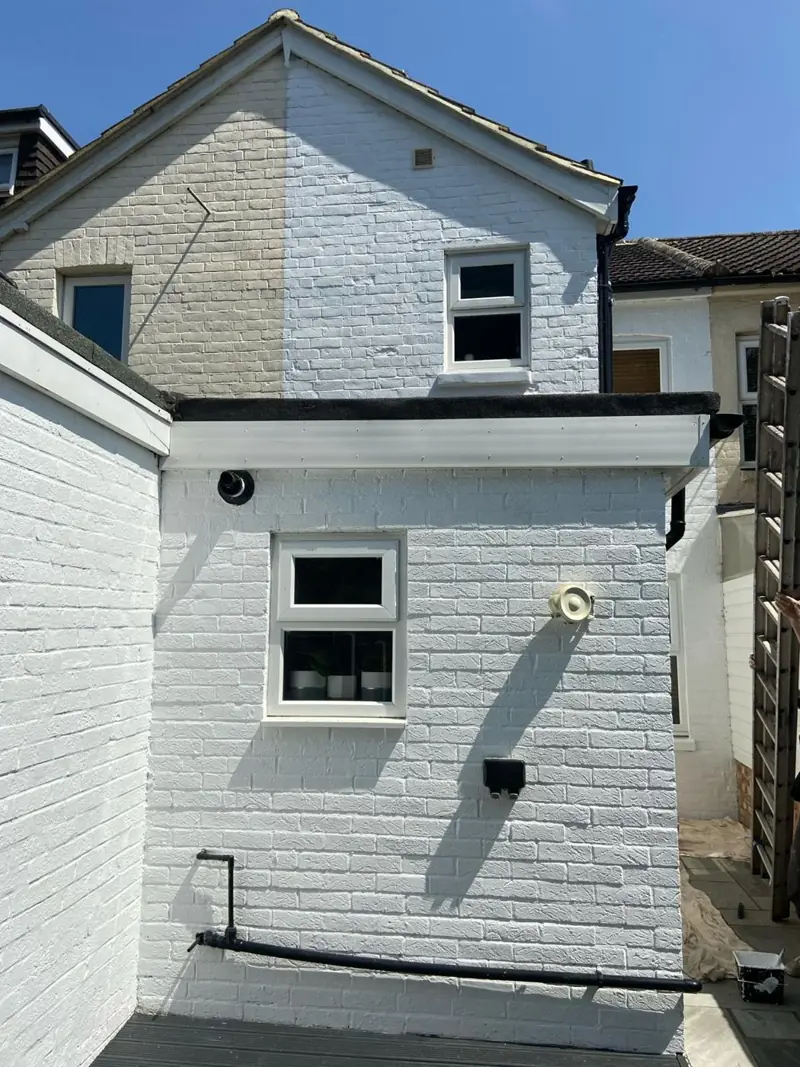
Gable end half done, grey brick on one side, fresh white masonry paint on the other

Almost every house here dates from 1973 onwards. There is no ironstone, no limestone, no listed fabric and no conservation area recorded for the estate, so the lime-wash and mineral-only specifications that older villages need are not required. A good acrylic or siloxane masonry paint over properly prepared render is the right system for a cement-rendered panel on a 1980s house, and it can be tinted to any colour.

Preparation is the same discipline as anywhere: a fungicidal wash on green growth, stabiliser on chalky render, and cracks raked out and filled. The difference is what we check for first. On panels fixed to a cavity wall we tap for hollow render around the edges and look at the sill above, because a leaking sill is the usual reason a small rendered area fails early. Porch walls get the same check at the joint with the canopy, where a gap in the flashing sends rain straight down the face of the render and leaves a dark streak that paint alone will not cure.

Thinking twice before painting bare brick

An owner in the detached closes might consider painting the whole brick front to modernise a 1980s house. It can be done, and no heritage rule on the estate stops it. But once brick is painted it has to be repainted every several years for good, and getting paint back off is slow and rarely clean. On a semi on Morgan Close, Riley Close or Alvis Court, painting one half also leaves a hard line against the neighbour’s brick. We would usually suggest painting the porch, plinth or panels and leaving the main brick alone, and we say so at the quote.

In the northern 1970s area, Census 2021 shows 35.5% of homes social rented and 9.7% shared ownership. If your home is one of these, the lease or the housing association may control any change to external walls, colour included, so check before booking.

Garden walls along a shared terrace
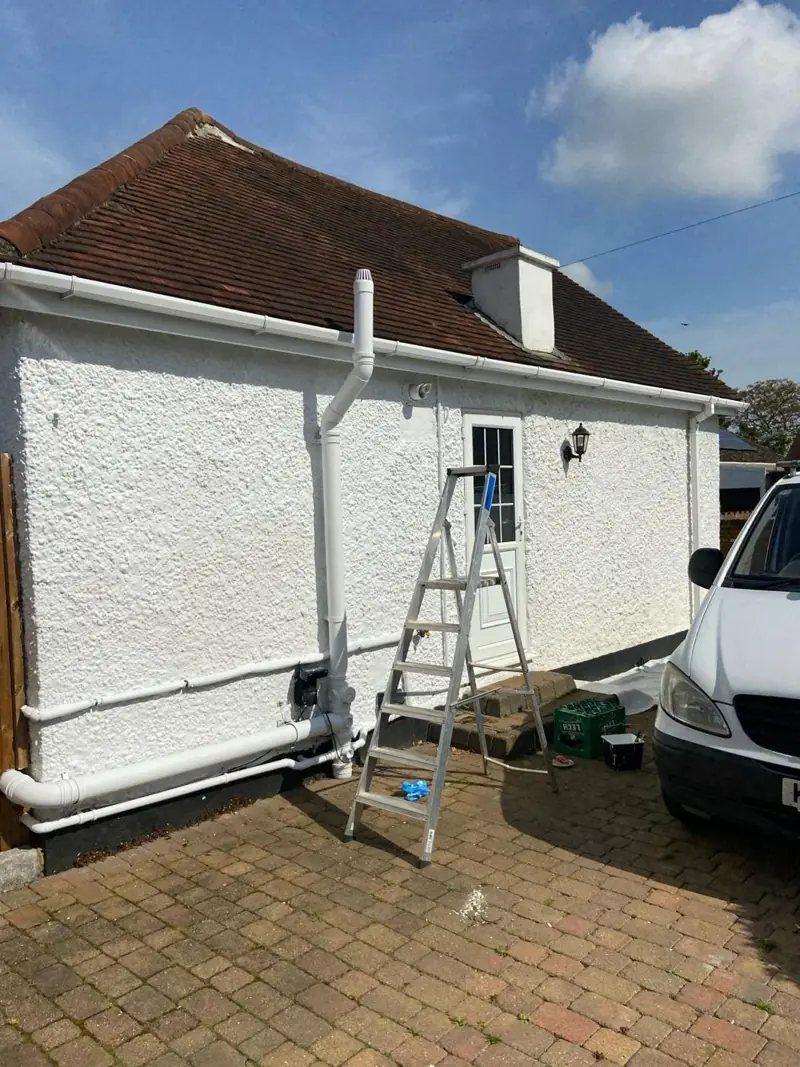
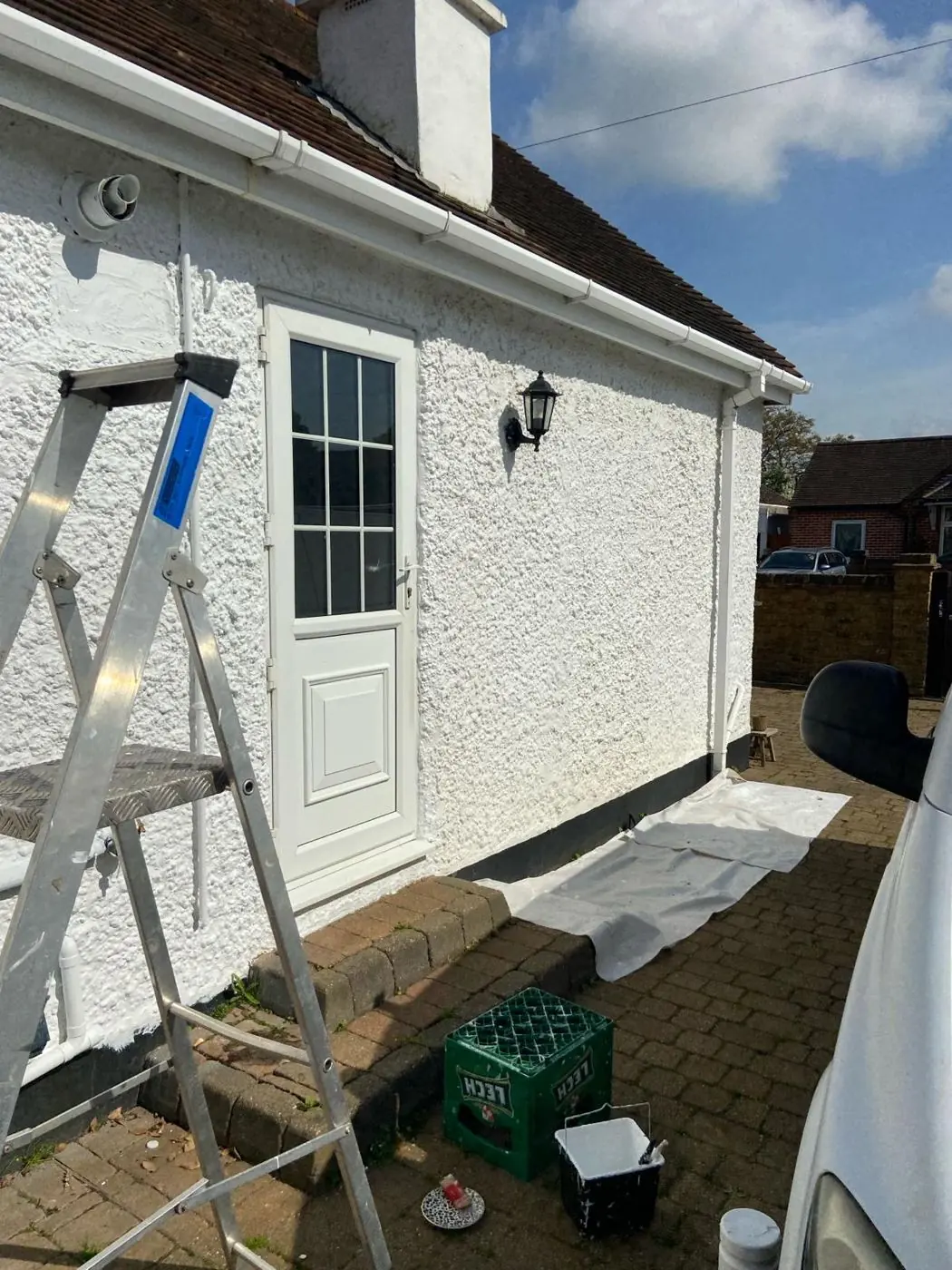
Bungalow side wall in roughcast render repainted white, stepladder still in place

On the 1970s terraces, low front walls and the walls between back gardens are often shared with the house next door. If only your side is painted the join shows, so it is worth a word with your neighbour first; some decide to have both sides done on the same visit. Where the garden can only be reached through the house, materials come through the hallway under dust sheets.

The general method is on our render and masonry painting page, and the guide to painting render and roughcast covers paint types in more detail. For other services on the estate, see the Rectory Farm page.

Last updated by Dean, DH Painter & Decorator.
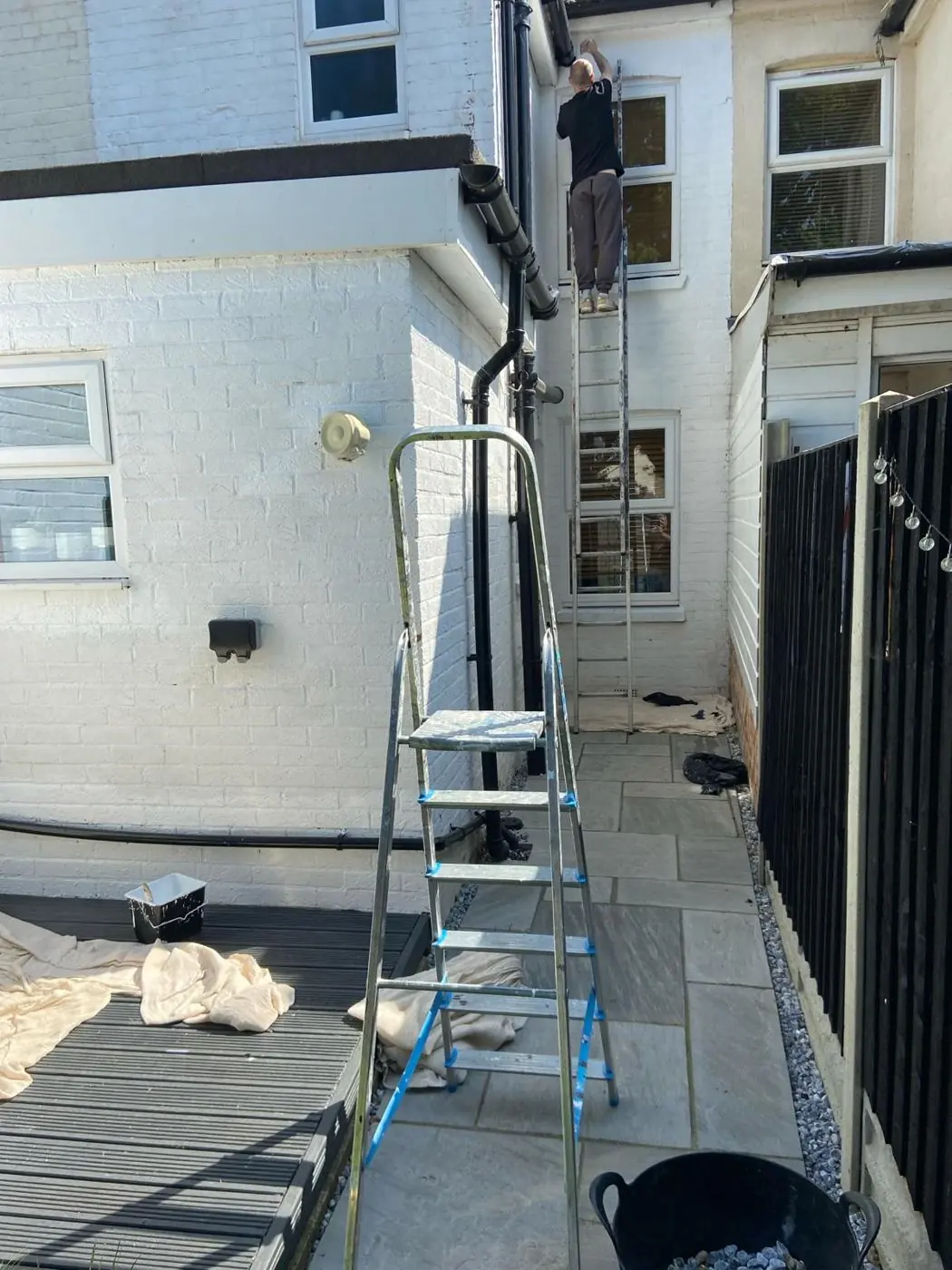
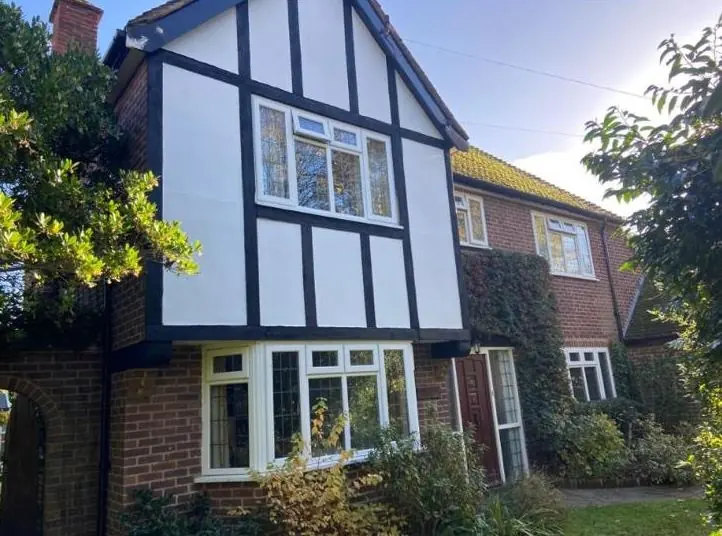
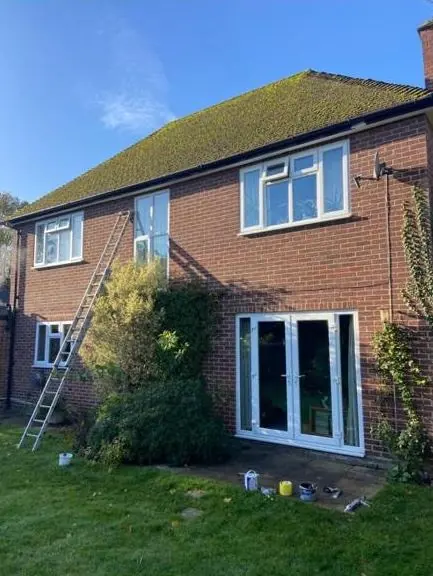
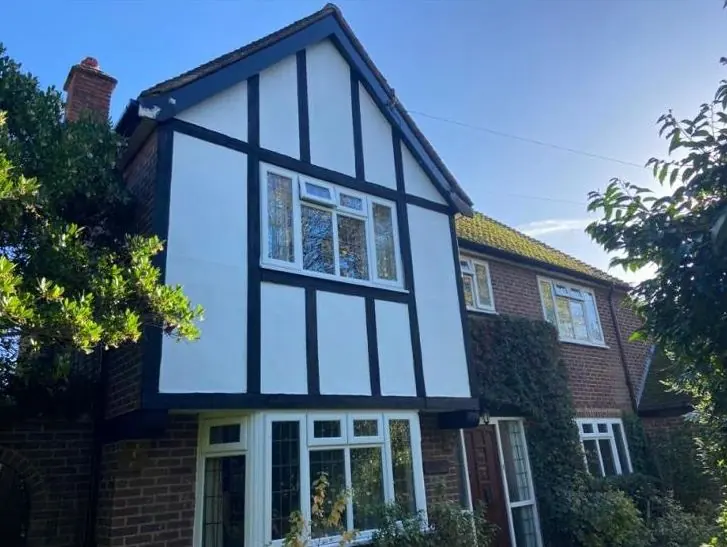
Bungalow side door surrounded by white render being repainted, ladder and dust sheet mid-job Narrow side return with white-painted brickwork, decorator on a ladder at the upper windows Tudor-style gable with black timbers and white panels repainted by a Northampton decorator Brick house rear with white fascias and soffits repainted, ladder and tins on the lawn Mock Tudor house front with black and white gable freshly repainted, finished Gravel drive and garden with stained hardwood gates visible at the far end

Render & masonry painting in Rectory Farm: your questions answered

Can't see your question? Call us on 07539 779 036 and we'll happily talk it through.

Do I need lime or breathable mineral paint on my Rectory Farm house?

No. Almost all homes on the estate were built between 1973 and 1992 with cavity walls, and there is no historic stone or listed fabric recorded. A quality acrylic or siloxane masonry paint over well-prepared cement render is the right choice. Lime and mineral-only systems matter on old solid-wall buildings, which is not what Rectory Farm is made of.

Can I paint just my half of the brick front on a semi in Morgan Close?

You can, and no heritage rule on the estate prevents it, but the join with the unpainted half next door will always be visible. Painted brick also needs repainting regularly from then on. We usually suggest limiting paint to the porch, plinth or panels. If you still want the whole front done, it is worth talking to your neighbour first.

The rendered panel under my window has cracked. Is it worth repainting?

Usually, yes, once the cause is dealt with. On these houses a cracked or stained panel often traces back to a sill or gutter that is letting water in above it. We check for hollow render and leaks, fill the cracks, and then apply masonry paint. If the render itself has come away from the wall, that is a plastering job first.

Can you paint a shared front or garden wall on a 1970s terrace in the north of the estate?

Yes, with the neighbour's agreement, because a shared wall belongs to both houses. If only one side is painted, the line between the two will show, so some neighbours have both sides done on the same visit. If your home is social rented or shared ownership, check with the landlord before changing the colour of any external wall.

What customers say about Dean

Most of our work comes from recommendations and returning customers. These are real reviews from customers after the job was finished, in their own words.

More customer reviews

After completing my gates I was then assured Dean was more than competent to repaint the inside of my property from top to bottom. It’s a large 4 bedroom house and was done to a very high standard. Once again I would highly recommend him.

Customer review Gates, then a full four-bedroom interior

I contacted Dean to get the outside of the house painted; the house is all roughcast render. He has done a fantastic job; the house is looking brand new. The same he did for our garage, painted our bedrooms x2, did extra jobs for us like skirtings and door frames, and painted even our gates. I could not recommend him enough; he is attentive, smiling, always on time, and nothing too much; I am so happy with what Dean has done; he went above and beyond. I have recommended him to all my friends and family.

Read full review
Customer review Roughcast render, garage, bedrooms and gates

Dean did a great job for a good price i'd be very happy to recommend him always on time polite and friendly.

Customer review Painting and decorating

Start your project

Get a free painting and decorating quote

Tell us a little about the job and we'll arrange a visit to look at it properly. Quotes and advice are always free, with no obligation.

What happens next

  1. We get back to you to arrange a convenient time to visit.
  2. Free visit. We look at the job and talk through colours, finishes and any repairs.
  3. Written quote. A clear price covering preparation, materials and the finish we agreed.

Request a free quote

Please enter your name.

Please check your email address.

Please enter a valid phone number.

Prefer to talk? Call 07539 779 036.

Call 07539 779 036Call nowFree quote