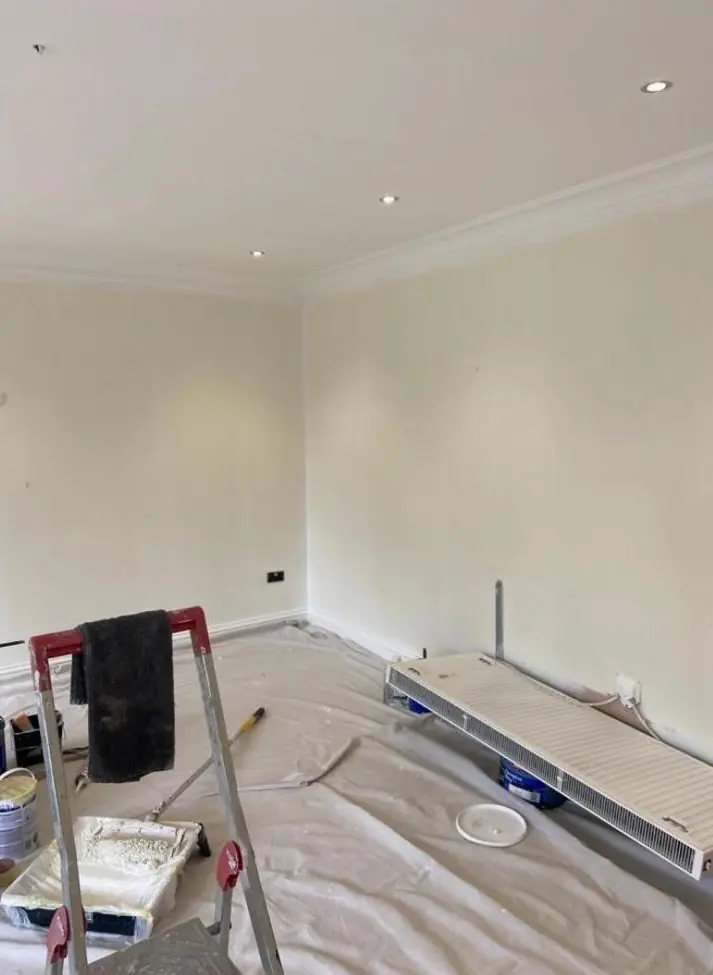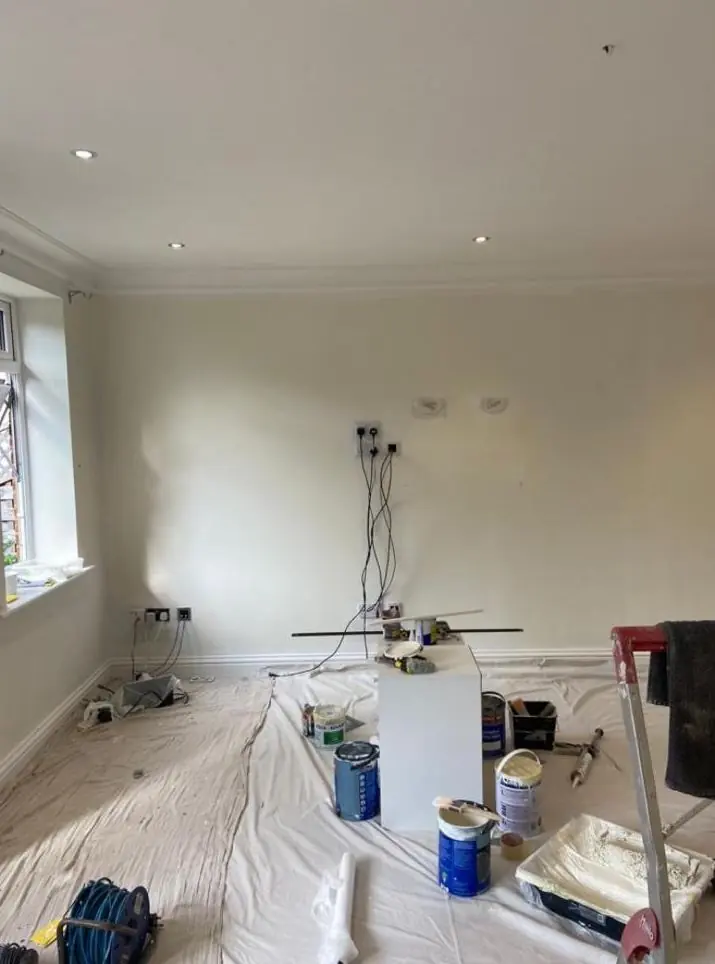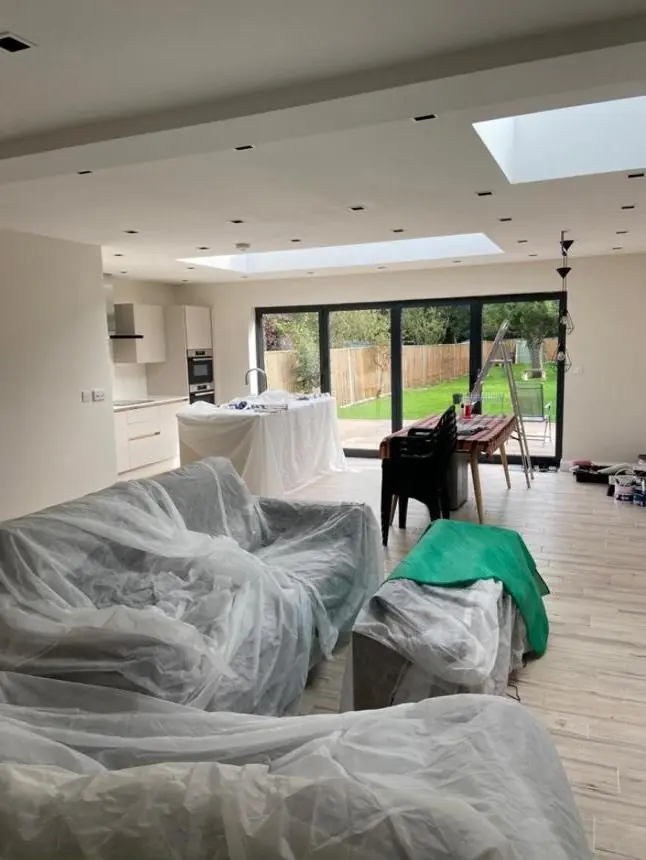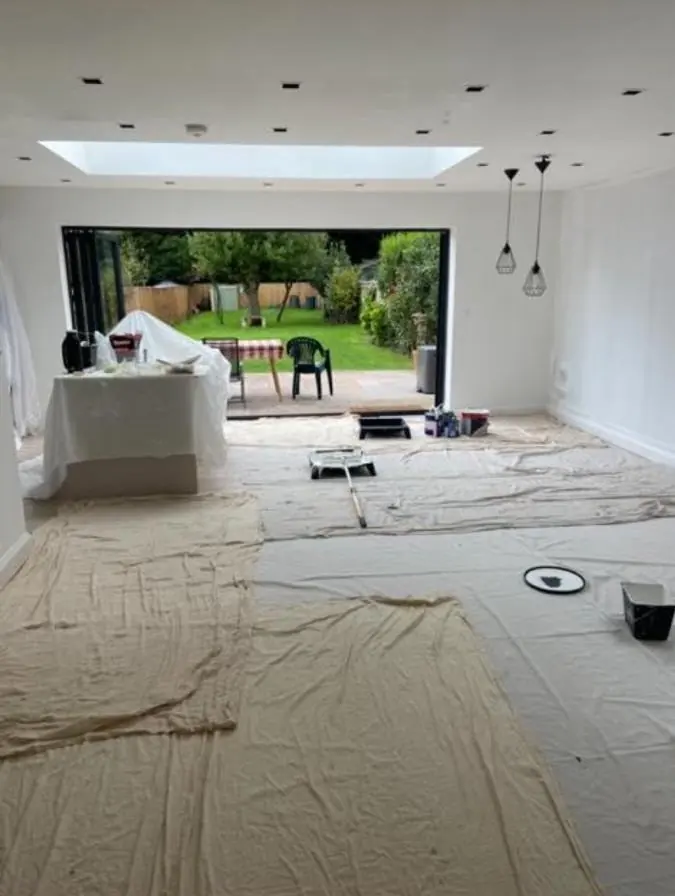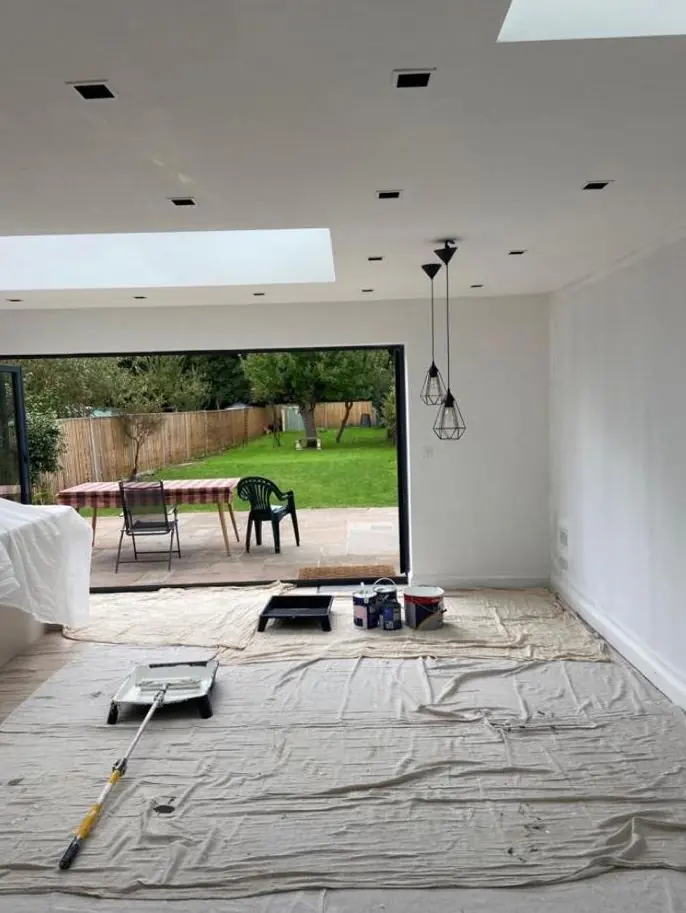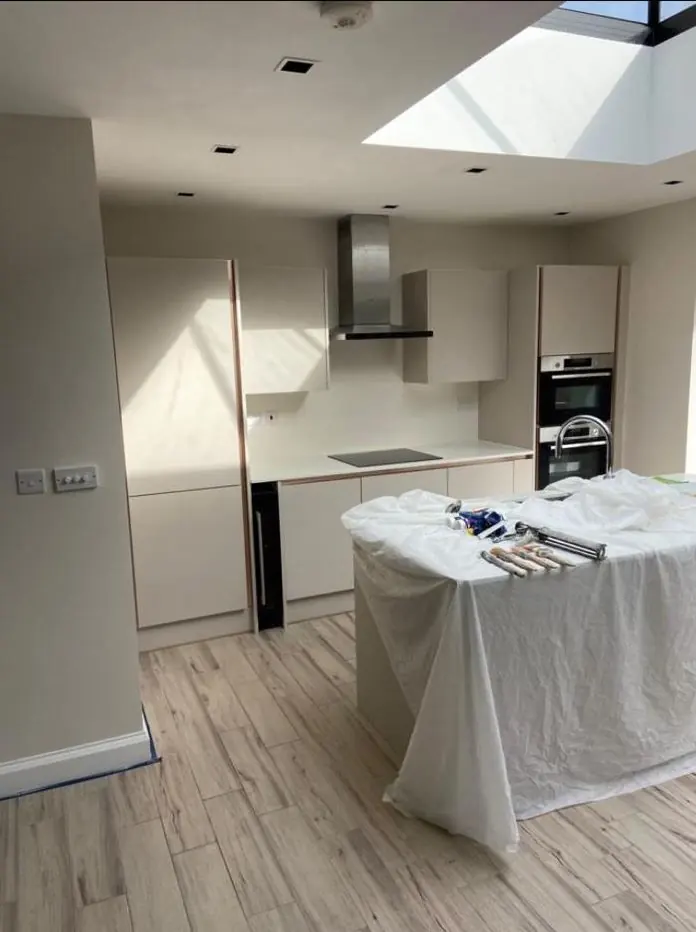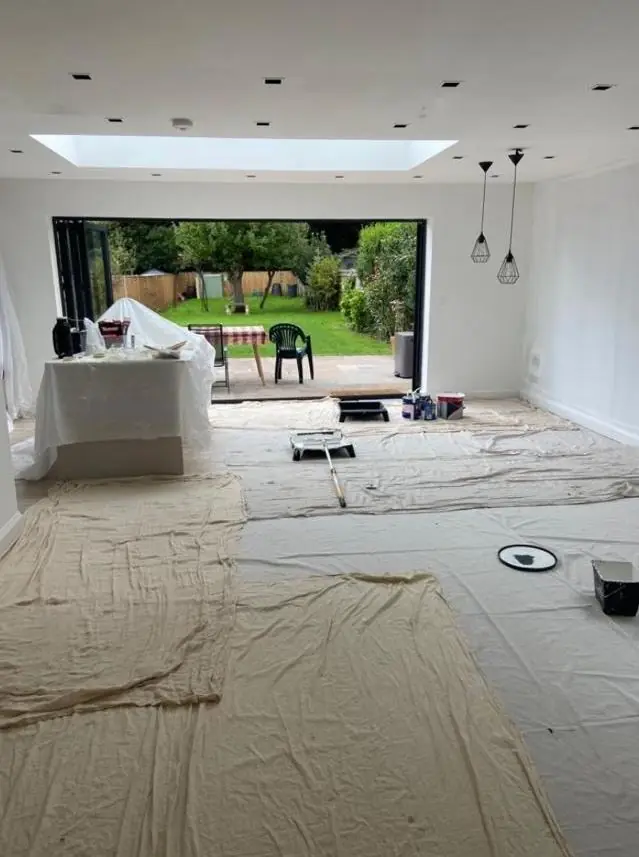
Dean decorates new plaster in Hardingstone, 1.8 miles south of Northampton's centre. The work includes new homes on the southern estates, extensions built behind older village houses, and lime plaster repairs in stone cottages, which need a different paint from modern gypsum skim.
Two kinds of new plaster in Hardingstone
New plaster in Hardingstone comes in two forms, and they should not be painted the same way. Most of it is modern gypsum: skim coats in the newer homes on the southern estates, and plasterboard in extensions built behind houses in the village. The rest is lime: repairs and replastering inside the older cottages and village houses of the conservation core, where the walls are coursed ironstone and limestone rubble.
Our new plaster and extension painting service covers gypsum work in detail, and the mist coat guide explains the technique. This page is about deciding which approach a Hardingstone wall needs.
Lime repairs: let them breathe
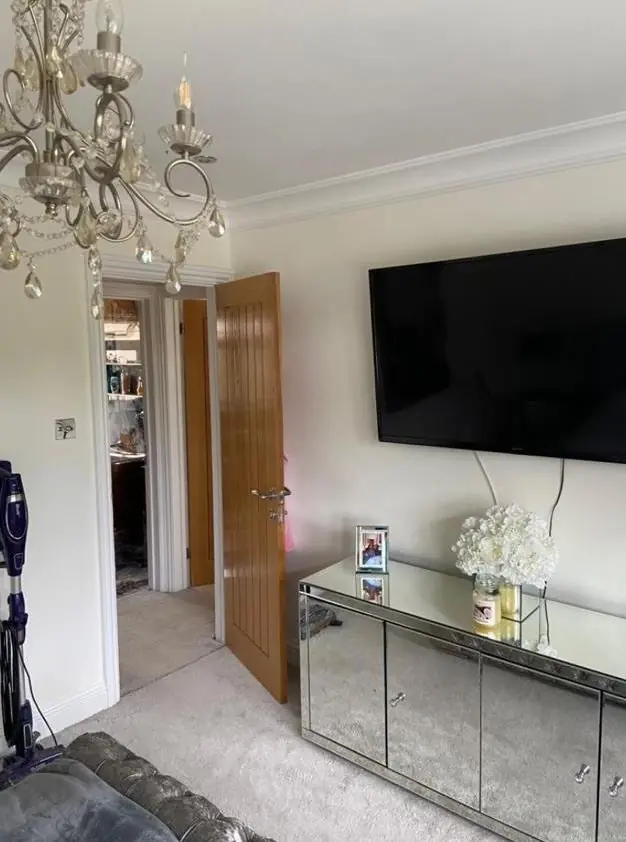
When a stone cottage is replastered in lime, often because cement render or gypsum was put on in the past and has trapped damp, the new lime has to stay breathable. It cures slowly as it takes in carbon dioxide from the air, and it should only be painted once it has hardened. A vinyl or acrylic emulsion forms a film on top, holds moisture in the wall, and can undo the reason for using lime in the first place. In this village that matters more than usual. Hardingstone sits on the spring line at around the 100-metre contour, and the springs behind Coldstream Lane’s name still run underground. Ground-floor walls in old houses can be damp at the base.
For new lime plaster we use limewash, or a mineral, silicate or clay-based paint suited to lime. The finish is flat and soft, which suits these rooms. If you need something more washable in a kitchen or hall, we will explain the trade-off rather than simply apply a vinyl product. Salts coming through as white bloom are brushed off dry and left to settle before the next coat.
Many of Hardingstone’s 41 listed buildings are among these older houses. If plaster work is part of a wider repair on a listed property, the consent for that work may already set out the finish to use.
Extensions where old meets new
Extensions behind historic houses in the conservation area are expected to use matching or sympathetic stone and brick. Inside, the new room is usually gypsum plaster over block or plasterboard. The awkward part is the junction with the original house. The opening through the old stone wall is often lime or a mix of materials, and it moves differently from the new work.
- New walls and ceilings: a diluted mist coat once the skim has turned an even pale pink, then two finish coats.
- Reveals cut through old stone: checked for what they are plastered in before deciding on breathable or standard paint.
- The joint line: filled with a flexible material, because the old and new structures will move a little against each other in the first year or two.
New homes south of the village
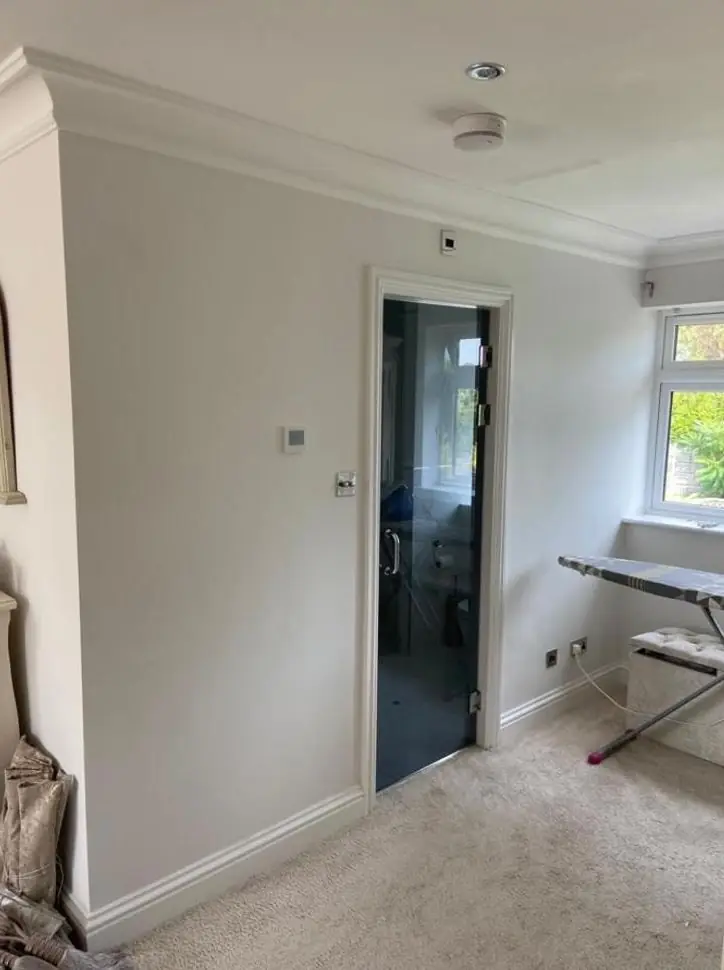
On the southern estates, including Bouverie Road, Gardeners View and Tawny Owl Drive, the walls are modern skim or plasterboard. New homes are commonly handed over with a thin contract emulsion that shows marks and does not wash well. For a first full decoration we lightly sand, fill nail pops and settlement cracks, spot-prime repairs and apply proper finish coats. Waiting until the house has been through a heating season lets most of the early shrinkage cracks show first, so they are filled once rather than twice.
See the Hardingstone area page for other decorating work in the village.
Last updated by Dean, DH Painter & Decorator.