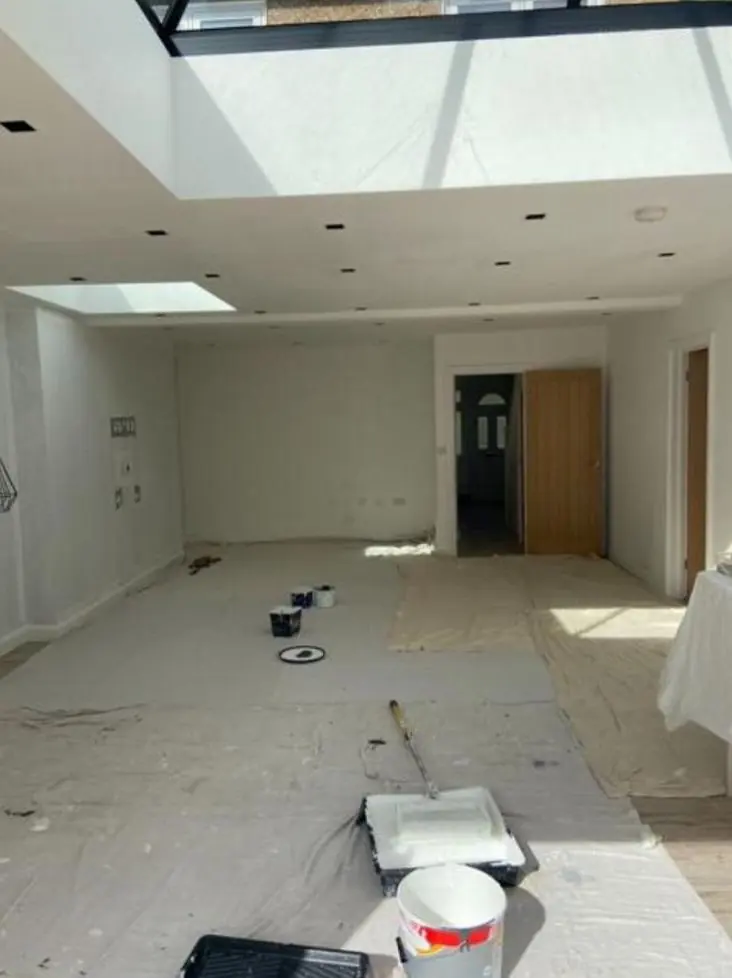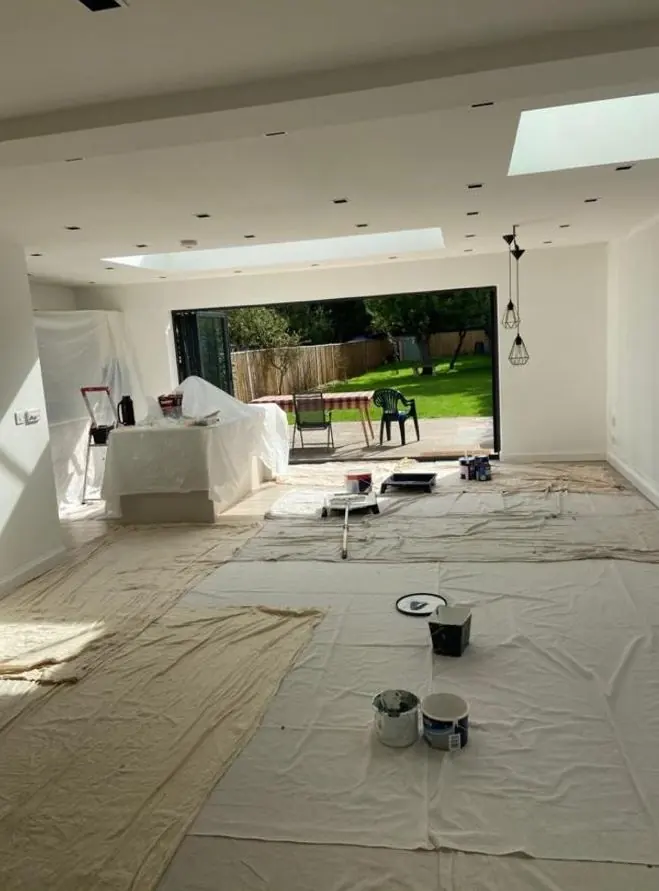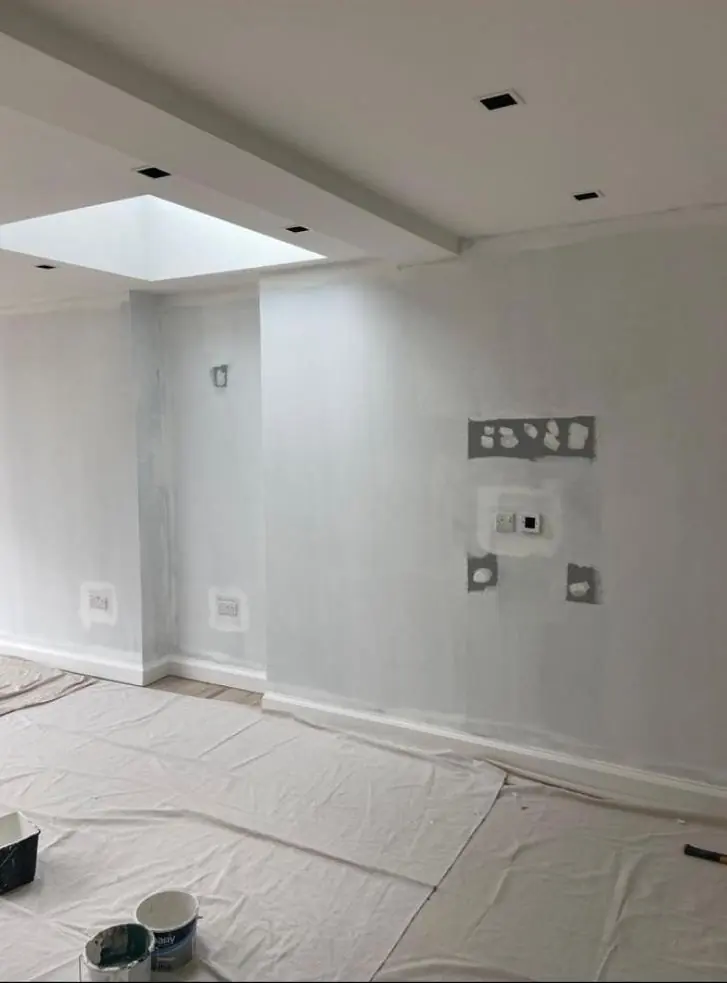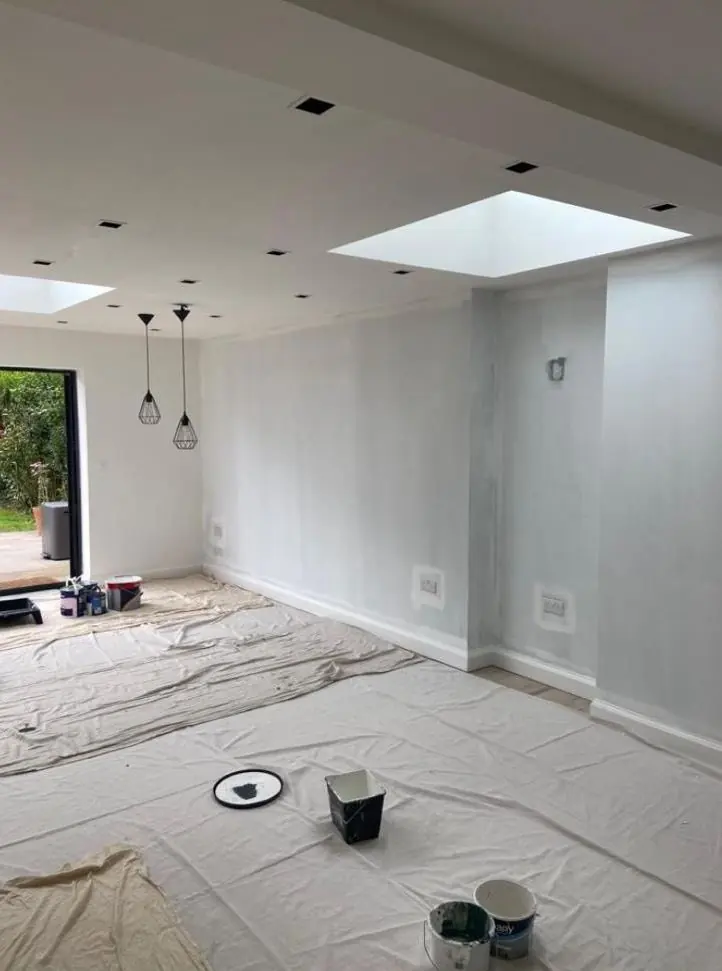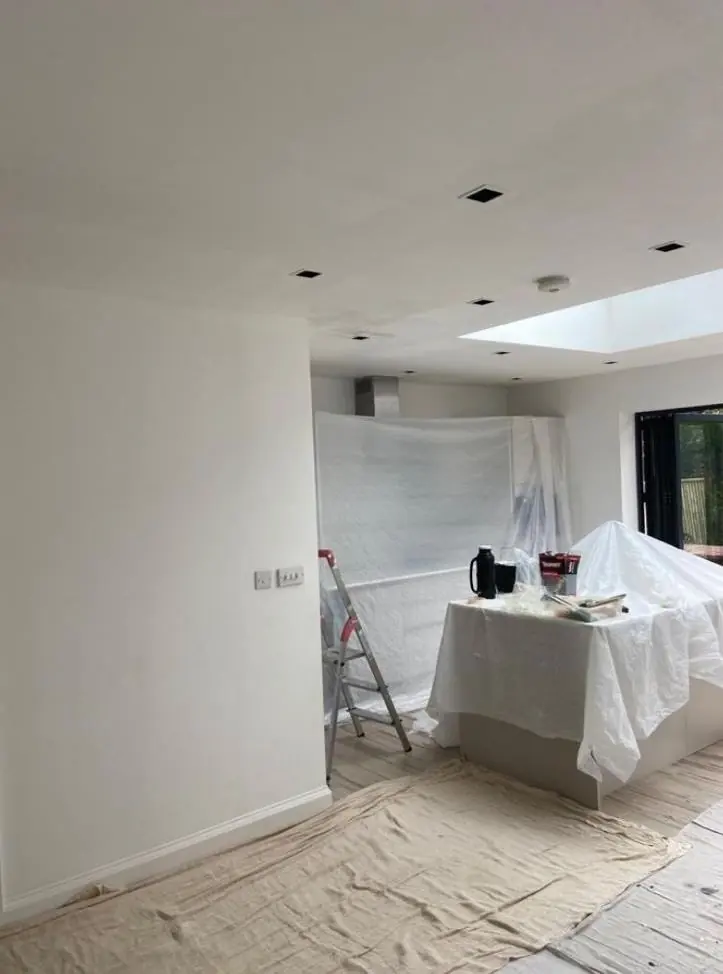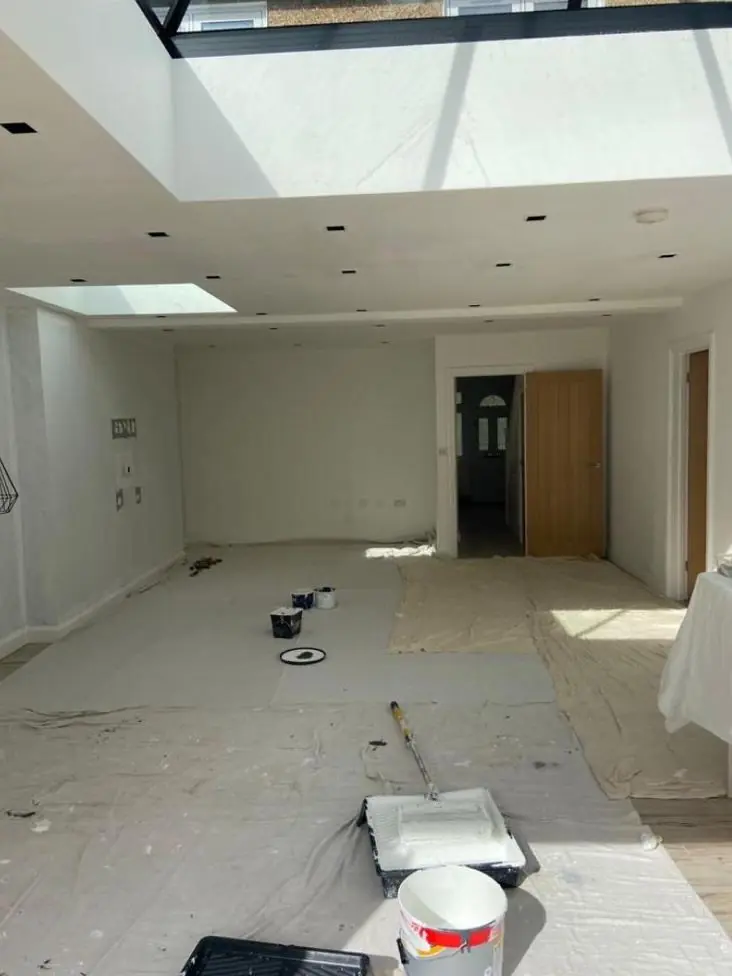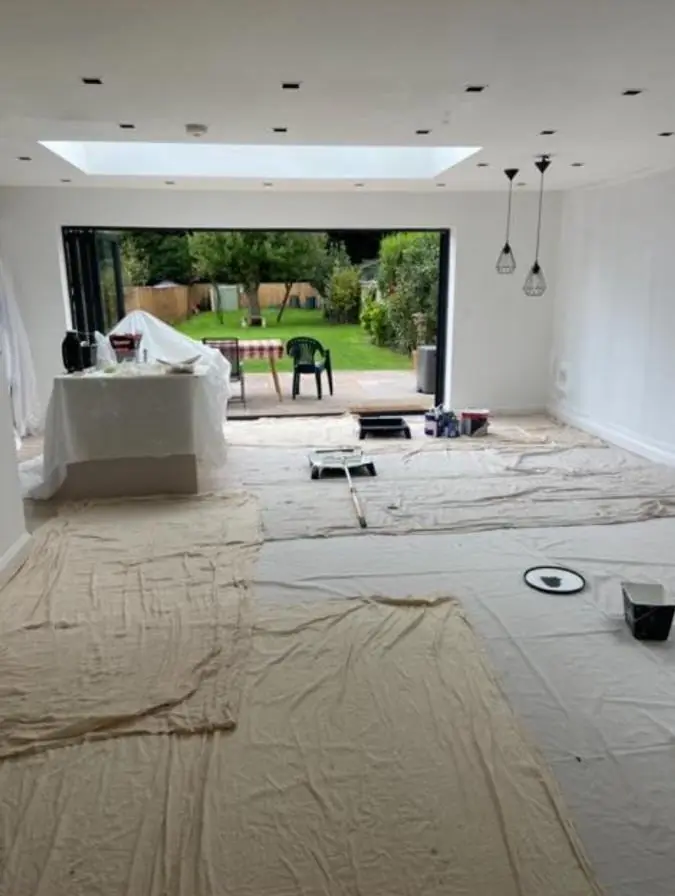
Dean decorates newly plastered rooms, infill houses and extensions in Milton Malsor, 3.2 miles south-west of Northampton town centre. Because building here is limited to infill and extensions, much of the work is where new plaster meets a centuries-old ironstone house, and we plan the paint system around that join.
Why new plaster here so often sits beside old stone
Milton Malsor grew from 302 to 311 dwellings between 2001 and 2011, and planning keeps new building to infill inside the village boundary. That means fresh plaster usually turns up in one of two places: a newly built infill house, or an extension or re-plastered room added to an older home. Many of those older homes are coursed ironstone or ironstone-and-limestone rubble, and inside them the original walls are old lime plaster. Put a new gypsum-plastered extension next to that and you have two materials that behave very differently under paint.
The join between the old house and the new room
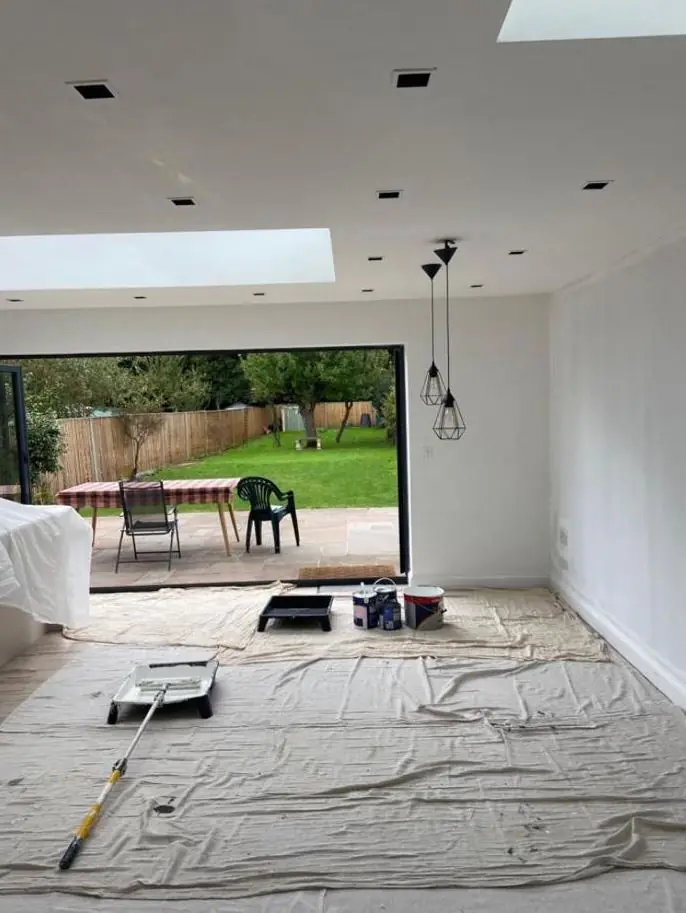
Modern gypsum plaster and plasterboard want a diluted mist coat so the first layer of paint can soak in and grip. Old lime plaster wants to breathe, and covering it with a vinyl finish can trap moisture inside a solid stone wall. Where an extension opens into the original house, we treat each side on its own terms:
- New gypsum skim: a thinned contract matt or purpose-made mist coat, then two finish coats.
- Old lime plaster on the original walls: a breathable emulsion, without hard sealers.
- The junction itself: cracks along the joint are raked out and filled with a flexible filler, because old and new walls settle at different rates.
We match the colour on both sides so the change of paint type doesn’t show, even though the products are different. Where it is not clear what an older wall is plastered with, we test a small area first.
The same thinking applies to woodwork across the join. New softwood or MDF skirting in the extension is knotted and primed from bare, while the original skirting in the old part of the house may carry many layers of paint and need keying and filling instead. Getting both to the same sheen is part of making the extension feel like it belongs to the house.
Drying time on damp-prone ground
The village sits on mainly sandy soil left by an ancient riverbed, and a stream runs north-west through The Dip field. It flooded in 1998. Ground-floor rooms in lower parts of the village can stay damp for longer, so new plaster there may take longer to dry than the usual few weeks. We check every wall with a moisture meter before the mist coat, including corners, window reveals and behind where radiators will go. Painting too soon on wet plaster leads to blooming and peeling, which is a real risk on a ground-floor extension near The Dip.
Infill houses: start to finish on bare surfaces
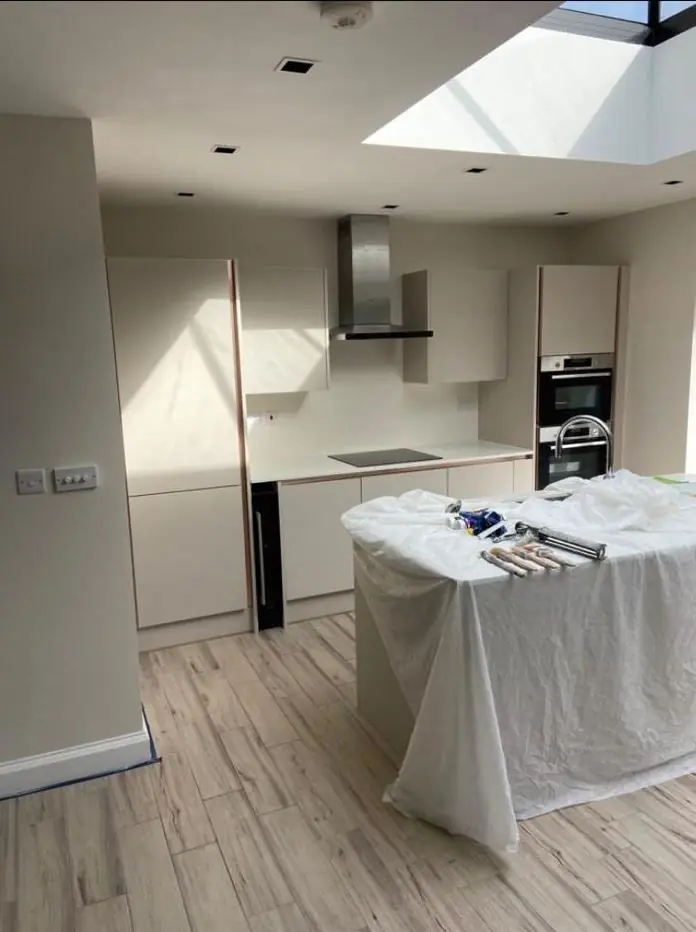
A new infill house is decorated from scratch: every ceiling, wall, skirting, architrave and door frame is bare. The order matters. We mist coat the plaster, fill and caulk the cracks the mist coat shows up, then apply the finish coats, before knotting, priming and glossing new joinery. Our guide to painting new plaster covers mixing and drying times. The new plaster and extension service page lists everything a typical extension quote includes.
Extensions on listed or conservation-area houses
With 34-35 listed buildings in the conservation area, some extensions here are added to listed homes. Planning and listed building consent for the extension itself is the builder’s and owner’s business, but it can affect decoration too, for example if the consent covers external finishes or how the new work meets historic fabric. If you have consent conditions, show us before we quote, so the paint specification fits them.
Last updated by Dean, DH Painter & Decorator.