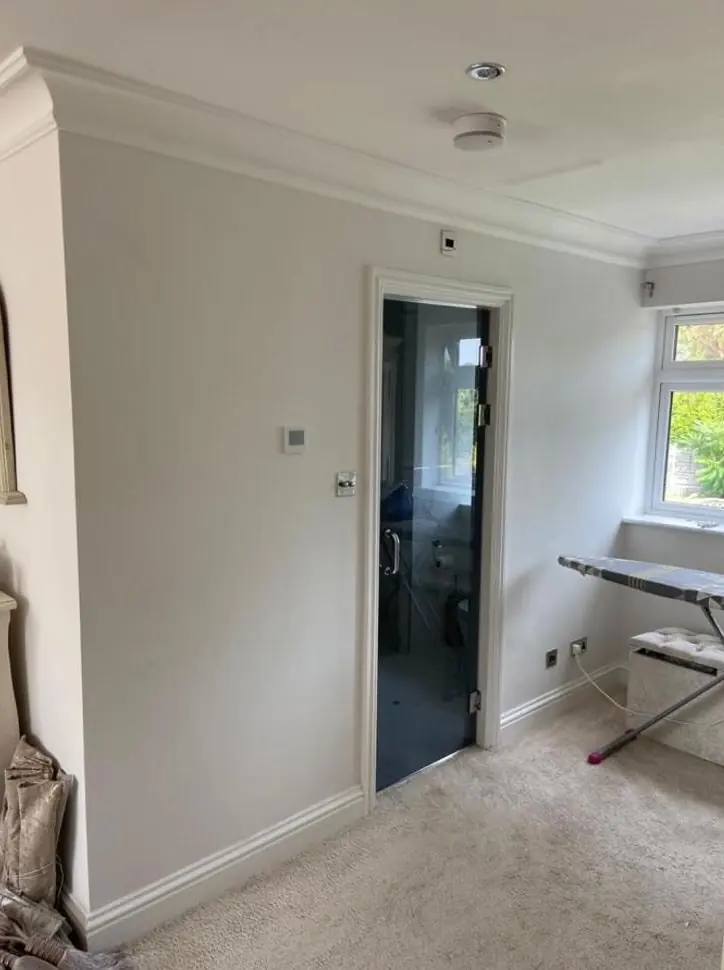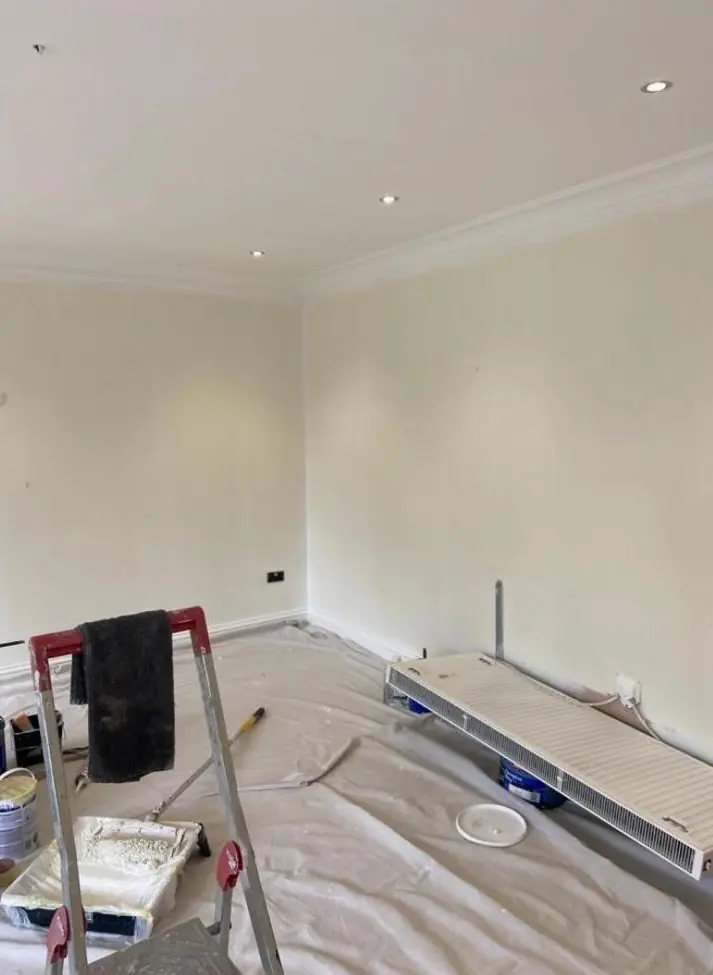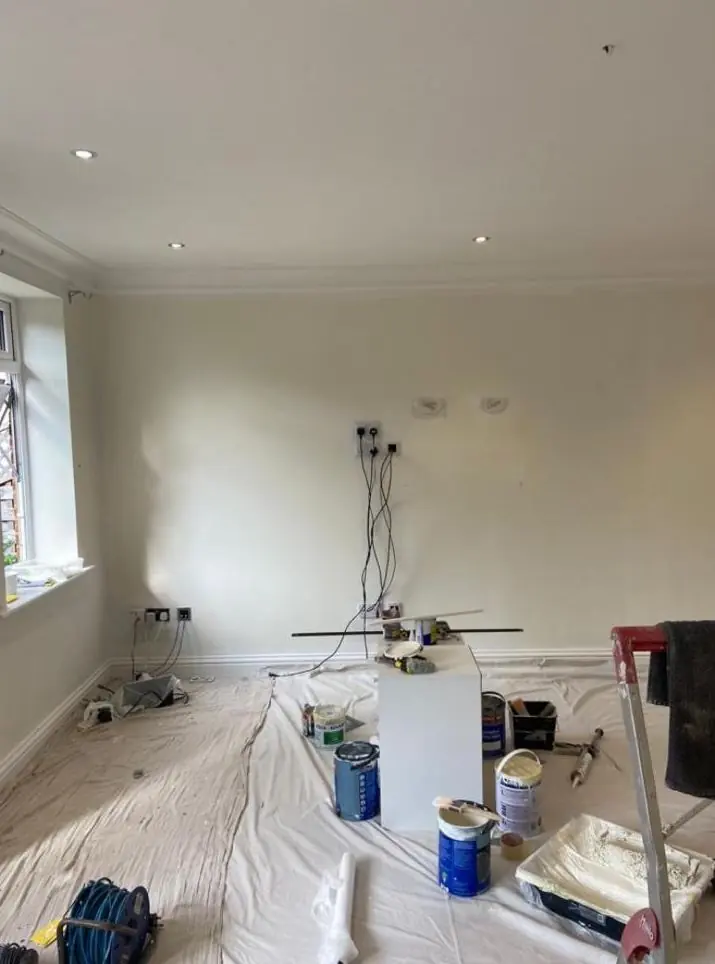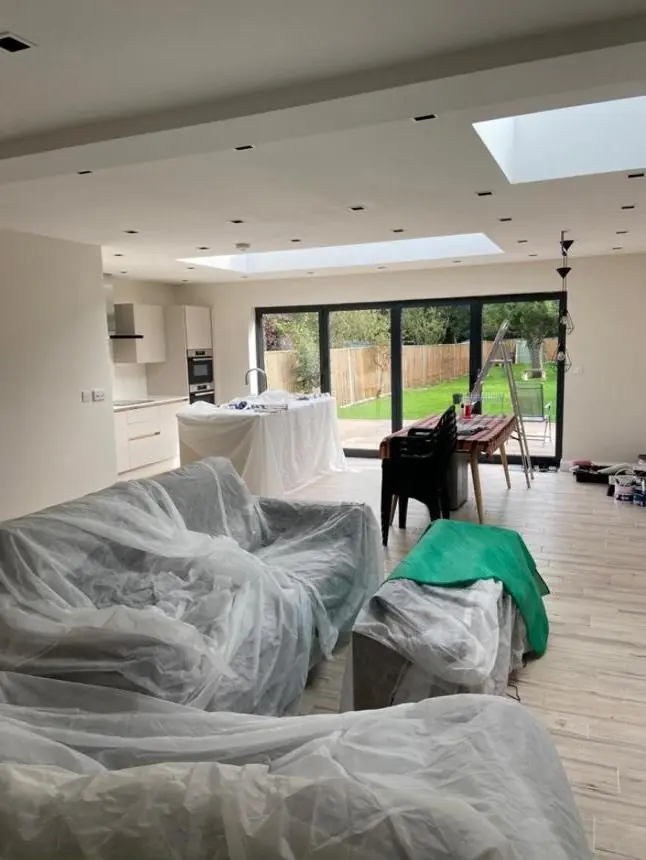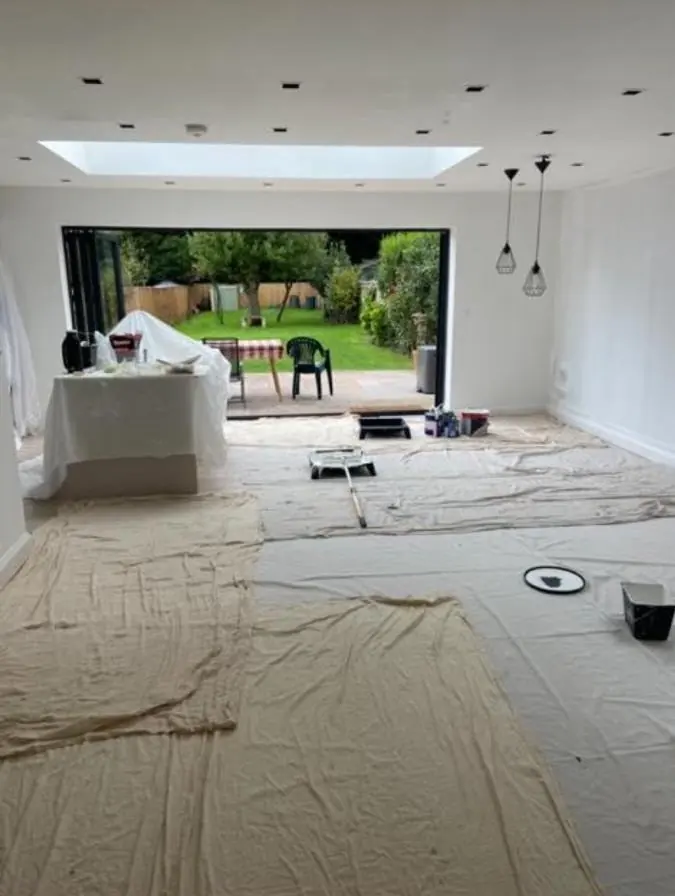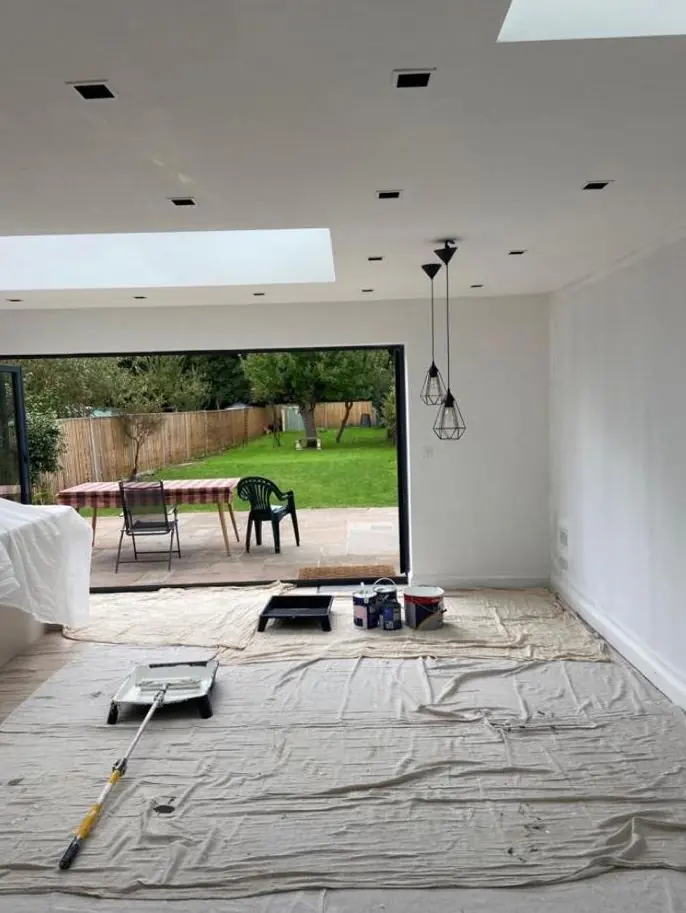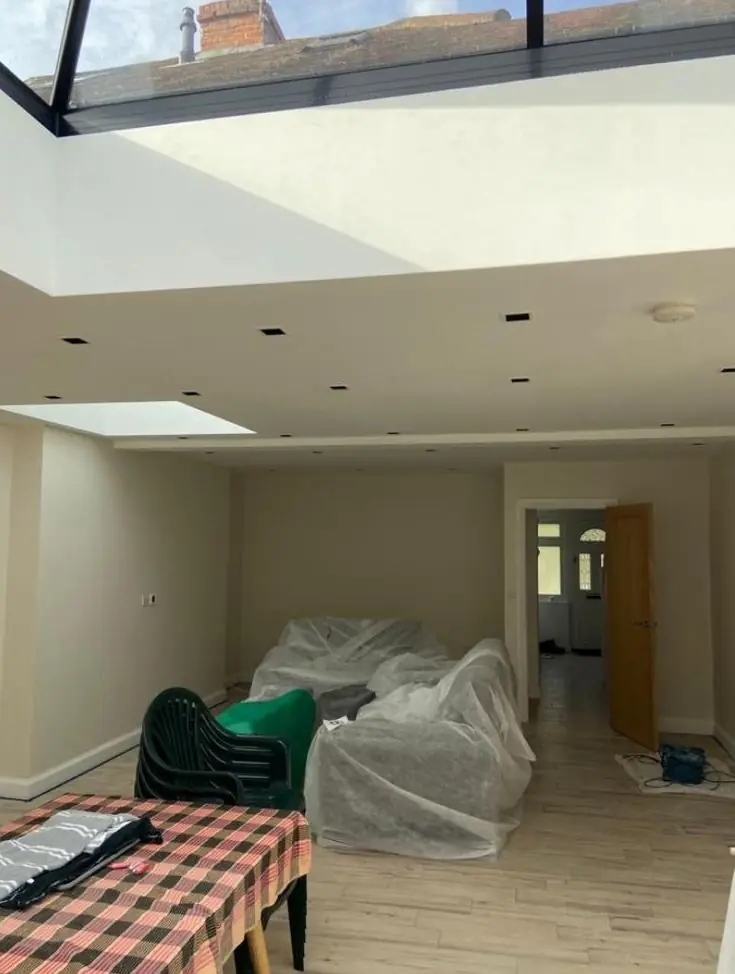
Dean mist-coats and decorates new plaster in extensions, loft conversions and replastered rooms in Roade, the village about 5.4 miles south of Northampton town centre. Modern gypsum on the western estates takes a diluted emulsion mist coat. Where new work meets old lime in the stone cottages, both surfaces need a breathable paint.
Where fresh plaster turns up in Roade
Most new plastering in Roade happens in the 20th-century housing west of the A508: single-storey rear extensions, garage conversions, loft rooms and replastered walls after rewiring. The plaster is gypsum on board or blockwork, and painting it follows a set routine. You let it dry fully, apply a mist coat that soaks into the porous surface, then put the finish coats on top.
The eastern side of the village is a different case. The late 17th- and 18th-century houses around High Street, Memorial Green and Hartwell Road are built of coursed limestone rubble, and their original walls are often lime plaster. When one of these houses gets a kitchen extension or a room is part-replastered, new gypsum can end up next to centuries-old lime, sometimes in the same wall.
Joining gypsum to lime in the stone cottages
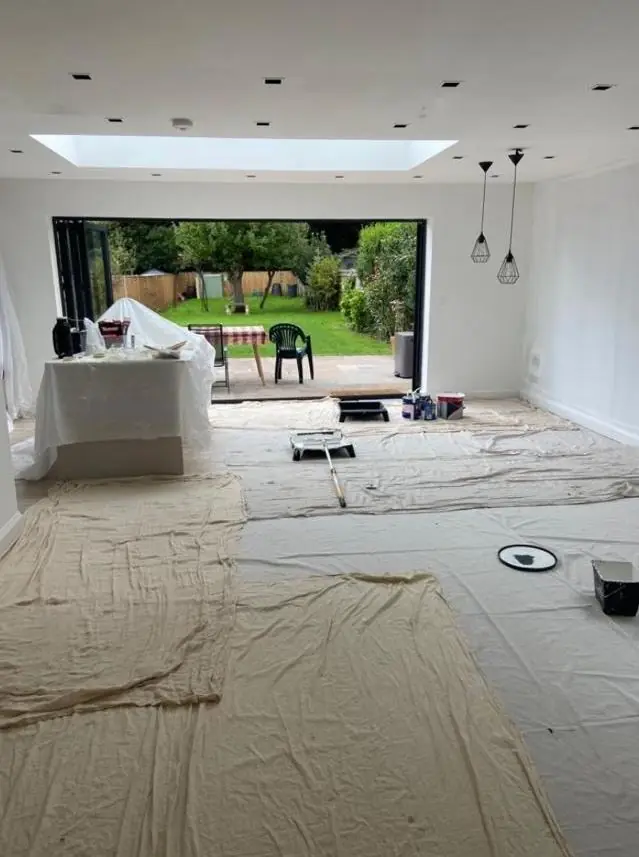
Lime plaster lets moisture pass through it, and a thick limestone wall depends on that. Gypsum skim with a modern vinyl emulsion on top acts more like a seal. If one paint system covers both, one of them suffers. Either the lime wall holds damp under a plastic film, or the new plaster gets a paint it doesn’t need.
- On original lime walls we use a breathable mineral or clay paint, without a vinyl mist coat.
- On new gypsum in the extension, a standard diluted contract-matt mist coat is fine.
- Where the two meet, we keep the finish breathable across the joint, so the new wall doesn’t look different from the old one once both are painted.
Hairline cracks often open along the line where new plaster meets old. We cut those out and fill with a flexible filler before the top coats rather than painting over them. If the cottage is one of Roade’s listed buildings, the plastering may have been agreed with the council, and we keep to any finish that was specified.
Loft rooms and extensions on the western closes
In closes like Manor Close or Wallwin Close, a loft conversion adds a lot of new plaster at once: sloping ceilings, dormer cheeks, a new stairwell. Sloped ceilings show every patch of uneven absorption, so getting the mist coat right matters most there. We thin a trade matt as the manufacturer directs, put it on evenly, and check the surface in raking light before the second coat.
The full method, including why a vinyl or silk emulsion should never go straight onto bare plaster, is covered on our new plaster and extension painting page and in the guide to mist coating new plaster.
How long to wait before we paint
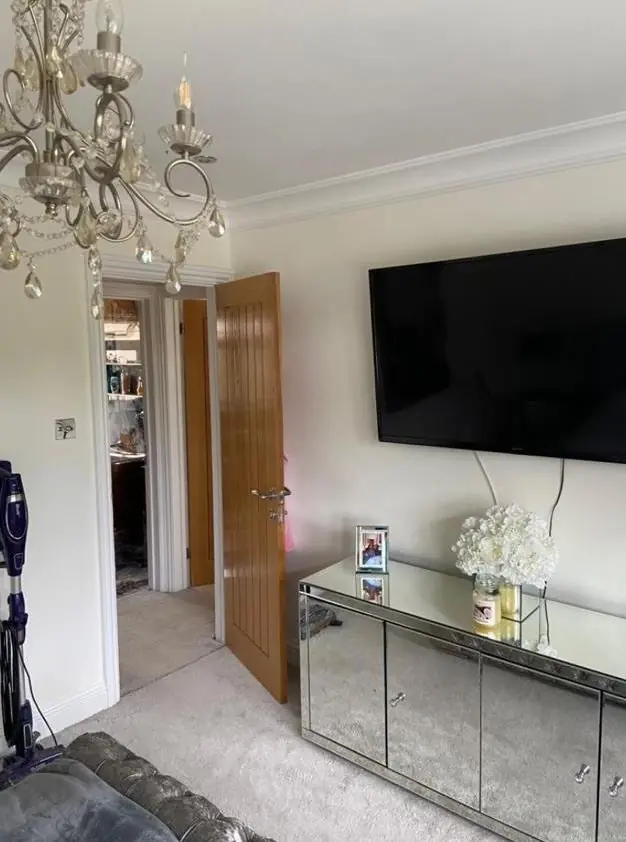
A new skim usually needs around a week of good drying conditions to change from dark pink to an even pale colour. Thicker backing coats, or plaster on solid stone walls in the older cottages, can take a lot longer. That is especially true in a cold extension, before the heating is on. We check the colour and feel of the plaster before we come, and if it isn’t ready we’ll say so and not paint over damp patches. Running the heating gently and opening a window each day speeds the drying more than blasting heat at the wall, which can crack a fresh skim.
If your builder is finishing in Roade and wants a decorator lined up, give us their expected handover date and we’ll plan around it. More about the village is on our Roade area page.
Last updated by Dean, DH Painter & Decorator.