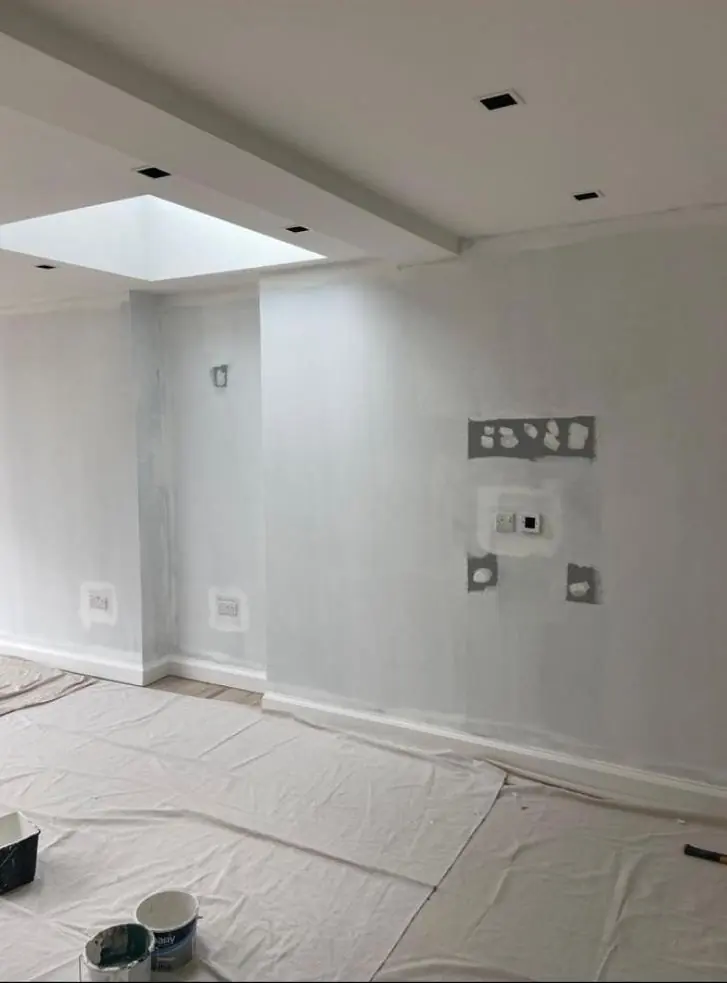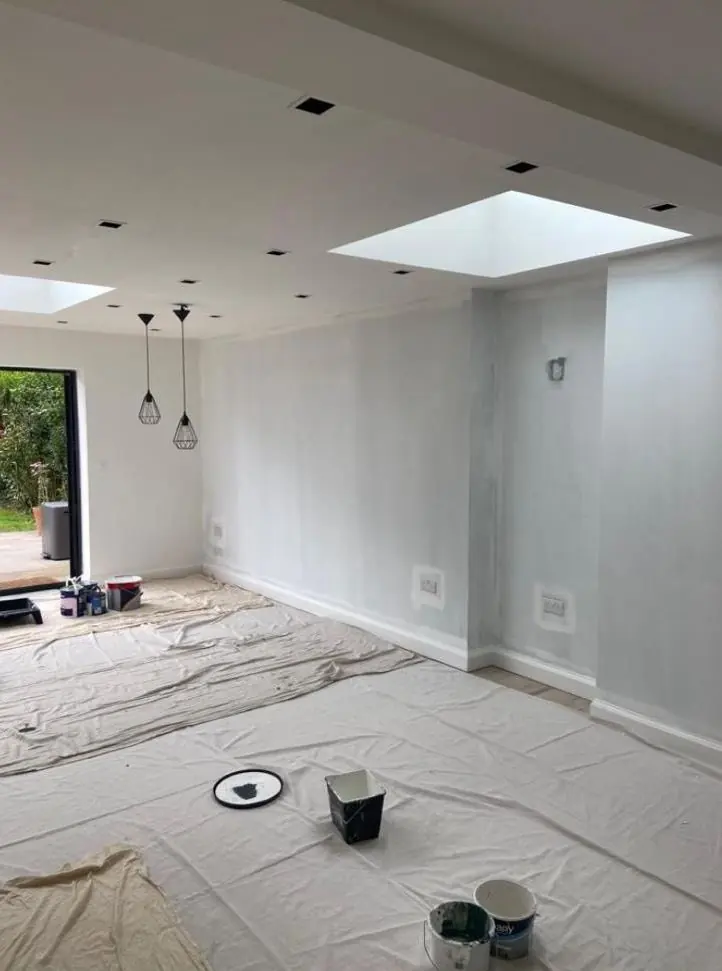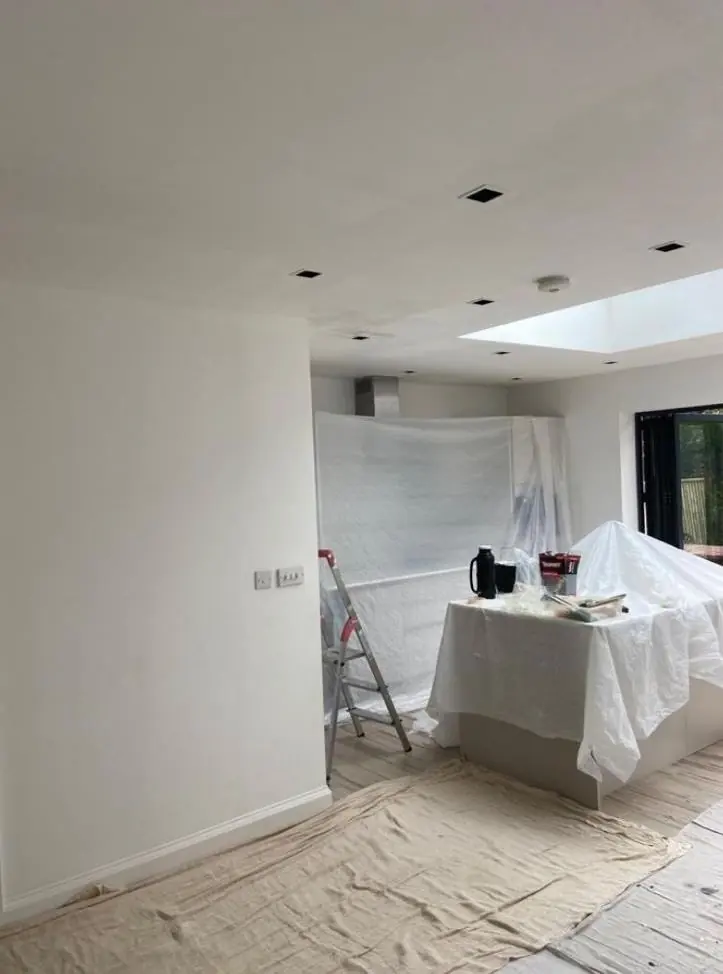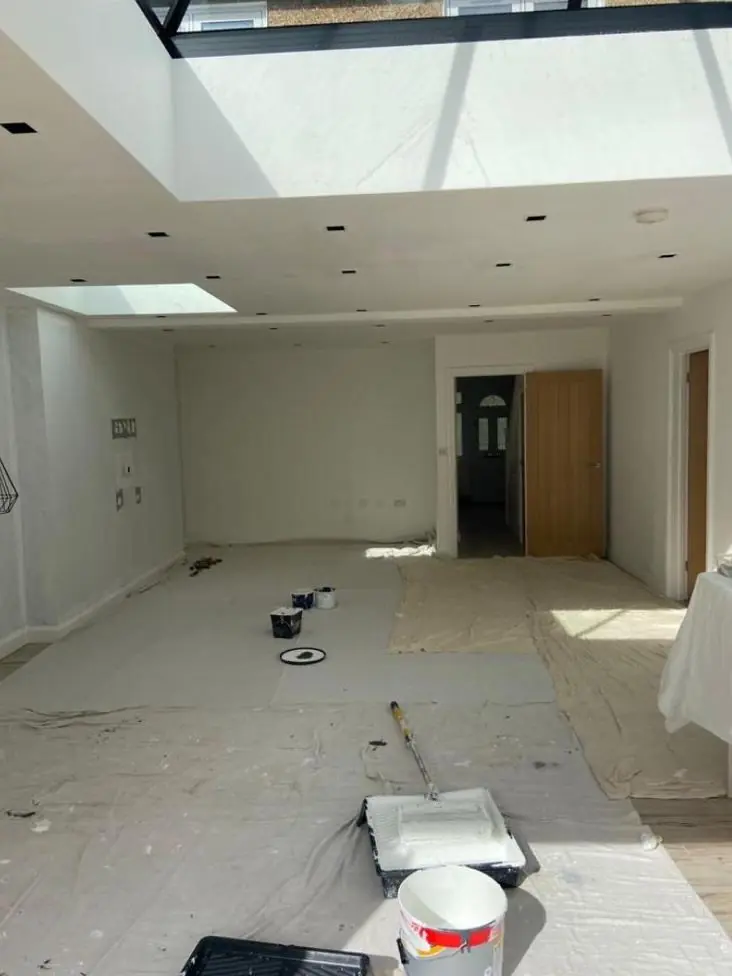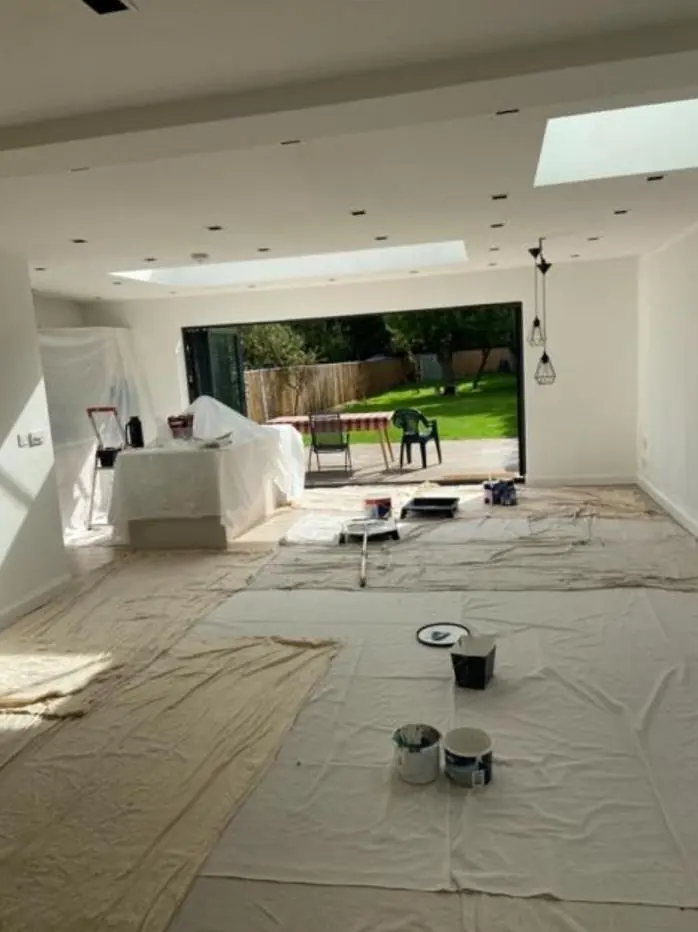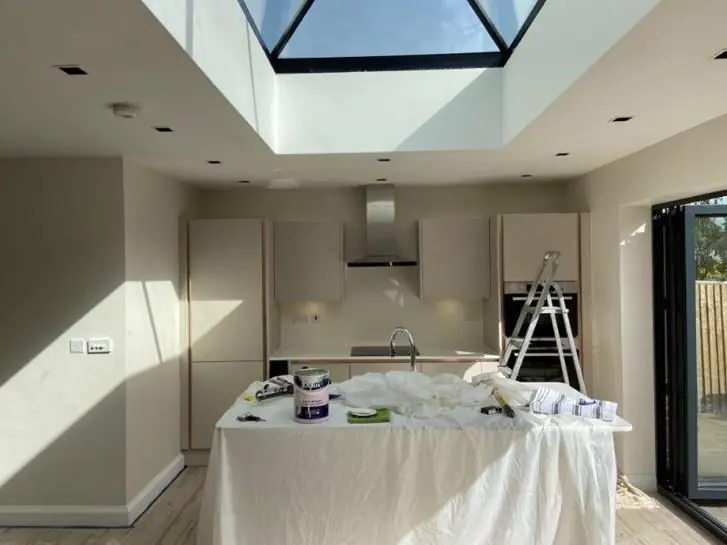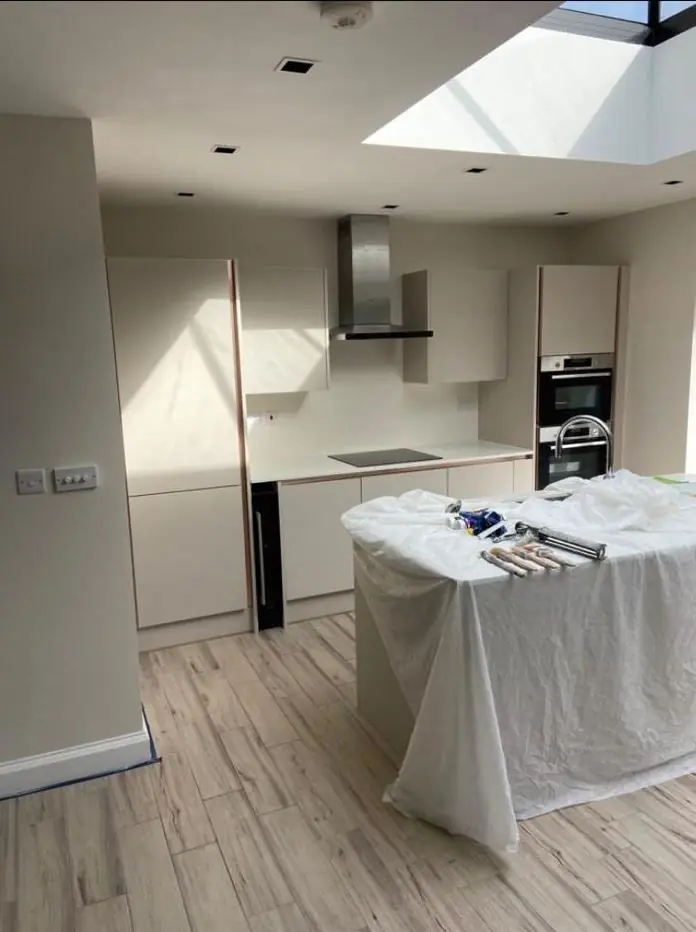
Dean paints freshly plastered walls and ceilings in Collingtree, south Northampton, 3 miles from the centre, after loft conversions, extensions and replastering. New gypsum plaster needs a diluted mist coat and the right drying time, and in the village's older stone houses it often has to meet original lime plaster.
Where fresh plaster appears in Collingtree
The planning record for Collingtree shows the usual kinds of household change: loft conversions and extensions, including an application for a loft conversion over a garage on Chestnut Avenue. Outside the listed High Street, the later houses around Chestnut Avenue, Ash Lane, Spinney Drive and Sargeants Lane and the large golf-side homes of Collingtree Park are where such changes are least constrained. Every one of those projects ends with bare pink plaster that the builder hands over for decorating, and how it is treated in the first weeks decides how the walls look for years.
Bare gypsum: the first coats
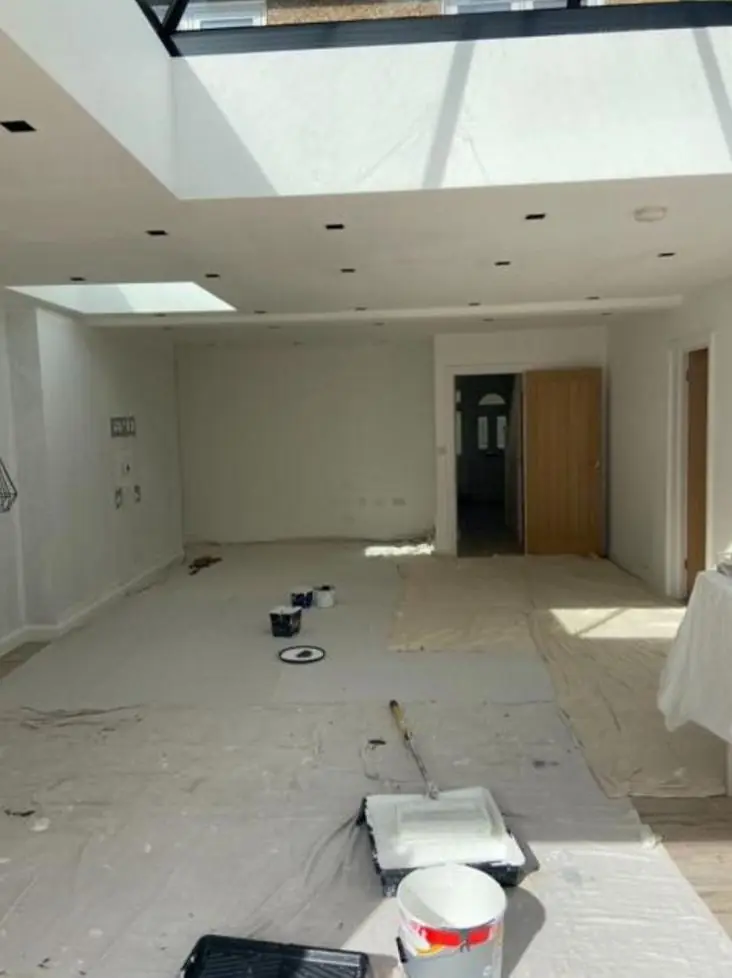
Fresh skim coat is porous and still drying when the plasterer leaves. Paint it too soon, or with a full-strength vinyl emulsion, and the paint skins on the surface without soaking in, then peels away in sheets. Our sequence for a new room in a Collingtree loft or extension is:
- Wait until the plaster has turned an even pale colour with no darker damp patches, which usually takes from several days to a few weeks depending on thickness, heating and season.
- Apply a mist coat of thinned contract matt, or a dedicated new-plaster primer, so it soaks into the surface.
- Fill any small dings and fine cracks around beads and corners once the mist coat shows them up, then sand.
- Finish with two full coats in the chosen colour and sheen.
Our mist coat guide goes into the reasons in more detail.
Loft rooms and garage conversions
Loft conversions bring sloping ceilings, dormer reveals and lots of plasterboard joints meeting at awkward angles. Under a roof the room warms and cools quickly, so we keep an eye on drying conditions and avoid painting a new loft in a heatwave or a cold snap. A room built over a garage, like the Chestnut Avenue example, usually has new plasterboard ceilings and walls throughout, plus new skirtings and door linings in bare timber, which need knotting and priming before they meet the paint system on the walls.
When new plaster meets an old stone house
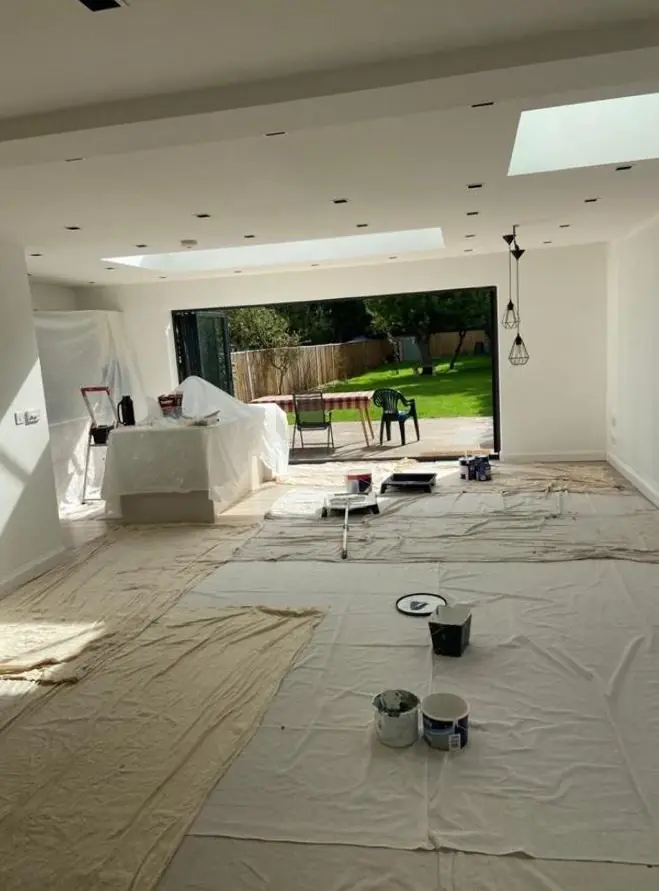
The listed High Street houses are built of limestone and ironstone rubble, and many of their inside walls still carry lime plaster. When an extension or repair adds gypsum plaster next to old lime work, the two behave differently. Lime is soft, flexible and lets moisture pass, while gypsum is harder and suits only dry conditions. Where they meet, we fill the junction with a flexible material and paint the old wall with a breathable finish, even if the new plaster takes a standard emulsion. If a whole room has been replastered in lime, it is treated as a lime wall: a breathable mineral or clay paint, applied once the lime has fully carbonated, which takes far longer than gypsum.
Ten buildings in the Collingtree Conservation Area are listed. Works that affect their fabric, such as replacing lime plaster with gypsum, may need listed building consent, so that question should be settled with West Northamptonshire Council before the plasterer arrives rather than at the decorating stage.
Handover from the builder
We are happy to coordinate with your builder on timing, so the mist coat goes on once the plaster is ready and before flooring and kitchen units are fitted. Along the High Street, which goes nowhere and is walled in stone along the frontages, builders’ skips and our van can compete for space, so it helps to know the site plan in advance. The full process is set out on our new plaster and extension painting page.
Last updated by Dean, DH Painter & Decorator.