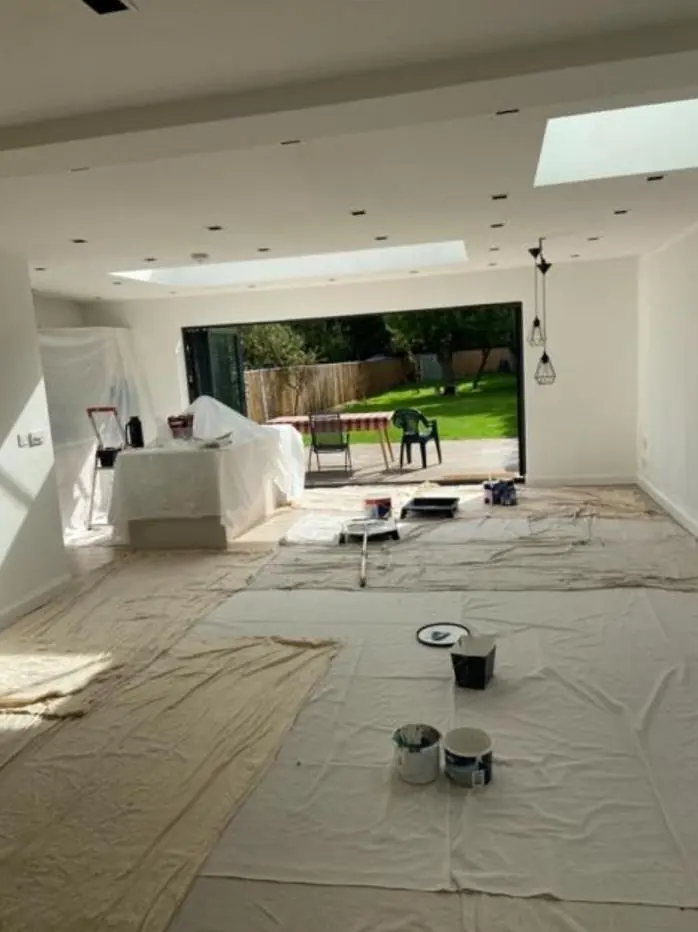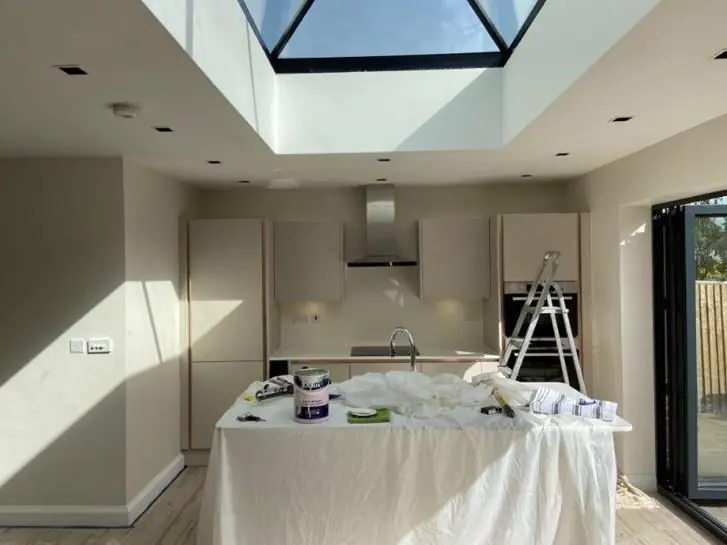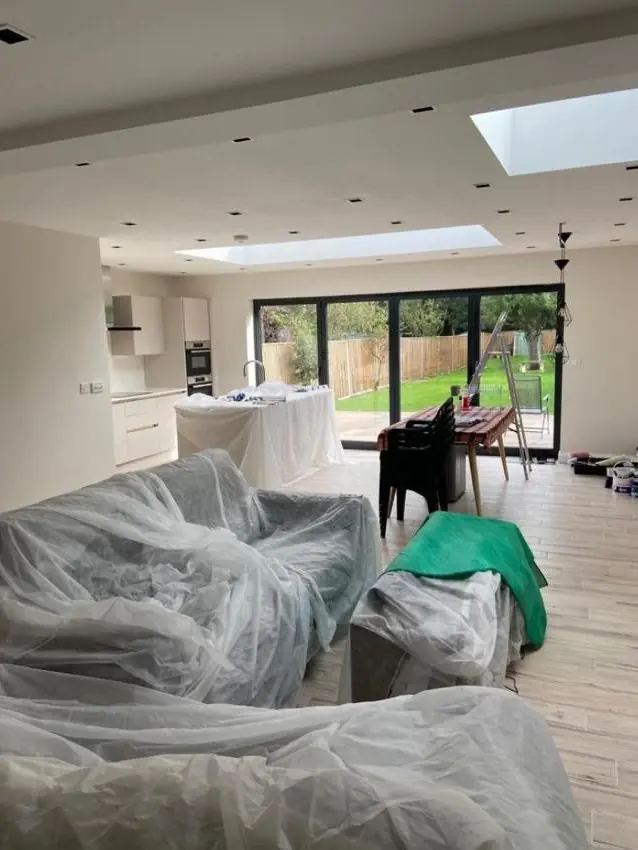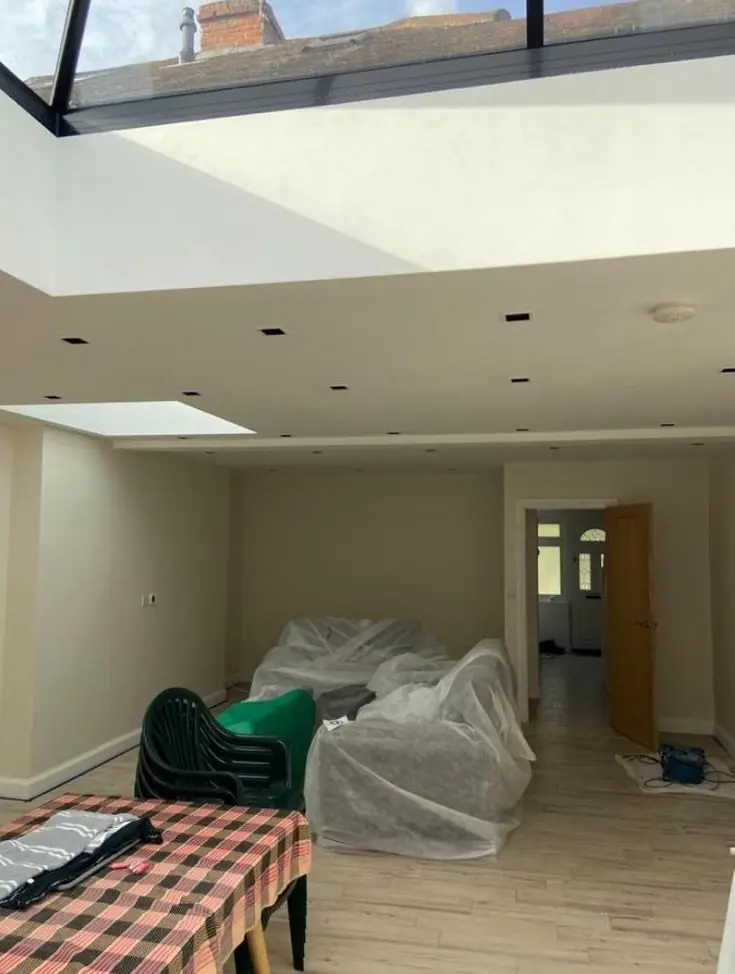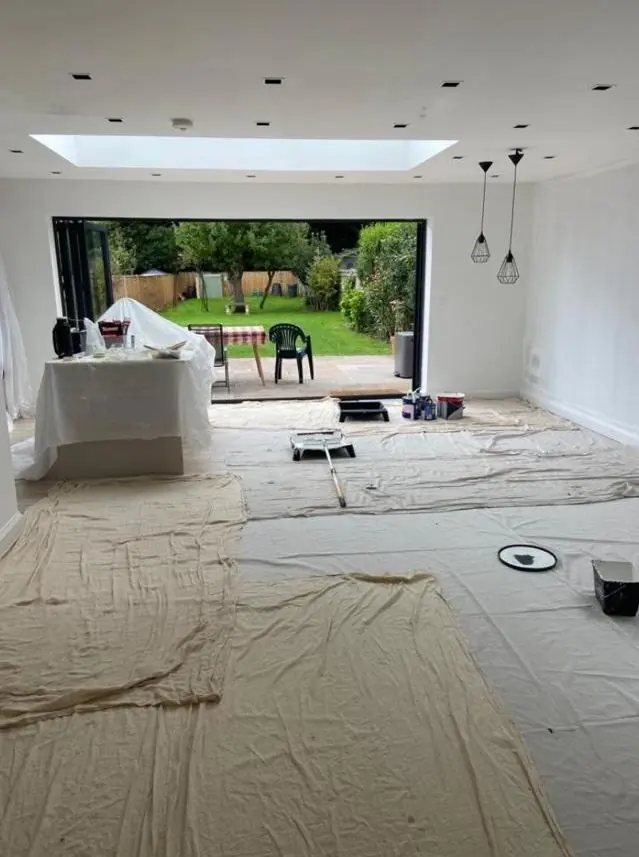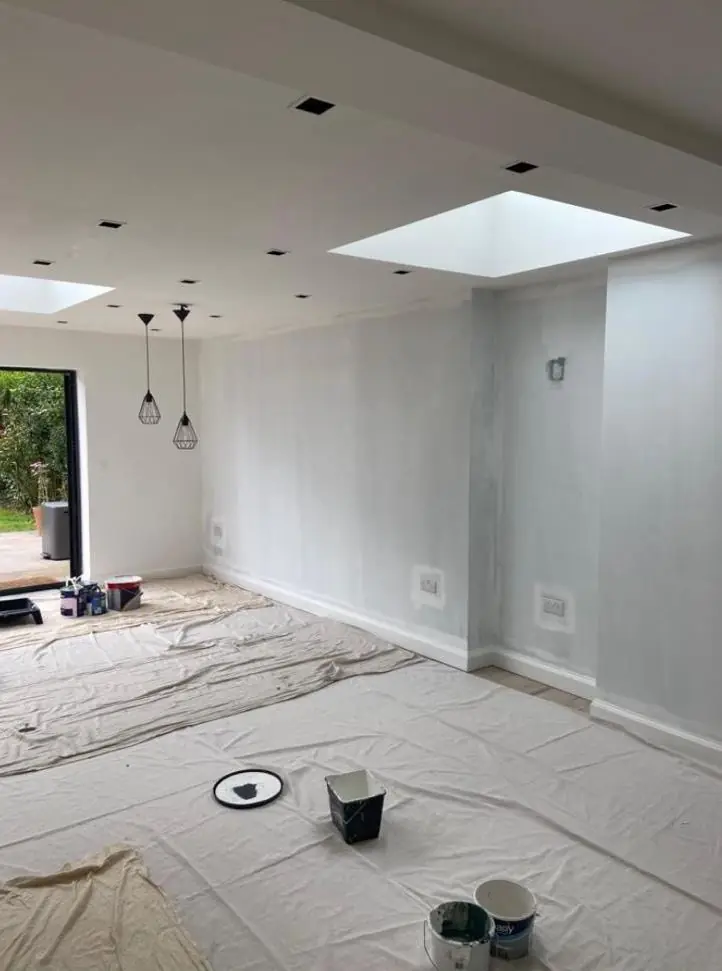
DH Painter & Decorator paints new plaster, extensions and re-skimmed rooms in East Hunsbury, NN4. Dean is based in Northampton, about 1.9 miles away, and quotes free for the mist coat and full decoration once your plasterer or builder has finished.
Three ways new plaster ends up on East Hunsbury walls
Bare plaster appears in this suburb for some fairly specific reasons, and each one changes how the job is handled.
- Extensions and sun rooms. The 1980s and 1990s houses here have reached the age when owners extend into the garden, and sales listings for homes on streets such as Thames Road and Stanford Way mention conservatories and sun rooms already added.
- Conservatory conversions. Swapping a glazed conservatory roof for a solid, insulated one leaves a new plasterboard ceiling and often new plastered walls.
- Repairs after surface-water flooding. Parts of East Hunsbury sit low in old natural valleys running down to Wootton Brook. A parish flood study records flooding to properties on Lichfield Drive in 2005 and 2007 and to properties on Marlowe Close, and some ground floors have been dried out and replastered since.
After a flood: let the wall finish drying
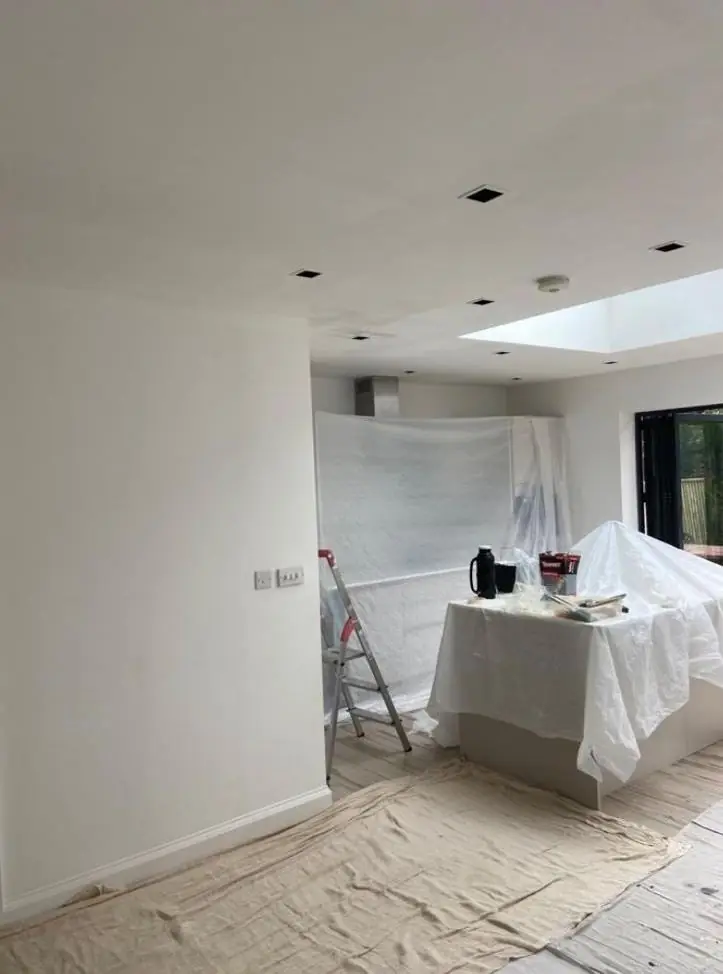
Replastering after water damage is where patience matters most. The new skim may look dry within days, but the blockwork or brick behind it can hold moisture for much longer, and as it dries it pushes salts and damp through to the surface. Paint applied too early can blister, or white powdery salt deposits can appear through the finish.
Before any paint goes on, we check the walls with a moisture meter, not just the colour of the plaster, and look along the base of the wall for tide marks or salts. Some flood repairs use sand and cement or lime-based plasters instead of gypsum because they cope better with future wetting. Those take longer to cure and need a breathable paint system, so it helps to tell us what the plasterer used. If walls are still damp we will say so and come back rather than seal moisture in.
Conservatory conversions and sun rooms
A converted conservatory is a room with a lot of glass on three sides, and that brings its own points to watch:
- Strong sun on fresh plaster can make it dry unevenly, so the mist coat goes on when the whole surface has reached the same pale colour, not when the sunny side looks ready.
- New ceilings in these rooms are often plasterboard with taped or skimmed joints, which need checking for cracking at the joints after the first coat.
- The plaster usually meets white uPVC frames on every wall, so cutting in has to be precise and the frames protected throughout.
- Rooms with a lot of glazing can suffer condensation in winter, which is worth sorting with ventilation before decorating.
Mist coat, snagging and finish
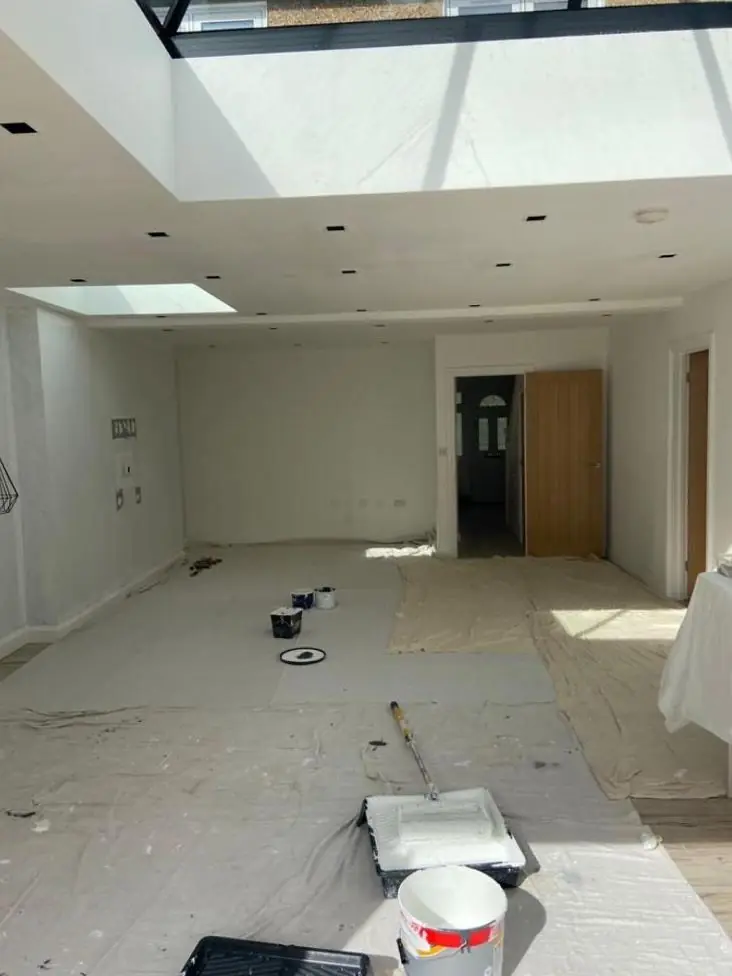
Once the plaster is dry, it gets a mist coat: a thinned contract matt or a dedicated new-plaster primer that soaks in and gives later coats a sound base. That first coat shows every hairline crack and trowel mark, so we fill, sand and spot-prime before two finish coats. New skirtings, architraves and doors in an extension are sealed and painted at the same stage. Our mist coat guide explains why this step matters, and the main new plaster and extension page sets out what a full extension quote includes.
With driveways at most houses, materials and equipment can stay on site without parking problems, and we can fit in between the plasterer leaving and the floor or kitchen going in. More about the area is on our East Hunsbury page.
Last updated by Dean, DH Painter & Decorator.