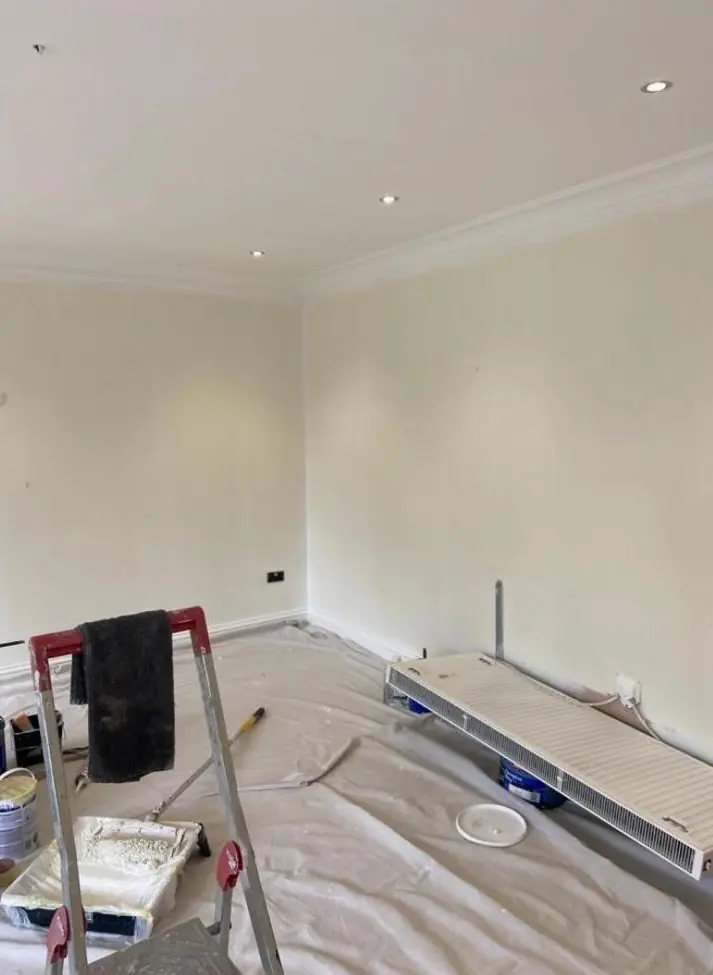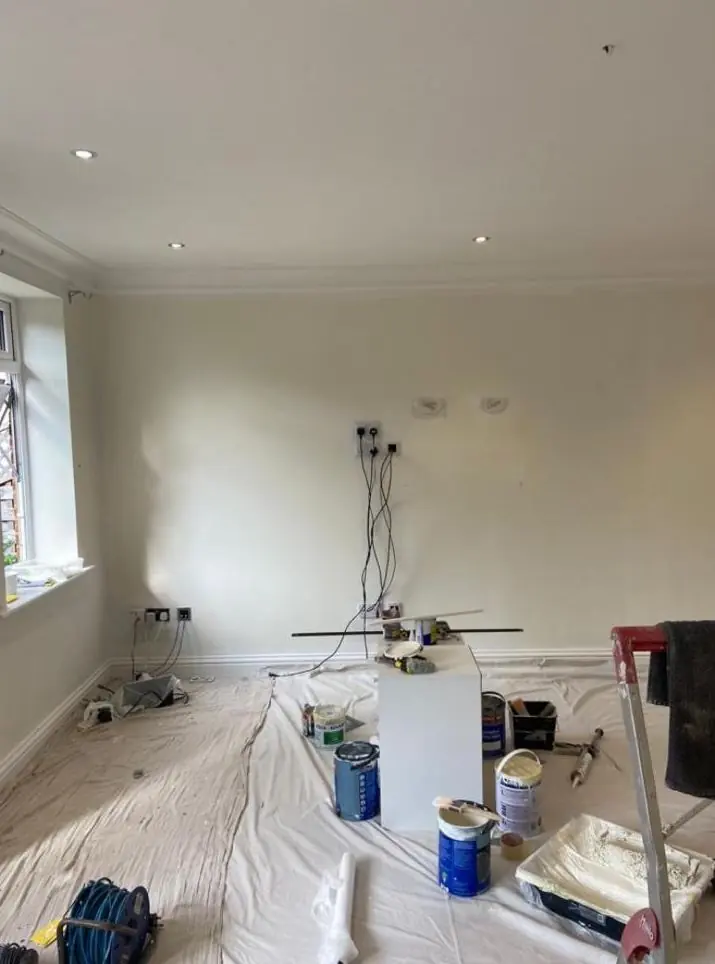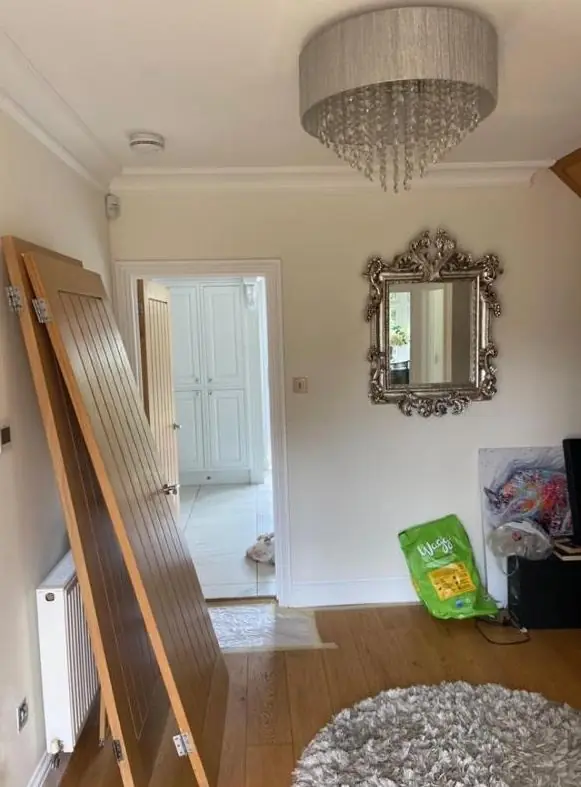
We hang wallpaper and lining paper in Milton Malsor, a conservation village about 3.2 miles south-west of Northampton. In the older ironstone cottages Dean usually lines the walls before a decorative paper goes on, while the infill houses have flatter plaster that takes paper more directly.
Why most cottage walls here are lined before papering
A large part of Milton Malsor is a conservation area of coursed ironstone and limestone cottages, many from the 17th and 18th centuries. Walls inside houses of that age are usually lime plaster laid over rubble stone. They are rarely flat or square, and the surface can be patchy where repairs have been made over the years. A decorative paper hung straight onto that shows every hollow, and the joins open where the wall moves.
Lining paper hung across the wall evens out the surface, gives the paste something consistent to grip and spreads small movements so the seams of the top paper stay tight. On walls with a lot of old repairs, Dean may suggest a thicker lining grade. In a cottage that has already been papered several times, stripping back to sound plaster comes first, because layers of old paper on soft lime can pull away in sheets once wetted.
Pattern, beams and walls that lean
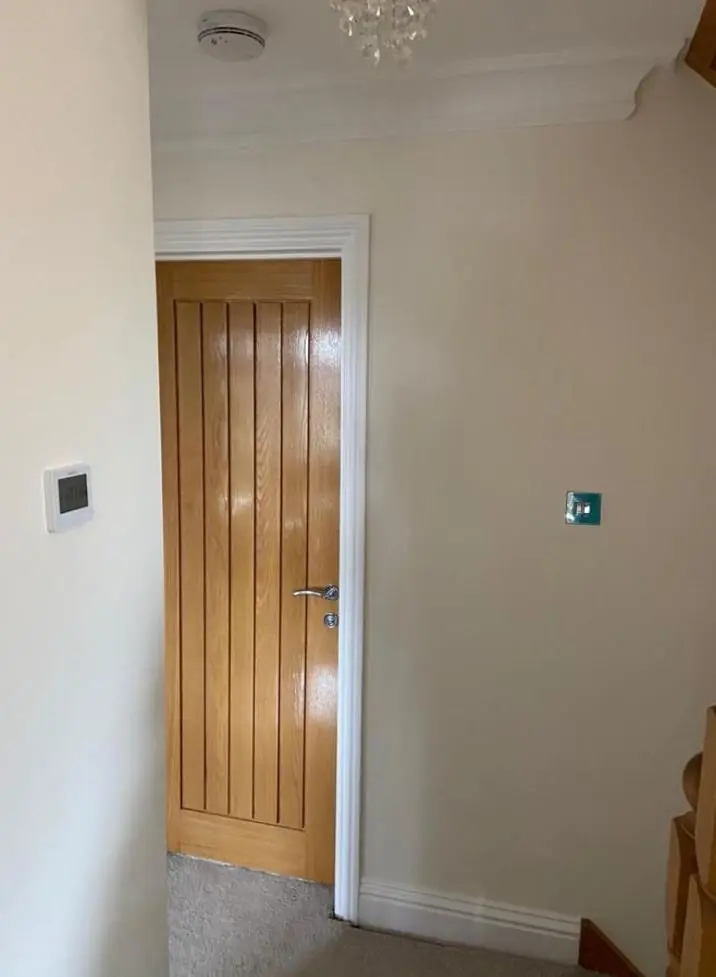
In rooms with beams and low ceilings, a strong pattern makes every out-of-true line stand out. A pattern that runs level across a leaning beam looks crooked, and a stripe hung truly plumb on a leaning wall shows the lean against the corner. In older Milton Malsor houses we often suggest one of these:
- A small, loose or random pattern that hides slight drops and twists.
- Plain textured or grasscloth-style papers, which need no matching across uneven corners.
- Keeping bold designs to one flatter wall, such as a chimney breast or a partition, and painting the rest.
Deep window reveals in thick stone walls also take careful planning, because returns and soffits need cutting and wrapping neatly. We plan where the first length goes so the pattern is centred where your eye lands, not where the wall happens to start.
Damp ground and choosing the right paper
The village is built on mainly sandy soil, and a stream runs through it and The Dip field. It flooded in 1998, causing minor damage. Old solid walls on ground like that can hold moisture, especially low down on ground floors. Heavy vinyl papers form a skin that stops the wall drying, and that can lead to mould behind the paper or seams lifting.
On older walls we lean towards breathable papers, such as traditional pulp papers or suitable non-wovens, with the right paste. If a wall is damp when we check it, we say so and recommend leaving it to dry or having the cause looked at before papering. Paper put up on a wet wall usually has to come down again.
Smoother plaster in the infill homes
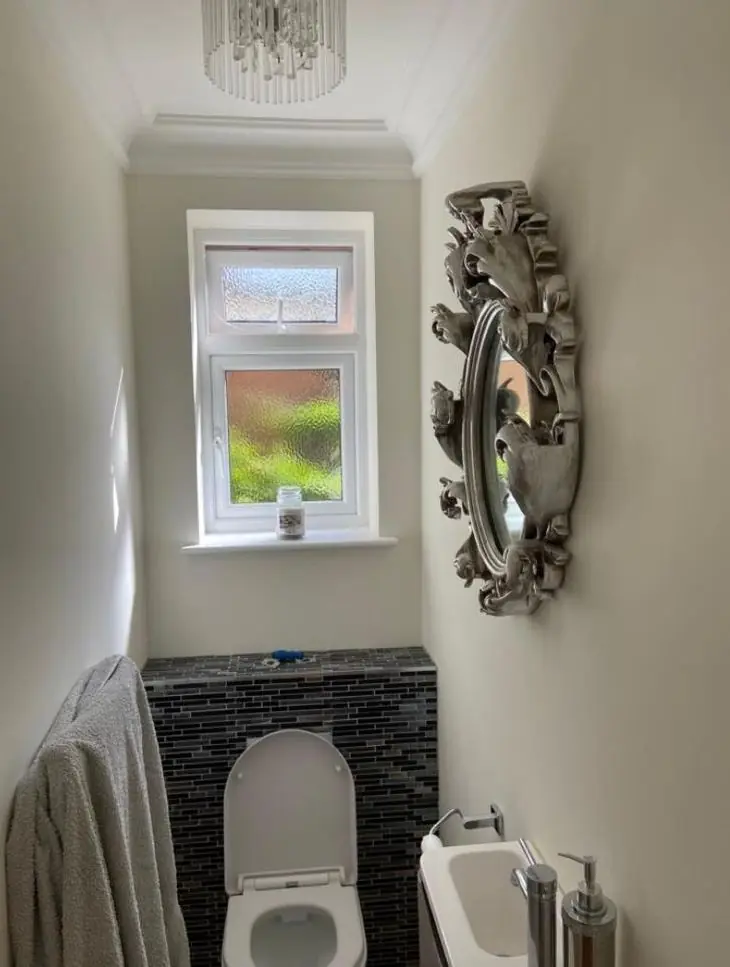
Development in Milton Malsor is limited to infill within the village boundary. Those newer homes, and extensions on older ones, have modern plaster or plasterboard, so papering is closer to straightforward. New plaster still needs to be fully dry and sealed with a size or primer first, or the paste soaks in unevenly and the paper is hard to slide into place.
Our main wallpaper hanging page covers stripping, the paper types we hang and how a job runs. For general advice on picking someone for this kind of work, read how to choose a painter and decorator. You can also go back to the Milton Malsor overview. To book a visit, call Dean on 07539 779 036.
Last updated by Dean, DH Painter & Decorator.