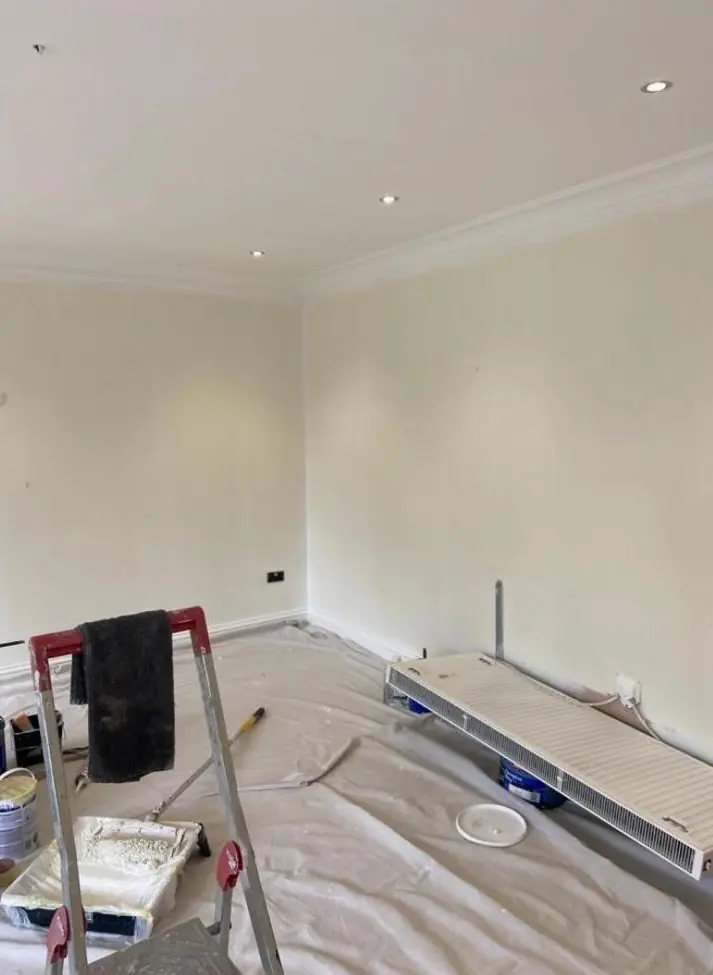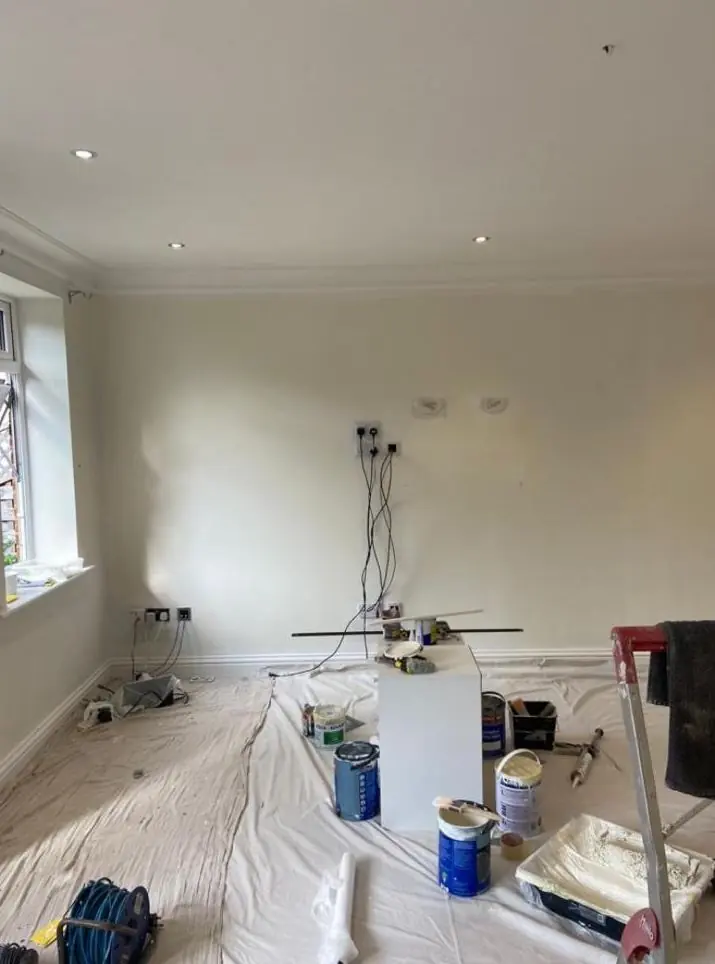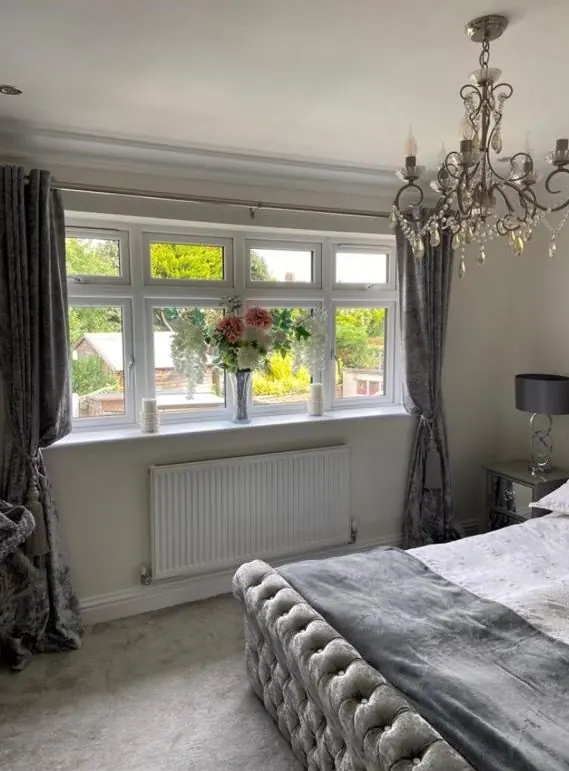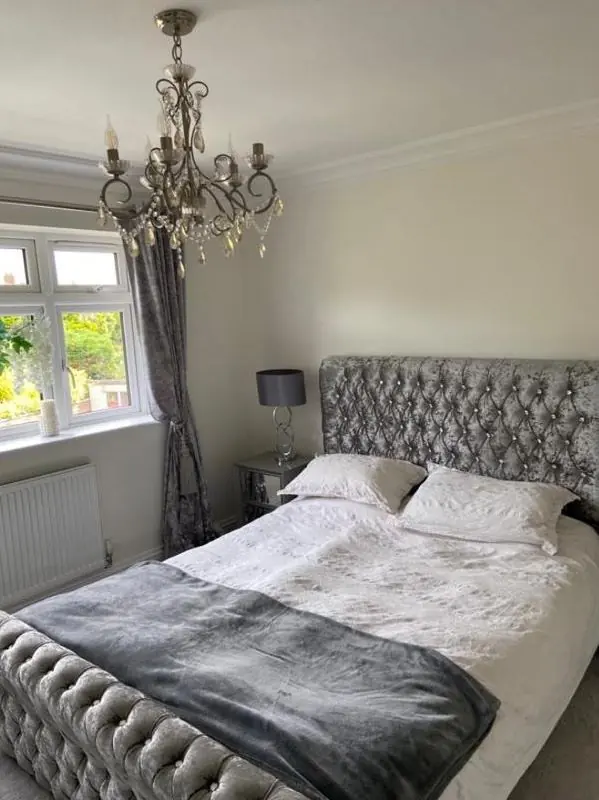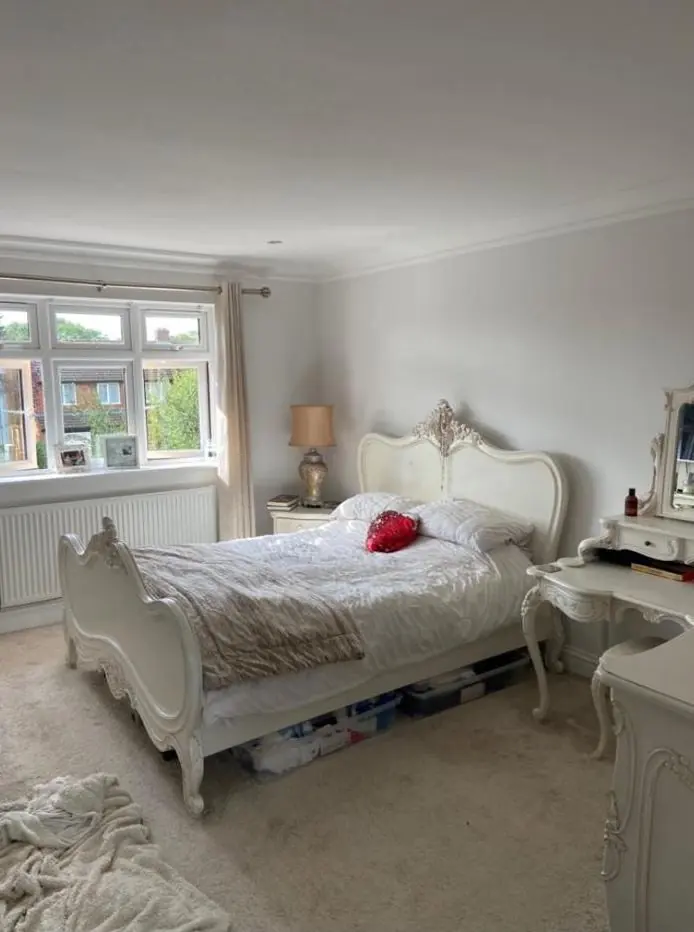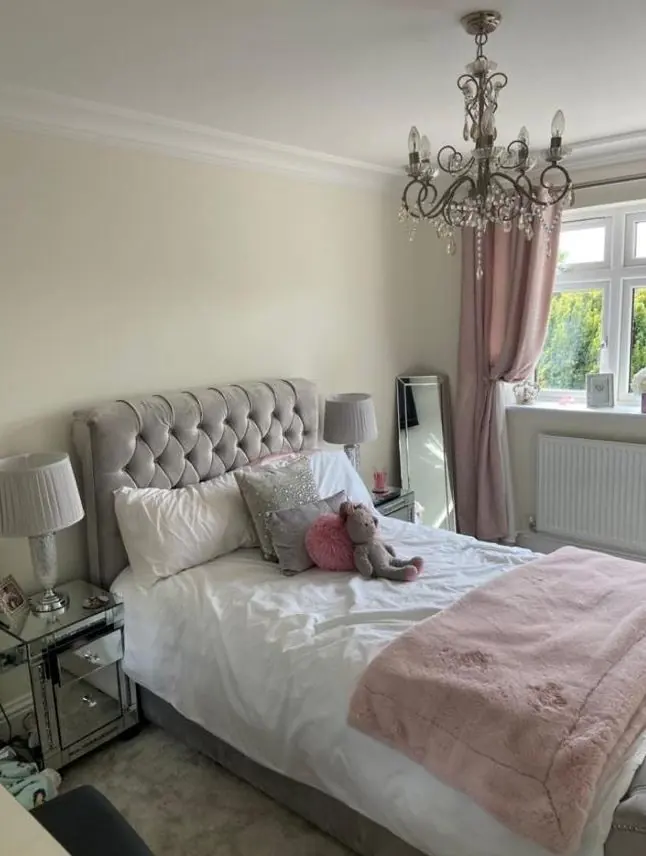
We hang wallpaper and lining paper in Wootton (NN4), about 2.4 miles south of Northampton town centre. In the conservation-area cottages that means lining first and choosing patterns that hide crooked walls; on the modern estates it is mostly feature walls and full rooms on flatter plaster.
Hanging paper where nothing is square
Most of Wootton’s historic houses date from the late 17th or early 18th century, built of coursed rubble in ironstone and limestone. The inner faces of those walls were plastered by hand over uneven stone, so a wall can lean, bow between its corners and meet a ceiling that dips under an old beam or a dormer. Paper shows all of that. A plumb line in a cottage on Green Lane or Church Hill might hang true while the corner beside it drifts away, and a pattern with a horizontal repeat will expose a sloping ceiling within a few lengths.
We set out each room from its most visible point, usually the chimney breast or the wall facing the door, and arrange for any unavoidable mismatch to fall in the least noticed corner: behind a door, above a cupboard or into a shadowed recess.
Lining paper over lime plaster
Lime plaster on a solid stone wall moves moisture in and out, and in Wootton the water table is close to the surface. That changes the choice of paper as well as how it goes up.
- Lining paper is hung horizontally first, so its joints never line up with the decorative paper’s seams.
- Breathable papers, such as traditional pulp and many non-wovens, are a safer choice on these walls than heavy vinyls, which can trap damp behind them.
- Loose or hollow plaster is repaired before anything is hung, because paper pulls weak plaster away as it shrinks while drying.
- If a wall is visibly damp, we hold off rather than hang paper that will lift at the seams.
If the house is one of the 25 listed buildings in the conservation area, check with the council before removing old finishes. New paper over sound lining is usually a reversible change, while stripping historic surfaces may not be.
Patterns that forgive a crooked room
In cottages with low ceilings and wandering walls, the choice of design matters as much as the hanging. Small, random or free-match patterns, soft textured papers and designs without strong horizontal bands are easy on the eye in an out-of-true room. Large geometrics, stripes and tight trellis prints are the hardest, because they draw a straight line beside every imperfection. If you have your heart set on a stripe in an attic room under a steep former-thatch roof, we will agree where it starts and finishes before the first length is cut. Dormer cheeks and the sloping ceilings of attic rooms are often better painted in a colour taken from the paper, so the pattern stops at a clean line instead of chasing every angle.
Feature walls in the newer homes
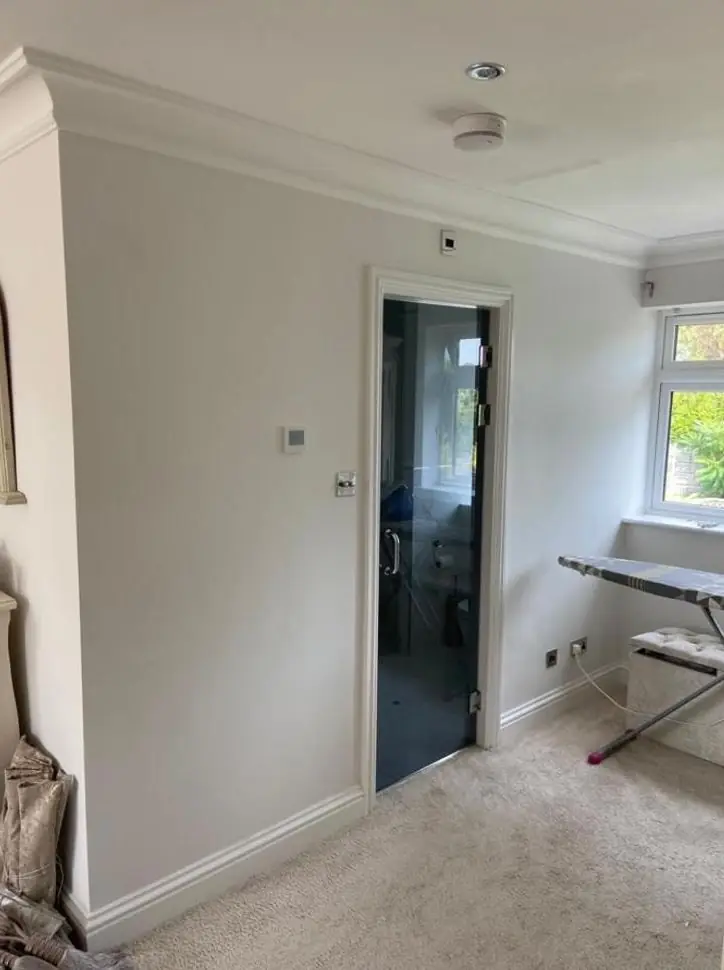
Across Wootton Fields, Simpson Manor and the townhouse streets, walls are flatter and the work is different. A bold paper on the chimney breast or behind the bed, a papered back wall in a lounge-diner, or a full room in a heavier designer paper are typical on modern plaster. In three-storey townhouses, papering the stairwell means working from a platform over two flights, and we plan the drops so joins do not land at eye level on the landing.
Full details of what our paperhanging includes are on the wallpaper hanging service page, and the Wootton overview lists everything else we cover in the parish. For what affects the cost of a room, see the decorating cost guide.
Last updated by Dean, DH Painter & Decorator.