We hang wallpaper in East Hunsbury (NN4), the estate suburb just under two miles south of central Northampton. Dean strips old woodchip and lining paper, repairs and lines the walls, and hangs feature walls or full rooms in the suburb's 1980s and 1990s detached and semi-detached houses.
Woodchip first, wallpaper second
Woodchip was common in British houses of the 1980s, and in East Hunsbury it can still survive under several coats of emulsion on a lounge wall, a landing or a back bedroom. Before any new paper can go up, it has to come off. Painted woodchip resists water, so we score it and use a steamer to soften the paste, working a section at a time. The aim is to protect the plasterboard face underneath, because many walls in houses of this age are dry-lined, and plasterboard tears if the paper is pulled too hard.
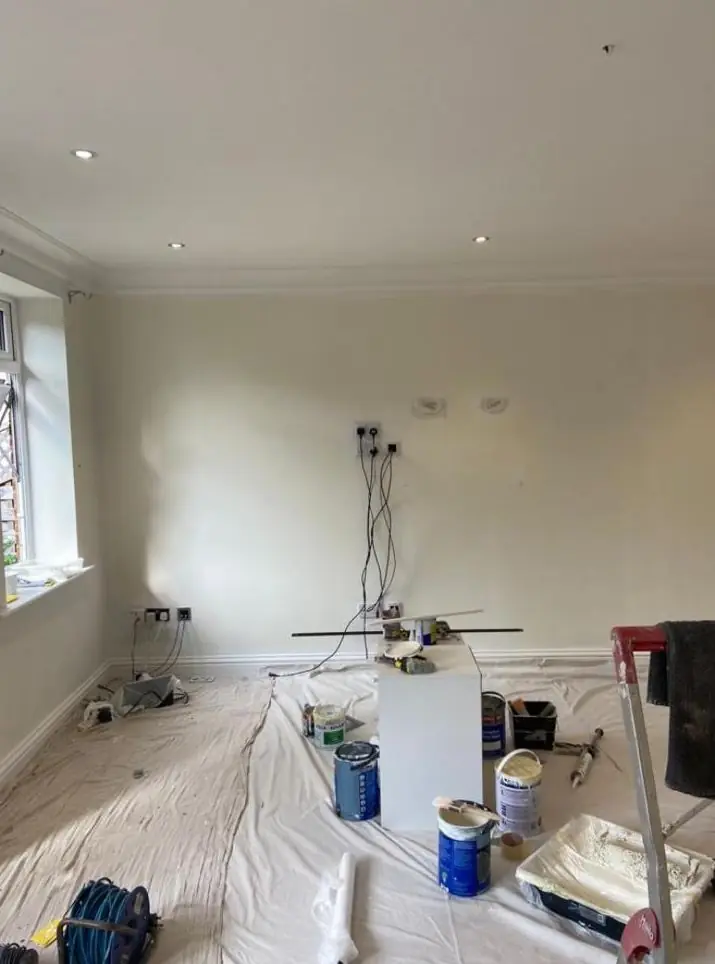
Once the walls are stripped, there’s usually some making good to do: small tears in the board’s paper face need sealing, and dents and old fixing holes need filling and sanding. On plasterboard walls we often hang a lining paper first. It gives an even surface for the decorative paper, and the next time the room is redecorated, the paper will come away without damaging the board.
Feature walls in estate lounges and bedrooms
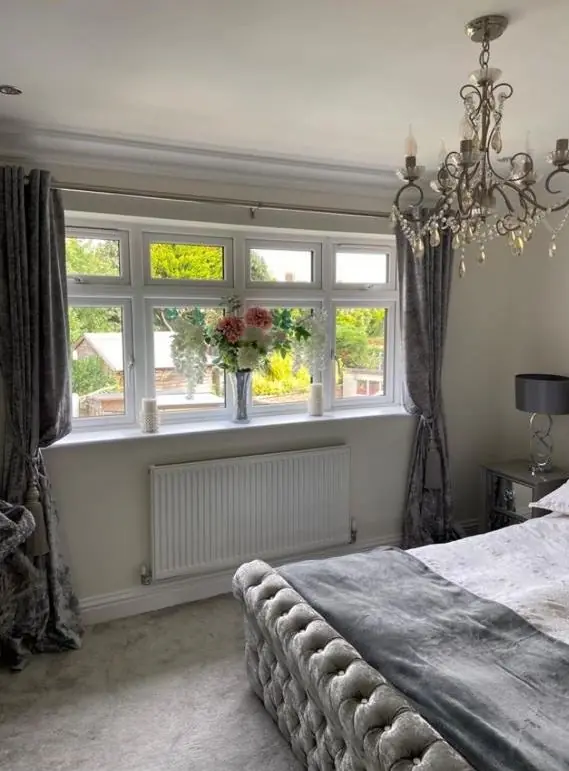
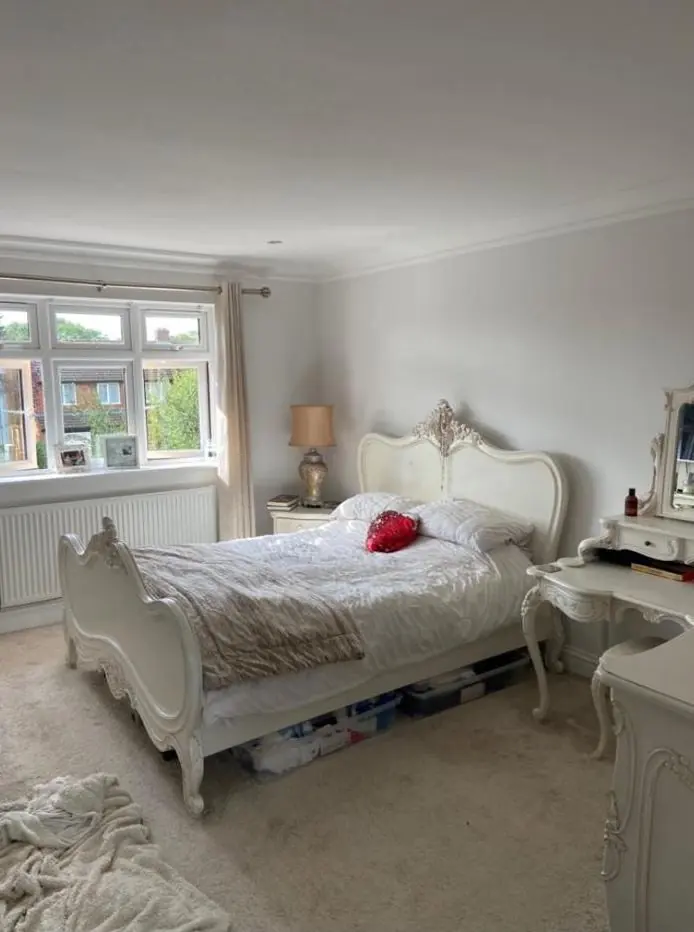
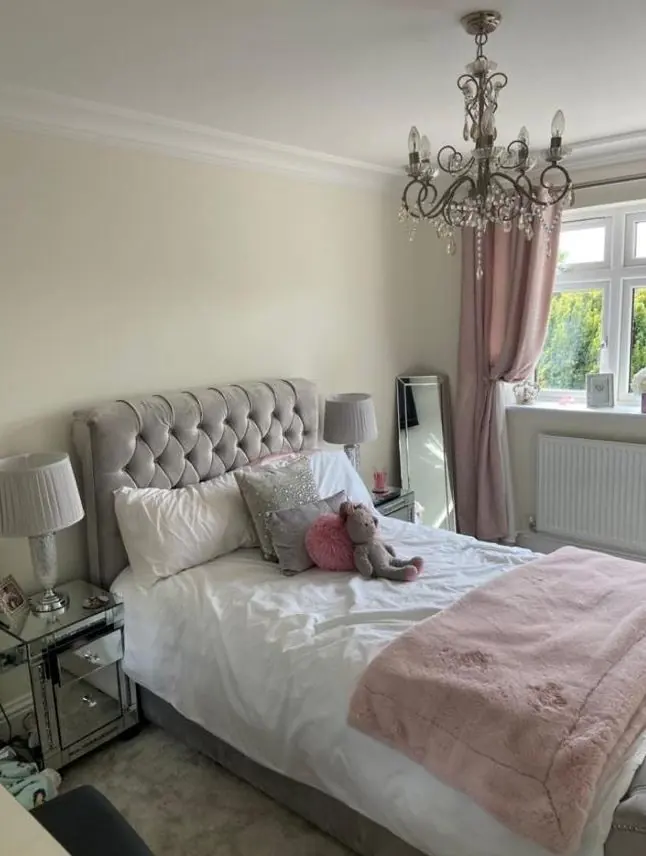
In East Hunsbury’s estate houses, wallpaper usually means a single wall rather than a whole room: behind the bed in the main bedroom, the end wall of a lounge-diner, or the wall facing you as you come through the front door. These homes have standard ceiling heights and fairly regular room shapes, which suits a bold pattern because there’s less trimming around awkward angles. That still leaves the details that make or break a feature wall:
- Where the first drop goes. On a lounge wall, the pattern should be centred on the window or the main feature, not just started in a corner.
- How the pattern meets the ceiling line. Houses settle, so a ceiling may not be quite level, and a large repeat makes that obvious. We set the drop so the pattern runs true to the eye.
- Light switches and sockets. Every cut-out on a busy pattern needs care, and on a feature wall the cut-outs sit in plain view.
Bigger rooms in the detached houses
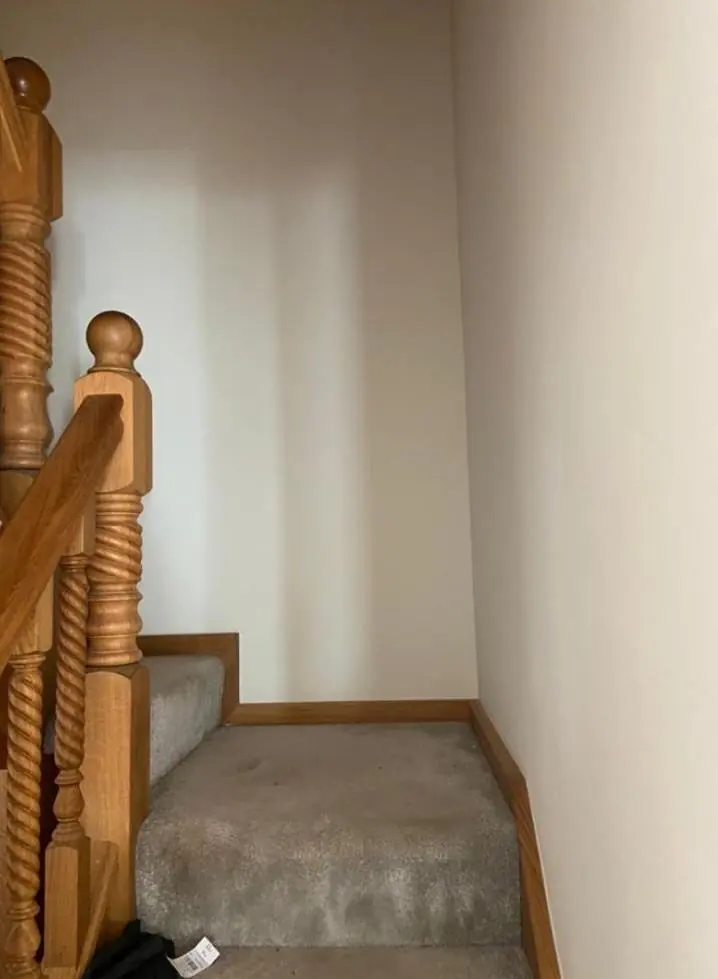
The larger detached houses, and homes on the Grangewood Estate, are more likely to have rooms where papering every wall is worth doing, such as a dining room, a main bedroom or a stairwell. Full rooms mean more lengths, so we check batch numbers on every roll before cutting. Ordering one or two extra rolls is sensible with large pattern repeats. On stairwells we use a stair platform, because the straight staircases common here make that the safe and simple choice.
Walls that have been damp or replastered
Low-lying parts of East Hunsbury have flooded from surface water, with Lichfield Drive hit in 2005 and 2007 and two homes on Marlowe Close also recorded. New plaster has to dry fully before it’s papered, which can take weeks rather than days. Then it needs sizing so the paste doesn’t soak straight in. Paper hung too early can bubble, or mould behind the paper. If your walls have been replastered, Dean will check them with a moisture meter before we book the paper hanging.
Conservatories and sun rooms are another case to think about. They get strong direct light, which fades many papers within a few seasons. Paint is usually the better choice there, and keep the paper for the room next door.
Choosing paper and booking the job
We hang traditional, vinyl, non-woven and textured papers. Non-woven papers are hung by pasting the wall instead of the paper, which is quicker and neater on a large feature wall. If you’re choosing between two designs, our colour and finish advice can help match the paint on the other walls to the paper. The process itself is set out on our main wallpaper hanging in Northampton page, and more on the area is on the East Hunsbury page.
Last updated by Dean, DH Painter & Decorator.