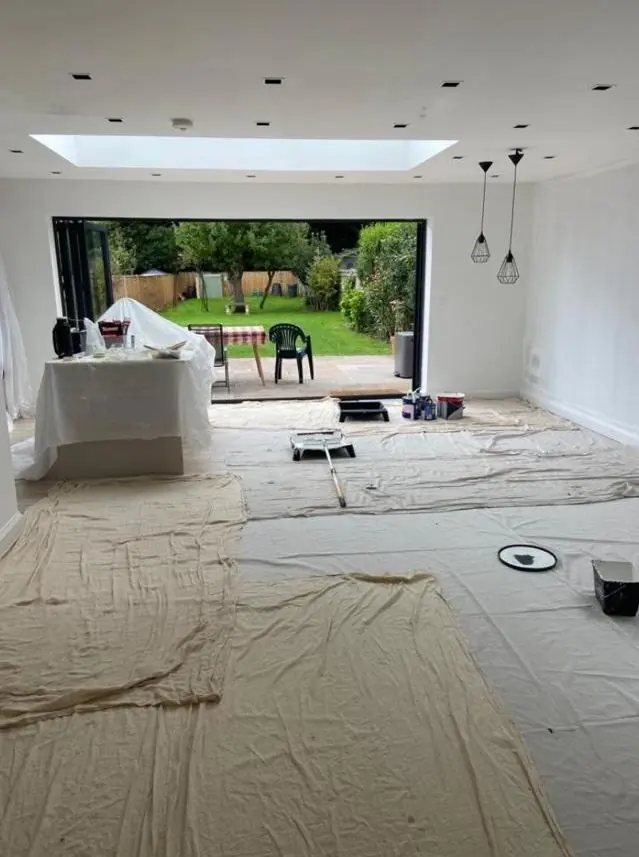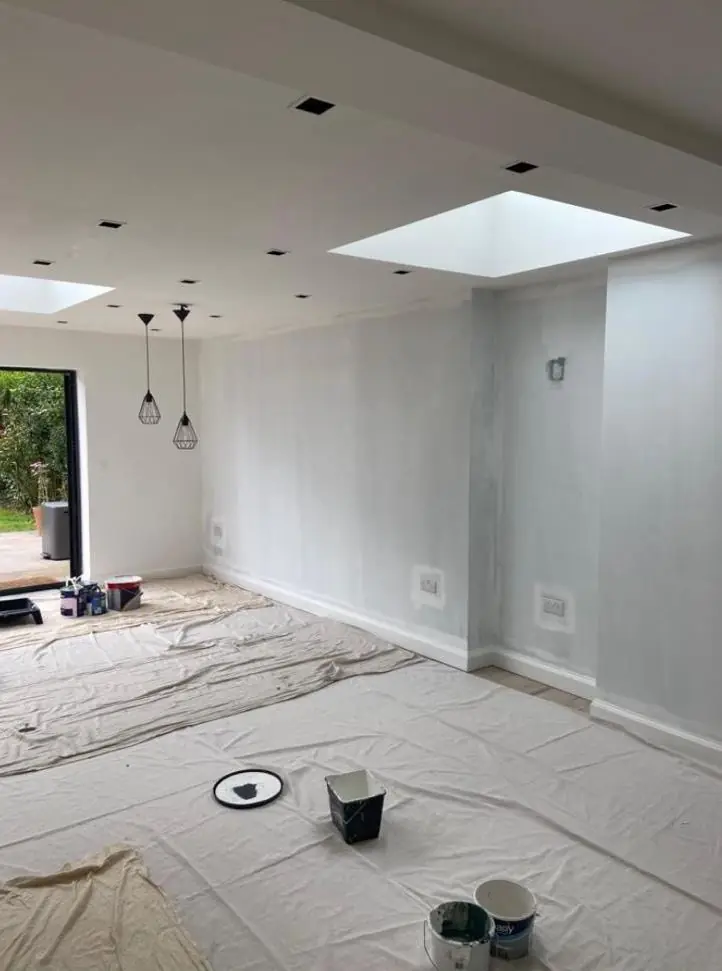
We take on commercial painting in Great Doddington, 8.3 miles east of Northampton, where business premises are few and small: shop units in converted cottages, an inn built as a house in 1686, community buildings and farm or livery premises. Work is planned around trading and around the age of the buildings.
Where the village’s premises are
Great Doddington has no business park or industrial estate. Its commercial buildings are a handful of small premises spread along the High Street and the lanes off it. In 2002 the conservation area appraisal listed a post office, a general store and a hairdresser, each trading from a converted cottage around The Square near Chapel Lane, and a village shop is still mentioned today. Add the Stag’s Head, the club off Lower Street, the Memorial Hall with its Elliott Room, the Top Farm livery yard and the working farms, and that is the full picture.
That shapes the work. Commercial painting here is rarely a large single contract. It is more likely a shop interior, a bar and function room refresh, a hall repaint or joinery on a farm building, often inside or next to a historic structure. The way we run commercial jobs generally is explained on our main commercial painting page.
Shops in converted cottages at The Square
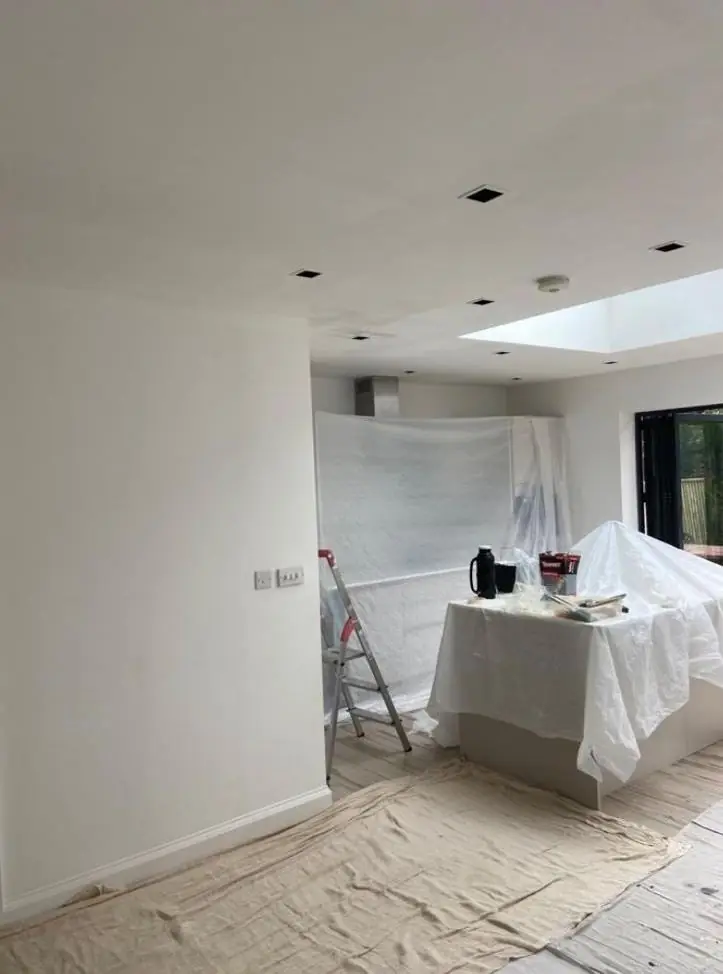
Because the shop units began life as cottages in the conservation area, their frontages are domestic in scale: cottage doors and windows rather than a glazed shopfront with a fascia board. Exterior work is mainly joinery, painted like-for-like to suit the stone, and the limestone itself is left unpainted. Inside, a small retail space or salon usually needs washable, low-odour paints so the room can be back in use quickly, and we agree with you which areas can be screened off while you keep trading.
For a hairdresser, the practical points are different again: wet areas by the basins want a moisture-tolerant, wipeable finish, and colour matters because clients sit facing the walls under bright lights. We can sample two or three shades on the wall before you choose.
The pub, the club and the hall
Dating from 1686, when it was put up as a dwelling, the Stag’s Head has been an inn since at least the turn of the 20th century. Painting inside a building of that age means uneven walls, low ceilings and probably lime plaster, which needs breathable paint rather than a hard-wearing vinyl that would trap moisture. Bar areas also need finishes that cope with cleaning and knocks, so the choice is a balance between the two, made after we have seen the surfaces.
The club and the Memorial Hall are community spaces with heavy footfall, chairs against walls and regular bookings. For these we suggest scuff-resistant finishes on the lower walls and a durable eggshell on doors and frames, with the work phased room by room so that bookings can carry on.
Farm buildings and livery stables
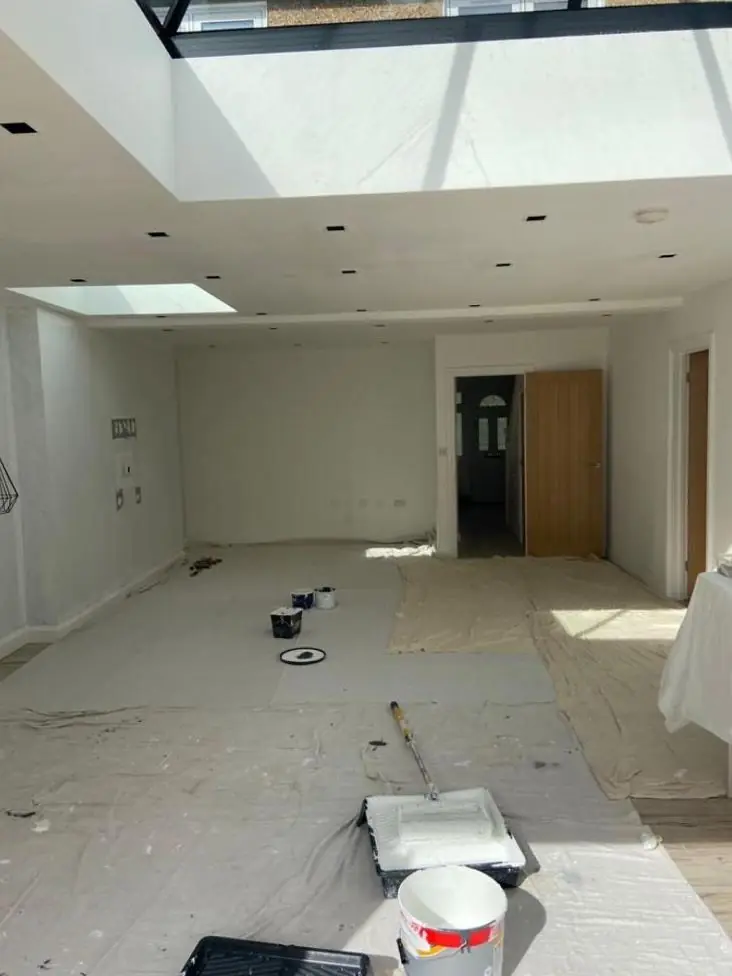
Great Doddington grew up around five farms, and farming and horses are still part of the village. On farm offices, stores and stables, the jobs are typically timber doors, boarding, gates and fascias. Anywhere horses or livestock can reach, we use animal-safe products. The red brick barns are not painted; masonry work on them is cleaning rather than coating. Fences and field gates are covered on our staining page instead.
Working around a narrow village street
The village runs along one main street of about a mile and a half, with tight spots by the Stag’s Head and where Church Lane meets the High Street, and many buildings sit right on the footway. We agree parking, delivery of materials and pavement protection before starting, so customers and passers-by are kept clear. The Great Doddington area page lists the other services we offer in the village.
Last updated by Dean, DH Painter & Decorator.