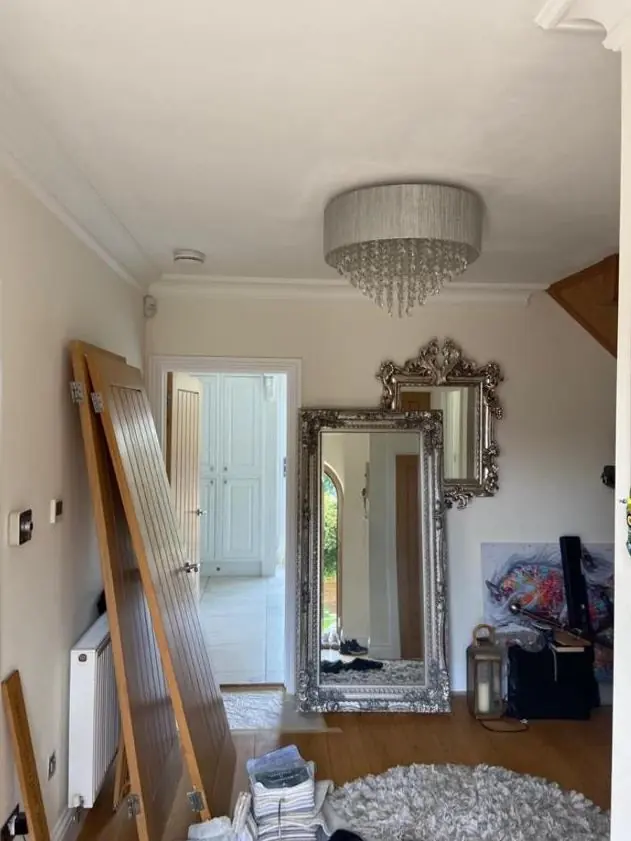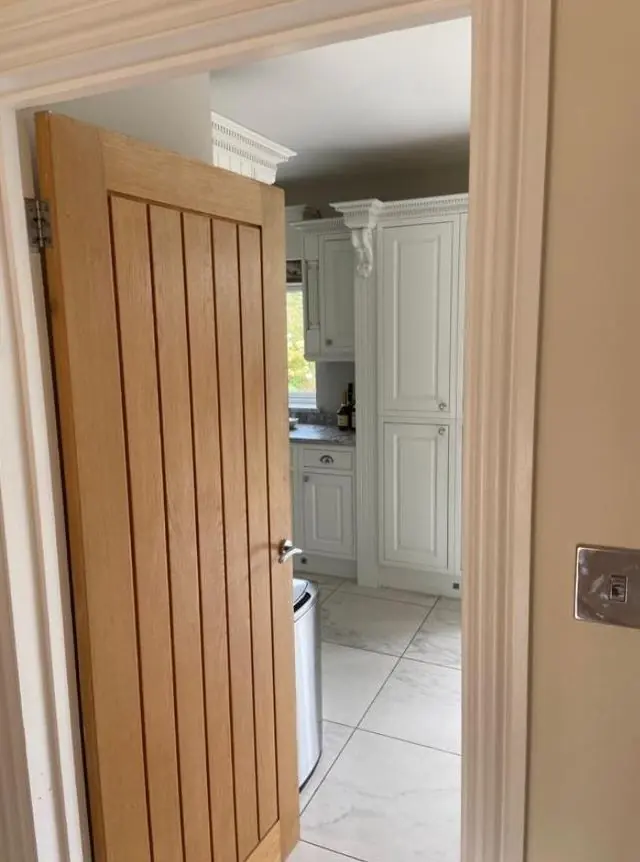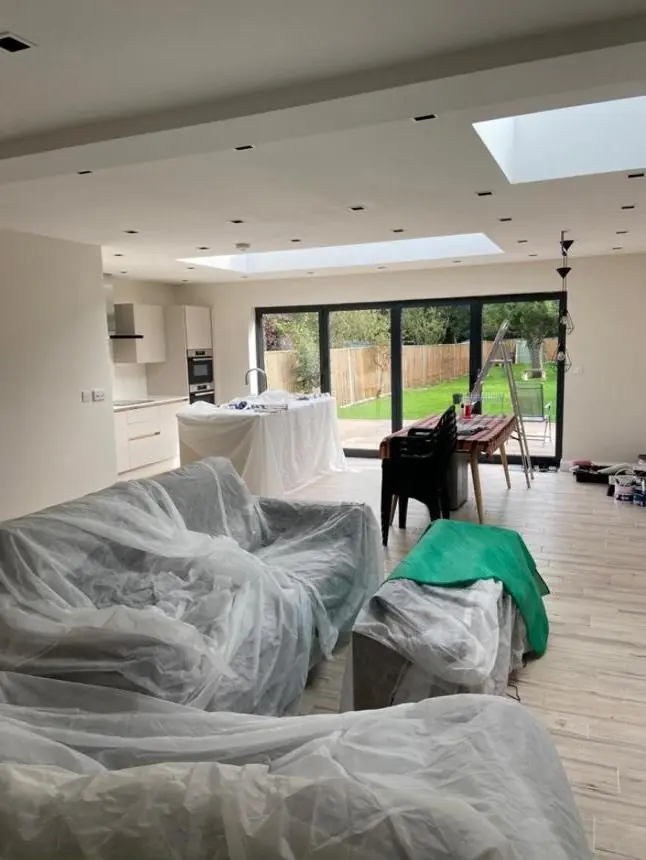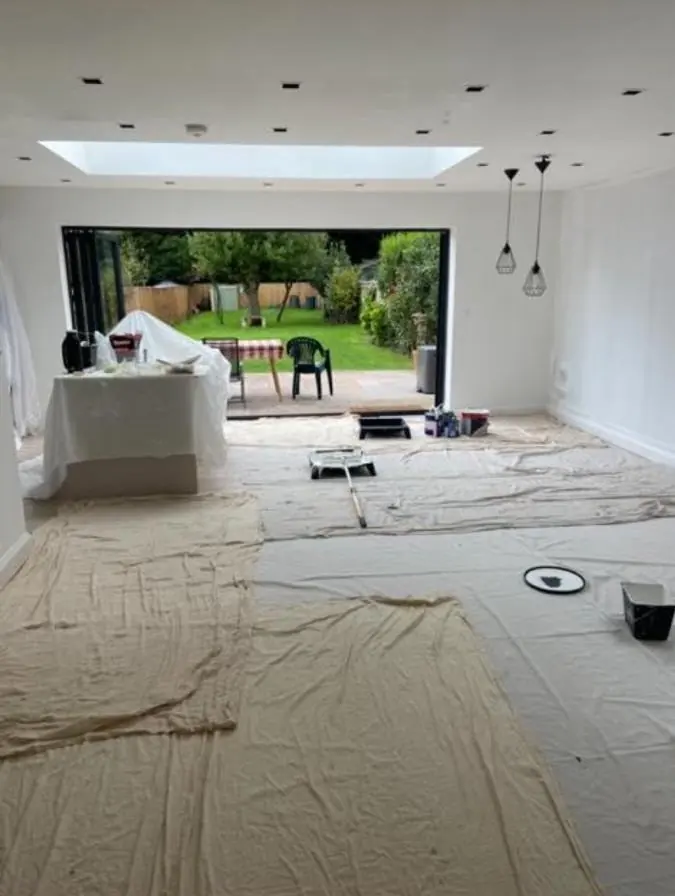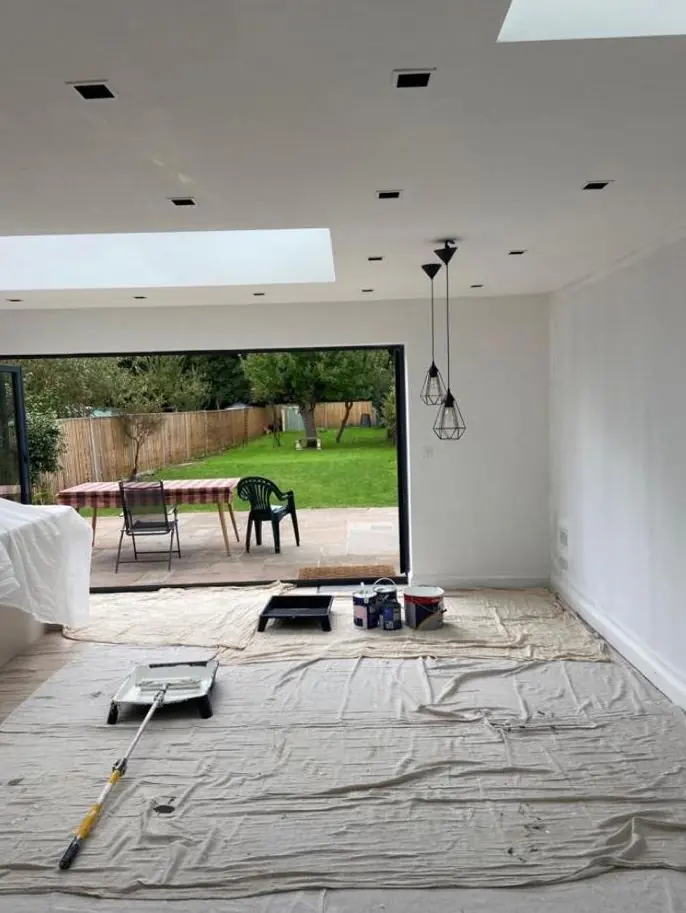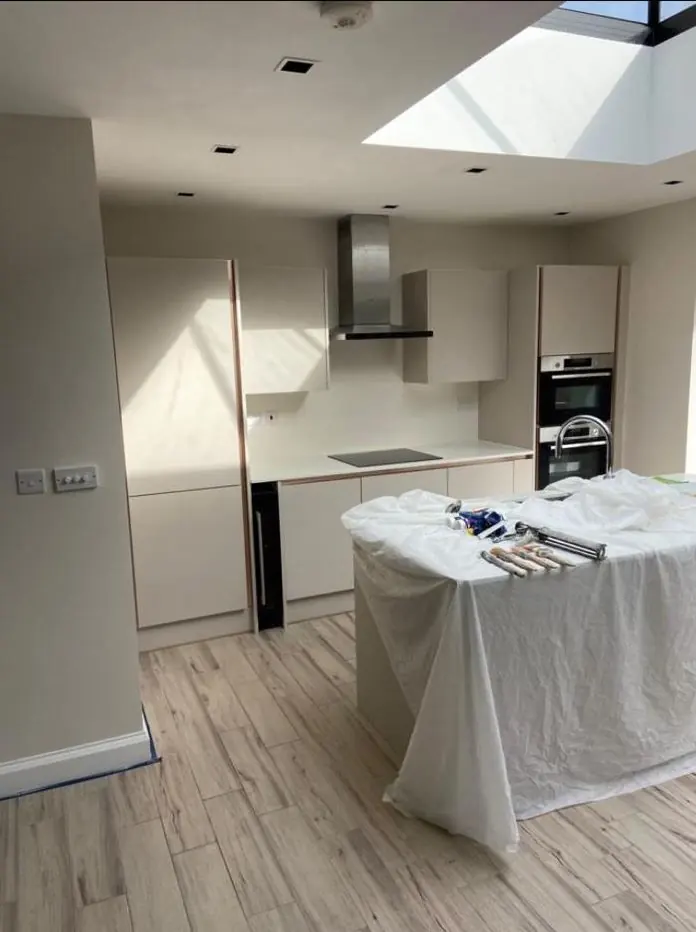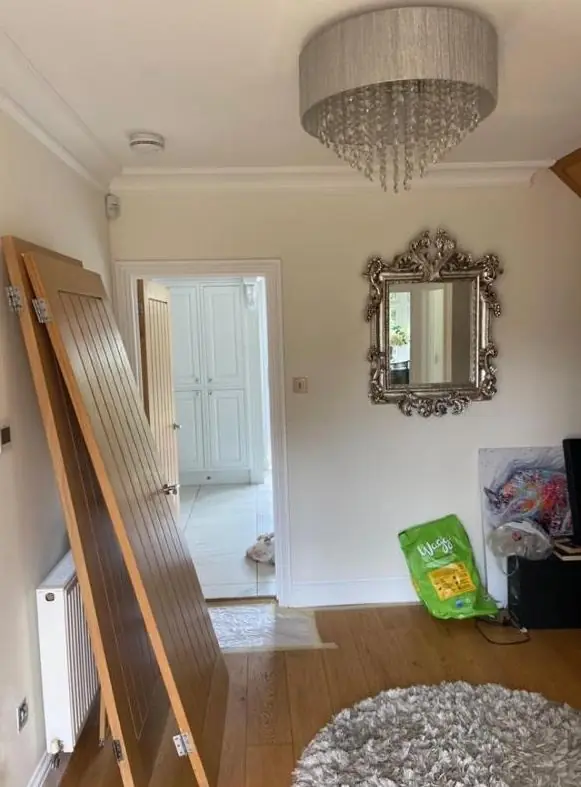
We decorate rental homes in Great Doddington for landlords and letting agents, mostly repaints between tenancies. The village, 8.3 miles east of Northampton, is not a dense lettings market, so the work is usually one house at a time, and Dean plans it around the type of property you let.
Letting a house in a small Nene Valley village
Great Doddington is a village of about 1,100 people (1,123 at the 2011 census) strung along one main street, and there is no published lettings data for it that we would rely on. In practice, a rented home here is likely to be an individual cottage or house rather than one of a block of flats, so each between-tenancy job is planned on its own terms. The village’s post town is Wellingborough, about 2.5 miles away, but we cover it from our Northampton base 8.3 miles to the west.
Our main landlord and letting agent decorating page sets out how we handle end-of-tenancy repaints in general. Here we focus on the property types you are likely to let in Great Doddington and what each means for the job.
A let cottage in the conservation area
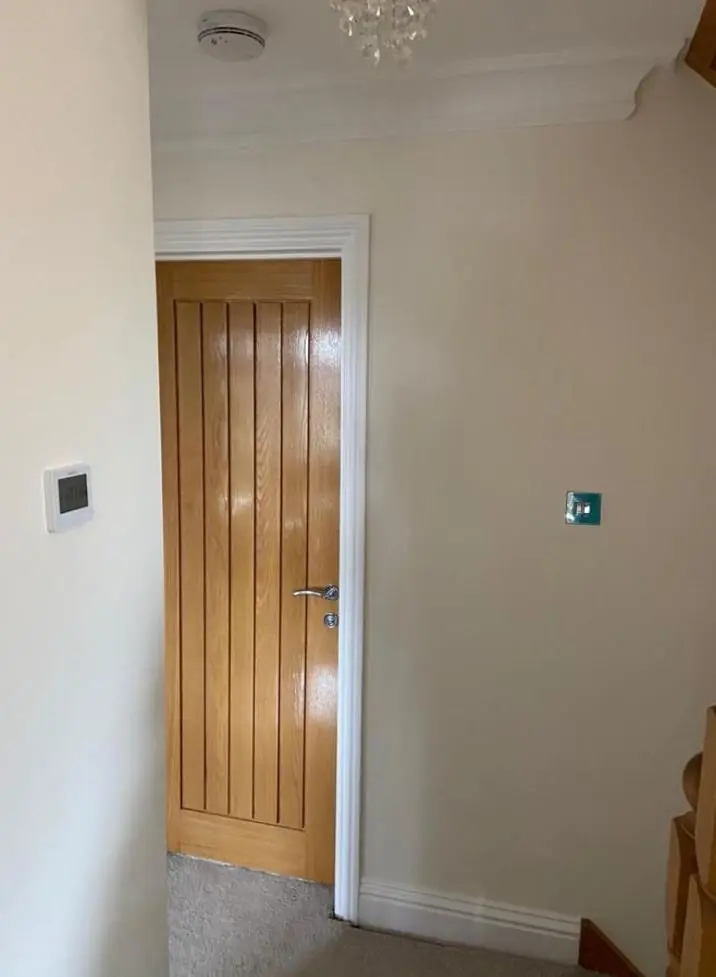
If your rental is one of the limestone cottages in the historic core, there are a few things to know before the decorator arrives:
- Listed status. Several cottages are listed. Repainting in the same colours is routine, but changing colours or materials on listed fabric may need consent, and as owner that responsibility sits with you.
- Breathable walls. Old lime plaster on solid stone walls needs breathable paint. A quick coat of cheap vinyl emulsion between tenants can trap moisture and leave flaking patches that the next tenant reports as damp.
- Uneven surfaces. Walls and ceilings in 17th-century cottages are not flat, so the realistic goal is a clean, even colour, not a showroom finish.
Cottages with attic rooms add time to a changeover. Sloping ceilings and dormer reveals take more cutting in than a square bedroom, and every tin and dust sheet goes up a steep, narrow stair, so allow for that in the void period when the let is one of the older houses.
Bungalows and post-war houses: quicker turnarounds
The 20th-century side of the village, including the 1960s/70s bungalows at 44-54 High Street and the houses at St Nicholas Court, is far simpler to turn around. Walls are plaster or plasterboard, joinery is modern, and standard durable emulsions and water-based satins apply. A neutral scheme in a wipeable matt, used consistently across your properties, makes touch-ups at the next changeover easy, because you only need one or two colours on the shelf.
Single-storey bungalows also avoid any stairwell access, so a full repaint between tenancies is usually quicker than a cottage of the same floor area.
Planning the gap between tenants
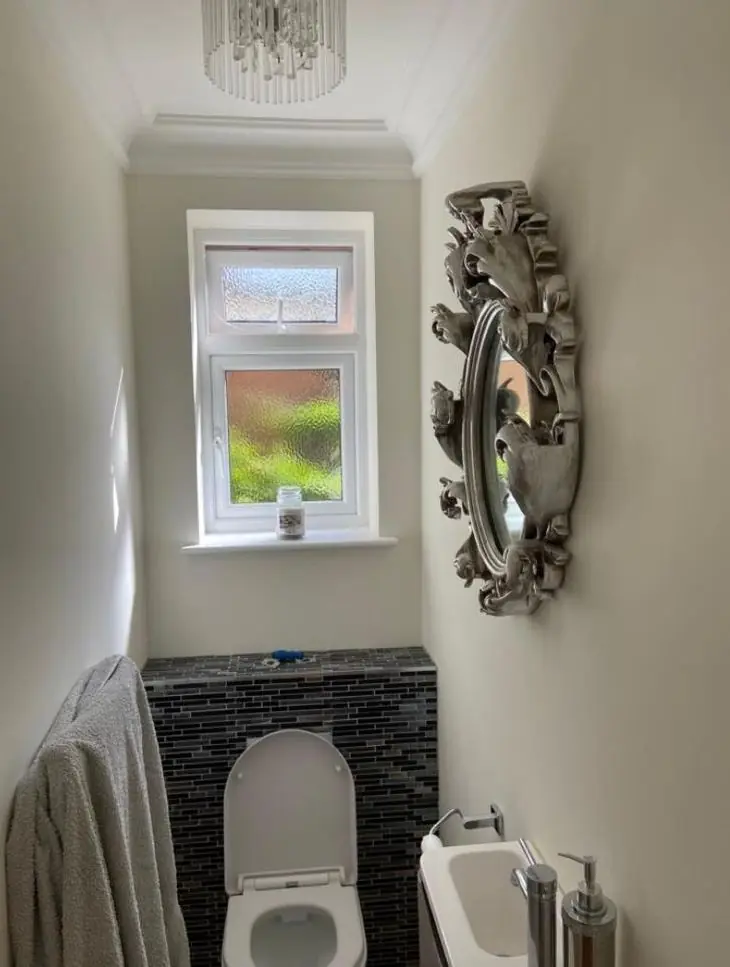
Void weeks cost rent, so the aim is to fit the decorating into the changeover rather than stretch it. Because the village is spread along roughly a mile and a half of street and many cottages front straight onto the pavement, we agree parking, key collection and access before the start date. If an agent holds the keys, we can arrange collection and return directly with them. A typical changeover visit covers:
- A walk-round to decide which rooms need full coats and which only need touching up.
- Filling, sanding and repainting walls, ceilings and woodwork in the agreed scheme.
- Washing down kitchens and halls before painting, where grease and scuffs build up.
- A short written note of what was done, useful for your inventory.
For an idea of what drives the cost of a changeover, see our painter and decorator cost guide. More about the village and the services we cover there is on the Great Doddington page.
Last updated by Dean, DH Painter & Decorator.