Painter & decorator covering Northampton and surrounding areas

New Plaster & Extension Painting in Great Doddington

Fresh gypsum in barn conversions and extensions needs a mist coat, while lime repairs in the old stone cottages need breathable paint and patience.

  • Over 30 years experience
  • Free quotes & advice
  • Fully insured & trained
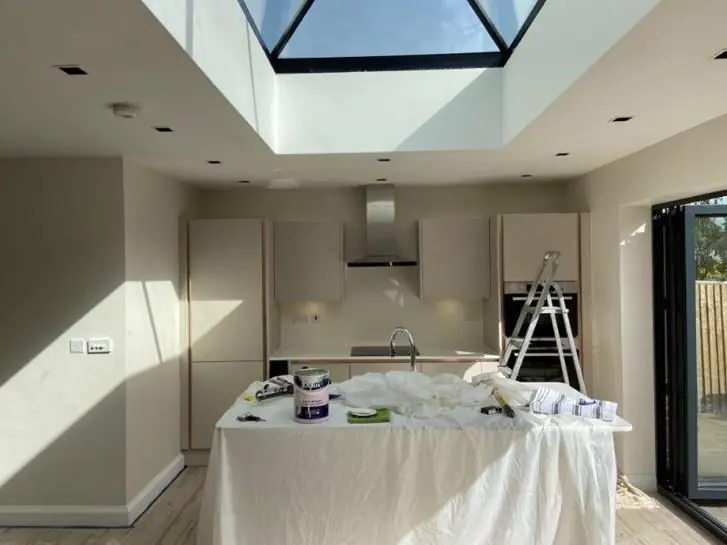
Kitchen extension walls and ceiling painted white, dust sheets covering the floor mid-job

We paint new plaster and extensions in Great Doddington, about 8.3 miles east of Northampton. Most of the work is either fresh gypsum in barn conversions and 20th-century homes, which needs a proper mist coat, or lime plaster repairs in the village's old stone cottages, which need a breathable finish instead.

Gypsum or lime: the question to settle first

New plaster in Great Doddington comes in two kinds, and they are not painted the same way. Modern gypsum skim, found in extensions, rewires and replastered rooms in the 20th-century ribbon houses and in the barn conversions, is painted with a thinned mist coat once dry. Lime plaster, used for repairs in the 16th- to 19th-century limestone cottages of the conservation area, cures slowly, stays slightly porous for good and should only get a breathable finish.

Getting this wrong is the most common way paint fails on old plaster. A vinyl emulsion rolled over fresh lime seals in moisture the wall needs to release, and within a season or two it blisters or peels. So before we quote, Dean looks at the colour, hardness and texture of the new work and asks the plasterer what went on. The general method for gypsum is set out on our main new plaster and extension painting page and in the mist coat guide.

Repairs in the listed cottages
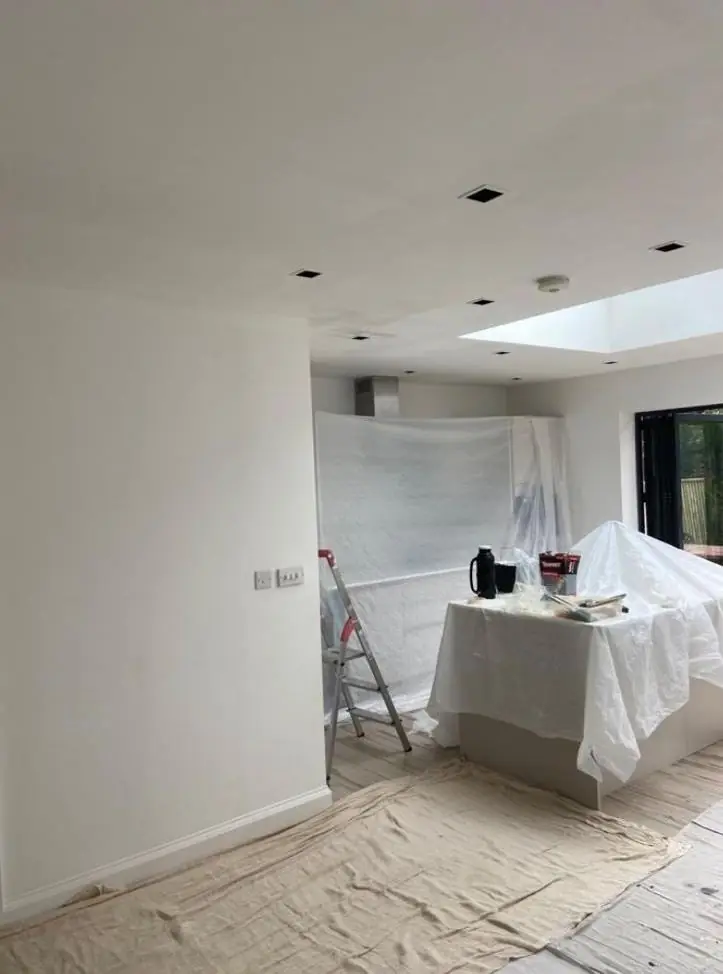
Kitchen island wrapped in sheeting while extension walls are painted white

Several cottages in the old core are listed, including examples on Doctors Lane, the High Street and Lower Street, and repairs inside them are often done in lime to match the original. Lime needs more drying time than gypsum: in a thick-walled stone cottage, a patch can take several weeks to cure, longer in cold or damp weather. We would rather come back when it is ready than paint early.

Once it has cured, the finish is limewash, a mineral silicate paint or a clay-based emulsion, depending on what is already on the surrounding walls. Patches rarely sit perfectly flush with old, undulating walls, and we feather the new finish into the old rather than trying to make the wall look machine-flat. Where the rest of the room is already in a modern emulsion, we discuss whether to strip back or to accept a compromise, as there is no single right answer for every room.

Barn conversions: big walls, new plaster against old fabric

The farm conversions at Top Farm, Glebe Farm and Grove Farm, and any further work in barns like them, produce large areas of new gypsum on tall walls, often meeting exposed beams, stone reveals or red brick. These are the jobs where the mist coat matters most, because a big expanse of fresh plaster shows every missed patch and every bit of flashing once the light falls across it from a wide barn opening.

SurfaceWhere you find it in the villageFirst coat
Fresh gypsum skimBarn conversions, extensions on ribbon houses and bungalowsThinned contract matt mist coat once fully dry
New lime plasterRepairs in the conservation-area cottagesLimewash or breathable mineral paint, after curing
Plasterboard with skimLoft rooms and partitions in post-war homesMist coat, then standard emulsion

Cutting in against beams and stone is done by brush, never sprayed or taped onto rough walling. Bare stone and brick inside the barns stay unpainted.

Extensions on the post-war houses
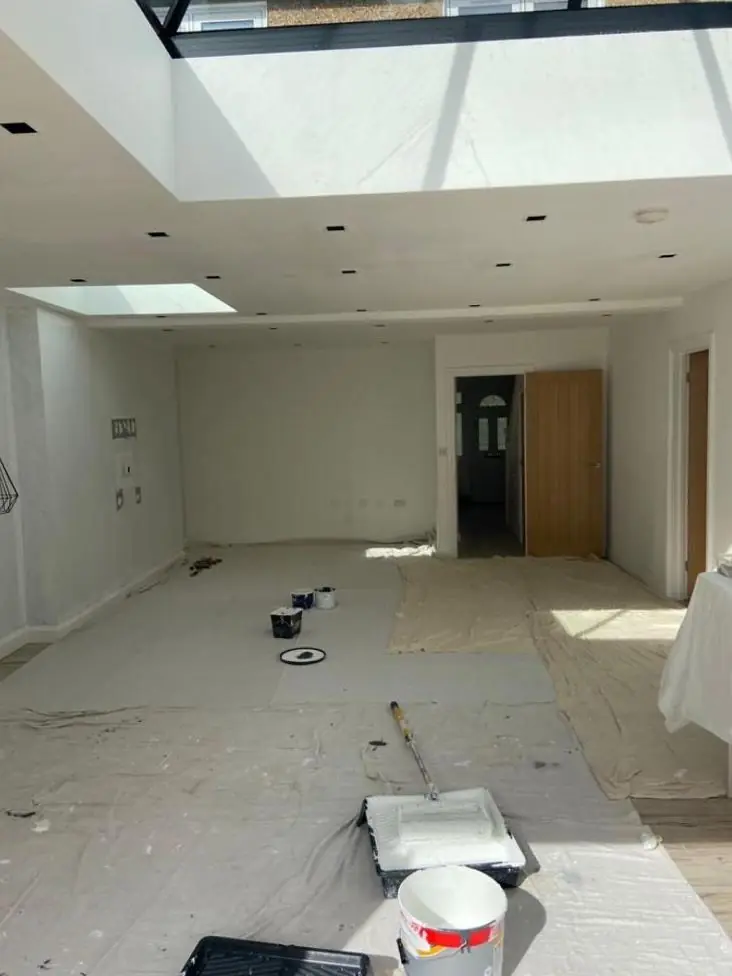
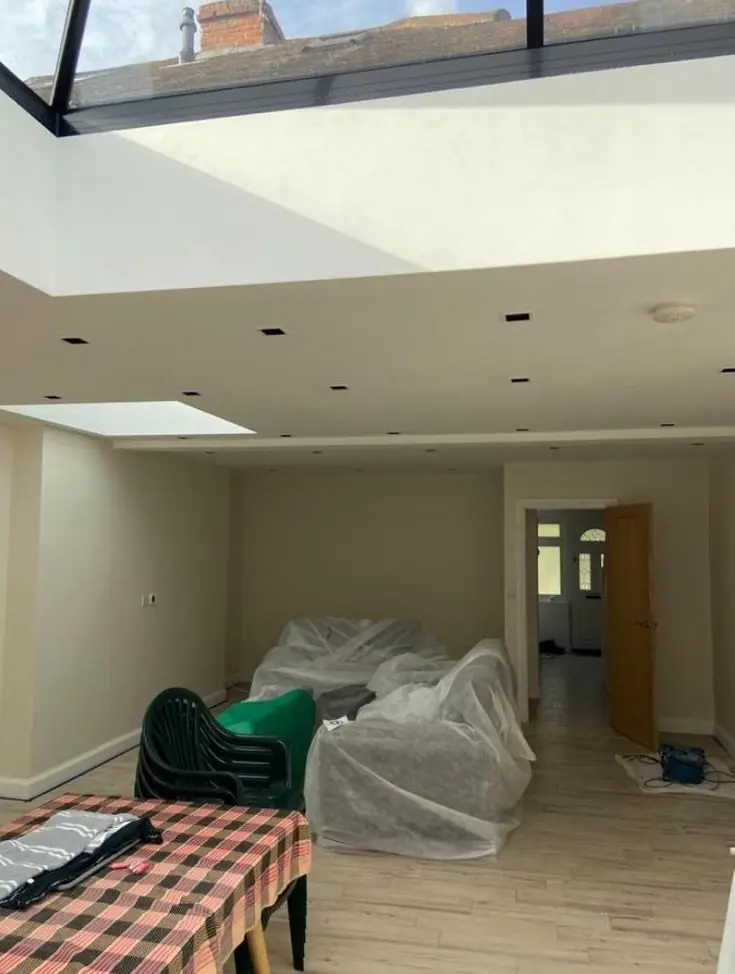
Extension ceiling under roof lantern painted white, roller tray and tins on the dust sheets

Most extension work is likely on the 20th-century side of the village, along the ribbon development, at St Nicholas Court and on the 1960s/70s bungalows at 44-54 High Street. These houses take modern systems, so the job is the familiar one: let the skim dry until the colour is even, mist coat, fill any hairline cracks, then two finish coats, plus priming and painting new skirtings, architraves and doors.

If your builder is still on site, we are happy to agree a start date around the plasterer’s finish so the drying time is built into the programme. You can read about the other work we cover in the village on the Great Doddington area page.

Last updated by Dean, DH Painter & Decorator.
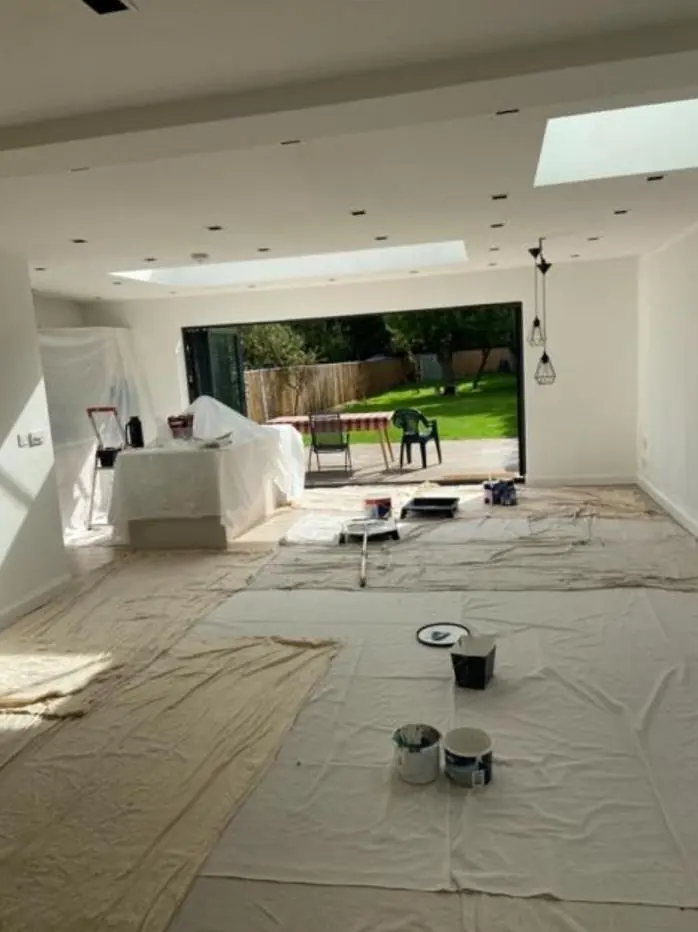
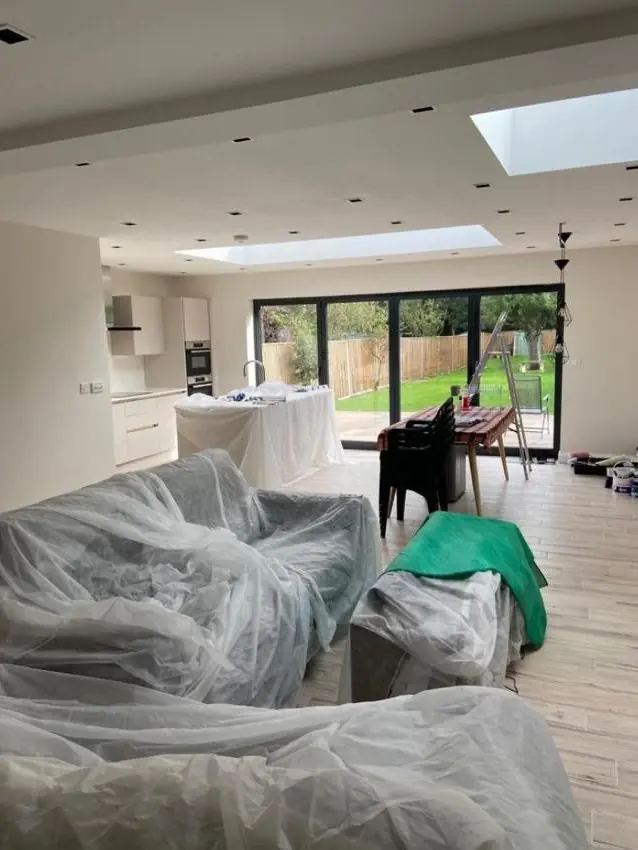
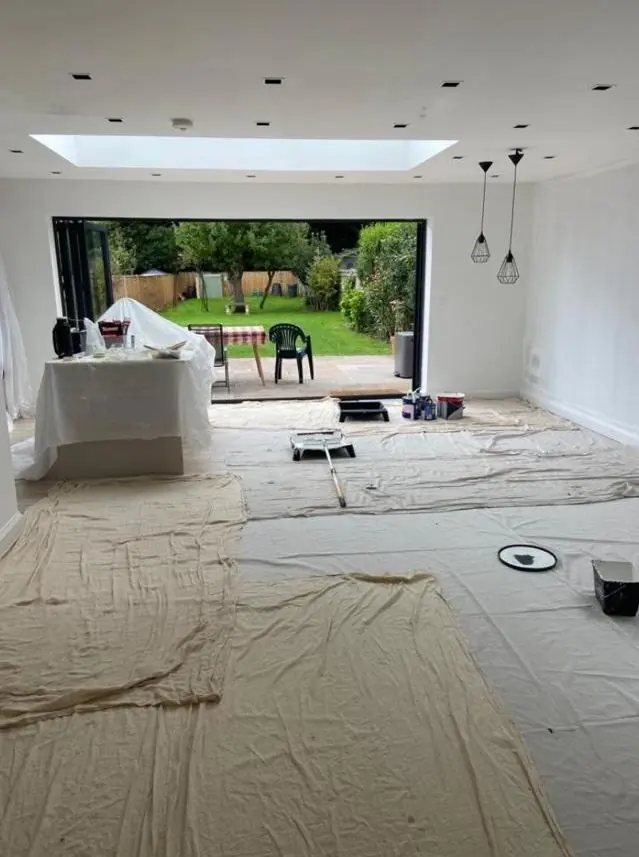
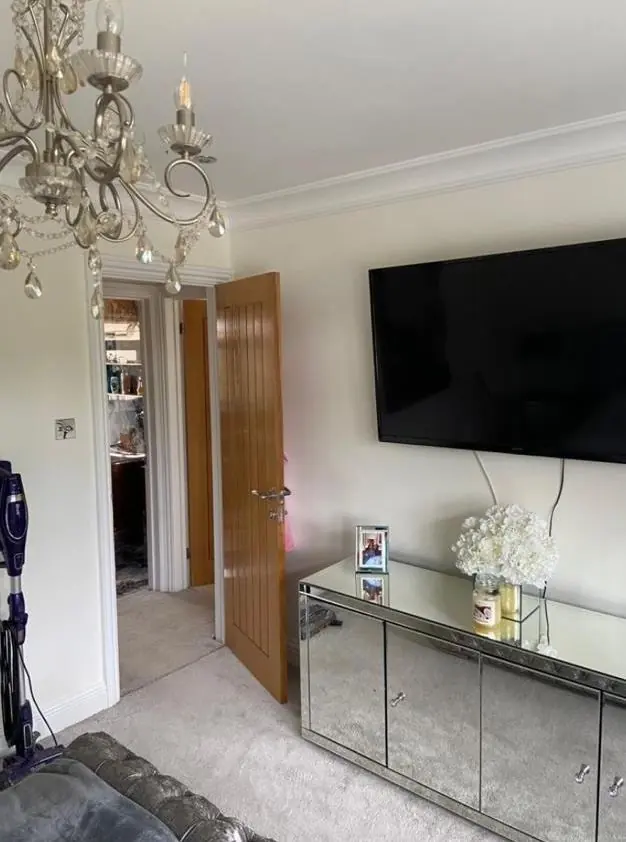
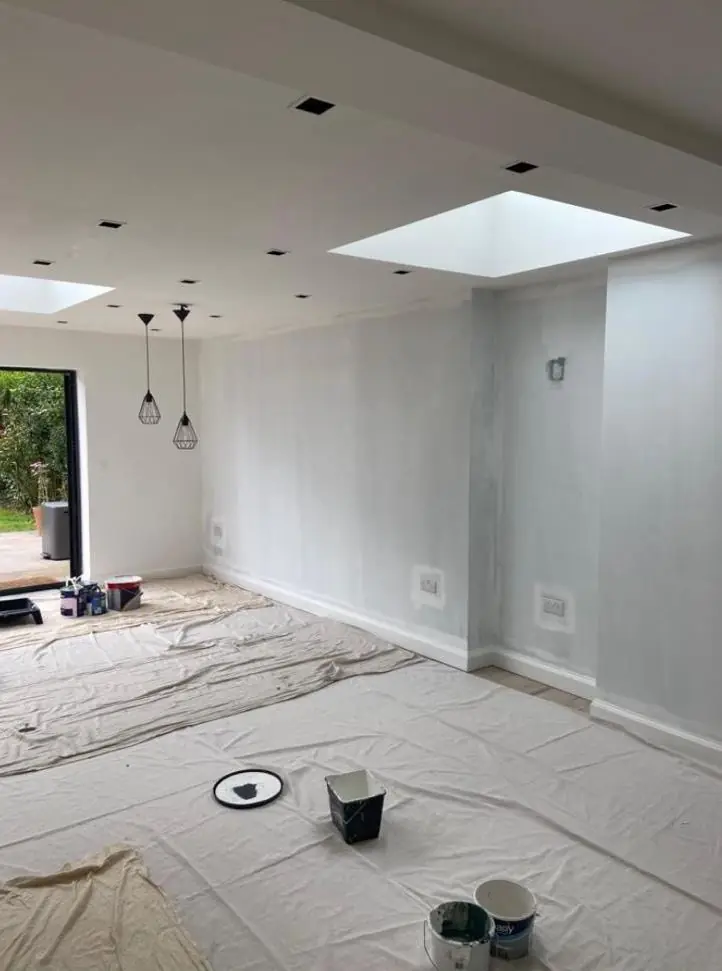
Wide view of a white-painted extension with pendant lights and paint tins on dust sheets Kitchen with roof lantern and walls painted soft grey, island sheeted, stepladder by the oven Extension walls painted pale grey with roof lanterns overhead, furniture still under sheeting Roof lantern reveals painted white above a grey extension, sofas sheeted for protection Extension floor laid with overlapping dust sheets, white walls and garden beyond the bifolds Living room around a wall-mounted TV, cream walls and white coving finished

New plaster & extensions in Great Doddington: your questions answered

Can't see your question? Call us on 07539 779 036 and we'll happily talk it through.

How long should new lime plaster dry before painting in a Great Doddington stone cottage?

Longer than gypsum. In a thick limestone wall, a lime repair can take several weeks to cure, and longer in winter or if the wall is damp. It should be firm and evenly pale before any finish goes on. We check it on site and would rather return later than paint too early, because trapped moisture is what makes finishes on lime fail.

Can I use normal emulsion on a lime repair in my listed cottage on Lower Street?

It is not a good idea. Vinyl emulsions form a film that stops lime plaster drying out, which leads to blistering and flaking. For lime repairs in the conservation-area cottages, we use limewash, a mineral silicate paint or a breathable clay-based emulsion. If the rest of the room is already in vinyl emulsion, we talk through the options before starting.

Does a barn conversion at Top Farm or Grove Farm need anything different for new plaster?

The plaster itself is usually gypsum, so it gets a standard mist coat. What changes is the scale and the edges. Tall walls need towers, and new plaster meets beams, stone reveals and red brick that stay unpainted, so every edge is cut in by brush. Light from the large barn openings shows patchiness, which is why the mist coat must be even.

When should I book you for painting a new extension on a High Street bungalow?

Ideally while the builder is still on site, so the decorating start can be set around when the plasterer finishes. New gypsum skim normally needs to dry until it is an even pale pink before the mist coat. On a single-storey bungalow extension there is no high-level access to arrange, so the main thing to plan is drying time.

What customers say about Dean

Most of our work comes from recommendations and returning customers. These are real reviews from customers after the job was finished, in their own words.

More customer reviews

After completing my gates I was then assured Dean was more than competent to repaint the inside of my property from top to bottom. It’s a large 4 bedroom house and was done to a very high standard. Once again I would highly recommend him.

Customer review Gates, then a full four-bedroom interior

I contacted Dean to get the outside of the house painted; the house is all roughcast render. He has done a fantastic job; the house is looking brand new. The same he did for our garage, painted our bedrooms x2, did extra jobs for us like skirtings and door frames, and painted even our gates. I could not recommend him enough; he is attentive, smiling, always on time, and nothing too much; I am so happy with what Dean has done; he went above and beyond. I have recommended him to all my friends and family.

Read full review
Customer review Roughcast render, garage, bedrooms and gates

Dean did a great job for a good price i'd be very happy to recommend him always on time polite and friendly.

Customer review Painting and decorating

Start your project

Get a free painting and decorating quote

Tell us a little about the job and we'll arrange a visit to look at it properly. Quotes and advice are always free, with no obligation.

What happens next

  1. We get back to you to arrange a convenient time to visit.
  2. Free visit. We look at the job and talk through colours, finishes and any repairs.
  3. Written quote. A clear price covering preparation, materials and the finish we agreed.

Request a free quote

Please enter your name.

Please check your email address.

Please enter a valid phone number.

Prefer to talk? Call 07539 779 036.

Call 07539 779 036Call nowFree quote