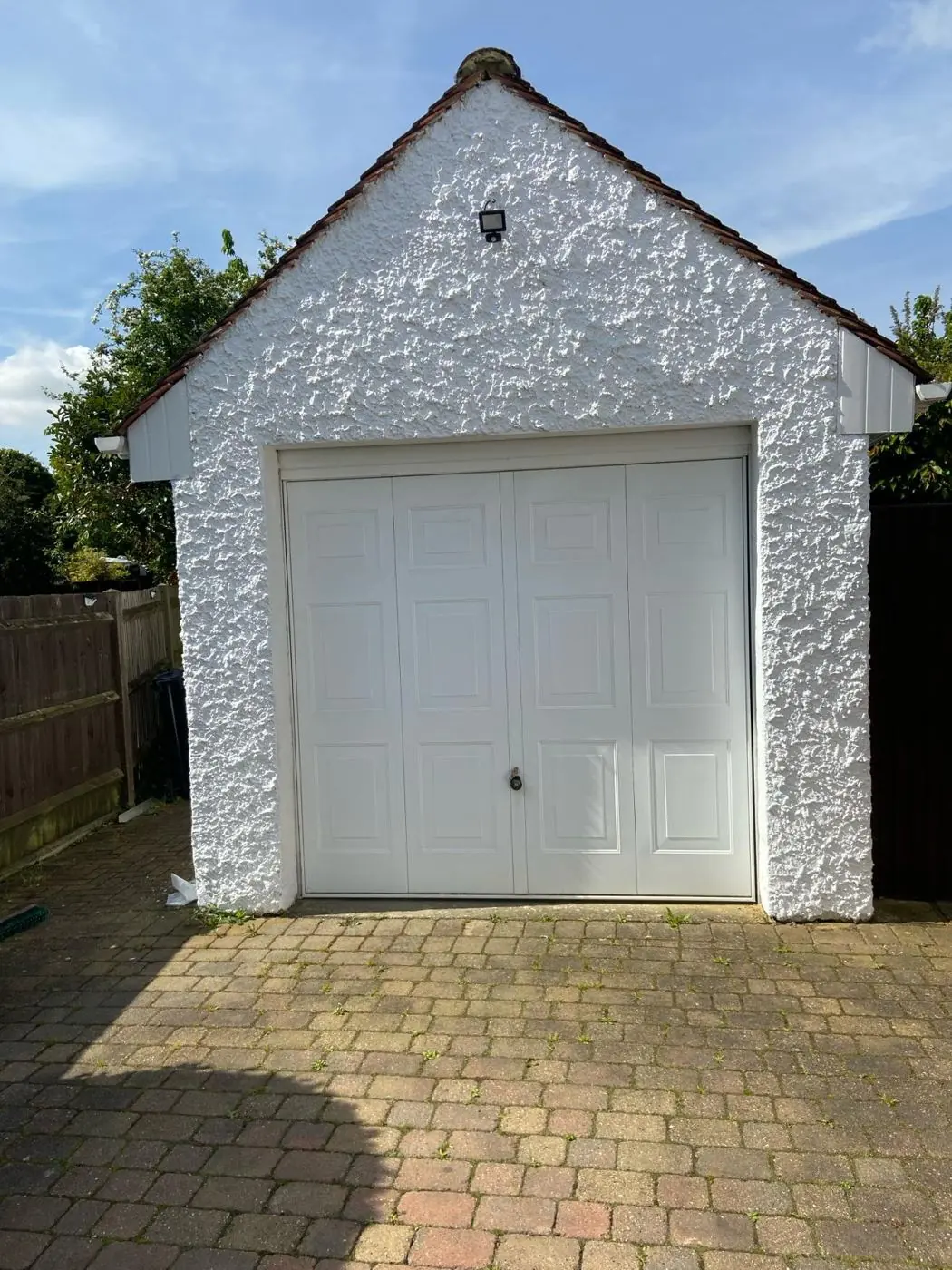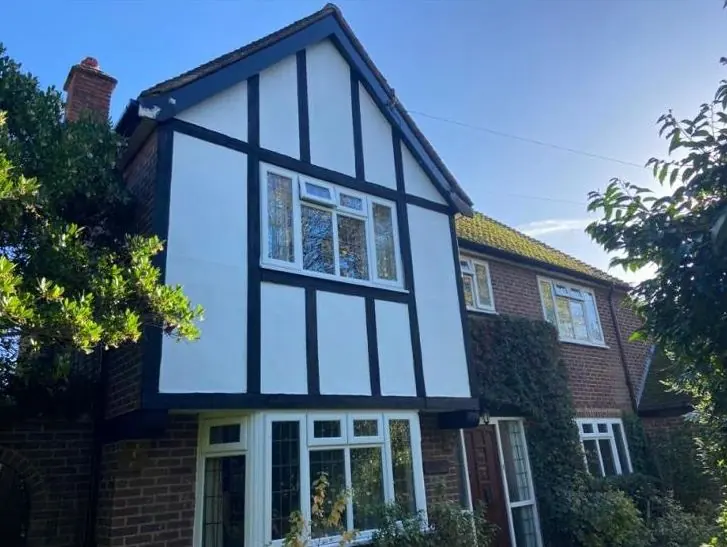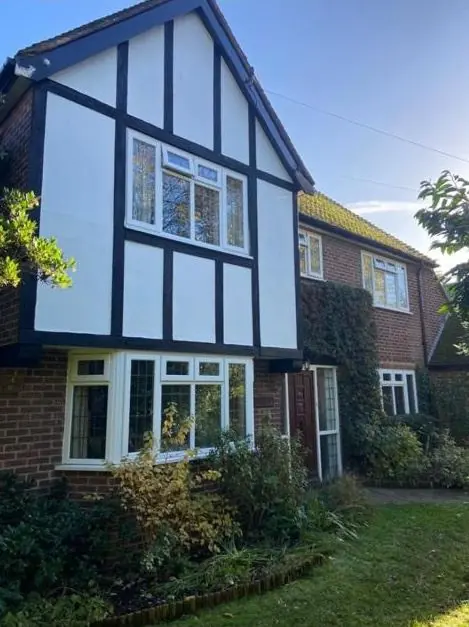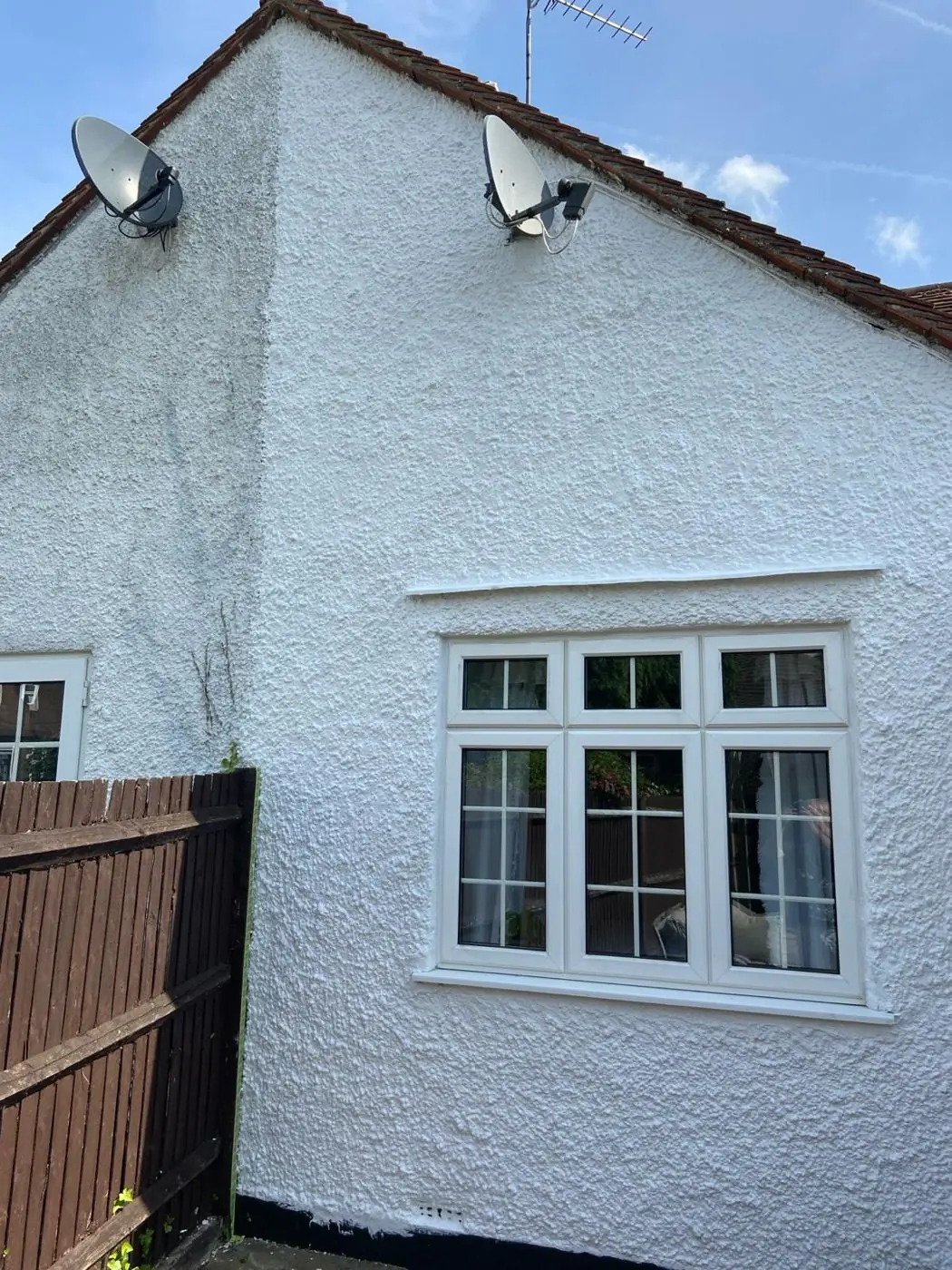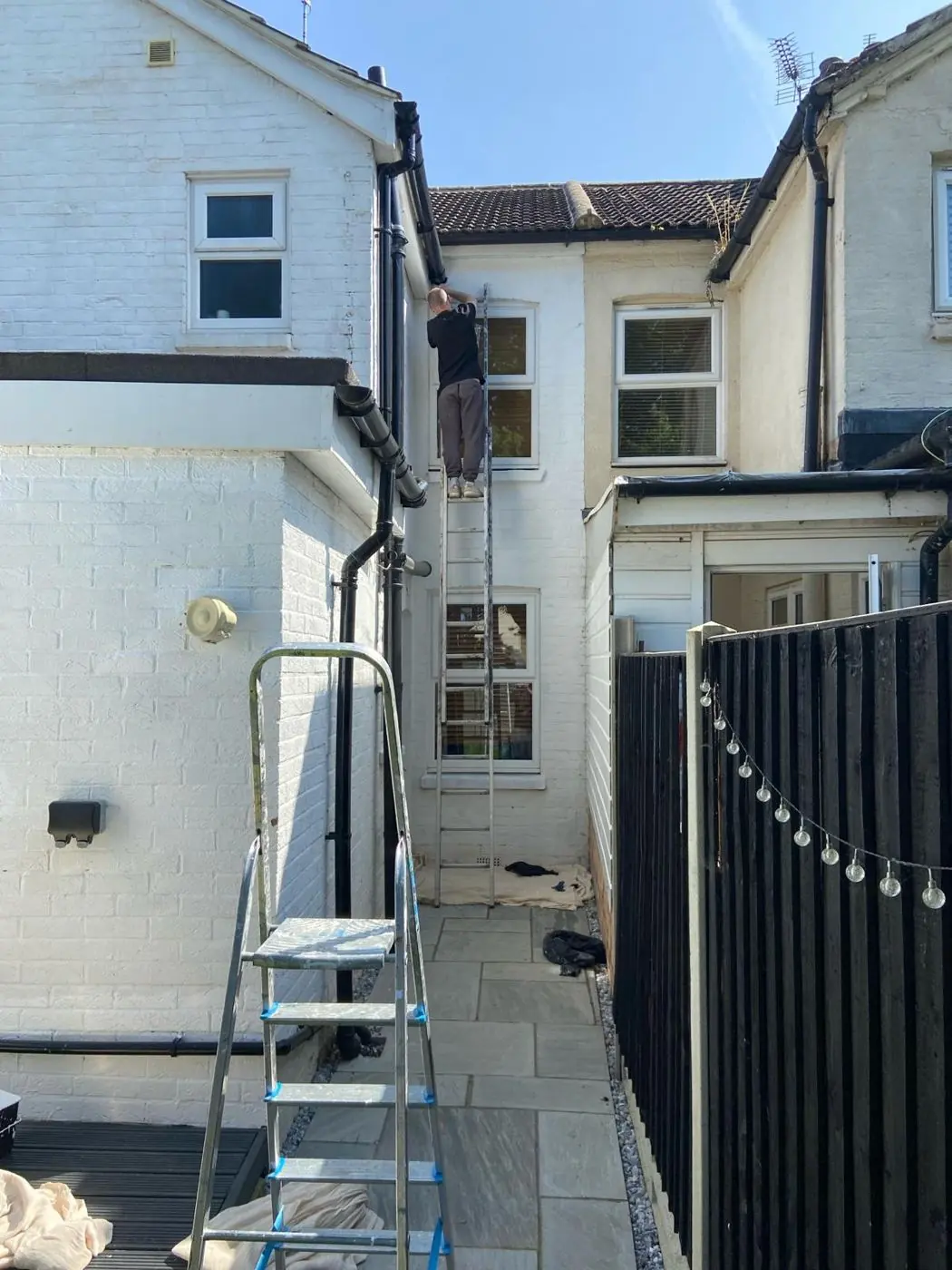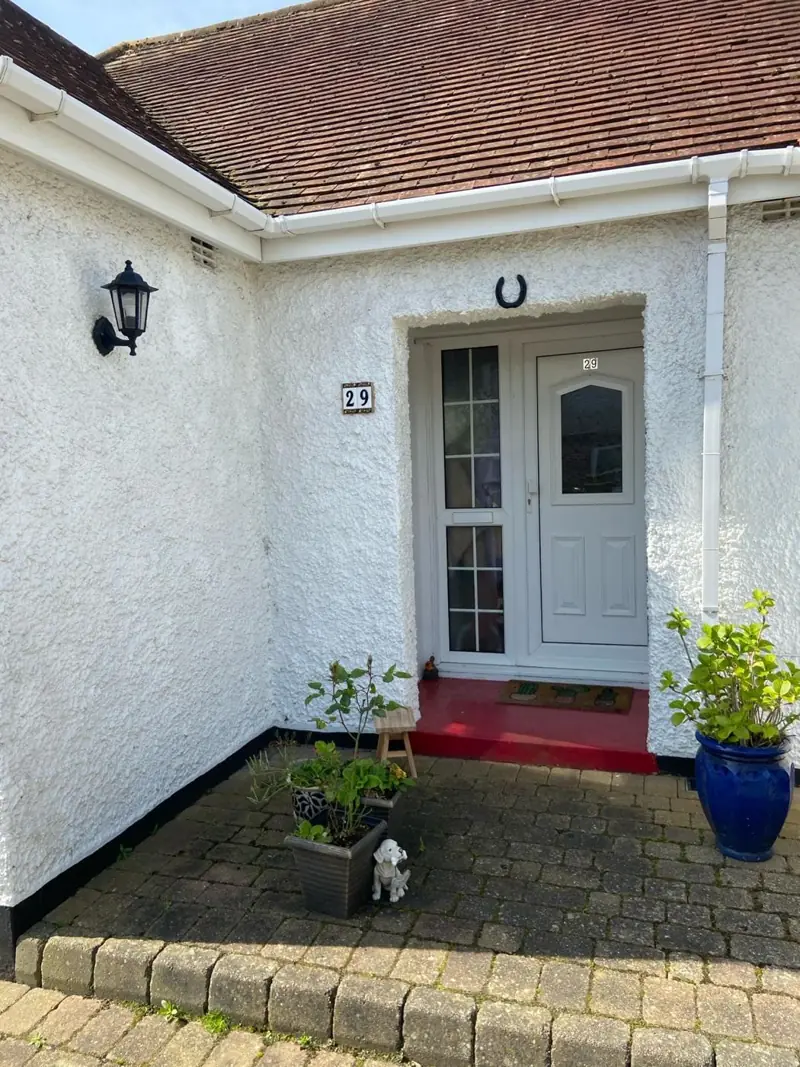
DH Painter & Decorator paints fascias, soffits, bargeboards and dormer timber in Great Doddington, a village about 8.3 miles east of Northampton. Dean quotes after seeing the roofline, because rooflines in the stone core and those on the 20th-century houses need quite different work.
Two kinds of roofline in one village
Great Doddington has two very different rooflines. In the conservation area many cottages have no fascia board at all in the modern sense. Their gables finish in ashlar parapets and kneelers, or in timber bargeboards, and the roof is broken up by gabled, hipped and Lincolnshire dormers with wood-clad cheeks. Along the rest of the main road, the 20th-century ribbon houses and the 1960s and 70s bungalows at 44-54 High Street have conventional fascias and soffits running the full length of the eaves.
Both kinds sit high, take the weather and are easy to ignore until the timber starts to rot. The difference is in how we treat them.
Dormer cheeks, bargeboards and pantile roofs
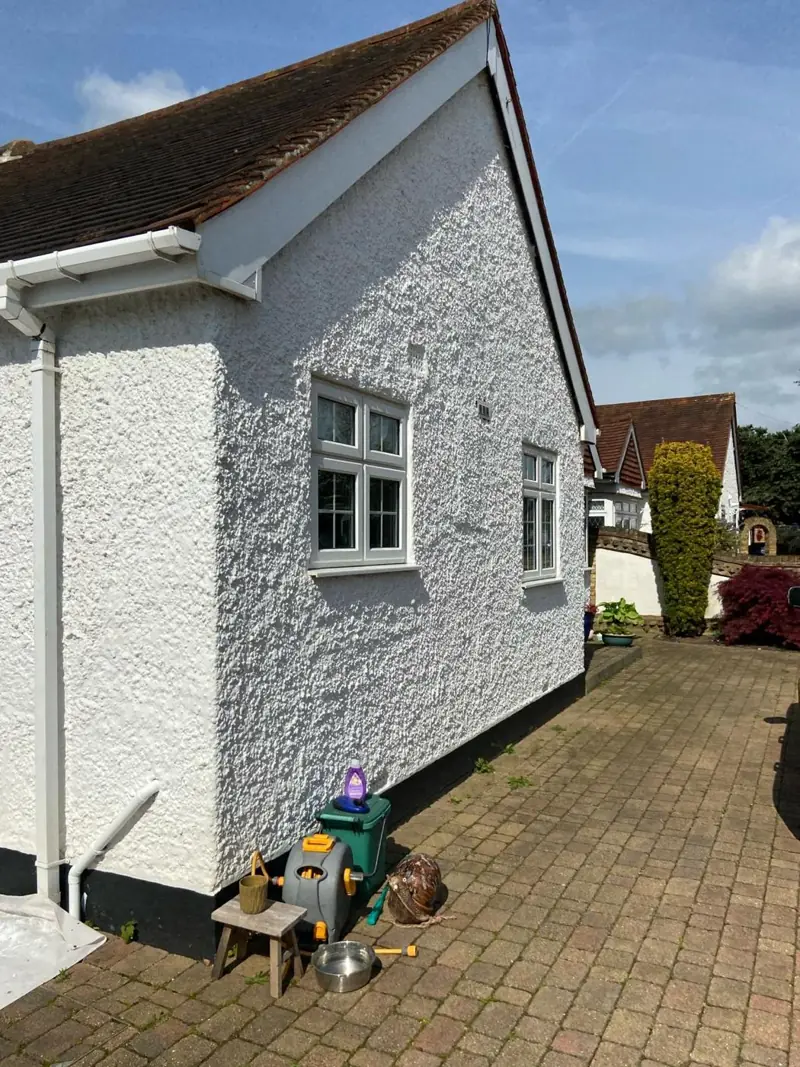
Dormer cheeks clad in timber are some of the most exposed joinery in the village. They take rain on three faces, and water runs off the tiles around them. Most roofs in the old core are orange or red clay pantiles, plain tiles or Castle Ashby clay specials, with some Welsh slate, so we work from a tower or a ladder with a stand-off rather than leaning anything on the roof covering. On these timbers we scrape back to sound paint, treat soft spots, prime bare wood and use a microporous paint so moisture in the timber can escape.
On listed cottages, such as those on Church Lane and the High Street west of it, we repaint bargeboards and dormer cheeks in the existing colour. Any change of colour or material on listed fabric may need consent from North Northamptonshire Council, so ask before choosing a new shade.
Eaves under thatch at 24 and 26 High Street
The thatched pair at 24 and 26 High Street have deep eaves of long-straw thatch over the joinery below. Work there is slow and done entirely by hand. We use no heat gun and no blowlamp, and we keep sanding dust and paint mist away from the thatch. Ladders are set so they never bear on the thatch edge. We apply the same care to any cottage where the roof covering is fragile.
Bungalow eaves along the main road
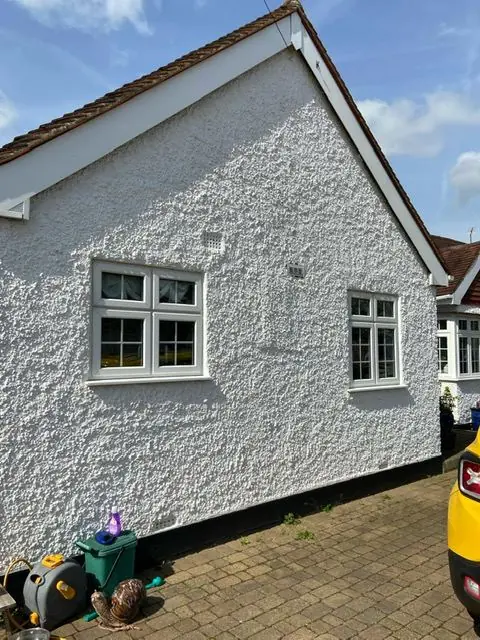
Bungalow fascias are low enough to reach from steps or a short ladder, which keeps the access simple. They often run long and unbroken across the front and sides, so a careful finish shows. Timber fascias and soffits on these houses get the standard treatment: wash, sand, spot-prime and two coats of exterior gloss or satin. If yours have already been replaced with uPVC, they can be cleaned and, if you want a colour change, painted with a primer made for plastics. Our fascia and soffit painting page covers the uPVC process in more detail.
Things specific to Great Doddington rooflines
- Valley-side exposure: south and south-east facing eaves looking over the Nene Valley fade and crack first.
- Tree debris: gutters near the churchyard yews, the sycamore in The Square and the cedar at 22 High Street fill with needles and leaves. We clear the gutter before we paint the fascia behind it.
- Footway access: where a cottage stands right on the High Street pavement, the ladder foot is on the public footway and we fence it off while working above.
- Pinch points: narrow stretches near the Stag’s Head and at Church Lane limit where a tower can stand and where we can park.
Rooflines are often one part of a wider outside job; the Great Doddington area page covers the rest of the village’s house types.
Last updated by Dean, DH Painter & Decorator.