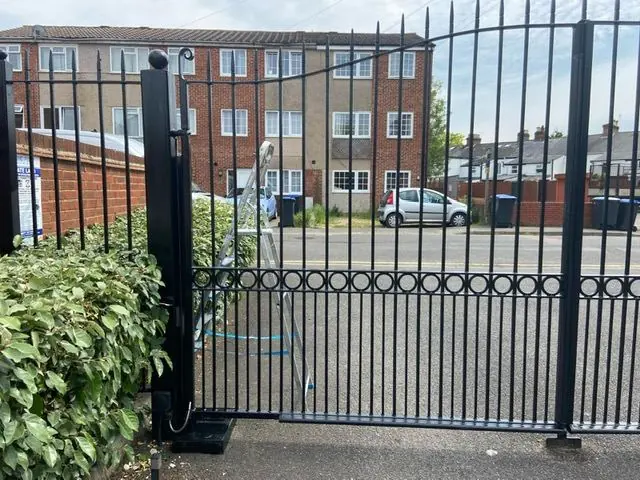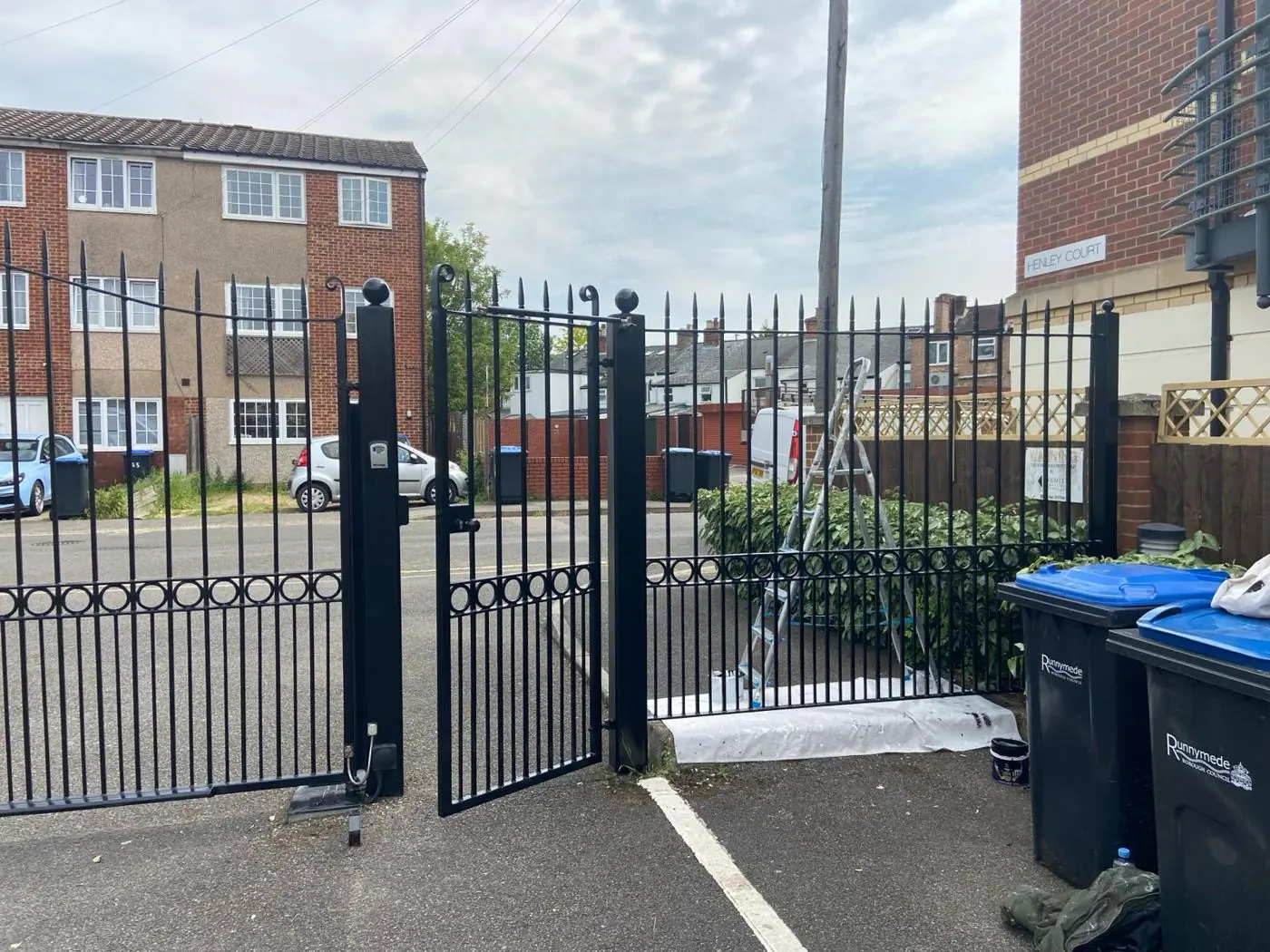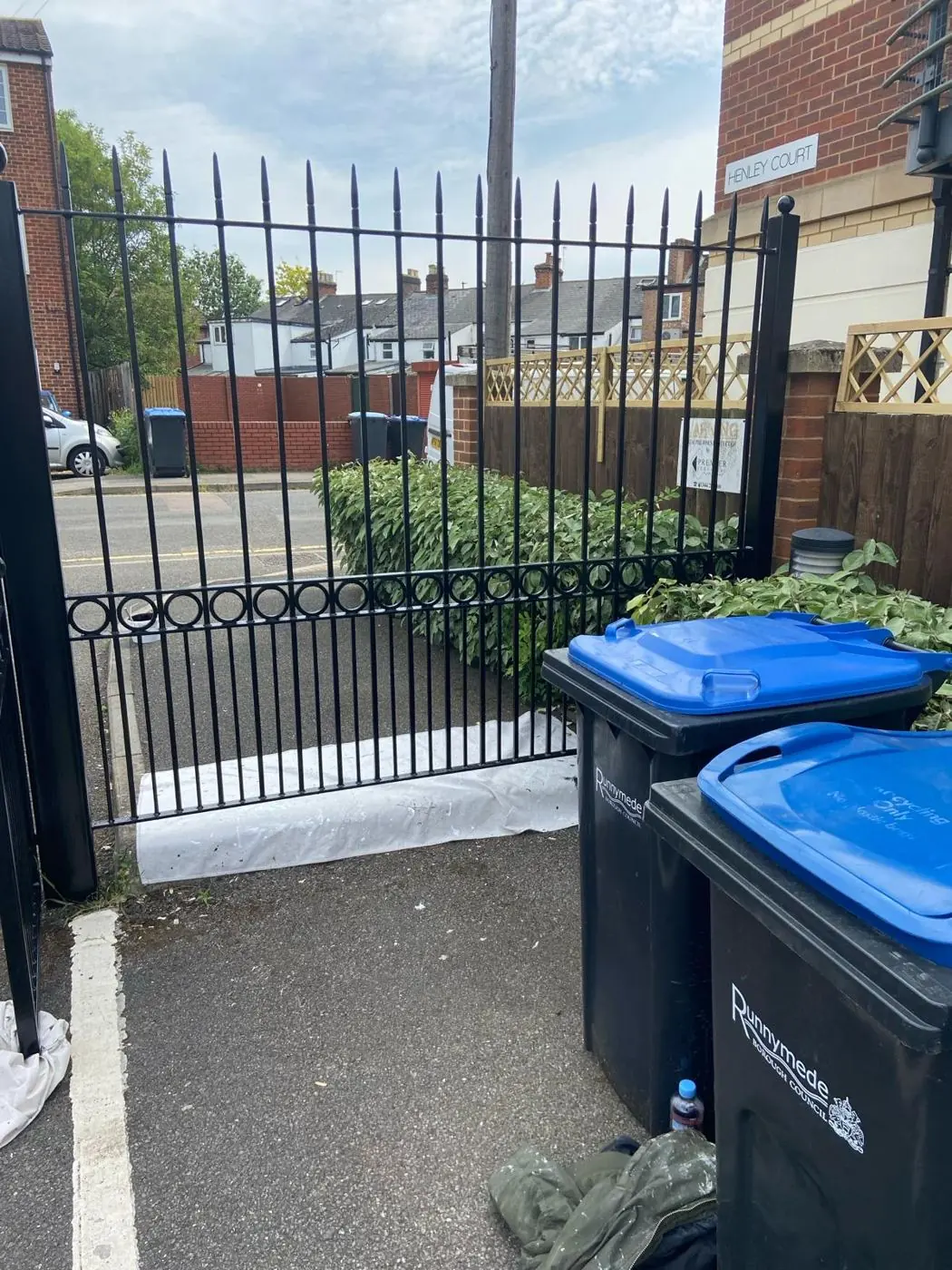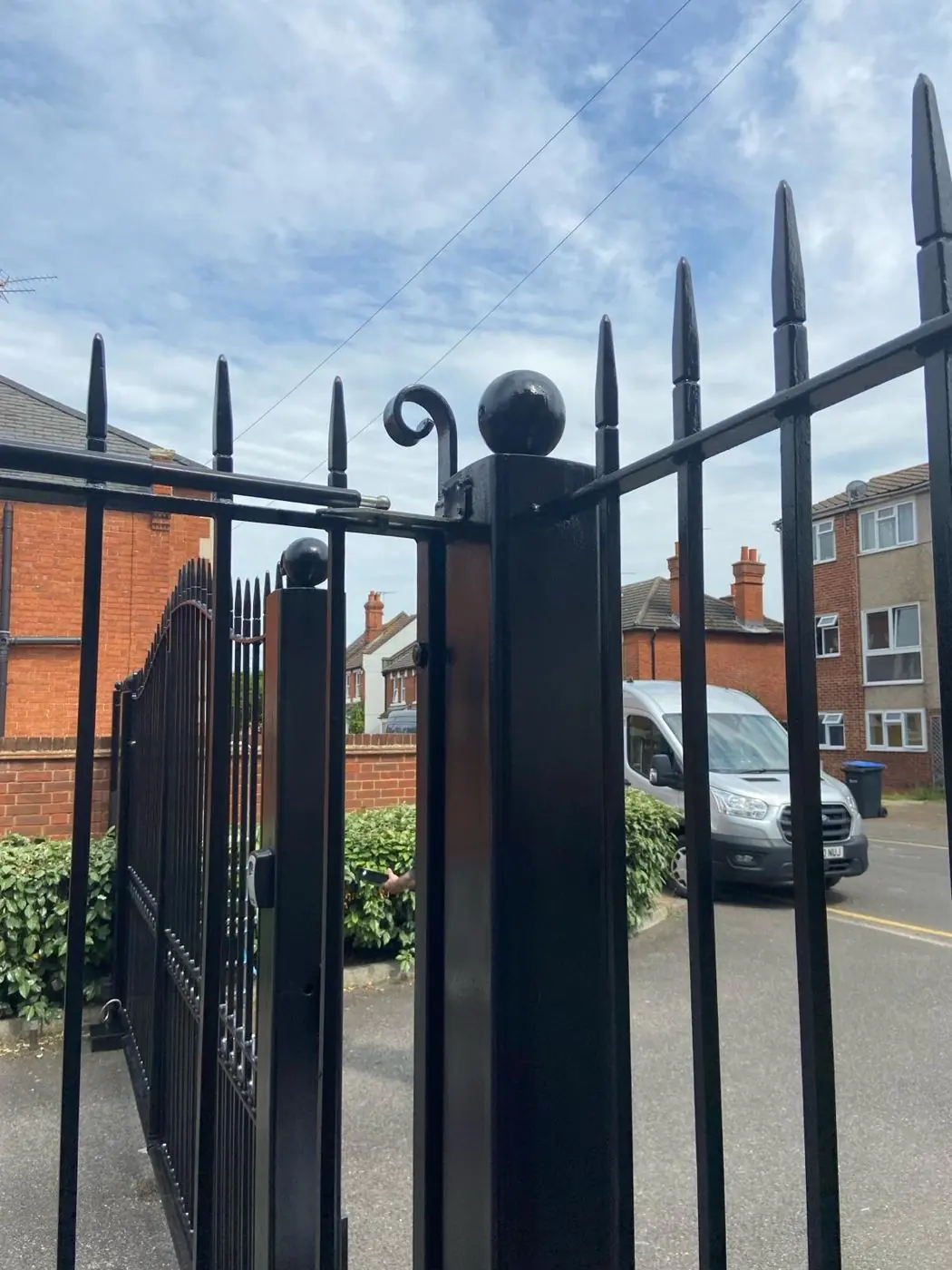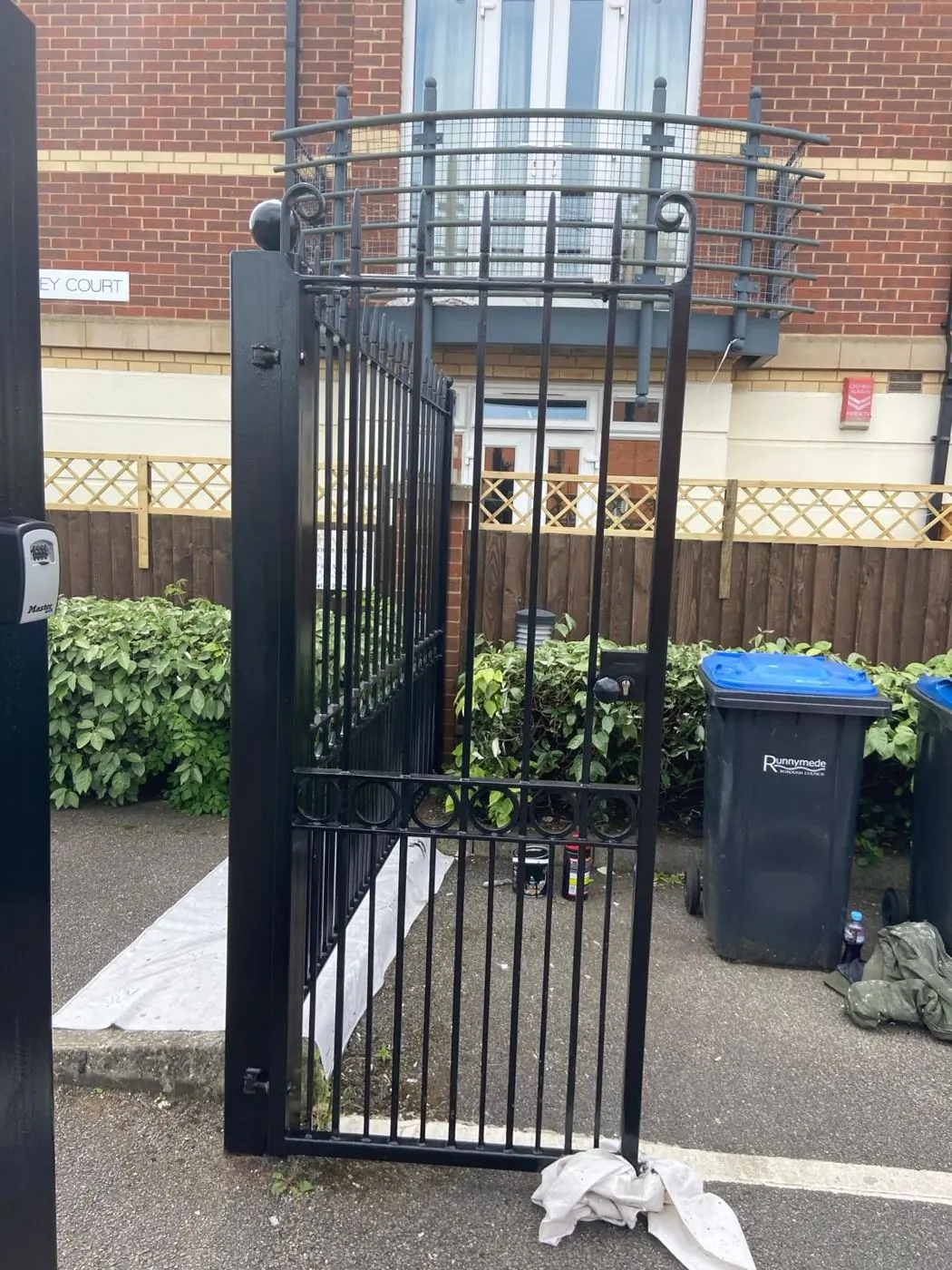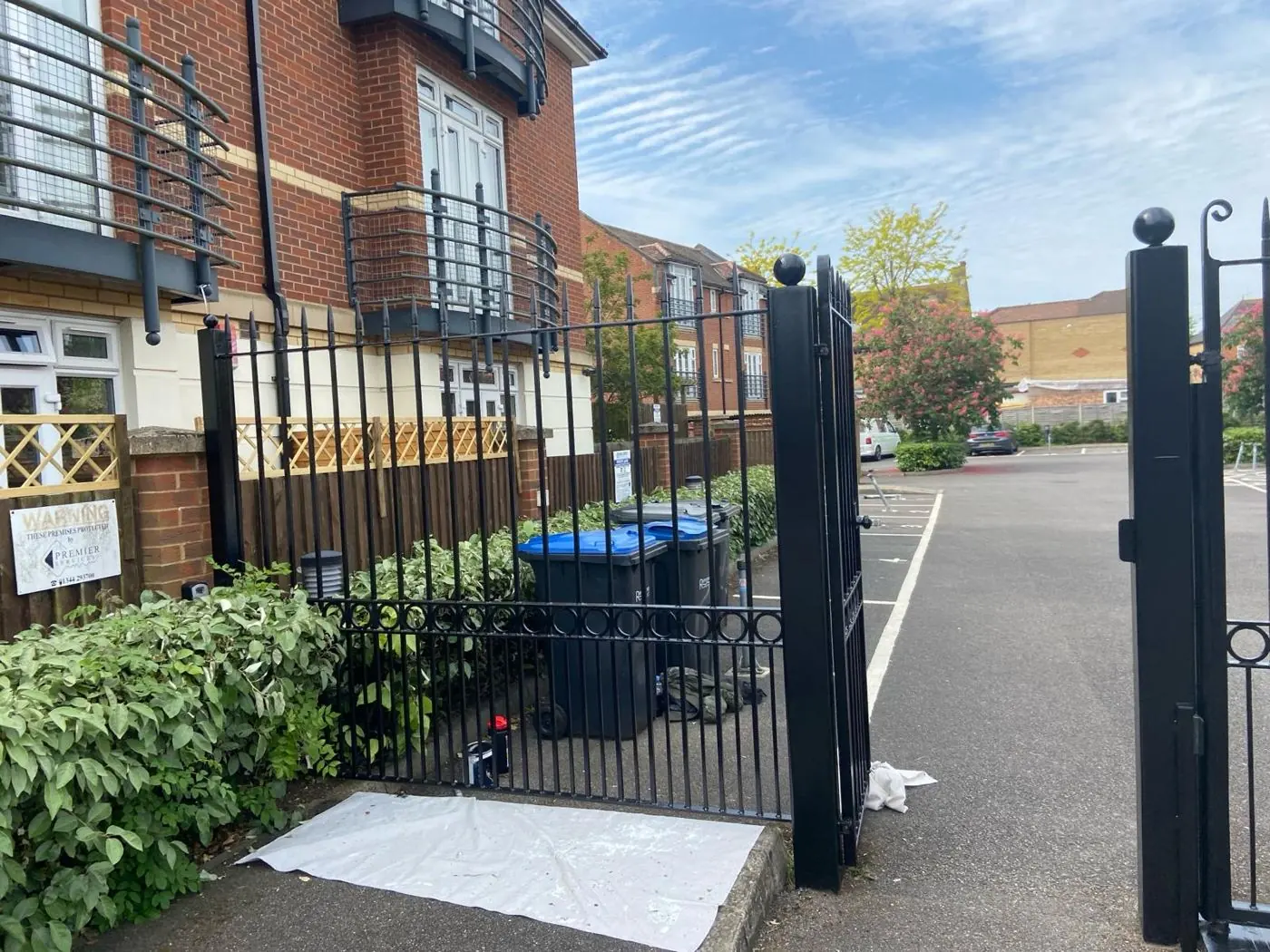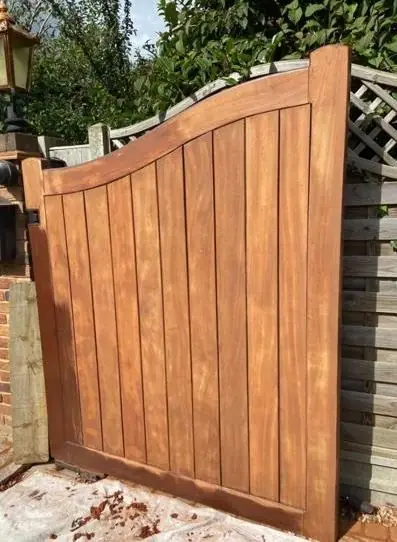
DH Painter & Decorator repaints metal gates, railings and handrails in Great Doddington, about 8.3 miles east of our Northampton base. The village is mostly stone walls and timber fencing, so jobs here tend to be single gates or short runs, and Dean quotes after checking the rust.
A village of stone walls, with metal in the gaps
Great Doddington is not a railing village. The conservation area appraisal describes boundaries made largely of limestone walls with cock and hen copings, picket fencing on low plinths and continuous walls along Lower Street and Doctors Lane. Iron railings are not a feature it names. So metalwork jobs here are usually small: a wrought or mild steel gate set between stone piers, a handrail beside a step, a gate into a farmyard or a short run of railing on a newer house.
Small does not mean simple. A single gate in a stone wall often hangs on hinge pins leaded or set straight into the limestone pier, and that is where rust starts and spreads. Rust stains running down a pale stone pier are hard to shift, so we treat the rust at its source rather than painting over it.
Newer homes outside the conservation area, such as the 20th-century houses along the main road and the bungalows at 44-54 High Street, are more likely to have a pair of steel driveway gates or a simple metal side gate. These are usually mild steel or galvanised, and the work is a matter of keeping water out of the bottom rails and the hinge collars, where it collects and stays. Gates that face south over the valley also lose their gloss faster in the sun, and a dull, chalky black is the first sign that the next coat is due.
Raised footways and handrails along the High Street
Along the High Street’s north side, the pavement is raised behind retaining walls edged in blue bull-nosed engineering brick. Where a house has a metal handrail, a gate or any railing set into that kind of edge, the paint work takes place right next to the public path. We keep a clear way past for pedestrians, sheet the footway under us and avoid leaving wet paint where someone could brush against it. Wire-brushing dust and old paint flakes are swept up as we go, because older layers on ironwork can contain lead.
Farm gates and yard metalwork
The village grew up around five farms, and there are still working farms and a livery yard. Galvanised field gates, steel yard gates and tubular hurdles lose their zinc over the years and start to rust at the welds and hinge points. On galvanised steel we use a primer made for zinc surfaces, because ordinary metal primers can lose their grip there. Where animals are around, we plan the work so gates are not needed while the coating dries, and we choose finishes that are safe once cured.
How we take a gate back to sound metal
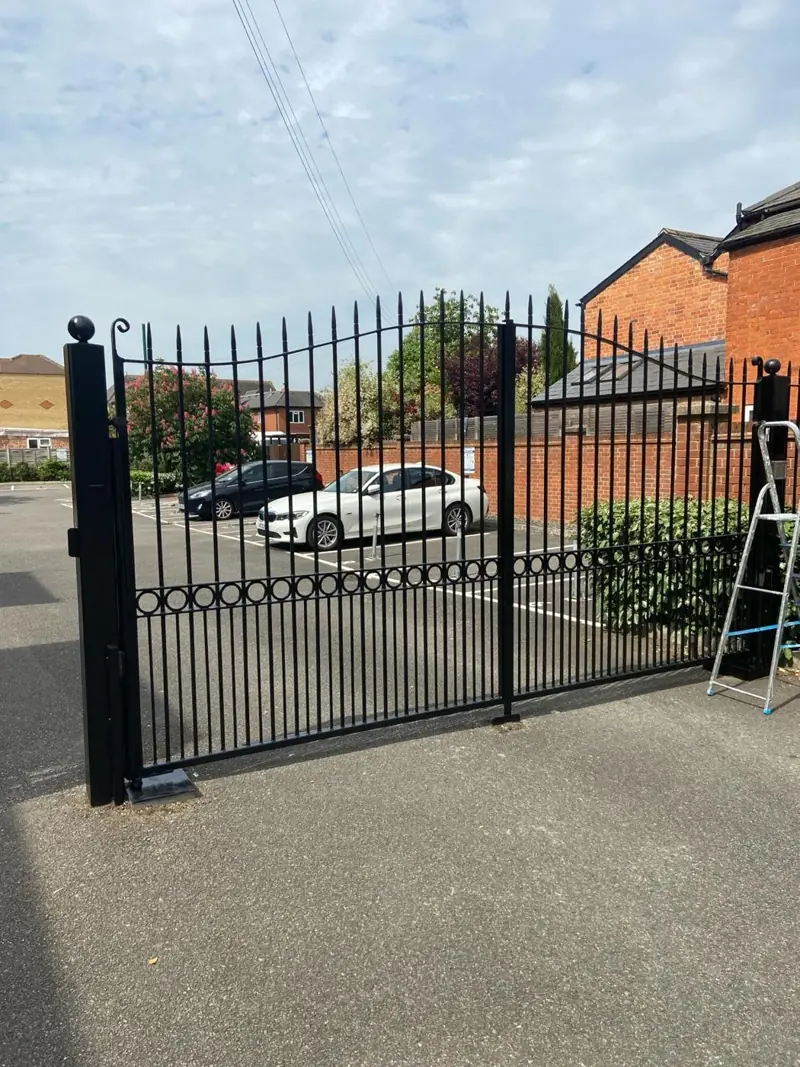
- Check the hinges, latch and the point where the gate meets the stone or the post, since these are where corrosion runs deepest.
- Wire-brush and scrape loose rust and flaking paint, and use a rust converter on pitting that cannot be cleaned out.
- Spot-prime bare metal with a rust-inhibiting primer the same day, before moisture can settle.
- Apply two finish coats, usually a black or dark green that sits well against limestone, brushed into the scrollwork and the undersides.
Timing matters on the valley side. Steel cools quickly on still autumn evenings above the Nene, and dew on cold metal ruins a fresh coat, so we start late enough for the metal to dry and finish early. The metal gate and railing painting page covers primers and gloss versus satin. The Great Doddington area page lists the other work we do in the village.
Last updated by Dean, DH Painter & Decorator.